


August 2026: Essential Updates in Rubber and Plastics Industry Standards – Part 2
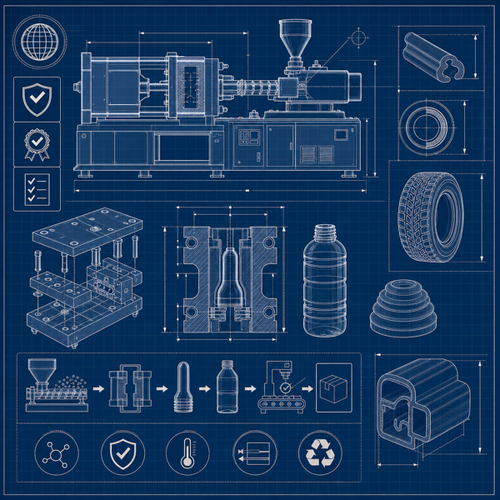
August 2026: Essential Updates in Rubber and Plastics Industry Standards – Part 2
August 2026 brought significant advancements in international standards for the rubber and plastics industries. This edition, Part 2 of our three-part series, breaks down five pivotal new and revised standards every industry professional, engineer, and compliance manager should know. These standards set new benchmarks for safety, performance, and quality in applications from automotive tyres to fuel hoses and window profiles. Staying abreast of these developments is critical for ensuring compliance, improving product performance, and maintaining market competitiveness.
Overview
The rubber and plastics sector underpins a broad array of industries, from automotive to construction and manufacturing. Standards in this field govern material properties, dimensional tolerances, testing methods, and performance requirements—ensuring reliability, safety, and interoperability of products across global markets. As regulatory pressures intensify and product expectations climb, new standards published in August 2026 deliver fresh, authoritative guidance for quality assurance, innovation, and international trade.
In this article, you’ll find:
- A summary of what’s new in five major international standards
- Practical explanations of technical updates and their implications
- Industry-specific compliance guidance and tips for implementation
Detailed Standards Coverage
ISO 18106:2026 – Methods for Measuring Snow Grip Performance in Tyres
Passenger car, commercial vehicle, truck and bus tyres — Methods for measuring snow grip performance — Loaded new tyres
This revised ISO standard specifies methods for determining the relative snow grip performance index of new passenger car, commercial vehicle, truck, and bus tyres. By establishing uniform testing procedures on packed snow surfaces, it supports accurate, reproducible comparisons between candidate and reference tyres under loaded conditions.
Key Requirements:
- Defines test methods for braking and acceleration on snow for different vehicle types
- Introduces reference tyres (SRTTs) and control tyres to ensure consistent benchmarking
- Sets environmental requirements for snow compaction, temperature, and test surface preparation
- Mandates detailed reporting formats for test results and evaluation procedures
- Directly references latest ASTM standards for reference test tyres
Application:
All manufacturers and testing bodies involved with road tyres for passenger cars, commercial vehicles, trucks, or buses intended for snowy conditions must comply. Regulatory agencies and R&D departments will also rely on this standard for conformity assessments and innovation.
Notable Changes from Previous Versions:
- Addition of new reference tyres, including ASTM F2493-24, F3677-23, and F3678-25
- Enhanced test reproducibility through stricter control of procedures and tyre preparation
- Revised annexes for robust reporting and clarity
Key highlights:
- Standardizes snow performance comparisons for global markets
- Establishes clear requirements for test environments and reference tyres
- Guides product development for winter and all-season tyres
Access the full standard:View ISO 18106:2026 on iTeh Standards
ISO 19013-1:2026 – Rubber Hoses and Tubing for Diesel Fuel Circuits
Rubber hoses and tubing for fuel circuits for internal combustion engines — Specification — Part 1: Diesel fuels
The third edition of ISO 19013-1 details critical specifications for rubber hoses and tubing used in diesel fuel circuits, factoring in the increasing prevalence of biodiesel blends. It provides a comprehensive framework for product classification, dimensions, performance tests, and durability under varying operational environments.
Key Requirements:
- Classifies hoses and tubing by pressure, temperature, and application (e.g., engine feed/return lines)
- Performance testing for:
- Burst pressure
- Adhesion between layers
- Low-temperature flexibility and heat aging
- Ozone and fuel resistance (including bio-diesel up to 20% blends)
- Internal cleanliness and extractable contaminants
- Detailed marking and traceability requirements
- Specific OEM application testing detailed in Annex E
Application:
Automotive OEMs, fuel system component suppliers, and aftermarket parts manufacturers must comply, especially those targeting vehicles with internal combustion diesel engines (including commercial vehicles using biodiesel blends).
Notable Changes from Previous Versions:
- Expanded requirements for performance and safety
- Inclusion of newer test procedures and updated references
- Extended scope to better accommodate biofuels
Key highlights:
- Guarantees hose reliability with conventional and bio-diesel fuels
- Introduces stricter material and cleanliness standards
- Improves durability and lifespan in aggressive fuel environments
Access the full standard:View ISO 19013-1:2026 on iTeh Standards
ISO 20457:2026 – Tolerances and Acceptance for Plastics Moulded Parts
Plastics moulded parts — Tolerances and acceptance conditions
ISO 20457:2026 brings crucial guidance for defining, achieving, and verifying geometrical and dimensional tolerances in plastic moulded components. It serves designers, manufacturers, and quality assurance teams working with thermoplastics, thermoplastic elastomers, and thermosets in a wide array of moulded applications (injection, compression, rotational moulding, and more).
Key Requirements:
- Defines direct and general tolerances based on manufacturing effort
- Sets procedures for dimensioning, tolerancing, and measurement (linear, angular, form, and freeform features)
- Details acceptance conditions, referencing drawing standards (ISO 8015) and relevant environmental factors
- Distinguishes between required functional tolerances and manufacturing capability
- Provides informative annexes on shrinkage, production expense, and validation of measurement systems
Application:
Relevant across plastics and rubber product manufacturers, especially those supplying precision-moulded parts to automotive, electronics, consumer goods, and medical sectors. Contractual parties can also extend application to alternative plastic processes.
Notable Changes from Previous Versions:
- More precise formulation of the scope
- Better guidance on functional versus achievable tolerances
- User-friendlier figures and revamped annexes for practical application
Key highlights:
- Harmonizes tolerance standards for plastic parts worldwide
- Reduces disputes in part acceptance and quality agreements
- Enhances compatibility with digital design and manufacturing workflows
Access the full standard:View ISO 20457:2026 on iTeh Standards
EN 12608-1:2026 – PVC-U Profiles for Windows and Doors
Unplasticized poly(vinyl chloride) (PVC-U) profiles for the fabrication of windows and doors – Classification, requirements and test methods – Part 1: Non-covered PVC-U profiles
This revised European standard is the definitive guideline for non-covered PVC-U profiles intended for window and door fabrication. It sets detailed requirements for classification, testing, and product conformance, supporting quality assurance from extrusion to installation.
Key Requirements:
- Classifies PVC-U profiles based on wall thickness, visible/non-visible surfaces, and climatic exposure
- Dictates material properties, dimensional tolerances, linear weight, and appearance criteria
- Requires performance testing including:
- Heat reversion
- Behaviour after heating at 150°C
- Weldability and mechanical strength
- Impact resistance (optional)
- Outlines updated test methods and environmental exposure standards
- Focuses on raw material traceability and profile marking
Application:
Essential for PVC extruders, window/door manufacturers, architects, and building specification professionals throughout Europe and international markets.
Notable Changes from Previous Edition:
- Expanded material definitions and updated references
- Permission of RUVM for non-sight visible surfaces
- Enhanced requirements for colorimetry and ash content as optional test methods
Key highlights:
- Guarantees high-quality, long-life PVC frames under diverse climate conditions
- Aligns with circular economy by referencing recycled materials
- Ensures compatibility with current and future window/door systems
Access the full standard:View EN 12608-1:2026 on iTeh Standards
EN 513:2026 – Resistance of PVC Profiles to Artificial Weathering
Plastics – Poly(vinyl chloride) (PVC) based profiles – Determination of the resistance to artificial weathering
EN 513:2026 specifies rigorous testing methods for evaluating the weathering resistance of PVC-based profiles, including those with surface treatments such as foils or paints. By using xenon-arc radiation to simulate prolonged sunlight exposure, it helps manufacturers assess durability and color stability before market release.
Key Requirements:
- Exposure of PVC profile specimens to controlled xenon-arc radiation
- Assessment of changes in color, impact strength, adhesion, and chalking (as per informative annex)
- Prescribes specimen preparation, test cycles, temperature and humidity regimes
- Updated methods for colorimetric measurement (including CIEDE2000)
- Mandates comprehensive test reporting, including holder type details
Application:
PVC profile extruders, window and door manufacturers, and independent labs must use this standard when verifying product compliance or developing new formulations for exterior applications.
Notable Changes from Previous Edition:
- Updated specimen holder specification
- Addition of advanced color measurement techniques
- Revised references to harmonize with international standards
Key highlights:
- Enhances the evaluation of outdoor durability
- Enables better prediction of product lifespan and appearance retention
- Supports claims for UV and weather resistance in marketing and specification
Access the full standard:View EN 513:2026 on iTeh Standards
Industry Impact & Compliance
Business Implications:
- Adopting these standards streamlines production, ensures regulatory compliance, and enhances reputation and market access—especially in tightly regulated regions.
- For quality managers and procurement specialists, referencing the latest standards in contracts can prevent costly rework, liability, and disputes.
- Updated methods (e.g., for snow grip, hose performance, PVC weathering) improve product claims credibility and support innovation.
Compliance Considerations:
- Most standards have immediate (but not retroactive) effect; however, transition periods may apply in some regions—always consult the relevant national body.
- Risks of non-compliance include regulatory penalties, product recalls, and loss of market approvals, particularly in automotive and building sectors.
- Early adoption is often rewarded in tender processes and can be a differentiator for exports.
Benefits of Adoption:
- Reduced product failures and warranty claims
- Smoother quality audits and supplier evaluations
- Compatibility with eco-innovation and digital manufacturing practices
- Improved customer satisfaction and trust
Technical Insights
Common Technical Requirements:
- Precise methods for material and product characterization (tensile tests, impact, chemical resistance, aging)
- Mandatory traceability and marking for critical components
- Enhanced reporting and documentation for test results
Implementation Best Practices:
- Align internal test protocols with the updated methods (e.g., for snow grip and weathering correction)
- Update procurement specifications to reference the latest standards part numbers
- Train design and production teams on new dimensional tolerancing and acceptance criteria
- Invest in re-certification where products have changed or new test regimes apply
Testing and Certification:
- Use accredited labs and certified reference materials (e.g., SRTTs, xenon-arc apparatus)
- Maintain detailed records to facilitate audits and future product claims
- Consult with notified bodies for CE marking or international market access, especially for building products?
Conclusion and Next Steps
This second installment on August 2026 rubber and plastics industry standards highlights the sector’s relentless drive for higher quality, safety, and environmental compatibility. By familiarizing yourself with these five standards, you can:
- Streamline product development and quality assurance
- Avoid compliance pitfalls and market entry barriers
- Position your organization at the forefront of industry best practices
Recommendations:
- Download and review each standard via the iTeh Standards platform (see links above)
- Assess which standards affect your operations and prioritize gaps analysis
- Engage technical and compliance teams in internal training or expert workshops
Stay tuned for our next and final article in this series, covering the remaining key standards published in August 2026. For full access and expert support, visit iTeh Standards, your partner for reliable, up-to-date reference materials for the rubber and plastics industries.
Categories
- Latest News
- New Arrivals
- Generalities
- Services and Management
- Natural Sciences
- Health Care
- Environment
- Metrology and Measurement
- Testing
- Mechanical Systems
- Fluid Systems
- Manufacturing
- Energy and Heat
- Electrical Engineering
- Electronics
- Telecommunications
- Information Technology
- Image Technology
- Precision Mechanics
- Road Vehicles
- Railway Engineering
- Shipbuilding
- Aircraft and Space
- Materials Handling
- Packaging
- Textile and Leather
- Clothing
- Agriculture
- Food technology
- Chemical Technology
- Mining and Minerals
- Petroleum
- Metallurgy
- Wood technology
- Glass and Ceramics
- Rubber and Plastics
- Paper Technology
- Paint Industries
- Construction
- Civil Engineering
- Military Engineering
- Entertainment