


July 2026: Major Updates in Service Management, AI, Transport, and Facility Standards
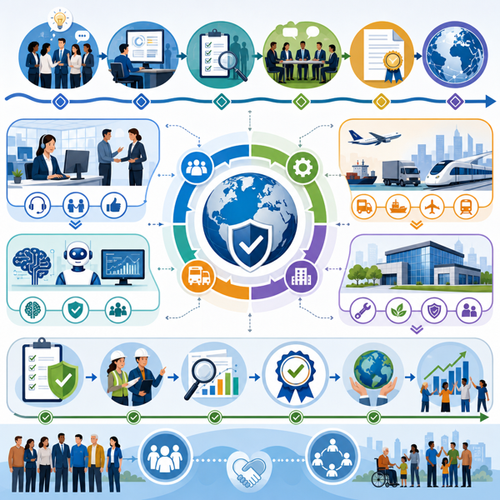
The landscape of service management, organizational quality, administration, transport, and social systems is evolving rapidly. In July 2026, five new international standards were published, shaping how organizations manage calibration, harness artificial intelligence, implement big data in intelligent transport systems, collaborate through shared manufacturing models, and develop facility management organizations. These standards provide enhanced frameworks for compliance, operational excellence, and strategic innovation, impacting a broad range of stakeholders across industries. This article—Part 1 of a two-part series—offers a detailed review of these pivotal updates, with direct access to each standard for further exploration.
Overview
The services, company organization, management and quality, administration, transport, and sociology sectors underpin modern economies. Standards in these fields serve as the backbone for quality assurance, regulatory conformity, innovation, and operational resilience. From accurate calibration for measurement processes to AI as a service and facility management development, compliance with the latest standards ensures organizations remain trustworthy, efficient, and future-ready.
In this comprehensive update, you’ll learn:
- The scope and requirements of new standards across calibration, AI, transport systems, facility management, and the sharing economy
- Compliance and best practices for implementation
- Impacts on organizational strategy, operations, and risk management
Detailed Standards Coverage
ISO 28037:2026 - Determination and Use of Straight-Line Calibration Functions
Full Title: Determination and use of straight-line calibration functions
ISO 28037:2026 addresses one of the most critical foundations in scientific and industrial measurement: the use of linear (straight-line) calibration functions. The standard defines mathematical methods for generating, validating, and utilizing straight-line calibration between variables, ensuring data accuracy and reliability in measurement systems across research laboratories, manufacturing, quality control, and regulatory assessment.
Key requirements include:
- Estimation of calibration parameters using least-squares methods accommodating various types of measurement uncertainty (including heteroscedastic data)
- Clear guidance for handling uncertainties and covariance (matrix-based approaches) within measured data
- Comprehensive model validation procedures to identify discrepancies and ensure calibration integrity
- Predictive methodologies for estimating variable values and associated uncertainties
- Informative annexes for specialized situations, such as unknown scale factor uncertainties and compliance with the Guide to the Expression of Uncertainty in Measurement (GUM)
Who should comply:
- Metrology and calibration laboratories
- Quality assurance teams in manufacturing
- Industries relying on accurate measurement: pharmaceuticals, automotive, electronics, and chemical analysis
Implementing ISO 28037:2026 enables organizations to deliver traceable and credible results, minimize risks associated with measurement errors, and fulfill regulatory demands for data integrity. Noteworthy updates from previous technical specifications include improved calculation procedures, removal of outdated definitions, and alignment with current international measurement standards.
Key highlights:
- Unified approach for linear calibration with or without heteroscedastic uncertainties
- Emphasis on proper validation and uncertainty propagation
- Handy guidance on anomalies and outlier detection
Access the full standard:View ISO 28037:2026 on iTeh Standards
EN 18286:2026 - Artificial Intelligence Quality Management System for EU AI Act Compliance
Full Title: Artificial intelligence - Quality management system for EU AI Act regulatory purposes
EN 18286:2026 is a strategic milestone for any organization placing or deploying high-risk AI systems within the European Union. Developed to support conformity with the EU Artificial Intelligence Act (AI Act 2024/1689), this standard specifies the structure, documentation, and operation of a quality management system (QMS) tailored to AI products and services.
Scope and requirements:
- Definition, implementation, maintenance, and continual improvement of AI QMS
- Comprehensive lifecycle controls: from design and development, through validation, supply chain management, change procedures, and post-market surveillance
- Special emphasis on risk management for AI impacting health, safety, and fundamental rights
- Integration and harmonization with other relevant management standards (e.g., ISO 9001:2015 and ISO/IEC 42001:2023)
- Documentation, audit readiness, stakeholder consultation, and incident reporting procedures for regulatory review
Intended audience:
- Any provider placing high-risk AI systems on the EU market
- Organizations integrating AI within regulated sectors (healthcare, mobility, manufacturing)
- Compliance officers, quality managers, and AI system developers
EN 18286:2026 fosters responsible, transparent, and auditable AI, helping organizations demonstrate legal compliance and consumer trust. It also highlights procedures to address fundamental rights and mitigate operational and reputational risks.
Key highlights:
- Concrete QMS model for legal compliance under the EU AI Act
- End-to-end risk and lifecycle management
- Integration guidance with systems like ISO 9001 and sectoral standards
Access the full standard:View EN 18286:2026 on iTeh Standards
ISO/TR 12786:2026 - Intelligent Transport Systems — Big Data and AI Use Cases
Full Title: Intelligent transport systems — Big data and artificial intelligence supporting intelligent transport systems — Use cases
This technical report delivers a valuable repository of use cases exemplifying the deployment of big data and artificial intelligence to enhance intelligent transport systems (ITS). It is a vital reference for smart mobility developers, urban planners, transport authorities, and technology providers aiming to leverage data-driven innovation in transport safety, efficiency, and resilience.
Content highlights:
- Comprehensive introduction to ITS-specific applications of big data and AI (e.g., congestion prediction, real-time traffic optimization, V2X edge detection, asset monitoring)
- Analysis of technical and societal challenges, such as interoperability, data quality, bias, and privacy concerns
- Descriptions of over 30 real-world use cases, including AI-driven traffic control, predictive asset maintenance, emergency detection, and multimodal demand management
- Consideration of ethical, legal, and risk dimensions for ITS stakeholders
Beneficiaries include:
- City governments and transit agencies
- Transport infrastructure owners and operators
- Smart city technology vendors
- Researchers and software developers in transport analytics
Adopting practices outlined in ISO/TR 12786:2026 enables stakeholders to accelerate ITS deployment, integrate trusted AI, and address emerging transportation challenges through proven scenarios.
Key highlights:
- Practical, data-driven use cases powering smarter, safer mobility
- Focused guidance on risk, governance, and explainability in ITS applications
- Actionable insights for overcoming ITS-specific big data hurdles
Access the full standard:View ISO/TR 12786:2026 on iTeh Standards
ISO/TR 42505:2026 - Sharing Economy — Shared Manufacturing: Concepts and Models
Full Title: Sharing economy — Shared manufacturing — Concepts and models
An essential guide for manufacturers and ecosystem players, ISO/TR 42505:2026 defines the vocabulary, characteristics, business models, and IP considerations relevant to shared manufacturing, a key pillar of the modern sharing economy. As manufacturing shifts from traditional models to collaborative, cloud-enabled and peer-to-peer approaches, this report helps organizations navigate opportunities and challenges around pooling and optimizing production resources.
Covered topics include:
- Definitions and distinctions among shared, collaborative, and cloud manufacturing
- Digital platform-based operation and resource sharing frameworks (equipment, expertise, capabilities)
- Models for manufacturing resource sharing, capability sharing, innovation sharing, and service collaboration
- Principles for intellectual property management: ownership, confidentiality, licensing, and dispute resolution
- Practical case studies, value drivers, and good practices to promote innovation and resilience
Who should engage:
- SMEs and large enterprises considering open platform manufacturing
- Technology providers in industrial IoT and cloud manufacturing
- Legal professionals focused on IP management in collaborative contexts
- Policy-makers and economic development agencies supporting platform economies
By embracing ISO/TR 42505:2026, stakeholders can securely participate in dynamic, multi-party production ecosystems, optimize utilization, and strengthen supply chain resilience—while safeguarding intellectual assets.
Key highlights:
- Clear, practical frameworks for new manufacturing paradigms
- Emphasis on digital collaboration and operational agility
- Robust IP management guidance for safe participation
Access the full standard:View ISO/TR 42505:2026 on iTeh Standards
EN ISO 41002:2026 - Facility Management: Development of the FM Organization
Full Title: Facility management - Development of the facility management organization (ISO 41002:2026)
EN ISO 41002:2026 provides authoritative guidance on establishing and evolving a facility management (FM) organization at all levels: strategic, tactical, and operational. Its holistic framework supports organizations in aligning facility services with business objectives, stakeholder needs, regulatory requirements, workplace health and safety, and sustainability goals.
Core areas include:
- Governance, leadership, information management, and continual improvement in FM
- Value drivers, risk management, and opportunities for organizational growth
- Stakeholder engagement, communication, and performance measurement
- Sourcing strategies, integration of facility services, and digital technology adoption
- Emphasis on protecting asset value, delivering safe, healthy, and resource-efficient environments, and supporting sustainable development
Primary audiences:
- Facility management service providers and teams
- Organizations procuring or managing outsourced FM
- Real estate administrators, building owners, and operational leadership
- Sustainability and environmental managers
Adherence to EN ISO 41002:2026 ensures consistent delivery of high-quality FM services, enhances organizational resilience, and helps organizations achieve both regulatory and sustainability targets.
Key highlights:
- Full-spectrum guidance: strategy, operations, and stakeholder alignment
- Best practices for asset protection and sustainable, efficient FM
- Integration with digital and data-driven FM solutions
Access the full standard:View EN ISO 41002:2026 on iTeh Standards
Industry Impact & Compliance
The July 2026 batch of standards plays a transformative role across sectors:
- Organizations deploying AI in Europe must adopt EN 18286:2026 to ensure legal conformity with the EU AI Act.
- Calibration-reliant sectors mitigate regulatory and operational risk through ISO 28037:2026’s robust calibration methodologies.
- Transport authorities and smart mobility tech developers will find ISO/TR 12786:2026 an accelerator for data-driven innovation and safer roads.
- Manufacturers and enterprises seeking resilience and agility can now confidently engage in the sharing economy using ISO/TR 42505:2026’s frameworks.
- Facility management professionals secure stakeholder value, resource efficiency, and strategic outcomes with EN ISO 41002:2026.
Compliance considerations:
- Implementation timelines vary by industry and local regulation; early adoption is recommended for competitive advantage and risk mitigation.
- Conforming to these standards supports ISO, CEN, and EU legal requirements, improves audit readiness, and enhances reputation with clients and regulators.
- Non-compliance can result in operational delays, regulatory penalties, and negative market perception—especially in regulated industries such as healthcare, mobility, and advanced manufacturing.
Benefits include:
- Streamlined processes and reduced errors
- Enhanced trust and credibility
- Stronger supply chain and business resilience
Technical Insights
Several technical themes recur across these new standards:
- Lifecycle Risk Management: Both AI QMS and facility management standards emphasize comprehensive lifecycle coverage—from planning through monitoring and continual improvement.
- Data Quality & Uncertainty Handling: ISO 28037:2026 and ISO/TR 12786:2026 focus strongly on robust data methodologies, risk of measurement errors, and transparent result communication.
- Digital Transformation: Shared manufacturing and facility management standards acknowledge the critical importance of digital platforms and new technologies for agility and efficiency.
- Testing, Validation, and Audit: Clear procedures are built into each standard for verifying compliance and performance, documenting processes, and managing incidents or outliers.
Implementation best practices:
- Gap analysis: Benchmark current practices against new standard requirements.
- Stakeholder engagement: Communicate changes and requirements organization-wide.
- Training: Ensure teams understand and can execute new procedures and compliance measures.
- Documentation: Establish and maintain robust records for regulatory audits.
- Continuous improvement: Use feedback and performance metrics to refine practices.
Certification:
- For standards providing management system frameworks (e.g., EN 18286:2026, EN ISO 41002:2026), certification by accredited bodies can provide additional assurance and market recognition.
Conclusion & Next Steps
The July 2026 standards publication marks a pivotal moment for professionals and organizations invested in the future of service management, administration, transport, shared manufacturing, and facility operations. This in-depth coverage empowers organizations to drive compliance, resilience, and innovation:
- Assess the applicability of each standard to your operations
- Initiate implementation programs, especially for high-risk or regulated sectors
- Leverage iTeh Standards’ resources and document access for practical adoption guidance
- Stay engaged with the forthcoming Part 2 for additional updates in this critical standards domain
Adopt these standards proactively to stay competitive, secure regulatory compliance, and build a future-ready, high-quality organization.
Categories
- Latest News
- New Arrivals
- Generalities
- Services and Management
- Natural Sciences
- Health Care
- Environment
- Metrology and Measurement
- Testing
- Mechanical Systems
- Fluid Systems
- Manufacturing
- Energy and Heat
- Electrical Engineering
- Electronics
- Telecommunications
- Information Technology
- Image Technology
- Precision Mechanics
- Road Vehicles
- Railway Engineering
- Shipbuilding
- Aircraft and Space
- Materials Handling
- Packaging
- Textile and Leather
- Clothing
- Agriculture
- Food technology
- Chemical Technology
- Mining and Minerals
- Petroleum
- Metallurgy
- Wood technology
- Glass and Ceramics
- Rubber and Plastics
- Paper Technology
- Paint Industries
- Construction
- Civil Engineering
- Military Engineering
- Entertainment