


Telecommunications and AV Engineering: New Surge Protection Standard Released – July 2026
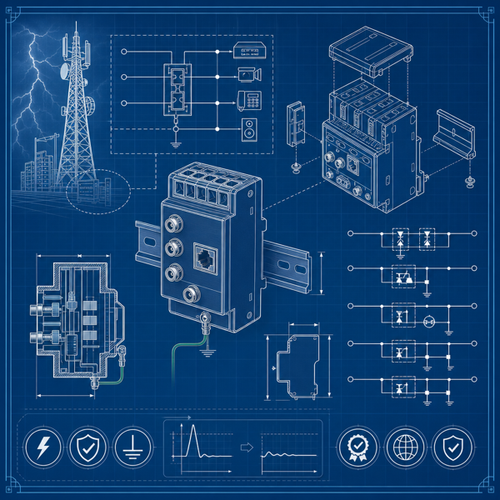
With July 2026 ushering in crucial updates for the Telecommunications and Audio/Video Engineering sector, a new standard is making waves in the industry. The EN IEC 61169-1-3:2026 standard now introduces rigorous requirements and precise testing methodologies for surge protective devices (SPDs) built into coaxial connectors—a pivotal development given the prevalence of lightning strikes and transient overvoltage risks in modern telecom infrastructure. This article, Part 2 of our coverage for this month, examines the scope, implementation, and compliance dynamics of this singular but significant publication.
Overview / Introduction
The field of Telecommunications and Audio/Video Engineering relies on resilient infrastructure to ensure reliable connectivity for businesses and consumers alike. Given the ever-increasing sophistication of electronics and the rising value of uninterrupted service, the integration and rigorous testing of surge protection mechanisms within network components have never been more critical.
Industry standards not only unify safety and quality benchmarks but also facilitate global interoperability across equipment and vendors. In this article, we unpack what the new EN IEC 61169-1-3:2026 specification entails and why it matters for compliance officers, engineering heads, procurement specialists, and anyone invested in secure communications networks.
Detailed Standards Coverage
EN IEC 61169-1-3:2026 - Surge Protective Devices in Coaxial Connectors
Radio-frequency connectors – Part 1-3: Electrical test methods – Surge withstand – Surge protective devices built in a coaxial connector – Performance requirements and testing methods
Published July 3, 2026 by CLC, EN IEC 61169-1-3:2026 addresses the growing demand for robust lightning and surge protection in telecommunications and signaling networks. Specifically, it defines how SPDs (surge protective devices) can be optimally integrated into coaxial connectors, offering in-depth requirements and testing regimes that ensure resilience up to system voltages of 1,000 V (RMS) AC and 1,500 V DC.
Scope and Purpose
This standard targets devices embedded within telecommunications infrastructure—specifically, SPDs mounted in coaxial connectors used throughout signal transmission chains. Types covered include:
- Gas discharge tube (GDT) type surge protectors
- ¼ wavelength short stub types
- Flash-off gap protectors
- Hybrid combinations
These devices are intended to deflect surge currents and protect sensitive telecommunications equipment from both direct and indirect lightning effects, as well as any transient overvoltages that could otherwise cause catastrophic failure.
Key Requirements and Technical Specifications
The standard spells out comprehensive performance and durability benchmarks, including:
- Sparkover voltage tolerances and measurements (both DC and impulse conditions)
- Return loss (VSWR) to ensure minimal transmission line reflection
- Insertion loss requirements to guarantee signal integrity
- Insulation resistance before and after overvoltage applications
- Impulse durability testing (including both C2 and D1 lightning impulse categories)
Detailed methodologies are provided for each critical parameter, leveraging test circuits such as:
- DC and impulse sparkover voltage setups
- Return loss and insertion loss test beds
- Insulation resistance evaluation under both standard operating and post-surge conditions
Who Needs to Comply? This standard is crucial for:
- Manufacturers of RF (radio frequency) connectors
- Telecom equipment designers and systems integrators
- Service providers maintaining infrastructure exposed to surge risks
- Compliance engineers and quality assurance teams
Implementation and Implications
Practical adoption requires validating that SPD-integrated coaxial connectors meet stringent test methods at both the component and system levels. This may mean investing in new measurement equipment—provided for in informative Annexes A, B, and C covering test tools, setup, and result interpretation.
Transition timeframes are set by CENELEC: National adoption by July 2027 and withdrawal of conflicting standards by July 2029, giving manufacturers and regulators a firm schedule for compliance alignment.
Key highlights:
- Defines types and classifications of SPDs suited for telecom networks
- Introduces advanced impulse and durability testing protocols for real-world surge scenarios
- Clarifies minimum performance requirements across all major SPD integration strategies
Access the full standard:View EN IEC 61169-1-3:2026 on iTeh Standards
Industry Impact & Compliance
Surge-related equipment failure is among the leading causes of network downtime and data loss in telecommunications. By adopting the latest standard, organizations can:
- Reduce outages and protect investments in base stations, switching equipment, and distribution nodes
- Simplify cross-border deployment with harmonized testing and compliance across Europe and internationally
- Support a clear transition plan: Networks and suppliers must update certification and procurement protocols to reflect new testing metrics by July 2027, with earlier adoption recommended for mission-critical environments
Compliance Recommendations
- Identify all coaxial-connected infrastructure subject to transient voltage exposure
- Work with suppliers certified under EN IEC 61169-1-3:2026
- Initiate internal audits and update technical documentation in line with the new requirements
The risks of non-compliance are significant—ranging from potential safety hazards and operational downtime to loss of insurance coverage and regulatory penalties.
Technical Insights
Common Technical Requirements
The standard sets the following minimum expectations for SPD-integrated coaxial connectors:
- Sparkover voltages must be within defined bands to ensure both protection and uninterrupted operation
- Return loss (VSWR) should meet or exceed specified values to guarantee transmission efficiency
- Insertion loss is bounded to preserve signal fidelity, even after transient exposure
- Insulation resistance must remain high pre- and post-testing
Testing and Certification Best Practices
- Employ recommended setups from Annexes A, B, and C for reproducible test outcomes
- Use impulse generators and certified high-voltage measurement equipment for durability tests
- Document all test results per IEC/EN traceability standards
- Consider third-party laboratory certification for market and regulatory assurance
Implementation Actions
- Audit critical communication junctions and sites for surge vulnerability
- Specify EN IEC 61169-1-3:2026-compliant connectors in all new procurement
- Engage with testing labs to validate installed infrastructure
- Train technical staff on new measurement and reporting protocols
Conclusion / Next Steps
The EN IEC 61169-1-3:2026 standard establishes a robust foundation for surge protection within the telecommunications and AV engineering landscape. As surges and lightning events increasingly threaten critical infrastructure, compliance with this standard is more than a legal requirement—it is a strategic move for business continuity and customer trust.
Key Takeaways:
- Surge protection in coaxial connectors is now governed by critically updated, harmonized requirements
- Early adoption can reduce risk, enhance network integrity, and streamline cross-jurisdictional operations
- Organizations should update internal policies, procurement specifications, and technical training curricula as soon as possible
For engineers, procurement teams, and compliance officers, the message is clear: Explore the full text, consult with suppliers, and ensure your communication systems are surge-ready for the next generation of reliability.
Explore this and other current standards:Visit iTeh Standards for more
Categories
- Latest News
- New Arrivals
- Generalities
- Services and Management
- Natural Sciences
- Health Care
- Environment
- Metrology and Measurement
- Testing
- Mechanical Systems
- Fluid Systems
- Manufacturing
- Energy and Heat
- Electrical Engineering
- Electronics
- Telecommunications
- Information Technology
- Image Technology
- Precision Mechanics
- Road Vehicles
- Railway Engineering
- Shipbuilding
- Aircraft and Space
- Materials Handling
- Packaging
- Textile and Leather
- Clothing
- Agriculture
- Food technology
- Chemical Technology
- Mining and Minerals
- Petroleum
- Metallurgy
- Wood technology
- Glass and Ceramics
- Rubber and Plastics
- Paper Technology
- Paint Industries
- Construction
- Civil Engineering
- Military Engineering
- Entertainment