


June 2026: Essential Updates to Testing Standards for Materials, Electrical Systems, and NDT
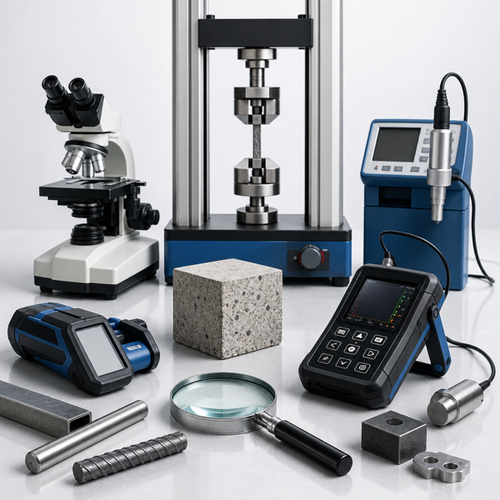
Staying ahead in quality assurance and safety compliance means keeping pace with evolving international testing standards. June 2026 marks the publication of three pivotal standards that impact the calibration of metallic material testing machines, high-current measurement techniques in electrical systems, and the harmonization of terminology in non-destructive testing (NDT). These updates underscore the critical need for precise measurement, process reliability, and common understanding in today’s industrial, research, and regulatory environments.
With these new or revised standards—FprEN ISO 14577-2, FprEN IEC 62475:2026, and ISO 18173:2026—manufacturers, testing laboratories, utility managers, and NDT professionals have clear guidelines to ensure robust compliance, equipment reliability, and efficient communication across global supply chains.
Overview
Testing plays a foundational role in almost every industry—from verifying metallic material properties in production lines to ensuring electrical system safety and decoding critical infrastructure with non-destructive techniques. Upholding internationally recognized standards means stakeholders can trust testing results, reduce measurement uncertainty, and demonstrate regulatory compliance.
This article unpacks:
- The scope and key requirements of the new standards
- Who must comply and why it matters
- Practical implications for laboratories and manufacturers
- Technical trends in calibration, measurement, and terminology for the testing sector
Detailed Standards Coverage
FprEN ISO 14577-2 - Instrumented Indentation Testing: Verification and Calibration
Metallic Materials — Instrumented Indentation Test for Hardness and Materials Parameters — Part 2: Verification and Calibration of Testing Machines (ISO/FDIS 14577-2:2026)
Part of a landmark series on the instrumented indentation test, this standard details methods for verifying and calibrating machines used to determine hardness and other properties of metallic materials using force and displacement data. It is critical for ensuring the accuracy of test results in both routine quality checks and advanced materials research.
Scope and Application
The standard covers:
- Direct verification: Checking the primary machine functions such as force calibration, displacement measurement, machine compliance, indenter geometry, and area function—using traceable and calibrated devices, generally in controlled environments (10°C–35°C).
- Indirect verification: Assessing the repeatability of the machine and its ability to deliver consistent results, used both as an addition to direct verification and for periodic checks.
- Requirements for calibration certificates and routine checks, even for transportable and specialized indentation machines (including nano- and micro-indentation equipment).
Key Requirements
- Force Calibration: Spans full operational range and uses a minimum of 16 calibration points per direction, repeated three times.
- Displacement Device Calibration: Focuses on high resolution (down to 1 nm for nano-range); calibration addresses drift, temperature effects, and positional accuracy.
- Indenter Verification: Calls for precise geometrical confirmation, surface quality, and periodic recalibration based on certified reference materials.
- Compliance Checks: Ensures machine elasticity does not bias results, especially for nano- or micro-scale tests.
Compliance and Users
- Target: Laboratories, quality control, calibration facilities, and manufacturers in metallurgy, automotive, aerospace, and material sciences.
- Implications: Clear procedures for routine validation and documentation (verification reports, calibration certificates).
- Notable Changes: Supersedes previous edition (ISO 14577-2:2015) with technically revised procedures, bringing tighter tolerances and improved uncertainty analysis.
Key highlights:
- Harmonizes procedures for direct and indirect machine verification
- New tolerances for nano- and micro-indentation machines
- Emphasizes traceability and regular calibration intervals
Access the full standard:View FprEN ISO 14577-2 on iTeh Standards
FprEN IEC 62475:2026 - High-Current Test Techniques: Definitions and Measurement
High-Current Test Techniques — Definitions and Requirements for Test Currents and Measuring Systems
Addressing a fundamental facet of electrical testing, FprEN IEC 62475:2026 provides a comprehensive taxonomy and specification set for high-current testing. Industries such as electrical utilities, circuit protection, and laboratory testing rely heavily on this standard to ensure that current measurements are accurate, reliable, and compatible with international best practices.
Scope and Application
- Defines technical terms and requirements for both test currents and the associated measuring systems—including steady-state DC, AC, short-time currents, and impulse currents.
- Governs the calibration, qualification, and regular performance verification of current measuring devices in high-voltage and high-current contexts.
- Applies to labs, manufacturers, utilities, testing houses, and regulatory assessors.
Key Requirements
- Measuring System Calibration: Outlines methods (comparison with references, scale factor determination, linearity, and dynamic response tests).
- Test Current Specifications: Detailed tolerances and requirements for steady-state and transient currents—across DC, AC, and impulse modalities.
- Uncertainty Management: Formal procedures for estimating measurement uncertainty, stability checks, thermal effects, and environmental influences.
- Software and Interference: Calls for qualification of software used in digital measuring systems, with robust tests for electrical interference.
- Routine Checks and Documentation: Mandates performance records, exception documentation, and intervals between subsequent calibrations, especially for reference systems.
Compliance and Practical Use
- Target: High-voltage test labs, electrical manufacturers, grid operators, equipment qualification facilities, and regulatory authorities.
- Implications: Ensures all current measurements and equipment validations meet strict international benchmarks—critical to safety, contract fulfillment, and regulatory approval.
- Notable Updates: This edition incorporates lessons learned from previous drafts, resolves technical issues, and updates terms/definitions to support advances in measurement technology.
Key highlights:
- Defines approved measuring systems for all relevant current types
- Clarifies uncertainty sources and calculation methods
- Addresses new challenges in dynamic performance and interference
Access the full standard:View FprEN IEC 62475:2026 on iTeh Standards
ISO 18173:2026 - Non-Destructive Testing: General Terms and Definitions
Non-Destructive Testing — General Terms and Definitions
Effective communication is the backbone of technical assurance, and ISO 18173:2026 addresses this by compiling all essential terminology used across non-destructive testing disciplines. The standard is a major referential resource for practitioners worldwide, aligning terminology across ISO, EN, and ASTM.
Scope and Application
- Establishes a unified set of general technical terms for use in reports, procedures, and contracts involving non-destructive testing (NDT).
- Designed to serve a variety of industries: aerospace, construction, power generation, oil & gas, manufacturing, and more.
- Harmonizes legacy sources, evolving to reflect changes in NDT methodology and international harmonization efforts.
Key Requirements
- Definitions Coverage: Draws from ISO/TS 18173:2005, EN 1330-2:1998, and ASTM E1316-13c—providing internationally harmonized terms.
- Standardized Terminology: Ensures consistent use of terms in certification, assessment, and training across countries and professional organizations.
- Revision Insights: This edition supersedes the technical specification, providing updated and unified terminology for the industry.
Compliance and Benefits
- Target: NDT practitioners, inspection agencies, trainers, manufacturers, procurement teams, and quality managers.
- Implications: Simplifies global communications, reduces misinterpretation risk, and streamlines compliance documentation.
- Notable Changes: Harmonization with major international standards and technical advances since the previous edition.
Key highlights:
- Comprehensive, updated NDT terminology resource
- Enables clear contracts and technical instructions
- Facilitates certification, training, and multi-national project work
Access the full standard:View ISO 18173:2026 on iTeh Standards
Industry Impact & Compliance
The introduction of these three standards elevates baseline expectations for accuracy, reliability, and communication in the testing sector. Organizations across metals manufacturing, electrical engineering, and NDT now have clearer guidance on:
- Establishing and documenting traceable verification/calibration regimens
- Applying validated methodologies and measurement systems
- Reducing liability and risk exposure from non-compliance
- Demonstrating due diligence and quality assurance to clients and regulators
Compliance timelines depend on regulatory adoption and sector-specific requirements. Early implementation by laboratories, manufacturers, and testing service providers can offer competitive and operational advantages, including:
- Fewer failed audits and product recalls
- Streamlined internal procedures
- Faster market access and smoother international transactions
- Easier cross-auditability due to widespread terminology and methodology harmonization
Non-compliance risks:
- Measurement inaccuracies leading to failed products or misinformed decisions
- Disputes or delays in contract enforcement
- Regulatory or customer non-acceptance
Technical Insights
Across all three standards, several recurring technical themes surface:
- Traceability: All calibrations and measurements must be traceable to national or international standards bodies (e.g., through certified reference materials or calibration laboratories).
- Uncertainty Quantification: Improved methodologies for evaluating and documenting measurement uncertainty—critical for audit, accreditation, and continuous improvement.
- Routine Verification: Mandate periodic and event-driven re-verification of equipment (especially after significant repairs, upgrades, or environmental changes).
- Documentation Rigor: Detailed reporting procedures, retention of calibration certificates, and inclusion of all relevant environmental and procedural factors.
- Data Integrity: Addressing software used in measurement systems (particularly in FprEN IEC 62475:2026), ensuring that data extraction, processing, and storage are robust and secure.
Best practices for implementation:
- Review calibration schedules and align them with new standards’ requirements.
- Update training materials and internal procedures, leveraging harmonized terminology from ISO 18173:2026.
- Engage with certified calibration providers where traceability is required.
- Invest in or update software and equipment to meet dynamic and uncertainty management prescriptions.
- Plan transition timelines to demonstrate compliance during audits or client evaluations.
Conclusion / Next Steps
The June 2026 updates to international testing standards equip professionals with the tools to enhance quality, safety, and communication across the material science, electrical engineering, and NDT fields. Regularly monitoring and implementing these changes ensures robust compliance and strengthens an organization’s reputation for accuracy and reliability.
Key takeaways:
- Adopt the revised FprEN ISO 14577-2 for precise hardness testing machine calibration in the metals sector.
- Use FprEN IEC 62475:2026 to secure the integrity of high-current electrical measurements.
- Reference ISO 18173:2026 for clear and harmonized NDT terminology across borders and disciplines.
Recommendation: Organizations should:
- Audit their current procedures against the new standards
- Update calibration and inspection routines
- Ensure all technical staff understand new requirements and definitions
- Leverage iTeh Standards to access authoritative, up-to-date documents
Stay ahead of the curve—explore each standard in detail and subscribe to future updates at iTeh Standards.
Categories
- Latest News
- New Arrivals
- Generalities
- Services and Management
- Natural Sciences
- Health Care
- Environment
- Metrology and Measurement
- Testing
- Mechanical Systems
- Fluid Systems
- Manufacturing
- Energy and Heat
- Electrical Engineering
- Electronics
- Telecommunications
- Information Technology
- Image Technology
- Precision Mechanics
- Road Vehicles
- Railway Engineering
- Shipbuilding
- Aircraft and Space
- Materials Handling
- Packaging
- Textile and Leather
- Clothing
- Agriculture
- Food technology
- Chemical Technology
- Mining and Minerals
- Petroleum
- Metallurgy
- Wood technology
- Glass and Ceramics
- Rubber and Plastics
- Paper Technology
- Paint Industries
- Construction
- Civil Engineering
- Military Engineering
- Entertainment