


August 2026: New ISO Standard Strengthens Heat-Resistant Conveyor Belt Quality
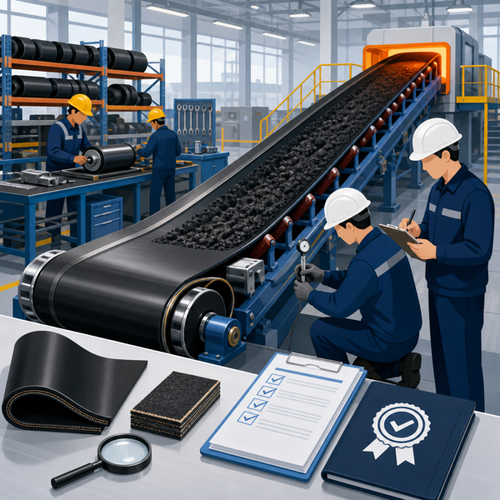
A significant new benchmark for the materials handling equipment industry arrived in August 2026. The International Organization for Standardization (ISO) released ISO 4195:2026: Conveyor Belts with Heat-Resistant Rubber Covers — Heat Resistance of Covers — Requirements and Test Methods. This authoritative standard specifies strict performance, durability, and testing protocols for heat-resistant conveyor belt covers—vital for high-temperature operations in manufacturing, mining, and logistics. For materials handling professionals, this update strengthens product consistency, supports safety, and facilitates global market access.
Overview / Introduction
Conveyor belts are pivotal in the efficient movement of materials across mining, industrial, and manufacturing operations. In these applications, heat-resistant covers are frequently required to withstand elevated temperatures without degrading—a demand seen in the cement, metallurgy, steel, and power industries, among others.
Having clear, reliable, and globally recognized standards ensures that conveyor belts perform safely and consistently, reducing downtime, lowering maintenance costs, and protecting personnel. The newly published ISO 4195:2026 updates these requirements and test methodologies, setting a transparent benchmark for both manufacturers and end-users. In this article, industry professionals will gain a deep understanding of what ISO 4195:2026 covers, how it impacts compliance, and what steps are needed for successful implementation.
Detailed Standards Coverage
ISO 4195:2026 – Conveyor Belts with Heat-Resistant Rubber Covers
Conveyor belts with heat-resistant rubber covers — Heat resistance of covers — Requirements and test methods
ISO 4195:2026 is a comprehensive international standard that outlines the performance requirements and testing protocols for conveyor belts with heat-resistant rubber covers. This third edition brings several technical advancements, offering greater clarity and alignment with evolving industry practices. The standard specifies:
- Requirements for heat resistance properties of rubber covers, including maximum permissible variations in hardness, elongation at break, and tensile strength after heat exposure.
- Test methods for assessing these properties, detailing procedures for sample preparation, heat exposure, evaluation, and result reporting.
- Applicability to conveyor belts with a carryside (top) cover thickness of 4 mm or more—excluding lighter belts covered by ISO 21183-1.
Scope and Application
This standard applies to all conveyor belts with carryside covers of at least 4 mm, typically used in high-temperature environments where conventional belts may fail. It is especially relevant for manufacturers, testing laboratories, procurement decision-makers, and quality assurance teams operating across industries such as:
- Bulk material transport (mining, quarrying, steelmaking)
- Manufacturing plants with oven or kiln conveyor systems
- Power plant material handling
- Recycling and waste management
Key Requirements and Specifications
ISO 4195:2026 identifies classes of heat resistance and spells out the following testing parameters:
- Hardness: Evaluates the ability of the rubber cover to retain its hardness after heat exposure.
- Elongation at Break: Measures the flexibility and strength retention post-heat exposure.
- Tensile Strength: Assesses resistance to breaking under tension after being subjected to high temperatures.
The standard details exposure conditions, classification types (including a new class 4 for enhanced resistance), and permissible property changes after thermal testing.
Major Changes from Previous Editions
Key revisions in the 2026 edition include:
- Introduction of class 4 for conveyor belt covers offering ultra-high heat resistance
- Addition of Test Method B to all four belt classes, enabling broader testing options
- Updated test environments to better simulate real-world operating conditions (aligning with ISO 18573)
- Inclusion of a tropical condition test scenario (Atmosphere E)
- Clarified default testing methods and eliminated outdated procedural language
Practical Implications
- Streamlines international trade by harmonizing testing and certification criteria
- Reduces risk of premature belt failure by ensuring consistent heat resistance
- Delivers a transparent reporting framework to aid procurement, installation, and regulatory compliance
- Supports quality managers and engineers in specifying, designing, and evaluating conveyor belt solutions
Key highlights:
- Enforces strict, unified property retention requirements post-heat exposure
- Adds new performance classes and testing regimes
- Clarifies test environments to match diverse global installations
Access the full standard:View ISO 4195:2026 on iTeh Standards
Industry Impact & Compliance
Adoption of ISO 4195:2026 has direct implications for businesses in the materials handling equipment sector. By following these requirements, organizations ensure that their conveyor belt products are:
- Accredited for use in international markets
- Proven to withstand defined thermal stresses, minimizing product recalls and warranty claims
- Clearly graded for procurement and risk management purposes
Compliance timelines will vary, but it is advised that manufacturers and users begin transitioning their test protocols and specification sheets immediately. Procurement and quality managers should check that all new contracts and requests for proposals reference ISO 4195:2026 where applicable.
Ignoring or delaying adoption can lead to:
- Increased safety incidents due to heat-related belt failures
- Lost opportunities in regulated procurement channels
- Difficulty demonstrating product quality during audits or certifications
Benefits of adopting ISO 4195:2026 include:
- Enhanced safety and operational reliability
- Reduced maintenance and downtime costs
- Streamlined supplier qualification processes and fewer disputes
Technical Insights
ISO 4195:2026 provides a robust technical framework to ensure heat-resistant conveyor belts meet or exceed user expectations under demanding conditions. Key technical requirements and best practices include:
- Standardized Testing: The standard mandates sample preparation, heat exposure durations, and temperature ranges. Adherence to these parameters during in-house or third-party testing is pivotal.
- Classification System: Belt covers are graded into heat resistance classes (now including class 4), enabling precise matching of product types to operating environments.
- Documentation: Comprehensive test reporting is required; all results must include tested properties, exposure conditions, and classification achieved.
- Certification: Organizations seeking product certifications should align their quality management systems and testing labs to ISO 4195:2026 protocols to maintain or achieve recognized marks.
Best Practices for Implementation:
- Audit current conveyor belt specifications for compliance gaps
- Update supplier requirements and quality documentation to reference the new standard
- Train technical and testing staff on new procedures and classification changes
- Engage certified labs or invest in compliant equipment for in-house testing
- Maintain detailed records to support audits, tenders, and customer queries
Conclusion / Next Steps
ISO 4195:2026 marks a critical step forward in the safety, performance, and global alignment of heat-resistant conveyor belt solutions. For organizations involved in materials handling, staying ahead in compliance not only limits risks but enhances client trust and operational excellence.
Key takeaways:
- The new edition brings expanded requirements, additional test methods, and refined reporting for heat-resistant conveyor belts
- Early adoption is essential for supply chain competitiveness and product reliability
- Ongoing training and quality system updates will be necessary for smooth transition
Explore the full details of ISO 4195:2026 and ensure your materials handling equipment remains at the forefront of industry best practices. For further guidance and the latest standards, visit iTeh Standards.
Categories
- Latest News
- New Arrivals
- Generalities
- Services and Management
- Natural Sciences
- Health Care
- Environment
- Metrology and Measurement
- Testing
- Mechanical Systems
- Fluid Systems
- Manufacturing
- Energy and Heat
- Electrical Engineering
- Electronics
- Telecommunications
- Information Technology
- Image Technology
- Precision Mechanics
- Road Vehicles
- Railway Engineering
- Shipbuilding
- Aircraft and Space
- Materials Handling
- Packaging
- Textile and Leather
- Clothing
- Agriculture
- Food technology
- Chemical Technology
- Mining and Minerals
- Petroleum
- Metallurgy
- Wood technology
- Glass and Ceramics
- Rubber and Plastics
- Paper Technology
- Paint Industries
- Construction
- Civil Engineering
- Military Engineering
- Entertainment