


Biotechnology Standards: Provenance, Biobanking, Cell Viability, and Predictive Computational Models Explained
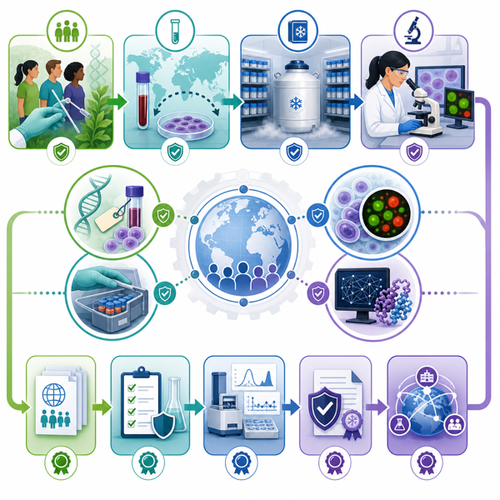
Biotechnology Standards: Provenance, Biobanking, Cell Viability, and Predictive Computational Models Explained
In today’s rapidly advancing biosciences landscape, the need for precise, reliable, and interoperable standards has never been greater. Biotechnology organizations deal constantly with sensitive biological materials, high-stakes research data, complex analytical methods, and increasingly, powerful computational models guiding research and development. This comprehensive guide covers four essential biotechnology standards, explaining their requirements, practical implications, and why adopting them is now crucial for businesses aiming to boost productivity, ensure data security, achieve scale, and maintain innovative momentum in a competitive market.
Overview
Biotechnology is at the forefront of scientific innovation, spanning disciplines from molecular biology and genomics to medicine and environment. Organizations in this sector manage volumes of biological materials, develop new therapies, engineer biological systems, and routinely handle complex data sets crucial for research and application. International standards ensure activities across the field—such as material collection, data handling, cell analysis, and computational modeling—are transparent, reproducible, and secure.
This article demystifies and contextualizes four pivotal biotechnology standards:
- ISO 23494-1:2026: Provenance information for biological material and data
- ISO 24651:2022: Biobanking requirements for human mesenchymal stromal cells (hBM-MSCs)
- ISO 8934-1:2026: General requirements for cell viability analytical methods
- ISO 9491-1:2026: Best practices in constructing predictive computational models in personalized medicine research
You will gain clarity on each standard’s purpose, primary requirements, and the strategic reasons for organizations to implement them—whether you run a laboratory, manage a biobank, lead biomedical research, or engineer bioinformatics pipelines.
Why Biotechnology Standards Are a Business Essential
Modern biotechnological operations face mounting challenges: regulatory complexity, data privacy, global collaboration, and rapid technology changes. Standards provide a robust foundation for:
- Traceability and Transparency: Ensuring the history and integrity of biological samples and data
- Quality Control: Establishing uniform procedures, quality checks, and reproducibility
- Security and Compliance: Enabling privacy, data protection, and accountability
- Scalability: Facilitating process automation, system integration, and global collaborations
- Productivity: Streamlining workflows, reducing errors, and eliminating redundancies
Adopting up-to-date biotechnology standards empowers your organization to meet regulatory expectations, satisfy business partners, and remain competitive as technologies evolve.
Detailed Standards Coverage
ISO 23494-1:2026 – Provenance Information Model for Biological Material and Data
Biotechnology — Provenance information model for biological material and data — Part 1: Design concepts and general requirements
What This Standard Covers:
ISO 23494-1:2026 addresses how organizations should model and document the provenance—essentially, the complete history—of biological materials and associated data. Provenance information is crucial for tracing sample origins, transformations, quality assessments, and who handled them, making it indispensable for research credibility and regulatory compliance.
Key Requirements and Specifications:
- Defines roles: Provenance Controller, Provider, and Processor
- Mandates digital, machine-actionable provenance models for interoperability
- Requires finalized provenance components to be archived and immutable
- Sets expectations for quality control, versioning, persistent identification, and access management
- Applies to any organization collecting, analyzing, processing, or distributing biological material/data in biotechnology and biomedicine
Who Must Comply:
- Laboratories, biobanks, research institutions, developers, manufacturers, and service providers managing biological material or data
Practical Implications:
- Workflow transparency: Ensures that every step—collection, processing, analysis, storage—is traceable
- Quality and validation: Stored provenance components serve as the authoritative record in disputes
- Automation potential: Supports integration into laboratory information management systems (LIMS) and AI systems
- Competency recognition: Adopted by accreditation bodies as evidence of robust quality practices
Key highlights:
- Enables interoperable data exchange and integration
- Assures quality and reliability of biotechnological data
- Addresses ethical and privacy aspects of human-derived materials
Access the full standard:View ISO 23494-1:2026 on iTeh Standards
ISO 24651:2022 – Biobanking Requirements for Human Mesenchymal Stromal Cells (hBM-MSCs)
Biotechnology — Biobanking — Requirements for human mesenchymal stromal cells derived from bone marrow
What This Standard Covers:
ISO 24651:2022 means standardized requirements for biobanking human mesenchymal stromal cells from bone marrow. These cells are crucial for research into immunomodulation, tissue regeneration, and developmental biology. Proper biobanking ensures research-grade material can be reliably collected, stored, and distributed.
Key Requirements and Specifications:
- Stipulates handling from bone marrow collection to storage, including transport, traceability, characterization, and quality control
- Focus on research use (not for clinical therapy or direct human application)
- Addresses sample isolation, expansion, unique ID assignment, contamination checks, and in vitro differentiation
- Requires documentation for each stage and robust information management
Who Must Comply:
- Biobanks, academic centers, research labs, and institutions managing hBM-MSCs for R&D
Practical Implications:
- Traceability: Ensures full traceability of sample origin, manipulation, and current status
- Uniformity: Reduces variability between biobanks, facilitating data sharing and collaboration
- Reproducibility: Sets a benchmark for quality and comparability in biological research
- Saves resources: Limits sample loss due to mishandling or inadequate storage
Key highlights:
- Structured quality control procedures (viability, morphology, proliferation, differentiation)
- Comprehensive documentation and sample tracking
- Standardizes transport, storage, and disposal procedures
Access the full standard:View ISO 24651:2022 on iTeh Standards
ISO 8934-1:2026 – Cell Viability Analytical Methods: General Requirements and Considerations
Biotechnology — Cell viability analytical methods — Part 1: General requirements and considerations
What This Standard Covers:
ISO 8934-1:2026 sets a general framework for evaluating cell viability—how many cells are alive and functioning in a given sample—in biotechnology and biomedicine. It harmonizes terminology and methodology across diverse analytical environments.
Key Requirements and Specifications:
- Guides the selection and establishment of fit-for-purpose viability analytical methods
- Emphasizes establishment of standard operating procedures (SOPs)
- Mandates control over sources of variability (pre-analytical, analytical, post-analytical phases)
- Applies to nucleated mammalian cells in suspension, adherent form, or complex matrices
Who Must Comply:
- Labs and companies conducting viability testing in R&D, manufacturing, or quality control for biological products
Practical Implications:
- Consistency: Supports method standardization, enabling comparable results across sites
- Validation: Covers method qualification, validation, and ongoing verification
- Reliability: Enhances trust in analyses used for research, bioproducts, toxicity screening, and more
- Documentation: Encourages full reporting, including metadata and measurement uncertainty
Key highlights:
- General framework adaptable to emerging technologies
- Supports reproducibility, accuracy, and transparency in viability reporting
- Addresses data interpretation and communication best practices
Access the full standard:View ISO 8934-1:2026 on iTeh Standards
ISO 9491-1:2026 – Predictive Computational Models in Personalized Medicine Research
Biotechnology — Predictive computational models in personalized medicine research — Part 1: Constructing, verifying and validating models
What This Standard Covers:
ISO 9491-1:2026 provides a foundational reference for building, verifying, and validating computational models used in personalized medicine research. These models can integrate patient data, omics, and clinical outcomes to predict risks, optimize treatments, or drive discovery.
Key Requirements and Specifications:
- Covers the lifecycle: setup, formatting, validation, simulation, storage, and sharing of computational models
- Specifies requirements for provenance, formatting, annotation, data interoperability, and ethical considerations
- Encourages the use of FAIR and ALCOA data management principles
- Addresses integration of AI and machine learning models, model validation, and in silico trial setup
Who Must Comply:
- Research teams, software developers, data managers, and health product developers using computational models in life sciences research
Practical Implications:
- Transparency: Clear documentation and validation improve model trustworthiness and regulatory acceptance
- Data integration: Facilitates the exchange and harmonization of data from heterogeneous sources
- Ethics and privacy: Provides guidance on incorporating legal and ethical frameworks
- Collaboration: Ensures reproducibility and understanding across research consortia
Key highlights:
- Ensures interoperability and reuse of computational models and data
- Promotes robust validation and verification processes
- Advances personalized, data-driven research and product development in biotechnology
Access the full standard:View ISO 9491-1:2026 on iTeh Standards
Industry Impact & Compliance
Implementing these four biotechnology standards has significant operational, reputational, and financial impacts for businesses and research organizations.
Key benefits of compliance:
- Risk reduction: Less chance of sample mix-ups, data losses, or compromised results
- Enhanced collaboration: Standardized formats ease data and sample exchange between global partners
- Regulatory readiness: Facilitates adherence to international, national, and regional bioregulatory frameworks
- Competitive differentiation: Demonstrates commitment to best practices and quality
- Increased productivity and scaling: Efficient workflows and system integration support organizational growth
Risks of non-compliance:
- Data and sample mismanagement can undermine research credibility
- Poor quality control may impact product development, leading to business losses
- Regulatory or ethical breaches can damage reputation or lead to sanctions
Compliance Considerations
- Integrate standards requirements into SOPs and staff training
- Regularly audit processes, documentation, and systems against the standards
- Ensure all relevant roles (controller, provider, processor) are clearly identified and supported
Implementation Guidance
Successfully adopting biotechnology standards requires planning, adaptation, and continual improvement. Here are proven strategies:
Training and Awareness:
- Train all staff on the key requirements of relevant standards
- Develop checklists and guidance material for everyday laboratory and data management operations
Process Integration:
- Embed standard requirements into all SOPs
- Choose laboratory information management systems (LIMS), electronic lab notebooks, or biobank management tools that support standards-based practices and digital provenance
Quality Management:
- Establish regular internal and external audits for compliance
- Continually monitor, review, and improve procedures in light of new requirements or emerging technologies
Documentation and Data Management:
- Maintain clear, accessible, and version-controlled records for all processes, analyses, and samples
- Support persistent identifiers, linked data principles, and proper metadata management
Collaboration and Feedback:
- Participate in industry forums and working groups to learn from peers and influence future standards
- Encourage a culture of continuous improvement and open communication
Resource Utilization:
- Use official guidance documents, webinars, and support from ISO or national bodies
- Leverage digital platforms like iTeh Standards to access authoritative documents and implementation resources
Conclusion / Next Steps
Biotechnology is entering a new era where the interplay of biological materials, advanced analytics, and computational models defines the future of research and innovation. The four international standards covered in this article are indispensable tools for organizations seeking to thrive in today’s dynamic, data-driven environment:
- Ensuring traceability and integrity through provenance information models (ISO 23494-1:2026)
- Achieving unmatched quality and reproducibility in biobanking (ISO 24651:2022)
- Standardizing approaches to cell viability analysis for consistent, high-quality data (ISO 8934-1:2026)
- Leading innovation in predictive computational modeling for personalized medicine (ISO 9491-1:2026)
Embracing these biotechnology standards isn’t just about compliance—it’s about unleashing your organization’s potential to scale, innovate, and collaborate at the highest levels.
Recommended next steps:
- Audit your current processes against these standards’ requirements
- Train staff and management on upcoming changes
- Incorporate standards-based best practices into IT and laboratory systems
- Regularly review new and updated standards on iTeh Standards
Stay ahead—make standards the foundation of your biotechnology operations.
Categories
- Latest News
- New Arrivals
- Generalities
- Services and Management
- Natural Sciences
- Health Care
- Environment
- Metrology and Measurement
- Testing
- Mechanical Systems
- Fluid Systems
- Manufacturing
- Energy and Heat
- Electrical Engineering
- Electronics
- Telecommunications
- Information Technology
- Image Technology
- Precision Mechanics
- Road Vehicles
- Railway Engineering
- Shipbuilding
- Aircraft and Space
- Materials Handling
- Packaging
- Textile and Leather
- Clothing
- Agriculture
- Food technology
- Chemical Technology
- Mining and Minerals
- Petroleum
- Metallurgy
- Wood technology
- Glass and Ceramics
- Rubber and Plastics
- Paper Technology
- Paint Industries
- Construction
- Civil Engineering
- Military Engineering
- Entertainment