


Electroacoustics Standards: Essential Guidelines for Modern Measurement and Metrology
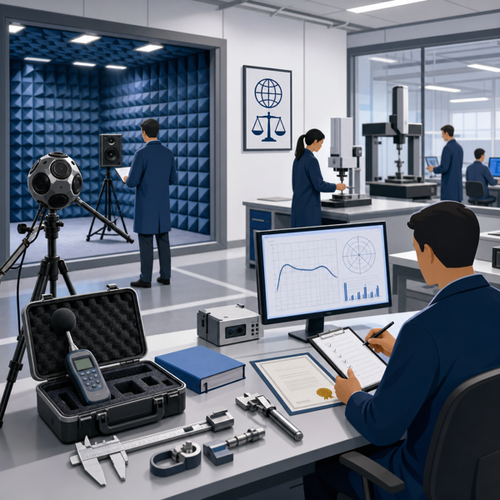
Implementing electroacoustics standards is now more crucial than ever as businesses pivot to technology-driven solutions across healthcare, industry, and research. These internationally recognized standards ensure that sound, hearing, and ultrasonic measurement tools operate with precision and consistency, regardless of the environment or technology platform. For companies harnessing new digital systems or scaling their operations, compliance with the latest metrology and measurement standards delivers productivity gains, robust data security, and streamlined processes. In this article, we will delve into four essential standards, offering insight into how they help future-proof your work and enhance scaling, safety, and accuracy in measurement.
Overview
Electroacoustics blends sound, technology, and measurement science to create tools and devices that inform diagnostics, protect workers, power research, and advance engineering. Within the context of metrology and measurement, standards play a foundational role: they outline requirements for instrument accuracy, calibrations, safety features, repeatability, and operational consistency. For businesses and public organizations facing tighter regulations and the integration of sophisticated new technologies, implementing these standards is key in:
- Reinforcing data quality and reproducibility
- Meeting international and national regulations
- Enhancing employee and patient safety
- Supporting productive scaling and seamless tech migration
- Ensuring compatibility across different devices and platforms
This comprehensive guide outlines four pivotal electroacoustics standards from the International Electrotechnical Commission (IEC), providing a user-friendly breakdown of each, along with practical implementation advice.
Detailed Standards Coverage
IEC 60645-7:2025 – Standards for Measuring Auditory Evoked Potentials
Electroacoustics - Audiometric Equipment - Part 7: Instruments for the Measurement of Auditory Evoked Potentials
IEC 60645-7:2025 sets the benchmark for instruments designed to measure auditory evoked potentials (AEPs)—vital electrical signals from the inner ear, auditory nerve, and brainstem, evoked by short-duration acoustic or vibratory stimuli. It defines the technical and performance characteristics required for both screening and diagnostic (clinical) equipment in audiometry.
The standard emphasizes consistency, ensuring that compliant instruments provide comparable results even across different brands and environments. It details the types of reference signals (such as clicks, tone-bursts, chirps), the measurement and calibration processes, and the necessary specifications manufacturers must declare. IEC 60645-7:2025 also includes safety, labeling, and environmental requirements, and underscores how uncertainty in measurement must stay within defined limits for compliance.
Industries and organizations delivering clinical diagnostics, occupational health screenings, research, and medical manufacturing benefit from aligning with this standard. Compliance empowers healthcare professionals to make reliable assessments and supports device development teams in ensuring product interoperability and regulatory acceptance.
Key highlights:
- Detailed requirements for both screening and clinical AEP instruments
- Clear performance and safety criteria, including signal-to-noise and measurement ranges
- Standardized processes for calibration, reference signals, and documentation
Access the full standard:View IEC 60645-7:2025 on iTeh Standards
IEC 61252:2025 – Standards for Personal Sound Exposure Meters
Electroacoustics - Personal Sound Exposure Meters
IEC 61252:2025 delivers up-to-date technical specifications for personal sound exposure meters (PSEMs)—devices used predominantly to monitor occupational noise exposure. The standard covers all aspects of performance, from the required range and accuracy of measurements, frequency weightings, directional response, and linearity, to the environmental endurance of meters.
This edition introduces substantial updates: PSEMs must indicate both time-averaged and peak sound levels, optional provision of sound exposure, enhanced criteria for directional and frequency responses, and tests to assess measurement uncertainties. It defines tests for pattern evaluation and periodic assessment, ensuring devices remain compliant over time. The specification promotes safety and protects hearing health by supporting employers and auditors in reliably measuring personal noise exposure.
IEC 61252:2025 applies anywhere occupational noise monitoring is needed—factories, construction sites, public venues, transportation hubs, and research labs. Aligning with this standard elevates workplace safety management systems, reduces risk of hearing loss claims, and helps organizations demonstrate regulatory compliance.
Key highlights:
- Specifies performance and test methods for PSEMs, including environmental resilience
- Mandates dual indication (time-averaged and peak exposure)
- Integrates uncertainty calculations into conformance criteria
Access the full standard:View IEC 61252:2025 on iTeh Standards
IEC 61669:2015 – Measuring Real-Ear Acoustical Performance of Hearing Aids
Electroacoustics – Measurement of Real-Ear Acoustical Performance Characteristics of Hearing Aids
IEC 61669:2015 provides comprehensive guidelines for measuring and estimating the acoustical performance of air-conduction hearing aids as applied to the user’s ear (real-ear measurement). The standard details the methods and requirements for different types of real-ear measurements, including unaided and occluded responses, insertion gains, and coupler differences.
By following this standard, clinicians and device manufacturers can ensure that hearing aid fittings reflect real-world performance in diverse users. The document also covers test equipment, environmental conditions, calibration routines, measurement uncertainty, and data reporting. Accurate real-ear measurement is essential for optimizing hearing aid effectiveness and user satisfaction; this standard thus forms a cornerstone of modern audiology.
Hospitals, clinics, audiology centers, hearing aid manufacturers, and research facilities all benefit from compliance, ensuring repeatable, accurate measurements that can be trusted across time and location. Moreover, adherence expedites regulatory approval and supports interoperability in global markets.
Key highlights:
- Defines standardized real-ear measurement procedures and test setups
- Details sources of measurement error and uncertainty management
- Covers new processing techniques, including speech test signals and coupler differences
Access the full standard:View IEC 61669:2015 on iTeh Standards
IEC 62127-3:2022 – Properties of Hydrophones for Ultrasonic Fields
Ultrasonics - Hydrophones - Part 3: Properties of Hydrophones for Ultrasonic Fields
IEC 62127-3:2022 defines the essential characteristics and technical requirements for miniature hydrophones used to measure ultrasonic fields in liquids, especially for medical, industrial, and research applications. The standard applies to hydrophones with piezoelectric sensor elements, with or without preamplifiers, and details parameters such as sensitivity (including complex-valued definitions), frequency response, directional sensitivity, effective size, electrical output, dynamic range, and environmental robustness.
This revised edition reflects advances in technology by removing the previous 40 MHz upper frequency limit, updating methods to characterize sensitivity and directional response, and adapting requirements for broad frequency bands. The standard is essential for manufacturers producing hydrophones for medical diagnostics (like ultrasound imaging), therapy, industrial process monitoring, and research laboratories. Accurate ultrasonic field measurements underpin device safety, regulatory compliance, and reliable performance.
Key highlights:
- Up-to-date requirements for frequency response and hydrophone sensitivity
- Refined procedures for assessing directional response and effective size
- Broader applicability for high-frequency and cutting-edge ultrasonic equipment
Access the full standard:View IEC 62127-3:2022 on iTeh Standards
Industry Impact & Compliance
Electroacoustic standards secure trust and performance across multiple industries, especially in healthcare, occupational safety, and advanced manufacturing. For medical device manufacturers, compliance safeguards patient outcomes, drives global market access, and streamlines approvals. In industrial settings, adherence to standards minimizes liability, ensures worker protection, and is often legally mandated.
Compliance with electroacoustic standards delivers:
- Consistent, reproducible results across instruments and locations
- Improved safety and operational confidence, supporting patient and employee wellbeing
- Regulatory alignment with national and international frameworks
- Productivity increases due to reliable, automated calibration and measurement procedures
- Enhanced data security, integrity, and traceability—crucial for scaling new technologies
Organizations failing to meet these requirements risk regulatory penalties, compromised quality, and heightened operational risk. Modern business scaling, particularly in healthtech and industrial acoustics, depends on the efficiency and trust that standards-based measurement delivers.
Implementation Guidance
Successfully integrating these standards into your operations means more than “checking a box.” Effective adoption rests on process, training, and continuous improvement. Below are key strategies:
Standardize Equipment Procurement: Source only instruments with current standards compatibility as a baseline requirement in RFPs.
Regular Calibration and Inspection: Institute periodic checks in line with each IEC standard’s requirements, using traceable reference equipment.
Training & Competency: Invest in regular training for operators and maintenance teams on the nuances of each standard and its application.
Documentation & Records Management: Maintain clear logs on device setup, test conditions, calibration, quality assurance, and compliance checks.
Continuous Monitoring: Use audit-ready procedures to ensure persistent adherence, documenting outcomes for internal and regulatory review.
Technology Integration: When upgrading systems, prioritize compatibility with new measurement and calibration protocols specified by these standards.
External Support: Leverage consultancy or expert services during initial rollouts or major tech migrations for a seamless transition.
Key resources for organizations:
- Internal policy manuals reflecting latest standards requirements
- Manufacturer-provided user and instruction guides
- National and international training courses/certifications
- Partner platforms such as iTeh Standards for access to up-to-date standard documents and implementation advice
Conclusion and Next Steps
Electroacoustic measurement is foundational to accurate, safe, and innovative operation across industries dealing with sound, hearing, and ultrasonic technology. The four IEC standards described here—covering auditory evoked potential equipment, personal sound exposure meters, real-ear hearing aid measurement, and ultrasonic hydrophones—equip organizations to operate efficiently in a rapidly changing, compliance-driven market.
Key takeaways:
- Adopting these standards increases data reliability, organizational reputation, and scaling potential
- Compliance is not just regulatory, but mission critical for safety, productivity, and customer trust
- Best practices should be embedded at every stage of technology adoption or process redesign
Want to future-proof your metrology and measurement operations? Explore the latest standards on iTeh Standards, access full documents for your key equipment, and make standards-based compliance a cornerstone of your growth and innovation strategy.
Categories
- Latest News
- New Arrivals
- Generalities
- Services and Management
- Natural Sciences
- Health Care
- Environment
- Metrology and Measurement
- Testing
- Mechanical Systems
- Fluid Systems
- Manufacturing
- Energy and Heat
- Electrical Engineering
- Electronics
- Telecommunications
- Information Technology
- Image Technology
- Precision Mechanics
- Road Vehicles
- Railway Engineering
- Shipbuilding
- Aircraft and Space
- Materials Handling
- Packaging
- Textile and Leather
- Clothing
- Agriculture
- Food technology
- Chemical Technology
- Mining and Minerals
- Petroleum
- Metallurgy
- Wood technology
- Glass and Ceramics
- Rubber and Plastics
- Paper Technology
- Paint Industries
- Construction
- Civil Engineering
- Military Engineering
- Entertainment