


August 2026 Standards Update: Key Changes in Metrology and Measurement
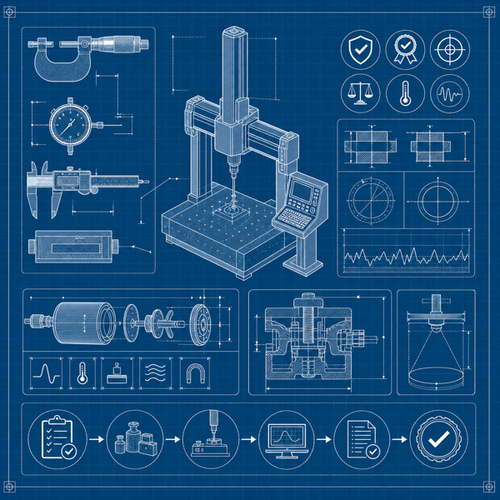
Updates in Metrology and Measurement are always pivotal for industries that depend on precision, reliability, and compliance. The August 2026 publication period delivers a significant set of five international standards, each touching crucial aspects—from vacuum cleaner acoustics and foundry surface assessment to advanced file formats for surface data, state-of-the-art machine diagnostics, and essential updates for audiometric instrumentation. These new guidelines strengthen the framework for measuring and interpreting physical phenomena, helping organizations ensure quality, manage risk, and maintain market access.
Overview
Metrology and measurement underpin nearly every modern industry—from manufacturing and electronics to healthcare and energy. Consistent, standardized approaches to measuring physical phenomena are critical for safety, interoperability, and competitiveness. With the advent of new technologies and shifting regulatory expectations, staying updated on the evolving standards landscape is a necessity for engineers, researchers, quality managers, and procurement specialists.
This article unpacks the five new or revised standards published in August 2026, highlighting their scope, notable changes, and direct impact on stakeholders.
Detailed Standards Coverage
EN IEC 60704-2-1:2026 - Noise Testing for Dry Vacuum Cleaners
Household and similar electrical appliances - Test code for the determination of airborne acoustical noise - Part 2-1: Particular requirements for dry vacuum cleaners
This standard provides a dedicated test code for measuring airborne acoustical noise emitted by dry vacuum cleaners—both mains-operated and cordless variants—under realistic household use. It aligns with the broader IEC 60704-1:2021 requirements while introducing vacuum cleaner-specific protocols for noise evaluation under typical operating conditions on both carpets and hard floors.
Detailed requirements specify:
- Direct and comparative acoustical measurement methods
- Robust criteria for test environments and instrumentation
- Pre-conditioning, loading, and appliance configuration for reproducible results
- Precise guidance on reporting and documentation of results
- Harmonization with EU and global testing procedures
Who needs to comply:
- Household appliance manufacturers
- Testing laboratories
- Compliance, safety, and product certification bodies
Practical implications:
- Supports fair product comparisons and claims
- Provides objective data for consumer information
- Enhances regulatory and voluntary noise labeling programs
Notable changes:
- Alignment with IEC 60704-1:2021 updates
- Greater robustness and consumer-centric testing
- Addressing potential loopholes in previous editions
Key highlights:
- New procedures for consumer-relevant testing
- Updated statistical requirements for noise verification
- Expanded guidance on measurement uncertainty
Access the full standard:View EN IEC 60704-2-1:2026 on iTeh Standards
EN 1370:2026 - Evaluation of Casting Surface Condition
Founding - Examination of surface condition
EN 1370:2026 delivers comprehensive methods for assessing the surface quality—specifically roughness and discontinuities—of castings that remain as-cast. This standard is relevant to all cast metals and casting methods (with the exception of die casting), focusing exclusively on non-machined surfaces.
It prescribes:
- Use of visual-tactile comparators, including well-known BNIF and SCRATA sets
- Procedures for contact and non-contact roughness measurement
- Framework for classifying and documenting surface discontinuities (by type and size)
- Clear requirements for marking, drawing specifications, and severity levels
Who needs to comply:
- Foundries producing steel, iron, and non-ferrous castings
- Quality inspectors and end users requiring surface integrity assurance
- Procurement and engineering teams specifying casting requirements
Practical implications:
- Facilitates consistent, objective surface assessment
- Supports supplier-buyer agreements on quality acceptance
- Provides the foundation for process improvement and defect analysis
Notable changes:
- New clauses for comparators and definitions
- Modified requirements for certain discontinuities
- Editorial improvements for clarity and usability
Key highlights:
- Enhanced surface comparator guidance
- 8-level classification system for discontinuities
- Greater clarity for multi-surface specification
Access the full standard:View EN 1370:2026 on iTeh Standards
ISO 25178-71:2026 - Areal Surface Texture Data (SDF File Format)
Geometrical product specifications (GPS) — Surface texture: Areal — Part 71: SDF file format
This key standard specifies the Surface Data File (SDF) format, which underpins the exchange and calibration of 3D areal surface texture data for industrial metrology. It defines reference data (“softgauges”) and software verification procedures crucial for verifying the digital processing chains in surface measurement instruments.
Core requirements include:
- Structure and detailed elements of the SDF file format (header, data area, trailer)
- Types of software measurement standards (Type S1: reference data; Type S2: reference software)
- Use of orthogonal grid sampling and support for different data types (binary, ASCII, float, integer)
- Certificate requirements for software measurement standards
Who needs to comply:
- Instrument manufacturers (surface profilers, optical scanners, etc.)
- Software developers and calibration laboratories
- Quality engineers and digital manufacturing specialists
Practical implications:
- Enables reproducibility and traceability of digital measurements
- Supports software validation and instrument calibration
- Facilitates international compatibility for surface data exchange
Notable changes from previous edition:
- Increased data type support and larger grid capacity
- Enhanced SDF specification for future-proofing digital metrology
Key highlights:
- Expanded binary and ASCII data representations
- Improved guidance for softgauge applications
- Strengthened interoperability in surface metrology
Access the full standard:View ISO 25178-71:2026 on iTeh Standards
ISO 13373-9:2026 - Vibration Diagnostics for Electric Motors
Condition monitoring and diagnostics of machines — Vibration condition monitoring — Part 9: Diagnostic techniques for electric motors
ISO 13373-9:2026 provides a structured approach to the vibration-based diagnosis of electric motor health, covering the most common types: squirrel-cage induction, wound-rotor induction, salient-pole, and DC motors (typically above 15 kW). This edition serves as an advanced resource for practitioners, incorporating diagnostic flowcharts, process tables, and detailed fault-symptom relationships.
Key content includes:
- Prescribed test procedures for different motor types
- Detailed measurement techniques (transducers, settings, spectrum analysis)
- Step-by-step diagnostic methodologies from initial fault detection to root cause analysis
- Coverage of operational, installation, and component-specific issues
- Guidance on documentation, reporting, and case studies for practical implementation
Who needs to comply:
- Condition monitoring professionals
- Maintenance teams (industrial, process plants, OEMs)
- Reliability and asset managers
Practical implications:
- Improves early fault detection and prevention
- Reduces downtime and enhances machine health
- Lays the foundation for predictive maintenance programs
Notable changes:
- Updated terms, new tables, and improved editorial clarity
- Enhanced vibration diagnostic tools for today’s machinery
Key highlights:
- Expanded fault and symptom tables
- Integration of diagnostic flowcharts for field use
- Focus on real-world electric motor case studies
Access the full standard:View ISO 13373-9:2026 on iTeh Standards
IEC 60645-6:2022 - Instruments for Otoacoustic Emissions
Electroacoustics - Audiometric equipment - Part 6: Instruments for the measurement of otoacoustic emissions
This edition of IEC 60645-6 establishes unified criteria and test methods for audiometric equipment designed to measure otoacoustic emissions (OAE) in the human ear. OAE testing is crucial in audiology for assessing cochlear health and early detection of hearing impairments.
Key aspects include:
- Performance specification for two types of OAE instruments (TEOAE and DPOAE)
- Definition of mandatory measurement functions, calibration methods, and test protocols
- Precision, accuracy, frequency range, and stimulus type requirements
- Guidance on marking, safety, documentation, and periodic calibration
Who needs to comply:
- Medical device manufacturers (audiometry and hearing diagnostics)
- Clinical audiologists and service providers
- Calibration and test laboratories
Practical implications:
- Ensures consistency and comparability of OAE measurements across equipment
- Supports compliance with regulatory medical device requirements
- Aids in development of next-generation diagnostic hearing tools
Notable changes from previous edition:
- Redefined frequency and stimulus level requirements
- Updated requirements for distortion and measurement range
- Editorial clarifications and alignment with new related standards
Key highlights:
- More robust measurement criteria for DPOAE and TEOAE
- Broader range of permitted instrument capabilities
- Enhanced calibration and uncertainty requirements
Access the full standard:View IEC 60645-6:2022 on iTeh Standards
Industry Impact & Compliance
The August 2026 publication suite brings new rigor to physical measurement, with direct implications for manufacturers, testing labs, and end-users. Adopting these standards:
- Reinforces global market access by demonstrating conformity
- Reduces testing ambiguities and subjectivity
- Mitigates risk by elevating measurement reliability and traceability
- Supports continual improvement through more actionable, comparable data
Compliance considerations:
- Aligning new product development and procurement specifications
- Updating quality manuals and training for laboratory and technical staff
- Planning transition periods and third-party certification where mandated
Non-compliance, on the other hand, exposes organizations to increased regulatory and reputational risks, and can result in product recalls, disqualification from key markets, and compromised product or patient safety.
Technical Insights
Across the five standards, several technical themes emerge:
- Emphasis on digital data and traceability: Enhanced data formats and reference standards (e.g., SDF) streamline calibration and validation in an increasingly software-driven landscape.
- Advanced measurement targets: From intricate surface roughness in castings to nuanced vibrational signatures in electric motors, measurement science is evolving to address complexity and subtlety in industrial practice.
- Improved comparability and reproducibility: Harmonized procedures and uncertainty requirements ensure that results are reliable regardless of location or equipment.
- Best practices for adoption:
- Integrate new requirements into internal QA and laboratory practice.
- Invest in staff training on updated protocols and technologies.
- Schedule regular calibration and periodic review of instruments/software per the latest standard guidance.
- Participate in inter-laboratory comparisons and proficiency testing.
- Maintain detailed compliance documentation to support audits and certifications.
Conclusion & Next Steps
The August 2026 updates confirm the dynamic, foundational role of metrology and measurement standards in today’s industries. From consumer appliances and metal casting to digital manufacturing and medical diagnostics, these standards set both the minimum benchmark and the aspirational roadmap for physical measurement.
Key takeaways:
- The new standards sharpen measurement resolution, comparability, and reliability across various domains.
- Early adoption drives competitive advantage and quality assurance.
Recommendations:
- Review full texts of the relevant standards for detailed guidance and compliance checklists
- Map current practices against new requirements and plan necessary updates
- Engage with professional communities and ongoing standardization activities to stay at the forefront of best practice
For complete documentation and access to all new and legacy standards, visit iTeh Standards.
Stay informed. Stay compliant. Elevate your organization’s measurement excellence with these essential standards.
Categories
- Latest News
- New Arrivals
- Generalities
- Services and Management
- Natural Sciences
- Health Care
- Environment
- Metrology and Measurement
- Testing
- Mechanical Systems
- Fluid Systems
- Manufacturing
- Energy and Heat
- Electrical Engineering
- Electronics
- Telecommunications
- Information Technology
- Image Technology
- Precision Mechanics
- Road Vehicles
- Railway Engineering
- Shipbuilding
- Aircraft and Space
- Materials Handling
- Packaging
- Textile and Leather
- Clothing
- Agriculture
- Food technology
- Chemical Technology
- Mining and Minerals
- Petroleum
- Metallurgy
- Wood technology
- Glass and Ceramics
- Rubber and Plastics
- Paper Technology
- Paint Industries
- Construction
- Civil Engineering
- Military Engineering
- Entertainment