


Liquid Fuels Standards: Ensuring Quality, Safety, and Innovation in the Petroleum Sector
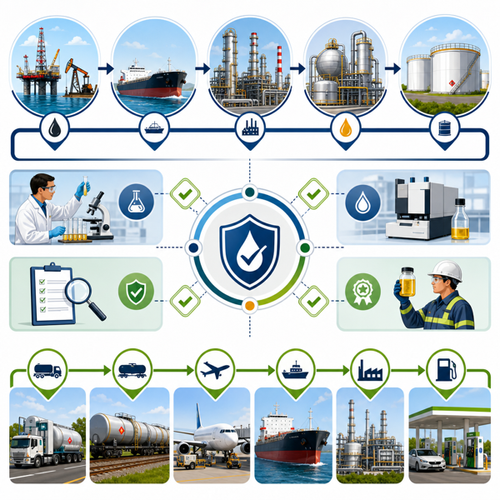
Liquid fuels are the lifeblood of the modern petroleum industry, powering everything from personal vehicles to logistics and industrial production. As technology advances and sustainability targets tighten, robust international standards for liquid fuels have never been more crucial. This guide examines three foundational standards—SIST EN 15751:2014, SIST EN 17124:2026, and SIST EN 228:2012—explaining their content, practical value, and why adherence to these standards is a must for organizations embracing new fuel technologies and scaling their operations. By understanding and implementing these standards, businesses can ensure fuel quality, optimize engine performance, enhance security and safety, and position themselves for sustainable growth.
Overview / Introduction
Petroleum-derived liquid fuels—such as unleaded petrol, biodiesel blends, and hydrogen—are central players in the global energy and transportation systems. The industry faces evolving challenges: climate targets, the introduction of renewable fuels, vehicle technology innovation (e.g., hydrogen fuel cell vehicles), and stricter consumer and regulatory expectations for safety, quality, and environmental performance.
In this changing landscape, adopting relevant international standards for liquid fuels is crucial. Standards provide a shared framework for:
- Ensuring fuel compatibility and safety in advanced engines and clean technologies
- Managing risks around fuel stability, storage, and distribution
- Harmonizing quality benchmarks across borders
- Supporting innovation and scalability of new fuel types
- Boosting operational efficiency for producers, distributors, and end users
In this article, you'll discover:
- The purpose, scope, and requirements of three critical standards for liquid fuels
- How these standards underpin technological innovation and operational quality
- Practical guidance for compliance and best practices
- The far-reaching benefits of robust standardization in petroleum products
Detailed Standards Coverage
SIST EN 15751:2014 - Oxidation Stability of FAME Fuels
Automotive fuels – Fatty acid methyl ester (FAME) fuel and blends with diesel fuel – Determination of oxidation stability by accelerated oxidation method
This European standard lays out a precise test method to measure the oxidation stability of fuels for diesel engines, specifically blends containing fatty acid methyl esters (FAME), a key biofuel component. Oxidation stability directly impacts fuel shelf life, storage, and engine performance.
Scope and Application
EN 15751:2014 applies to:
- Pure FAME (biodiesel)
- Blends of FAME with diesel fuel (with at least 2% v/v FAME)
- Automotive and heating fuels containing FAME
It measures the induction period—the time before rapid oxidation occurs—up to a maximum of 48 hours, ensuring fuels meet minimum stability benchmarks required in the market.
Key Requirements and Specifications
- Test principle: Fuel is heated and exposed to a stream of purified air. The formation of oxidation products is monitored via conductivity changes, indicating the end of the induction period.
- Precision range: Accurate for induction periods up to 48 hours; longer periods aren't within the method's repeatability precision.
- Special notes: Cetane improvers (like EHN) can slightly reduce measured stability, but this effect falls within method reproducibility.
- Compatible samples: Designed for FAME and FAME-diesel blends; not suitable for pure fossil diesel.
Who Needs to Comply
- Fuel producers and refiners manufacturing or blending biodiesel (FAME)
- Fuel distributors handling biodiesel blends
- Automotive and commercial vehicle operators using diesel with FAME content
- Normative users ensuring fuel quality specification compliance
Practical Implications
Implementing this standard:
- Safeguards against storage and engine issues due to fuel degradation
- Enables accurate shelf-life prediction for FAME-blend fuels
- Helps businesses meet biofuel quality specifications for emissions control and warranty compliance
- Boosts confidence for fleets transitioning to biodiesel or higher FAME blends
Key highlights:
- Accurate oxidation stability testing for biodiesel and FAME blends
- Supports regulatory and quality requirements for low-emission fuels
- Reduces risk of operational issues related to fuel degradation
Access the full standard:View SIST EN 15751:2014 on iTeh Standards
SIST EN 17124:2026 - Hydrogen Fuel Quality for PEM Fuel Cell Vehicles
Hydrogen fuel – Product specification and quality assurance for hydrogen refuelling points dispensing liquid or gaseous hydrogen – Proton exchange membrane (PEM) fuel cell applications for vehicles
Hydrogen, as a next-generation transport fuel, brings unique challenges to refuelling infrastructure and vehicle systems. This standard provides the framework for quality assurance and safety at hydrogen refuelling stations dispensing both liquid and gaseous hydrogen for PEM fuel cell vehicles.
Scope and Application
EN 17124:2026 focuses on:
- Fuel quality at dispenser nozzle for both liquid and gaseous hydrogen
- Hydrogen used in PEM fuel cell powered vehicles (passenger cars, buses, commercial vehicles)
- Assurance measures across the entire hydrogen supply chain (production, logistics, refuelling)
Key Requirements and Specifications
- Hydrogen purity: Minimum hydrogen content of 99.97% (mole fraction)
- Contaminants limits: Strict caps on water, hydrocarbons, methane, oxygen, helium, nitrogen, argon, carbon parts per million, sulfur compounds, ammonia, formaldehyde, particulates, and halogenated compounds (see specification Table 1)
- Quality assurance plans: Operators must develop risk-based or prescriptive quality control plans, identifying impurities at every supply chain stage
- Routine and non-routine quality control: Sampling, analysis, real-time and spot monitoring tactics clearly defined
- Risk assessment methodology: Guidance on occurrence, severity, and acceptability of risks associated with contamination
Who Needs to Comply
- Hydrogen refuelling station operators (HRS)
- Hydrogen fuel producers and suppliers
- Automotive OEMs providing PEM fuel cell vehicles
- Fleet and transport operators adopting hydrogen vehicles
Practical Implications
Implementing EN 17124:2026:
- Guarantees uniform, high-quality hydrogen at every fill, extending fuel cell system life and ensuring vehicle safety
- Minimizes warranty issues and catastrophic failures caused by contaminated hydrogen
- Enables scale-up of new hydrogen refuelling networks across borders with harmonized specs
- Supports transition to zero-emission mobility with robust traceability and quality management
Key highlights:
- Comprehensive list of contaminant limits for PEM vehicle hydrogen
- Mandatory quality assurance/risk management methodology
- Vital for safe, reliable hydrogen refuelling infrastructure development
Access the full standard:View SIST EN 17124:2026 on iTeh Standards
SIST EN 228:2012 - Requirements and Test Methods for Unleaded Petrol
Automotive fuels – Unleaded petrol – Requirements and test methods
Unleaded petrol (gasoline) remains a mainstay of consumer and commercial transport. SIST EN 228:2012 standardizes requirements for the composition, properties, and testing of unleaded petrol, ensuring engine compatibility, emissions compliance, and market consistency across Europe and beyond.
Scope and Application
EN 228:2012 applies to:
- All unleaded petrol (gasoline) fuels sold for petrol engine vehicles
- Two types: standard (with up to 10% ethanol/3.7% oxygen) and a type for older vehicles (max 5% ethanol/2.7% oxygen)
- Both modern and legacy vehicle fleets
Key Requirements and Specifications
- Ethanol content: Up to 10% (v/v) for modern engines, 5% for older vehicles
- Oxygen content: 3.7% (m/m) and 2.7% (m/m) limits respectively
- Comprehensive test protocols: Octane number, volatility, density, sulfur, benzene, aromatics, and more
- Additive and contaminant limitations: Control of metallic additives, sulfur, and oxygenates to minimize side effects and emissions
- Labelling and pump marking: Clear consumer communication regarding petrol type (e.g., E10, E5) and compliance
Who Needs to Comply
- Fuel refiners and wholesalers delivering petrol to market
- Retail fuel stations and their supply chain partners
- Vehicle OEMs and aftersales service providers
- Regulatory and compliance authorities
Practical Implications
Adhering to EN 228:2012 ensures:
- Compatibility with both new and older vehicle engine technologies
- Reduced risk of misfuelling and associated engine damage
- Consistent performance and emissions control, meeting Euro emissions legislation
- Smoother market operations and cross-border fuel harmonization
Key highlights:
- Twin-type specification for both modern and older vehicle fleets
- Extensive test methods assure fuel quality at every stage
- Direct alignment with EU directives on fuel properties and biofuel blending
Access the full standard:View SIST EN 228:2012 on iTeh Standards
Industry Impact & Compliance
The Role of Liquid Fuels Standards in Modern Business
Staying competitive in the petroleum industry today means more than just producing and selling fuels: it requires an unwavering commitment to product quality, regulatory alignment, operational safety, and readiness to scale new technologies such as biofuels and hydrogen-based systems.
Benefits of Compliance
- Quality assurance: Reduces variability, builds customer trust, and meets warranty obligations
- Workplace and public safety: Minimizes risks associated with contamination, misfuelling, and degradation
- Regulatory compliance: Protects against legal penalties, market restrictions, and costly recalls
- Efficiency and productivity gains: Standardized procedures and test methods improve operational consistency
- Market access and scalability: Harmonized standards enable easier expansion, cross-border trade, and adoption of next-gen fuels
Risks of Non-Compliance
- Increased risk of engine failures, warranty issues, and customer dissatisfaction
- Exclusion from markets with strict fuel quality or emission requirements
- Possible legal sanctions and reputational damage
- Technological obsolescence in a sector rapidly moving to renewable and hydrogen fuels
In a world shifting toward sustainable mobility and sectoral digitalization, fuel standards are the backbone of transformation.
Implementation Guidance
Adopting Liquid Fuels Standards: Best Practices
Assessment and Gap Analysis
- Review your current fuel quality management systems and compare them to the requirements in EN 15751, EN 17124, and EN 228.
- Identify areas of non-conformity or outdated procedures.
Training and Skills Development
- Train technical, laboratory, and operation staff on the latest test protocols, documentation requirements, and quality assurance plans.
Quality Control Procedures
- Establish or upgrade laboratory and field test facilities using reference methods described in the standards.
- Implement robust sampling, monitoring, and data management (especially for hydrogen as per EN 17124).
Supplier and Partner Management
- Communicate relevant standard requirements to all supply chain partners.
- Demand traceable documentation and certificates of conformity for fuels supplied.
Documentation and Traceability
- Maintain detailed records for samples, tests, risk assessments, and corrective actions.
- Adopt digital solutions for compliance tracking (e.g., lab results integration, supply chain traceability).
Continuous Improvement
- Regularly review updates to fuel standards and emerging industry best practices.
- Engage with standardization bodies and industry forums to stay informed and influence future standards.
Resources for Organizations
- Access full standards documentation and updates at iTeh Standards
- Consult national or regional industry associations for training, accreditation, and peer best practices
- Consider third-party audits/certification for high-assurance operations
Conclusion / Next Steps
Liquid fuels standards—covering biodiesel blends, hydrogen fuels for emerging fuel cell vehicles, and traditional unleaded petrol—form the foundation of trust, sustainability, and operational excellence across the petroleum sector. Embracing SIST EN 15751:2014, SIST EN 17124:2026, and SIST EN 228:2012 gives organizations the tools to win in a market driven by quality, safety, and rapid technical innovation.
Key takeaways:
- Relying on recognized standards ensures consistent fuel quality, regulatory compliance, and reduced operational risks
- Staying current with new standards is essential for organizations implementing new technologies (hydrogen, biofuels)
- Proper implementation supports business scaling, efficient logistics, and market access
Next steps:
- Conduct a compliance review against these standards
- Invest in training and quality infrastructure
- Explore and procure full standard texts and implementation resources via iTeh Standards
- Stay actively engaged with regulatory and industry developments
A standards-driven approach doesn't just safeguard your operations—it creates a platform for growth, innovation, and leadership in the fast-evolving global fuels market.
Categories
- Latest News
- New Arrivals
- Generalities
- Services and Management
- Natural Sciences
- Health Care
- Environment
- Metrology and Measurement
- Testing
- Mechanical Systems
- Fluid Systems
- Manufacturing
- Energy and Heat
- Electrical Engineering
- Electronics
- Telecommunications
- Information Technology
- Image Technology
- Precision Mechanics
- Road Vehicles
- Railway Engineering
- Shipbuilding
- Aircraft and Space
- Materials Handling
- Packaging
- Textile and Leather
- Clothing
- Agriculture
- Food technology
- Chemical Technology
- Mining and Minerals
- Petroleum
- Metallurgy
- Wood technology
- Glass and Ceramics
- Rubber and Plastics
- Paper Technology
- Paint Industries
- Construction
- Civil Engineering
- Military Engineering
- Entertainment