


Unlocking Railway Reliability: Standards for Rolling Stock Headstock Layout and Wheel/Rail Adhesion Materials
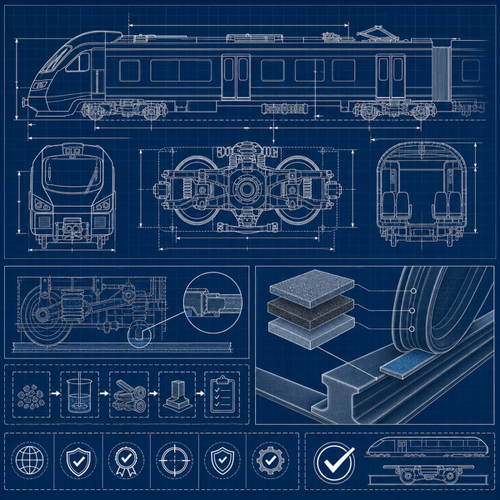
In today's evolving transport landscape, the demand for efficient, safe, and scalable railway systems has never been higher. At the heart of this progress lies strict adherence to international standards, which underpin reliability and interoperability for rolling stock and track infrastructure. Among the most impactful are standards governing materials and components crucial for railway engineering. This article explores two key standards: SIST EN 16839:2022/kFprA1:2025 on rolling stock headstock layouts and SIST-TS CEN/TS 15427-1-3:2021 on wheel/rail adhesion materials. Together, these documents shape not only compliance requirements but also operational excellence, business scalability, and system security.
Overview / Introduction
Railway engineering is a pillar of modern transport, vital to both passenger mobility and efficient freight logistics. The safe operation of trains relies on the precise design and interaction of complex components—including rolling stock elements, headstocks, couplers, braking systems, and wheel-rail interfaces. To maintain quality, optimize productivity, and meet regulatory demands, industry leaders turn to internationally recognized standards. These standards address material performance, equipment compatibility, and maintenance guidelines, providing a universal language for safety and dependability.
This article highlights:
- The core requirements of two essential railway engineering standards
- How adherence to these standards ensures business productivity and operational security
- Implementation strategies and the added value for industry stakeholders
Detailed Standards Coverage
SIST EN 16839:2022/kFprA1:2025 – Optimizing Rolling Stock Headstock Layout
Railway applications – Rolling stock – Head stock layout
This standard delivers comprehensive specifications for the layout and installation of critical components on the headstock of railway vehicles equipped with buffers and screw coupling systems. Its chief objective is to standardize the physical arrangement so that rolling stock vehicles can couple easily and safely, facilitate shunter access (including the prescribed "Berne rectangle"), and position rescue couplers and essential connections without obstruction.
The document addresses:
- Location, fixing method, and required free space for buffers
- Proper placement of screw coupling systems
- Installation of end cocks, pneumatic half couplings, and electrical connections
- Calculation and definition of buffer head width
- Ensuring defined nominal dimensions for all relevant equipment
This enables interoperability between different rolling stock and trainsets, crucial for multi-operator and cross-border rail networks. All entities that design, manufacture, or operate railway vehicles must comply to avoid incompatibility, safety risks, or delays during coupling and rescue operations.
Key highlights:
- Prescribes a universal set of dimensions for buffer heads, couplers, and auxiliary installations
- Ensures adequate workspace for shunters (the Berne rectangle), improving worker safety
- Reduces risk of operational blockages by standardizing electrical and pneumatic interface placements
Access the full standard:View SIST EN 16839:2022/kFprA1:2025 on iTeh Standards
SIST-TS CEN/TS 15427-1-3:2021 – Smart Wheel/Rail Friction Management with Adhesion Materials
Railway applications – Wheel/Rail friction management – Part 1-3: Equipment and Application – Adhesion materials
Railway safety and efficiency critically depend on the adhesion between wheels and rails. This technical specification defines the requirements for equipment and processes applying adhesion materials at the wheel tread/rail crown interface, covering both trainborne systems and trackside solutions for mainline (and optionally, urban) railways.
It establishes:
- Characteristics and performance benchmarks for adhesion application systems
- Definitions and terminology specific to wheel/rail adhesion management
- Inspection, testing, and maintenance protocols to verify ongoing system effectiveness
The standard ensures that application equipment:
- Applies materials solely to the "active interface," preventing contamination elsewhere
- Delivers reliable, consistent friction enhancement to minimize risk during low-adhesion events
- Is fully compatible with other rolling stock and infrastructure systems (e.g., brake systems, detection circuits)
Manufacturers and operators are key actors affected by this standard. Implementing its guidelines supports safe, consistent braking and acceleration, reducing asset wear and extension of maintenance intervals while also minimizing noise and potential disruptions.
Key highlights:
- Specifies application types (reactive and preventative), material approval processes, and refilling requirements
- Addresses both permanent (trainborne) and fixed (trackside) deployment methods
- Outlines inspection measures to confirm equipment performance and adherence
Access the full standard:View SIST-TS CEN/TS 15427-1-3:2021 on iTeh Standards
Industry Impact & Compliance
Implementing these railway engineering standards brings measurable value to every stakeholder from design firms and manufacturers to operators and safety supervisors. Compliance offers:
- Legal certainty for cross-border operations and regulatory audits
- Streamlined integration of new rolling stock and equipment into existing fleets
- Transparent safety measures to minimize the risk of incidents and disruptions
- Enhanced worker safety via regulated workspaces and secure equipment placements
For businesses, non-compliance can mean costly downtime, forced retrofits, limited interoperability, and loss of contract eligibility. Conversely, adoption of standards allows for:
- Scalable operations, facilitating fleet expansions or mergers
- Predictable maintenance costs and lifecycle planning
- Attractive service records that foster public trust and client confidence
Implementation Guidance
Practical Steps
- Gap Analysis: Assess current vehicle designs, maintenance practices, and equipment setups against the standards' requirements.
- Staff Training: Educate teams in the rationale and specifics of each standard, from headstock layout rules to adhesion system inspection schedules.
- Supplier Coordination: Work closely with material and equipment suppliers to ensure certified conformity.
- Testing & Documentation: Conduct inspections in accordance with defined methods—document outcomes for audits and ongoing improvements.
Best Practices
- Design for Universal Fit: Prioritize compatibility in all new builds and upgrades.
- Proactive Maintenance: Schedule regular checks on all systems, especially in challenging environments.
- Feedback Loops: Create mechanisms for operational feedback, incorporating lessons learned into both daily practice and strategic planning.
- Stay Updated: Monitor changes or amendments to standards to maintain compliance.
Resources
- Access the full text of relevant standards via authoritative platforms such as iTeh Standards.
- Participate in industry working groups, webinars, and training modules focused on railway safety and resilience.
Conclusion / Next Steps
The future of railway engineering hinges on sturdy, scalable frameworks for safety and interoperability—realized through robust standards for materials and component design. Both SIST EN 16839:2022/kFprA1:2025 and SIST-TS CEN/TS 15427-1-3:2021 stand as foundational references in this arena, securing efficient rolling stock interactions and reliable wheel/rail contact performance.
For professionals across the industry, adopting these standards means more than ticking a regulatory box: it is an investment in productivity, employee protection, fleet scalability, and public confidence. To ensure your operations are future-ready:
- Audit existing assets and processes against these guidelines
- Access, review, and integrate official documents directly from trusted sources
- Engage with railway engineering updates to stay ahead of regulatory and technological shifts
Explore the full standards today and position your business at the forefront of railway reliability and efficiency.
Categories
- Latest News
- New Arrivals
- Generalities
- Services and Management
- Natural Sciences
- Health Care
- Environment
- Metrology and Measurement
- Testing
- Mechanical Systems
- Fluid Systems
- Manufacturing
- Energy and Heat
- Electrical Engineering
- Electronics
- Telecommunications
- Information Technology
- Image Technology
- Precision Mechanics
- Road Vehicles
- Railway Engineering
- Shipbuilding
- Aircraft and Space
- Materials Handling
- Packaging
- Textile and Leather
- Clothing
- Agriculture
- Food technology
- Chemical Technology
- Mining and Minerals
- Petroleum
- Metallurgy
- Wood technology
- Glass and Ceramics
- Rubber and Plastics
- Paper Technology
- Paint Industries
- Construction
- Civil Engineering
- Military Engineering
- Entertainment