


Key Standards for Railway Rolling Stock: Technology, Safety, and Hydrogen Innovation
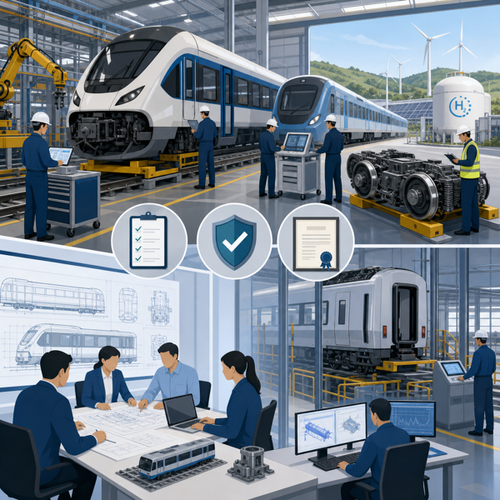
Ensuring safe, reliable, and sustainable railway rolling stock is more crucial than ever as the industry embraces digitalization and alternative energy solutions. International standards are at the heart of this transformation, providing the essential framework for safety, interoperability, innovation, and compliance. In this article, we unpack four essential standards—with a focus on their application for modern railway rolling stock—helping businesses enhance productivity, increase security, and seamlessly adopt new technologies.
Overview / Introduction
The railway sector plays a pivotal role in modern transportation, moving people and goods efficiently across cities, countries, and continents. With rapid advancements in digital communication, power electronics, and environmental technologies, the complexity of railway rolling stock systems has increased. International standards are a cornerstone in this evolving landscape, ensuring consistent safety, interoperability, and performance across all aspects of railway engineering.
Why Standards Matter:
- Standards provide common definitions, rigorous testing protocols, and minimum performance expectations, enabling smooth collaboration between manufacturers, rail operators, and regulators.
- As the industry integrates innovations such as hydrogen fuel cells, smart communication networks, and advanced power systems, standards are critical to minimize risks, ensure compatibility, and enable scaling.
- For end-users and the regular public, standards transform into safer, more reliable train services and the rapid adoption of innovations that support cleaner, more efficient transport.
What You Will Learn: This guide covers four key standards critical to railway rolling stock in general:
- Power and auxiliary electronics—Transformers and inductors on board
- Digitalization—Train communication network architecture
- Traction power performance—DC power rectifiers
- Sustainable energy—Hydrogen fuel systems
Each standard’s detailed overview includes its scope, requirements, who should comply, and actionable insights for businesses and technical teams.
Detailed Standards Coverage
IEC 60310:2026 – Reliable Transformers and Inductors for Rolling Stock
Railway Applications – Transformers and Inductors on Board Rolling Stock
What’s Covered & Scope: IEC 60310:2026 sets the industry benchmark for the design, performance, and verification of transformers and inductors used on trains and locomotives. It defines:
- Classifications, requirements, and test methods for both traction and auxiliary power transformers, and various power inductors encountered in rolling stock.
- Applicable for dry and liquid-immersed designs, and for transformer installations on three-phase AC line-powered trains.
- Excludes small instrument transformers and accessories like tap changers, which are covered by their own standards.
Key Requirements & Specifications:
- Technical terms and definitions for uniformity across suppliers and buyers.
- Detailed load profiles, current and voltage ratings specific to rail service conditions.
- Cooling methods identified and symbolized for easy specification.
- Robust mechanical, fire safety, and insulation criteria tailored for railway demands.
- Rigorous testing protocols (visual, functional, dielectric, short-circuit, vibration, noise, etc.) ensure equipment reliability over its life.
- Explicit end-of-life, thermal endurance, and environmental criteria.
Who Needs to Comply:
- Manufacturers of railway rolling stock, particularly those developing locomotives, passenger coaches, and freight systems.
- Suppliers of auxiliary systems requiring safe, reliable transformer and inductor solutions.
- Railway operators and maintenance organizations.
Practical Implications: Adaptation of IEC 60310:2026 streamlines procurement, ensures component compatibility, and boosts operational reliability. With growing demand for higher power density equipment and reduced maintenance, adherence drives long-term cost savings and system resilience.
Notable Updates in Edition 5:
- Introduction of typical electrical circuits for easier reference.
- Standardized letter symbols for cooling methods, supporting clearer documentation.
- Updated dielectric and temperature testing aligned with modern rail technology (including reference to the latest IEC 61373 for vibration and shock).
Key highlights:
- Covers both traction and auxiliary transformer/inductor designs.
- Comprehensive suite of type, routine, and investigation tests.
- Emphasizes shock, vibration, and fire safety suited to rail environments.
Access the full standard:View IEC 60310:2026 on iTeh Standards
IEC 61375-1:2026 – Digital Train Communication Network Architecture
Electronic Railway Equipment – Train Communication Network (TCN) – Part 1: General Architecture
What’s Covered & Scope: IEC 61375-1:2026 defines the essential architecture for train communication networks (TCN), which are digital communication systems connecting equipment in and between rolling stock vehicles, and to the ground infrastructure. The scope includes:
- Data communication within open trains (with interoperable, detachable cars), closed trains, and multiple-unit trains.
- Network layers from the train backbone (linking vehicles) down to consist networks (intra-vehicle communication) and connections to ground systems.
Key Requirements & Specifications:
- Hierarchical network structures, clearly defining levels for operational, safety, and passenger systems.
- Backbone and consist network topologies: Bus, switched, and the newest wireless architectures.
- Virtual network capabilities for supporting operation, maintenance, and passenger information.
- Orientation and composition management for trains with varying consists.
- Cybersecurity: Newly added requirements to mitigate digital vulnerabilities.
Who Needs to Comply:
- Rolling stock manufacturers deploying modern digital systems (e.g., train control and management systems, passenger information networks, advanced diagnostics).
- Railway operators aiming to integrate trains from multiple vendors or across borders.
- System integrators designing communication solutions for both passenger and freight rail.
Practical Implications: Implementation ensures seamless interoperability, crucial for international traffic and smart fleet management. New wireless and cybersecurity clauses reduce the risks of data breaches and support cutting-edge innovations like predictive maintenance, real-time passenger updates, and remote diagnostics.
Notable Features in Edition 4:
- Aggregated and segregated backbone topologies for more flexible train compositions.
- Independent consist orientation check for enhanced safety.
- Introduction of wireless backbones and consist networks, future-proofing new developments.
- Data class definitions and protocol requirements tailored to operations and maintenance systems (OMTS).
- Dedicated cybersecurity principles—crucial in today’s digital age.
Key highlights:
- Covers digital architecture for data communications across rolling stock.
- Supports wireless, virtual, and traditional cable-based network setups.
- Delivers clear cybersecurity requirements for train networks.
Access the full standard:View IEC 61375-1:2026 on iTeh Standards
IEC 62590-2-1:2025 – Uncontrolled Rectifiers for DC Traction Power
Railway Applications – Electronic Power Converters for Fixed Installations – Part 2-1: DC Traction Applications – Uncontrolled Rectifiers
What’s Covered & Scope: IEC 62590-2-1:2025 specifically addresses the requirements for uncontrolled rectifiers—devices that convert alternating current (3AC) from fixed power grids into direct current (DC) for railway traction systems, using robust diode assemblies. This is central for powering electric trains, metros, tramways, and advanced transit concepts like magnetic levitation and electric road systems.
Key Requirements & Specifications:
- Functionality and working principles: Clear interface models for standardizing inter-system connections.
- Test methods for operational safety, efficiency, and compatibility—including visual inspection, electrical and temperature-rise tests, and harmonic assessments.
- Strong focus on energy efficiency and reduction of losses.
- Defines marking and labeling requirements for traceability and safety.
Who Needs to Comply:
- Providers of fixed railway traction power supply systems (railways, metros, tramways, trolleybus operations, and innovative automated systems).
- Engineering teams designing or maintaining substations and power conversion points for rail networks.
Practical Implications: Adoption of this standard leads to higher efficiency, simplified integration, and safer operation of rectifier installations—key for urban transit expansions and upgrades. Reducing harmonic pollution and optimizing interfacing supports sustainability targets and network reliability.
Key Technical Upgrades Over Previous Editions:
- Tailored requirements for uncontrolled rectifiers only (excluding complex semiconductor-based systems).
- Energy efficiency performance now addressed explicitly.
- Updated test procedures, including short-time withstand and harmonic content measurements.
Key highlights:
- Focused on fixed installations and infrastructure power supplies.
- Reduces technical ambiguity for uncotrolled rectifier projects.
- Supports energy-efficient and interoperable DC traction systems.
Access the full standard:View IEC 62590-2-1:2025 on iTeh Standards
IEC 63341-2:2025 – Hydrogen Fuel Systems for On-board Railway Applications
Railway Applications – Hydrogen and Fuel Cell Systems for Rolling Stock – Part 2: Hydrogen Fuel System
What’s Covered & Scope: IEC 63341-2:2025 pioneers the standardization of hydrogen fuel systems for onboard use in railway rolling stock, supporting the global shift towards low-carbon and zero-emission rail transport. The scope includes:
- All rolling stock varieties (from light rail to high-speed trains) using on-board hydrogen supply to power fuel cells for both traction and auxiliary systems.
- Compressed hydrogen storage (gaseous form) and all associated mechanical, electrical, and software interfaces between train and fuelling infrastructure.
Key Requirements & Specifications:
- Detailed system architecture—from storage modules and piping to monitoring and control units.
- Environmental and durability requirements (extreme temperatures, vibrations, fire protection, shock resilience).
- Thorough safety and reliability demands—hazard analysis, marking, labelling, and maintenance protocols.
- Prescribed validation through type, routine, and investigation tests (mechanical, electrical, gas, EMC, fire).
- Coverage of eco-design, storage, transportation, installation, and lifecycle requirements.
Who Needs to Comply:
- Manufacturers building hydrogen-powered or hybrid trains.
- System integrators, component suppliers, and operators retrofitting or deploying hydrogen rolling stock.
- Railway maintenance and safety assurance teams.
Practical Implications: With the rail sector under pressure to decarbonize, this standard is foundational for safe, reliable deployment of hydrogen propulsion. It ensures interoperability, regulatory compliance, and public acceptance by codifying technology-specific safety and performance criteria.
Notable Features:
- Comprehensive interface definitions for smooth system integration.
- Mandatory reliability, safety, and maintenance processes unique to hydrogen technology in rail.
- Forward-looking eco-design and lifecycle management provisions.
Key highlights:
- Enables safe deployment of hydrogen-fueled rolling stock.
- Designed for all climate/environmental conditions encountered by trains.
- Establishes thorough testing and validation for public safety and operational efficiency.
Access the full standard:View IEC 63341-2:2025 on iTeh Standards
Industry Impact & Compliance
How These Standards Affect Railway Businesses
Complying with these international standards is no longer optional for businesses aiming to compete in the modern railway landscape. From ensuring interoperability among multinational rolling stock fleets to integrating smart, eco-friendly power systems, these standards bring tangible business value:
- Enhanced Safety: Clearly defined safety requirements reduce accidents, liabilities, and downtime.
- Improved Productivity: Unified technical requirements streamline procurement, installation, and maintenance processes, boosting fleet availability.
- Seamless Technology Adoption: Standards for digital networks and hydrogen systems facilitate the smooth rollout of new solutions—enabling scaling without repeated redesigns.
- Regulatory Compliance: Conforming to global best practices avoids costly fines, project rework, and loss of certification in international markets.
- Market Access and Branding: Certified compliance is increasingly a prerequisite for entering new markets and for securing major tenders or contracts.
Risks of Non-Compliance
- Frequent technical failures due to incompatibility or unsafe equipment.
- Exclusion from cross-border services due to a lack of recognized certification.
- Higher operating and maintenance costs resulting from non-standard parts and procedures.
- Exposure to regulatory penalties, negative public attention, and loss of business.
Implementation Guidance
Best Practices for Adopting Railway Rolling Stock Standards
- Gap Assessment:
- Benchmark current operations, products, and documentation against the latest versions of IEC standards listed above.
- Training & Competence:
- Invest in ongoing staff training on the technical requirements, especially as standards evolve with new editions.
- Supplier Coordination:
- Require proof of compliance or certification from all component and system suppliers.
- Integrated Testing:
- Incorporate standard-compliant tests into factory acceptance, commissioning, and periodic preventive maintenance routines.
- Documentation Management:
- Implement digital document control to track evolving standards, test protocols, and maintenance requirements.
- Continual Improvement:
- Monitor for new or revised standards and proactively plan fleet upgrades and retrofits.
Resources for Organizations:
- Access authoritative documents via iTeh Standards for the latest and historical versions.
- Engage with industry forums and working groups to stay ahead of upcoming changes.
- Leverage professional consultants with proven track records in railway compliance projects.
Conclusion / Next Steps
The ongoing revolution in railway engineering—driven by digitalization and sustainability—demands a robust approach to standards adoption. IEC 60310:2026, IEC 61375-1:2026, IEC 62590-2-1:2025, and IEC 63341-2:2025 collectively offer the framework to build rolling stock fleets that are safe, efficient, interoperable, and ready for future growth.
Key Takeaways:
- Embrace these standards to ensure your rolling stock fleet remains competitive and compliant.
- Engage cross-functional teams in the standards adoption process—from procurement to engineering, IT, and safety assurance.
- Prioritize investment in new technologies (like hydrogen and digital comms) that are underpinned by robust, well-defined international standards.
Next Steps:
- Visit iTeh Standards to explore the full documents, gather additional resources, and ensure your fleet or project stays ahead of regulatory and market changes.
- Stay informed—track new editions and guidance to maintain a leadership position in the evolving railway industry.
Categories
- Latest News
- New Arrivals
- Generalities
- Services and Management
- Natural Sciences
- Health Care
- Environment
- Metrology and Measurement
- Testing
- Mechanical Systems
- Fluid Systems
- Manufacturing
- Energy and Heat
- Electrical Engineering
- Electronics
- Telecommunications
- Information Technology
- Image Technology
- Precision Mechanics
- Road Vehicles
- Railway Engineering
- Shipbuilding
- Aircraft and Space
- Materials Handling
- Packaging
- Textile and Leather
- Clothing
- Agriculture
- Food technology
- Chemical Technology
- Mining and Minerals
- Petroleum
- Metallurgy
- Wood technology
- Glass and Ceramics
- Rubber and Plastics
- Paper Technology
- Paint Industries
- Construction
- Civil Engineering
- Military Engineering
- Entertainment