


Key Standards for Railway Rolling Stock: Technologies, Safety & Sustainable Innovation
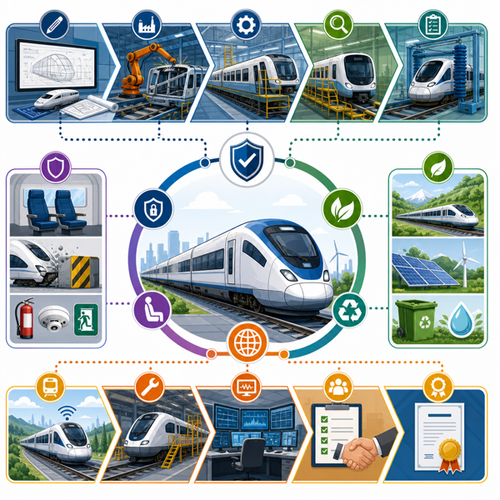
Key Standards for Railway Rolling Stock: Technologies, Safety & Sustainable Innovation
Railway engineering is rapidly evolving to meet the demands of next-generation mobility: higher speeds, greener alternatives, and smarter, safer train operations. The backbone of this transformation lies in internationally harmonized standards—essential guides that outline requirements, define best practices, and level the competitive playing field for manufacturers and operators worldwide. In this comprehensive overview, we explore four cornerstone standards that shape "railway rolling stock in general": IEC 60310:2026, IEC 61375-1:2026, IEC 62590-2-1:2025, and IEC 63341-2:2025. Whether you're an industry newcomer or an established player, understanding and implementing these standards is crucial—especially as the sector embraces new energy sources, advanced communication networks, and digital safety strategies that directly influence productivity, security, and scalability across rail systems.
Overview / Introduction
Rolling stock—the collective term for trains, locomotives, metros, and trams—forms the moving heart of railway operations. As railways modernize, stakeholders face a dynamic mix of new technologies: from high-performance traction transformers and intelligent electronic communications to energy-efficient power converters and clean hydrogen propulsion systems. The complexity of these systems and their interaction with infrastructure and passengers call for robust, up-to-date standards.
Why do railway standards matter more than ever today?
- Guarantees on safety and security for crews, passengers, and assets
- Increased system interoperability and global trade compatibility
- Productivity boosts via proven design, testing, and maintenance procedures
- Essential frameworks for the integration of new technologies
- Risk mitigation for evolving threats, from cybersecurity to supply chain disruption
In this guide, you’ll discover what makes these four IEC standards central to rolling stock engineering, who must comply, and how meeting the latest requirements accelerates both growth and operational excellence in today’s competitive rail market.
Detailed Standards Coverage
IEC 60310:2026 – Transformers and Inductors on Board Rolling Stock
Railway Applications – Transformers and Inductors on Board Rolling Stock
The IEC 60310:2026 standard defines comprehensive requirements for design, classification, operation, testing, and maintenance of on-board transformers and inductors within rolling stock. These components form the electrical backbone of traction and auxiliary power systems, impacting performance, reliability, and safety on every journey.
Scope and Coverage:
- Applies to both traction and auxiliary power transformers for rolling stock (e.g., trains, metros, trams), as well as various types of power inductors—covering both dry and liquid-immersed designs.
- Encompasses service conditions, thermal endurance, cooling, dielectric and mechanical design, fire protection, and full test protocols.
- Excludes instrument transformers and small-scale units below specific output thresholds.
- Fifth edition introduces new technical advances: typical circuit diagrams, standardized cooling method symbols, revised dielectric testing, updated shock/vibration test alignments (per IEC 61373:20), and split temperature tests for dry units.
Key Requirements:
- Classification and ratings (voltage, current, power output)
- Load profiles and current calculations
- Design for cooling, fire safety, and mechanical endurance
- Detailed marking and labelling instructions
- Prescriptive test regime: type, routine, and investigation tests
- Strict tolerances, with checks for losses, temperature rise, insulation, partial discharge, shock/vibration, and more
Who Needs to Comply:
- Manufacturers and integrators of on-board electrical equipment
- Rolling stock builders, refurbishing workshops, and operators
- Purchasers specifying or validating electrical train components
Practical Implications:
- Delivers a unified language for specification and acceptance, simplifying international procurement
- Assures safety and interoperability through rigorous testing and agreement protocols
- Sets out both mandatory and negotiable items, guiding procurement and engineering teams
Notable Features:
- Typical electrical circuits and cooling method symbols standardized
- Enhanced and separated temperature testing for dry units
- Updated requirements for shock/vibration protection
Key highlights:
- Full life-cycle approach: terms, specs, service, and end-of-life
- Aligns with modern needs for energy efficiency and resilience
- Supports safer, more reliable power systems for high-speed and urban rail
Access the full standard:View IEC 60310:2026 on iTeh Standards
IEC 61375-1:2026 – Electronic Railway Equipment: Train Communication Network (TCN) – Part 1: General Architecture
Electronic Railway Equipment – Train Communication Network (TCN) – Part 1: General Architecture
IEC 61375-1:2026 underpins the digital nervous system of modern trains by defining the architecture for train communication networks (TCN). It enables seamless data exchange—between vehicles, within vehicles, and between the train and external ground systems—across all types of rolling stock.
Scope and Coverage:
- Encompasses open and (optionally) closed trains running worldwide, covering backbone data communication and internal consist networks
- Specifies architectures for bus, switched, and wireless topologies, including support for virtual networks
- Outlines protocols, addressing schemes, and cybersecurity provisions
Key Requirements:
- Detailed network architecture: backbone, consist, and train-to-ground interfaces
- Technology-class definitions for hardware/software components
- Network hierarchy: backbone, consist, end-device levels
- Redundancy and orientation checks
- Wireless communication standards (train backbone, consist network)
- Protocols for data addressing, classes, service requirements
- Integrated cybersecurity requirements
Who Needs to Comply:
- Rolling stock OEMs and system integrators
- Communication and signaling equipment providers
- Operators upgrading or digitizing fleets
- Anyone implementing train-to-ground digital systems
Practical Implications:
- Establishes interoperability for international traffic, essential in liberalized railway markets
- Supports compatibility across legacy and new rolling stock—vital for mixed fleets
- Lays the foundation for Internet of Things (IoT), remote diagnostics, and predictive maintenance
- Embeds cybersecurity for protection against rising digital threats
Notable Features in the Latest Edition:
- Topology expansion: aggregated and segregated backbones
- Wireless backbone and consist network introduction
- Virtual network capabilities
- Data classes aligned with Online Monitoring and Telediagnosis Systems (OMTS)
- New cybersecurity protocols covering train networks
Key highlights:
- Futureproofs infrastructure with support for advanced digital and wireless tech
- Raises bar for reliability, passenger safety, and fleet-wide data analytics
- Streamlines support for intelligent onboard and remote control applications
Access the full standard:View IEC 61375-1:2026 on iTeh Standards
IEC 62590-2-1:2025 – Electronic Power Converters for Fixed Installations – DC Traction Applications: Uncontrolled Rectifiers
Railway Applications – Electronic Power Converters for Fixed Installations – Part 2-1: DC Traction Applications – Uncontrolled Rectifiers
IEC 62590-2-1:2025 standardizes uncontrolled rectifiers—critical power conversion units connecting AC networks with DC traction power, widely used in railways, metros, tramways, trolleybuses, and emerging electric transport.
Scope and Coverage:
- Sets out requirements for uncontrolled rectifiers using diode assemblies, plus coordination with associated transformers
- Applies across fixed railway installations: mainline, urban rail, automated, maglev, and electric road systems
- First edition updates scope to focus strictly on uncontrolled rectifiers (compared with earlier versions that included broader converter types)
Key Requirements:
- Functionality, working principles, and interface models
- Electrical characteristics: impedance, voltage, current, short-circuit strength, harmonics
- Energy efficiency specifications
- Marking, labelling, and circuit terminal requirements
- Test methodologies: insulation, load, voltage drop, harmonic content, temperature rise, mechanical stress
Who Needs to Comply:
- Rail infrastructure and power system designers
- Fixed installation engineers
- Equipment manufacturers and suppliers
- Operators managing onsite power facilities
Practical Implications:
- Enables standard integration of rectifier/transformer assemblies
- Delivers greater energy efficiency in urban and high-volume passenger systems
- Supports transition to lower-maintenance, reliable power supply architectures
Notable Features:
- Clean focus on diode rectifier-based systems
- Clearly specified interfaces for easier upgrades and expansion
- Comprehensive performance, safety, and longevity test framework
Key highlights:
- Direct support for sustainable, robust power supply in mass transit
- International consistency: simplifies procurement and TCO management
- Energy efficiency addressed, supporting both cost savings and environmental goals
Access the full standard:View IEC 62590-2-1:2025 on iTeh Standards
IEC 63341-2:2025 – Hydrogen and Fuel Cell Systems for Rolling Stock – Part 2: Hydrogen Fuel System
Railway Applications – Hydrogen and Fuel Cell Systems for Rolling Stock – Part 2: Hydrogen Fuel System
IEC 63341-2:2025 offers the world’s first comprehensive benchmark for safe, high-performance hydrogen fuel systems (HFS) onboard rolling stock. As sustainability and zero-emission targets rise, this standard drives the implementation of greener alternatives in light, regional, high-speed, and metro railways.
Scope and Coverage:
- Targets on-board hydrogen fuel systems (HFS) delivering energy to fuel cells (traction and auxiliary supply)
- Restricts to gaseous hydrogen storage; does not cover liquid, cryo-compressed, or solid-state storage
- Applies to all rolling stock types: light rail, trams, metros, commuter, regional, high-speed, and locomotives
Key Requirements:
- Mechanical, fluidic, and electrical interfaces between train and fueling station
- Design parameters for gas storage modules, handling systems, control circuits, safety monitoring
- Environmental constraints: temperature, humidity, altitude, corrosivity, shock/vibration
- RAMS (Reliability, Availability, Maintainability, Safety) analysis
- Full marking, labeling, and documentation
- Complete validation: type, routine, investigation and acceptance criteria, as well as system, mechanical, gas, electrical, and EMC tests
Who Needs to Comply:
- Rolling stock manufacturers introducing hydrogen drive systems
- Operators piloting or scaling zero-emissions trains
- Hydrogen component and sub-system suppliers
- Maintenance and system integrators
Practical Implications:
- Facilitates the safe rollout of hydrogen-powered trains, supporting net-zero and decarbonization strategies
- Mandates risk mitigation around fuel storage, discharge, and emergency response
- Harmonizes compatibility for cross-border hydrogen refueling
Notable Features:
- Addresses hydrogen purity, container design, bolted assembly, and environmental resilience
- Details fluidic purging, overpressure protection, and vent-to-atmosphere protocols
- Includes RAMS-based safety and maintainability principles
Key highlights:
- Globally recognized baseline for hydrogen train development
- De-risks market entry for clean energy rolling stock innovations
- Supports sustainable scaling for future-proof railway fleets
Access the full standard:View IEC 63341-2:2025 on iTeh Standards
Industry Impact & Compliance
How Standards Impact Business and Technology Adoption
The rapid advance of technology in railway rolling stock—from next-generation propulsion and energy storage to data-driven operations—means standards have never been more vital. These standards define both minimum and optimal safety, reliability, and performance criteria for everything on board: electrical systems, power supply, digital connectivity, and emerging green technologies.
Key business impacts include:
- Risk Management: Provides proven templates for safety-critical applications, minimizing technical and operational uncertainty
- Productivity: Streamlines integration and maintenance through uniform terminology and standardized testing/acceptance procedures
- Security: Integrates cybersecurity and system resilience (as in IEC 61375-1) from the outset
- Scaling & Innovation: Supports rolling out new systems—like hydrogen trains or wireless backbone networks—confidently and efficiently
- Market Access: Compliance is often mandatory for cross-border travel or public tenders, lowering barriers to international market participation
- Environmental Leadership: Standards like IEC 63341-2 give rail operators a framework for investing in sustainable growth
Risks of Non-Compliance:
- Failure can lead to project delays, accreditation rejection, costly rework, or even legal liability after incidents
- Inconsistencies create interoperability headaches and can isolate operators from future upgrades or partnerships
- Lax approach to cybersecurity could expose assets to malicious attacks
Compliance Considerations:
- Stay up-to-date: New editions often feature major technical improvements
- Treat standards as baseline, then innovate on top
- Audit compliance for every phase of project lifecycle: from procurement to operation and maintenance
Implementation Guidance
Adopting railway rolling stock standards can seem daunting, but following a phased and systematic approach ensures smooth, value-generating integration. Here are practical steps and industry best practices:
1. Gap Assessment:
- Audit your existing technical and process documentation against current standards (IEC 60310, 61375-1, 62590-2-1, 63341-2).
- Build a requirements traceability matrix to highlight areas to address (especially as regulations evolve).
2. Stakeholder Engagement:
- Involve engineering, procurement, operations, and compliance teams early.
- Include suppliers and contractors in requirements briefings—mutual understanding prevents costly misinterpretation.
3. Specification and Procurement:
- Use standard-compliant specifications in all requests for proposals and supplier agreements.
- Where standards allow buyer-supplier negotiation (see IEC 60310), document agreements precisely.
4. System Integration and Testing:
- Follow the prescriptive test regimens provided—regularly witnessed by independent assessors
- Employ type, routine, and investigation tests for each key subsystem
- Validate with real-world scenarios (e.g., shock/vibration, extreme environmental conditions)
5. Documentation & Training:
- Maintain detailed records of compliance—from design reviews to acceptance tests
- Train technical and operational staff using standard-defined procedures (including emergency and maintenance workflows)
6. Continuous Improvement:
- Monitor for updates/new editions and plan periodic audits
- Solicit feedback from field operations: incorporate lessons learned into design and procurement
- Contribute to industry working groups to stay ahead of regulatory changes
Resources:
- Official standards at iTeh Standards
- Industry associations, webinars, and working groups for up-to-date best practice sharing
- Vendor and infrastructure training covering all phases: design, certification, safe operation, and lifecycle management
Conclusion / Next Steps
The evolution of railway rolling stock is accelerating—driven by cutting-edge electrical systems, intelligent networking, sustainable energy, and the growing demand for safety and security. By adopting and rigorously implementing standards like IEC 60310:2026, IEC 61375-1:2026, IEC 62590-2-1:2025, and IEC 63341-2:2025, industry leaders secure the foundation for scalable, safe, efficient, and internationally competitive operations.
Key Takeaways:
- Standards guarantee interoperability, safety, and performance, forming the basis of successful, future-ready rolling stock projects
- Implementation ensures smoother project delivery, rapid innovation, and sustained compliance in a regulated global market
- Early compliance with hydrogen fuel and digital communication standards accelerates eco-friendly transformation and cybersecurity resilience
Recommendations for Organizations:
- Regularly review your compliance status against latest standards
- Engage with standards experts and use iTeh Standards as your source for the most recent documents
- Plan upgrades—ahead of deadlines—to avoid disruption and secure competitive advantage
- Develop internal training programs and foster a compliance culture across all departments
Call to Action: Explore these standards in depth, stay up to date with new editions, and position your organization at the forefront of railway innovation and sustainability. Visit standards.iteh.ai for access to the full texts and implementation resources.
Categories
- Latest News
- New Arrivals
- Generalities
- Services and Management
- Natural Sciences
- Health Care
- Environment
- Metrology and Measurement
- Testing
- Mechanical Systems
- Fluid Systems
- Manufacturing
- Energy and Heat
- Electrical Engineering
- Electronics
- Telecommunications
- Information Technology
- Image Technology
- Precision Mechanics
- Road Vehicles
- Railway Engineering
- Shipbuilding
- Aircraft and Space
- Materials Handling
- Packaging
- Textile and Leather
- Clothing
- Agriculture
- Food technology
- Chemical Technology
- Mining and Minerals
- Petroleum
- Metallurgy
- Wood technology
- Glass and Ceramics
- Rubber and Plastics
- Paper Technology
- Paint Industries
- Construction
- Civil Engineering
- Military Engineering
- Entertainment