


June 2026: Essential Updates to Automotive and Road Vehicle Standards
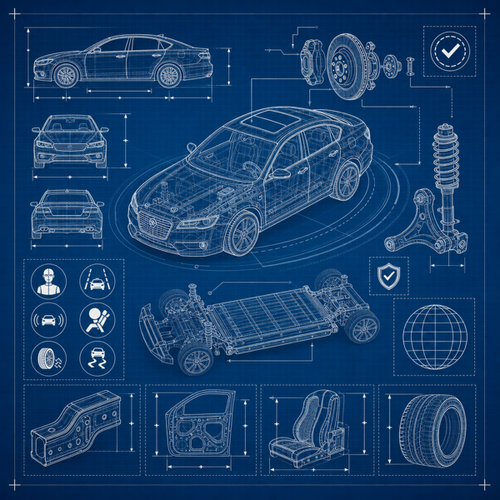
The automotive and road vehicles industry faces a transformative moment in June 2026, with the publication of four critical international standards. Ranging from cutting-edge protocols for electric vehicle charging and diagnostics, to advanced formulations for non-petroleum-based brake fluids, these updates reflect the sector’s accelerating pace of innovation. Covering new and revised standards from ISO, IEC, and CEN, these documents set the baseline for safety, reliability, interoperability, and performance across global automotive supply chains.
Overview
The automotive and road vehicles sector is rapidly evolving, driven by electrification, advanced diagnostics, and the demand for sustainable and safe vehicle systems. International standards play a foundational role in enabling these innovations: they ensure interoperability, safety, and quality, while guiding manufacturers, technology providers, and regulatory agencies.
This article explores the June 2026 updates, focusing on:
- Conformance testing for vehicle-to-grid (V2G) communication protocols
- Requirements for automated DC charging equipment
- Specifications for non-petroleum-based hydraulic brake fluids
- Unified diagnostic services for electronic control units (ECUs)
You’ll gain detailed insight into the scope, requirements, targeted industries, practical implications, and compliance benefits of each new standard.
Detailed Standards Coverage
prEN ISO 15118-4 – Vehicle to Grid Communication Conformance Testing
Road vehicles – Vehicle to grid communication interface – Part 4: Network and application protocol conformance test (ISO/DIS 15118-4:2024)
This standard provides the test suite framework required to verify the conformance of electric vehicle communication controllers (EVCC) and supply equipment communication controllers (SECC) with the V2G protocols defined in ISO 15118-2. It focuses solely on confirming capabilities and behavioral compliance at the network and application layer, fostering robust communication and increased confidence in interoperability for charging infrastructure and vehicles.
The conformance tests are structured as an Abstract Test Suite (ATS), utilizing TTCN-3 scripting for ISO/OSI Layer 3 and above. Key elements include:
- Definition of core test architectures and interfaces for SUTs (systems under test)
- Distinction between capability (static requirements) and behavior (dynamic requirements) testing
- Extensive coverage of protocol operations including session setup, value exchange, and error handling
The revision introduces:
- Enhanced consistency in test objective descriptions and improved readability
- New coverage for reliability and robustness scenarios
- Updated test case lists reflecting evolving V2G protocol demands
Targeted towards OEMs, EVSE manufacturers, communication module suppliers, and test labs, compliance ensures that vehicle and charger systems achieve the high degree of interoperability essential for cross-brand compatibility and user convenience.
Key highlights:
- Abstract and comprehensive test suite for V2G communication protocols
- Aligns with ISO 15118-2 for consistent application layer behavior
- Foundation for downstream interoperability and certification programs
Access the full standard:View prEN ISO 15118-4 on iTeh Standards
IEC 61851-23-1:2026 – Requirements for Automated DC Charging Systems
Electric vehicle conductive charging system – Part 23-1: DC electric vehicle supply equipment – Automated connection device
This new IEC standard defines the safety, control, and communication requirements for DC electric vehicle (EV) supply equipment using automated connection devices (ACDs) – integral for fully automated or robotic charging installations. Addressing maximum voltages up to 1,000 V AC/1,500 V DC, it solidifies the framework for next-generation, high-power DC charging infrastructure.
Core requirements include:
- General provisions for ACDs based on reference system architectures (IEC 61851-23, Annex BB and CC)
- Safeguards for electrical protection, proper interlock and connector status signaling, and user safety
- Communication protocol references for digital control (ISO 15118-20, IEC 61851-24) and EMC compliance (IEC 61851-21-2)
- Applicability to electro-mechanical automated couplers (category 2), detailing safe, reliable plug-in/out processes
Maintenance, advanced features such as bi-directional (vehicle-to-grid/reverse power transfer), and certain safety aspects are identified as outside the current scope but flagged for future standardization.
Recommended for:
- EV charging infrastructure providers
- Utility companies and charge point operators
- Heavy vehicle and fleet charging solution integrators
Implementation streamlines automated charging installation approval, provides reference safety architectures, and paves the way for more user-friendly, scalable public and private charging networks.
Key highlights:
- Specifies safety and control requirements for automated DC chargers
- Enables advanced, driverless and robotic charging solutions
- Aligns with evolving ISO/IEC communication and EMC requirements
Access the full standard:View IEC 61851-23-1:2026 on iTeh Standards
ISO 4925:2026 – Non-Petroleum-Based Brake Fluids for Hydraulic Systems
Road vehicles — Specification of non-petroleum-based brake fluids for hydraulic systems
Widely utilized in both passenger and commercial vehicles, hydraulic brake and clutch systems rely on highly stable and compatible fluids. ISO 4925:2026 provides comprehensive specifications, requirements, and test methods for non-petroleum-based brake fluids intended for vehicles equipped with styrene-butadiene rubber (SBR) and ethylene-propylene elastomer (EPDM) seals.
The standard details:
- Classification and specification requirements for brake fluid classes 3, 4, 5-1, 6, and 7
- Rigorous testing encompassing viscosity, boiling point, chemical stability, corrosion resistance, pH, low-temperature performance, and compatibility
- Requirements for non-toxicity, non-precipitating, non-corrosive behavior in all operating conditions
- Testing on the impact of fluids on rubber and metal system components, including noise and wear induction
- Enhanced lubrication requirements for both friction-induced noise and wear tests in this edition
OEMs, brake system suppliers, and aftermarket fluid producers will benefit from improved product safety, cross-compatibility, and assurance of system longevity with adoption of this standard.
Key highlights:
- Defines robust testing and classification for non-petroleum brake fluids
- Ensures compatibility with modern elastomers (SBR/EPDM)
- Introduces lubrication performance as a pass/fail criterion for noise and wear
Access the full standard:View ISO 4925:2026 on iTeh Standards
ISO 14229-1:2026 – Unified Diagnostic Services (UDS) for Electronic Control Units
Road vehicles — Unified diagnostic services (UDS) — Part 1: Application layer
ISO 14229-1:2026 formalizes the data link-independent application layer requirements for unified diagnostic services in modern automotive electronics. UDS allows a diagnostic tester (client) to control a variety of diagnostic functions in electronic control units (ECUs) responsible for powertrain, chassis, and safety-critical operations over a standardized communication interface.
Key service categories include:
- Diagnostic session control and ECU reset
- Security access management
- Communication session control (enabling/disabling messages)
- Reading of vehicle identification data and real-time sensor information
- Accessing, reading, and clearing diagnostic trouble codes (DTCs)
- Control of actuators and execution of diagnostic routines
- Authentication and network security mechanisms
This standard is pivotal for automotive software and tool vendors, OEMs, and service networks, ensuring uniformity in in-vehicle diagnostics, secure access, and streamlined aftersales support globally.
Key highlights:
- Consolidates all critical UDS commands for diagnostics and ECU management
- Ensures compatibility between diagnostic tools and in-vehicle ECUs
- Supports secure, high-level bidirectional communication and control
Access the full standard:View ISO 14229-1:2026 on iTeh Standards
Industry Impact & Compliance
The June 2026 standards represent more than technical updates: they set regulatory and de facto market benchmarks. Businesses throughout the supply chain—manufacturers, system integrators, component suppliers, and fleet operators—are directly affected.
Compliance considerations:
- Transition periods may be defined regionally—monitor national regulations for effective dates
- Existing products/certifications should be reviewed for compatibility with updated requirements
- Adopting these standards often facilitates certification, market access, and long-term risk mitigation
Benefits of compliance:
- Assurance of interoperability, especially for electric vehicle charging and diagnostics
- Greater product safety, reliability, and lifecycle support
- Competitive advantage through international acceptance and preferred vendor status
Risks of non-compliance:
- Increased liability, recall, or warranty costs due to incompatible or unsafe systems
- Barriers to market entry and procurement disqualification
- Higher costs in late-stage design changes or retrofits
Technical Insights
Across these standards, some common technical threads emerge:
- Interoperability Testing: Whether for V2G communication or UDS-based diagnostics, standardized conformance testing minimizes manufacturer-specific incompatibility
- Safety and Communication Protocols: Strong emphasis on both functional (protocol/communication) and electrical safety for all critical vehicle systems
- New Testing Criteria: Expanded coverage of robustness (V2G), lubrication-induced noise and wear (brake fluids), and advanced message services (UDS)
Best practices for implementation:
- Integrate requirements early into your design and verification plans
- Utilize certified test labs and verification tooling for protocol and safety validation
- Proactively engage with supply chain partners to ensure all subcomponents meet current standards
Testing and certification:
- For V2G and charging equipment: Employ accredited testing organizations with capability in the latest ISO/IEC protocols
- For brake fluids and diagnostics: Require suppliers' conformance certifications as part of the procurement process
Conclusion & Next Steps
The June 2026 publication of these four automotive and road vehicle standards marks a new chapter for OEMs, suppliers, and technical professionals committed to future-ready mobility. Early adoption not only enables compliance but also unlocks global market opportunities, enhances user safety, and ensures seamless cross-brand interoperability.
Key takeaways:
- Transformative changes in EV charging, diagnostics, and safety-critical fluids demand immediate attention
- Thorough review and integration of these requirements is essential for continued success in automotive engineering
- Staying current with international standards will position your organization as a trusted, innovative leader
Recommendations:
- Download and study the full standards via iTeh Standards’ authoritative resources
- Engage your technical and compliance teams to update procedures and specifications
- Subscribe to updates and training to remain ahead in this dynamic sector
Stay ahead of the curve by exploring each standard in detail, ensuring your organization is fully aligned with the latest advancements in automotive technology standards.
Categories
- Latest News
- New Arrivals
- Generalities
- Services and Management
- Natural Sciences
- Health Care
- Environment
- Metrology and Measurement
- Testing
- Mechanical Systems
- Fluid Systems
- Manufacturing
- Energy and Heat
- Electrical Engineering
- Electronics
- Telecommunications
- Information Technology
- Image Technology
- Precision Mechanics
- Road Vehicles
- Railway Engineering
- Shipbuilding
- Aircraft and Space
- Materials Handling
- Packaging
- Textile and Leather
- Clothing
- Agriculture
- Food technology
- Chemical Technology
- Mining and Minerals
- Petroleum
- Metallurgy
- Wood technology
- Glass and Ceramics
- Rubber and Plastics
- Paper Technology
- Paint Industries
- Construction
- Civil Engineering
- Military Engineering
- Entertainment