


August 2026 Brings Essential Updates to Automotive and Road Vehicle Standards
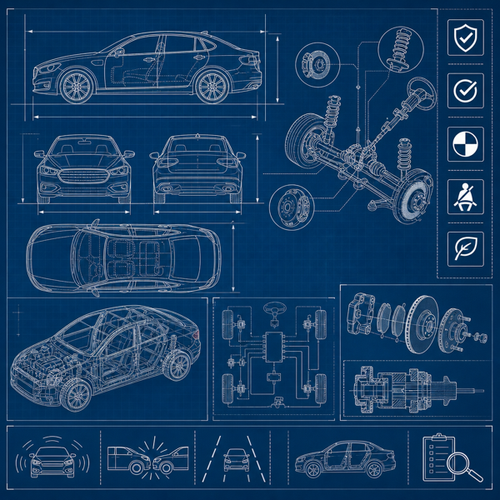
The August 2026 publication cycle introduces four significant new standards in the Automotive and Road Vehicle sector. These standards address contemporary challenges such as hazardous substances in plastics, megawatt-scale EV charging, safe integration of autonomous cargo e-transporters, and advanced automated DC charging systems. Each update represents a critical shift towards greater safety, technical consistency, and global harmonization for automotive manufacturers, suppliers, and technology innovators.
Overview / Introduction
The Automotive and Road Vehicle industry is rapidly transforming—driven by regulatory tightening, electrification, automation, and digitalization. International standards play a vital role in ensuring vehicles and components worldwide meet consistent requirements for safety, quality, environmental protection, and interoperability.
In this article, we highlight August 2026’s four newly published standards. Whether focused on hazardous chemical detection in plastics, megawatt charging for heavy-duty electric vehicles, safe deployment of autonomous e-transporters, or next-generation automated DC fast charging, these standards drive compliance, enhance operational excellence, and minimize risk. Readers will learn about each standard’s scope, critical requirements, affected stakeholders, and anticipated industry impact.
Detailed Standards Coverage
EN IEC 62321-13:2026 - Bisphenol A Determination in Electrotechnical Plastics
Determination of certain substances in electrotechnical products - Part 13: Bisphenol A in plastics by liquid chromatography-diode array detection (LC-DAD), liquid chromatography-mass spectrometry (LC-MS) and liquid chromatography-tandem mass spectrometry (LC-MS/MS)
This new edition addresses the rising concerns surrounding Bisphenol A (BPA) in electrical and electronic plastics. BPA, commonly used in polycarbonate (PC) and related polymers, has been highlighted by governments and regulators due to its environmental and health impacts.
Scope & Purpose:
- Specifies three analytical techniques—LC-DAD, LC-MS, LC-MS/MS—for determining free BPA in plastics from electrotechnical products.
- Focuses on matrices such as PC, PC/ABS, and polypropylene containing BPA concentrations between 20 mg/kg and 500 mg/kg.
- Supplements environmental regulatory compliance requirements and supports robust quality control processes.
Key Requirements:
- Sample preparation protocols to prevent contamination and BPA formation
- Instrument specifications and detailed calibration guidelines
- Strict procedures for blank control, calibration, and quantification
- Reporting requirements for BPA determination
Who Needs to Comply:
- Manufacturers of electrical and electronic equipment
- Laboratories and quality assurance units testing plastic components
- Organizations subject to environmental and chemical safety regulations
Implementation Implications:
- Assists in meeting global environmental directives (e.g., RoHS, REACH, WEEE)
- Reduces risk of regulatory non-compliance, recalls, and supply chain disruptions
Key highlights:
- Introduces multi-method approach (LC-DAD, LC-MS, LC-MS/MS)
- Supports BPA monitoring in key plastics used in automotive electrical/electronic parts
- Aligns with latest environmental and product compliance frameworks
Access the full standard:View EN IEC 62321-13:2026 on iTeh Standards
IEC 61851-23-3:2026 - Megawatt Charging Systems for Electric Vehicles
Electric vehicle conductive charging system - Part 23-3: DC electric vehicle supply equipment - Megawatt charging systems
As commercial and heavy-duty electric vehicles become mainstream, rapid large-capacity charging is essential. IEC 61851-23-3:2026 establishes the technical and safety requirements for Megawatt Charging System (MCS) infrastructure, targeting trucks, buses, and high-capacity fleets.
Scope & Purpose:
- Covers EV supply equipment designed for DC charging at power levels in the megawatt range, with voltages up to 1,500 V DC (output) and 1,000 V AC (input).
- Specifies system architecture, bidirectional power flow (future consideration), protective separation, and compatibility with IEC TS 63379 coupler.
Key Requirements:
- Detailed safety protocols for high voltage interfaces
- Protective separation between supply and vehicle interface
- Interoperability and communication (ISO 15118-10, ISO 15118-20) for charging control
- Cable management, overload, and fault protection
- Guidance for emergency shutoff, marking, and installation
Who Needs to Comply:
- EV supply equipment manufacturers
- Commercial fleet operators and infrastructure providers
- Heavy industry logistics and public transport companies
Implementation Implications:
- Facilitates commercial-scale EV adoption through rapid, reliable charging
- Supports energy network integration and future V2G (vehicle-to-grid) compatibility
- Ensures employee and user safety at high power levels
Key highlights:
- Enables charging at voltages up to 1,500 V DC for large electric vehicles
- Defines interfaces with digital communications for secure energy transfer
- Sets industry benchmark for Megawatt Charging System design and safety
Access the full standard:View IEC 61851-23-3:2026 on iTeh Standards
prEN IEC 63281-2-2:2025 - Safety and Test Methods for Autonomous Cargo E-Transporters
E-transporters - Part 2-2: Safety requirements and test methods for autonomous cargo e-transporters
With automation in road transport accelerating, the need for robust safety frameworks for autonomous cargo e-transporters has never been greater. prEN IEC 63281-2-2:2025 answers this call with comprehensive safety requirements covering design, operation, and testing.
Scope & Purpose:
- Applies to autonomous cargo e-transporters (ACeTs) intended for the safe and efficient movement of goods
- Establishes classifications, risk assessments, and environmental use scenarios
- Provides requirements for mechanical stability, software reliability, collision avoidance, and user interface
Key Requirements:
- Risk analysis and risk mitigation strategies
- Mechanical and electrical safety: rollover protection, speed limits, braking, anti-collision measures
- Functional safety rules for autonomous operation, including start/stop, emergency stops, presence detection, and remote control
- Detailed test methods: vibration, environmental, durability, load, collision, and more
Who Needs to Comply:
- Developers and manufacturers of autonomous cargo vehicles
- Industrial fleet operators, warehouses, logistics hubs adopting automation
- Compliance and safety certification bodies
Implementation Implications:
- Demonstrates a proactive approach to AI and automation-related safety
- Facilitates market entry and regulatory acceptance of autonomous cargo solutions
- Protects operators, bystanders, and goods during real-world deployment
Key highlights:
- First dedicated international standard for safety of autonomous cargo e-transporters
- Includes both environmental durability and human interaction hazards
- Provides practical and repeatable test methods for industry assurance
Access the full standard:View prEN IEC 63281-2-2:2025 on iTeh Standards
EN IEC 61851-23-1:2026 - Automated Connection Devices for DC EV Charging
Electric vehicle conductive charging system - Part 23-1: DC electric vehicle supply equipment - Automated connection device
Greater automation in DC charging infrastructure streamlines operations, enhances safety, and opens new application segments. EN IEC 61851-23-1:2026 provides requirements for EV supply equipment featuring Automated Connection Devices (ACD), ensuring a secure, automated interface between charger and vehicle.
Scope & Purpose:
- Specifies requirements for DC charging stations with ACDs, operating at supply voltages of up to 1,000 V AC and 1,500 V DC
- Includes connection device designs according to multiple system typologies (System A, B, and C), with a focus on fully automated mechanical/electronic coupling
- Lays out requirements for digital control and communication protocols
Key Requirements:
- Functional and safety requirements for all ACD types covered
- Signaling and communication interoperability (ISO 15118-20, IEC 61851-24, EN 50696)
- EMC (Electromagnetic Compatibility) considerations for reliable charging operation
- Operational protocols for safety shutdowns, maintenance, digital handshakes, and insulation checks
Who Needs to Comply:
- EV charging station manufacturers and integrators
- Commercial sites and fleet operators seeking automated charging
- System architects and infrastructure planners in mobility
Implementation Implications:
- Supports growth of fully automated, driverless EV charging (e.g., off-hour depot charging, robotic applications)
- Improves worker safety and operational uptime by reducing human intervention
- Opens new business models for automated mobility services
Key highlights:
- Dedicated standard for fully automated DC EV charging interface
- Details inter-system compatibility via digital, secure communications
- Robust safety provisions for both charger and vehicle-side integration
Access the full standard:View EN IEC 61851-23-1:2026 on iTeh Standards
Industry Impact & Compliance
These four standards usher in a new era of automotive best practices by directly addressing:
- Compliance and Certification: New and updated requirements for hazardous substance limits, charging safety, and autonomous vehicle operations demand prompt alignment for global market access. Certification to these standards can also facilitate regulatory approval and supply chain validation.
- Innovation Enablement: Automated charging systems and megawatt-scale station protocols expand possibilities for electrified commercial transport and driverless vehicle services. They foster deployment of emerging technologies and reduce operational friction.
- Risk Mitigation: Clear safety and testing guidelines for high-energy systems and autonomous devices mitigate real-world failure risks, decrease liability, and protect human health.
- Operational Efficiency: Automated communication, digital control, and standardized test protocols accelerate deployment cycle times and support scalable fleet integration.
Compliance Timelines:
- Assess transition strategies and update existing product designs or operational protocols promptly after publication.
- Adopt harmonized testing approaches for smooth certification and audit experiences.
- Monitor for updates and future amendments, as several standards note additional requirements under consideration.
Benefits of Adoption:
- Demonstrate regulatory alignment and social responsibility
- Lower costs related to recalls, penalties, and product rework
- Access international markets with a unified set of expectations
- Build credibility as a forward-thinking, compliant organization
Risks of Non-Compliance:
- Inability to access key international markets
- Increased regulatory scrutiny and potential for operational interruptions
- Higher product liability due to missed safety guidelines
Technical Insights
While these standards have diverse applications, several technical themes emerge:
- Data-Driven Testing: Both chemical substance analysis (BPA) and safety requirements for autonomous and charging systems emphasize robust, reproducible test methods. Laboratories must ensure proper calibration, precision checks, and environmental simulation.
- Digital Communication Protocols: Automated connection devices and megawatt chargers require precise signaling and control interfaces (ISO 15118, IEC 61851-24). Industry adoption of these protocols is key for interoperability and future-proofing infrastructure.
- Protective Separation and Insulation: High-voltage interfaces—both for automated and megawatt charging—demand physical and electrical separation measures to avoid accidental contact, fault propagation, and short circuits.
- Risk Assessment Frameworks: Functional safety for autonomous systems is grounded in thorough hazard analysis, scenario-based testing, and active monitoring of both hardware and software behaviors.
Implementation Best Practices:
- Proactively conduct a gap assessment versus the new standards
- Invest in staff training on key regulatory and technical changes
- Collaborate with accredited laboratories for substance and functional testing
- Prioritize integrated system safety validation, especially for automated and high-voltage systems
- Plan for continuous compliance monitoring as standards evolve
Conclusion / Next Steps
August 2026’s new standards in Automotive and Road Vehicles signal a decisive move towards safer, smarter, and more sustainable mobility. Organizations at every stage of the value chain should:
- Review each relevant standard thoroughly and assess its direct impacts
- Update internal procedures, design specifications, and quality protocols accordingly
- Engage with accredited certification bodies and qualified partners to ensure compliance
- Stay informed through authoritative sources like iTeh Standards for future developments
Adopting these standards is more than a regulatory obligation—it’s an investment in reputational excellence, innovation leadership, and operational resilience. Visit iTeh Standards to access the full text of each publication and equip your team for the next era of automotive engineering excellence.
Categories
- Latest News
- New Arrivals
- Generalities
- Services and Management
- Natural Sciences
- Health Care
- Environment
- Metrology and Measurement
- Testing
- Mechanical Systems
- Fluid Systems
- Manufacturing
- Energy and Heat
- Electrical Engineering
- Electronics
- Telecommunications
- Information Technology
- Image Technology
- Precision Mechanics
- Road Vehicles
- Railway Engineering
- Shipbuilding
- Aircraft and Space
- Materials Handling
- Packaging
- Textile and Leather
- Clothing
- Agriculture
- Food technology
- Chemical Technology
- Mining and Minerals
- Petroleum
- Metallurgy
- Wood technology
- Glass and Ceramics
- Rubber and Plastics
- Paper Technology
- Paint Industries
- Construction
- Civil Engineering
- Military Engineering
- Entertainment