


Certification Standards for Car Informatics and On-Board Computing: Essential Guidelines for Road Vehicles
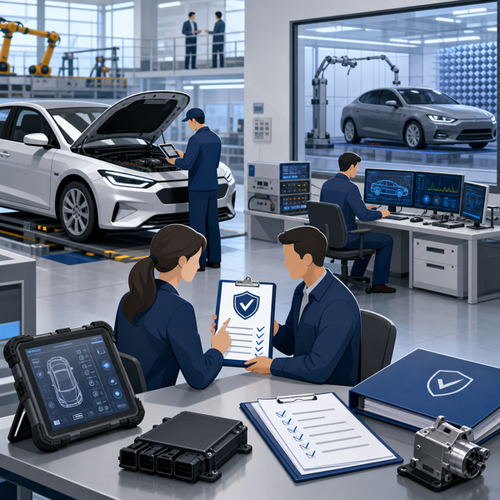
Choosing the right international standards for certification in car informatics and on-board computer systems is now a critical success factor for automotive businesses. In today's rapidly evolving automotive environment—where digital connectivity, safety, and driver experience are paramount—implementing recognized standards boosts productivity, ensures robust security, and enables seamless scaling of complex vehicular systems. This guide covers four foundational standards that underpin informatics and on-board computing in road vehicles, making technology integration more secure, reliable, and future-ready.
Overview / Introduction
Car informatics and on-board computer systems have revolutionized the road vehicle industry, supporting everything from driver assistance systems and multimedia experiences to advanced safety features. This evolution means that vehicle manufacturers, suppliers, and technology providers must rigorously adhere to international standards for interfaces, software integration, and human-machine interaction. Adopting these standards isn't just about achieving regulatory compliance—it's about building trust, ensuring interoperability, managing risk, and unlocking operational efficiencies.
In this article, you'll discover:
- What each key international standard in the field covers
- The main technical requirements and practical implications for organizations
- How certification drives security, productivity, and scale
- Best practices and steps for implementation
Whether you are an original equipment manufacturer (OEM), automotive software developer, or compliance manager, understanding these standards is essential for thriving in the modern automotive landscape.
Detailed Standards Coverage
ISO 17215-2:2014 - Video Communication Interface for Cameras: Service Discovery and Control
Road vehicles — Video communication interface for cameras (VCIC) — Part 2: Service discovery and control
ISO 17215-2:2014 addresses the challenges of managing multiple digital cameras in modern vehicles, focusing on how services—such as video streams—are discovered and controlled. This standard is primarily concerned with the organization and exchange of information between electronic components (like cameras and processing units) using the OSI model’s session (Layer 5) and presentation (Layer 6) layers.
The standard specifies using the scalable service-oriented middleware over IP (SOME/IP), which is AUTOSAR-compatible. It covers the structure and requirements for headers, parameter serialization, runtime behaviour, and service discovery protocol, ensuring smooth integration of camera systems for applications like advanced driver assistance, 360-degree views, and parking aids.
Who should comply?
- Automotive OEMs integrating multiple digital cameras in vehicles
- Component manufacturers and software developers for on-board camera systems
- Third-party system integrators
Implementation ensures seamless camera operation, reduces compatibility risks, and sets the foundation for scalable, future-ready vehicle informatics.
Key highlights:
- Defines discovery and control of camera services via SOME/IP
- OSI model-based approach accommodates wired and wireless connections
- Supports scalable, standardized service implementation for automotive camera networks
Access the full standard:View ISO 17215-2:2014 on iTeh Standards
ISO 21806-5:2020 - MOST Transport/Network Layer Conformance Test Plan
Road vehicles — Media Oriented Systems Transport (MOST) — Part 5: Transport layer and network layer conformance test plan
ISO 21806-5:2020 is critical for validating the integrity and reliability of multimedia networks in road vehicles. MOST (Media Oriented Systems Transport) is commonly employed for synchronous transmission of audio, video, and control data in automotive infotainment systems.
This standard details a conformance test plan (CTP) for the transport and network layers (OSI Layers 3 and 4). It outlines test cases for checking network services, data transport mechanisms, and dynamic behaviors of network nodes. By enforcing these tests, manufacturers can ensure that their MOST implementations meet the highest reliability and interoperability requirements, even under varied operating conditions.
Who should comply?
- Automotive manufacturers and suppliers implementing MOST networks
- Testing and certification laboratories specializing in automotive communication
Proper implementation ensures high-quality multimedia streaming, robust communications, and compliance with converging global standards.
Key highlights:
- Structured test plan for network and transport layer compliance
- Covers network services, data transport, and node behaviors
- Foundation for robust multimedia and infotainment system certification
Access the full standard:View ISO 21806-5:2020 on iTeh Standards
ISO 21956:2019 - Ergonomics Aspects for Keyless Ignition Systems HMI
Road vehicles — Ergonomics aspects of transport information and control systems — Human machine interface specifications for keyless ignition systems
ISO 21956:2019 establishes essential design specifications for the Human Machine Interface (HMI) of keyless ignition systems. These systems are increasingly seen in passenger cars, SUVs, light trucks, and commercial vehicles. The standard emphasizes human factors engineering, user experience, and accident avoidance.
It provides guidance and requirements for:
- Intuitive actuation of keyless ignition controls (pushbutton, rotary dial, etc.)
- Emergency start/stop conditions, addressing engine stall or low battery
- Alerting users to missing keys, inadvertent actuation, and non-standard operating conditions
- Preventing accidental operation and ensuring seamless user warnings
Who should comply?
- Automotive design engineers focused on cockpit architecture
- User interface/UX specialists for in-vehicle controls
- Vehicle manufacturers integrating advanced ignition technologies
Following ISO 21956 ensures safer, more usable in-vehicle ignition experiences and minimizes errors that could affect security and operation.
Key highlights:
- Covers actuation and emergency operation of keyless ignition
- Stresses alerting and ergonomic safeguarding
- Enhances usability and reduces driver error risk
Access the full standard:View ISO 21956:2019 on iTeh Standards
ISO/PAS 8926:2024 - Functional Safety: Use of Pre-existing Software Architectural Elements
Road vehicles — Functional safety — Use of pre-existing software architectural elements
ISO/PAS 8926:2024 presents a forward-looking framework for functional safety in embedded software. Specifically, it addresses the growing need to integrate pre-existing software components—often called commercial off-the-shelf (COTS) or previously developed elements—into systems designed per ISO 26262:2018 (the global automotive functional safety standard).
This specification assists organizations with:
- Assessing the suitability, provenance, and complexity of pre-existing software elements (PSAE)
- Determining the necessary criteria, documentation, and evidence to use these in safety-related applications
- Supporting systematic risk assessment, safety mechanism integration, and thorough verification
- Tailoring safety activities to the risk profile of each PSAE
Who should comply?
- Automotive software engineering teams and safety managers
- Suppliers of embedded automotive software libraries and platforms
- Functional safety auditors and certification bodies
The result is accelerated development with robust safety assurance—even as software reuse becomes more attractive for scaling solutions and reducing costs.
Key highlights:
- Framework for safe integration of pre-existing automotive software
- Classification and complexity assessment of software elements
- Detailed guidance for evidence, documentation, and ongoing validation
Access the full standard:View ISO/PAS 8926:2024 on iTeh Standards
Industry Impact & Compliance
The adoption of internationally recognized standards in car informatics and on-board computing is not just about satisfying compliance requirements. Here’s how these standards transform the way automotive businesses operate:
1. Enhanced Security and Safety Adhering to standards like ISO/PAS 8926:2024 and ISO 17215-2:2014 helps ensure embedded systems—including critical safety functions and video-based driver assistance—are designed, tested, and deployed securely. Standardized safety workflows reduce vulnerabilities and system failures.
2. Increased Productivity and Efficiency Certification against standards streamlines integration, reduces costly engineering rework, and facilitates rapid product updates. For example, ISO 21806-5:2020 ensures reliable network communication in infotainment, minimizing downtime and user complaints.
3. Seamless Scalability and Interoperability International standards promote interoperability across vehicle platforms and suppliers. As vehicles integrate more cameras, sensors, and control systems, standards like ISO 17215-2:2014 provide a common language for devices and middleware—essential for scaling modern connected fleets.
4. Regulatory Compliance and Market Access Global markets increasingly demand proof of recognized certification. Standards-based conformity positions manufacturers as trustworthy, compliant, and competitive, opening new business opportunities.
5. Risk Mitigation & Brand Protection A standards-based approach minimizes the likelihood of product recalls, cybercrime, and litigation. Clear, documented processes and interfaces reduce risk throughout the lifecycle.
Risks of Non-compliance:
- Inoperable or unsafe system integrations
- Increased susceptibility to cyberattacks
- Inability to scale platforms or update in the field
- Regulatory rejections and loss of customer trust
Implementation Guidance
Successfully adopting standards for car informatics and on-board computer systems requires a strategic, phased approach:
Step-by-step implementation best practices:
Gap Assessment
- Conduct a thorough review of current vehicle architectures and workflows against the standard’s requirements (e.g., service discovery protocols, HMI design, safety integration criteria).
- Identify gaps and prioritize based on safety/risk profiles and business objectives.
Stakeholder Engagement
- Involve engineering, compliance, procurement, and supplier teams from the outset to build awareness and buy-in.
Tooling & Test Environment Setup
- Use certified tools and test environments in accordance with standards like ISO 21806-5:2020, especially for network conformance and system validation.
Documentation and Training
- Maintain comprehensive, up-to-date documentation to support certification and future audit needs.
- Deliver targeted training for engineering and operations teams.
Pilot Deployment & Verification
- Roll out new systems or updates in a limited scope to validate compliance before broad deployment.
- Execute all required testcase suites, such as those in ISO 21806-5:2020.
Continuous Monitoring & Improvement
- Establish ongoing review cycles to ensure evolving implementations keep pace with new standard revisions and industry threats.
Additional resources:
- Leverage reference implementations, technical manuals, and industry working groups
- Consult iTeh Standards’ catalog for the latest official document versions and expert practical guides
Conclusion / Next Steps
Informatics and on-board computing are the backbone of next-generation vehicles—and certification to international standards is the best way to guarantee reliable, secure, and scalable automotive innovations. These four standards address video interfaces, transport and network testing, ergonomic human-machine interface design, and critical software safety, building a holistic framework for tomorrow’s connected vehicles.
Key takeaways:
- International standards underpin safety, security, and productivity in modern road vehicle systems
- Certification enables market access, operational efficiency, and risk management
- Implementation is not just a technical challenge—it is a business strategy
Recommendations:
- Continuously evaluate your current car informatics and on-board systems against the relevant ISO standards
- Use these standards as a roadmap for developing new products, integrating new software, or updating legacy systems
- Access detailed standards and guidance directly from iTeh Standards to ensure your implementations are always aligned with the latest industry benchmarks
Take your next step toward automotive excellence: Explore, adopt, and stay updated on all critical standards at iTeh Standards.
Categories
- Latest News
- New Arrivals
- Generalities
- Services and Management
- Natural Sciences
- Health Care
- Environment
- Metrology and Measurement
- Testing
- Mechanical Systems
- Fluid Systems
- Manufacturing
- Energy and Heat
- Electrical Engineering
- Electronics
- Telecommunications
- Information Technology
- Image Technology
- Precision Mechanics
- Road Vehicles
- Railway Engineering
- Shipbuilding
- Aircraft and Space
- Materials Handling
- Packaging
- Textile and Leather
- Clothing
- Agriculture
- Food technology
- Chemical Technology
- Mining and Minerals
- Petroleum
- Metallurgy
- Wood technology
- Glass and Ceramics
- Rubber and Plastics
- Paper Technology
- Paint Industries
- Construction
- Civil Engineering
- Military Engineering
- Entertainment