


Fuel System Standards for Road Vehicles: Ensuring Safety, Efficiency, and Future-Ready Compliance
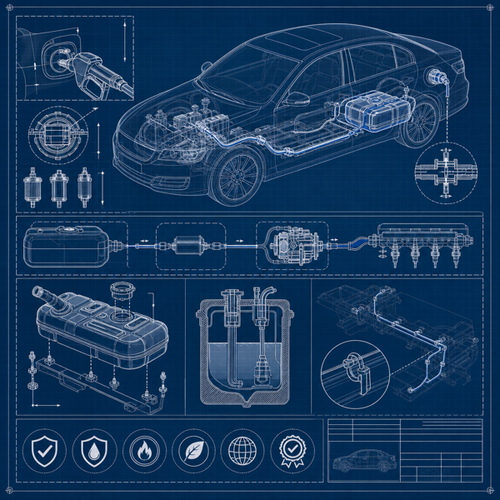
Keeping up with rapid advancements in vehicle technology and fuel diversity, fuel system standards for road vehicles are now more critical than ever. Strict guidelines defined by international standards not only ensure safety and reliability but also drive innovation, competitiveness, and compliance for businesses. Covering four fundamental ISO standards, this article explores the essential requirements and practical implications for compressed gases, liquid fuels, and hydrogen systems in automotive fuel systems, making information accessible and actionable for everyone invested in the road vehicles sector.
Overview / Introduction
The automotive industry is amid a profound transformation, driven by environmental demands, new energy sources like LNG and hydrogen, and heightened expectations for efficiency and safety. Fuel systems, responsible for the safe storage, delivery, and management of fuels, lie at the heart of this shift. To effectively manage the complexity of modern vehicles—ranging from gasoline-powered to alternative fuel and hydrogen-powered cars—compliance with robust fuel system standards is indispensable.
In this comprehensive guide, we break down four pivotal ISO standards governing fuel system components for road vehicles:
- ISO 12614-7:2021 (LNG Pressure Relief Valve—PRV)
- ISO 12619-7:2017 (Gas Injector for CGH2 and Hydrogen/Natural Gas Blends)
- ISO 18418-1:2026 (High-Pressure Liquid Fuel Supply Connections)
- ISO 19887-1:2024 (Hydrogen Fuel System Components—Land Vehicles)
Read on to discover why these standards matter, how they boost productivity, enhance operational security, and enable businesses to scale confidently and sustainably in a globally regulated industry.
Detailed Standards Coverage
ISO 12614-7:2021 - The LNG Pressure Relief Valve Standard
Road vehicles — Liquefied natural gas (LNG) fuel system components — Part 7: Pressure relief valve (PRV)
Scope and Applicability The ISO 12614-7:2021 standard defines the tests, requirements, and functional criteria for pressure relief valves (PRV) used in liquefied natural gas (LNG) fuel systems for road vehicles, as referenced in ISO 3833. It excludes aspects such as fuel containers, stationary engines, container mounts, electronic management systems, and refuelling equipment. Any component not in the standard may be validated through suitable functional testing, as detailed in the document.
Key Requirements and Specifications
- PRVs must withstand working pressures typical for natural gas (1.6 MPa/16 bar), but other system pressures are accommodated by proportional adjustment.
- Comprehensive tests are mandated, covering hydrostatic strength, leakage integrity, operational performance, and continued operation.
- Design and manufacturing must ensure valve integrity across variable pressure conditions and prevent hazardous leaks or failures.
- Clear marking and identification requirements for components to assure traceability.
Who Needs to Comply? This standard is applicable to automotive manufacturers, LNG system suppliers, and workshops servicing vehicles powered by liquefied natural gas. Compliance is critical for vehicle OEMs, conversion kit manufacturers, and parts suppliers who aim to sell or service LNG-fueled road vehicles.
Implementation Implications By adhering to ISO 12614-7:2021, businesses improve vehicle and public safety, reduce liability, and ensure regulatory acceptance for global markets. The standardized approach supports efficient integration of PRVs into complex LNG system architectures, boosting both reliability and consumer confidence.
Notable Features:
- Gauge pressure-based safety performance.
- System pressure adjustability for different LNG vehicle classes.
- Testing to simulate real-world conditions and component longevity.
Access the full standard:View ISO 12614-7:2021 on iTeh Standards
ISO 12619-7:2017 - Gas Injectors for Hydrogen and Natural Gas Blends
Road vehicles — Compressed gaseous hydrogen (CGH2) and hydrogen/natural gas blends fuel system components — Part 7: Gas injector
What This Standard Covers ISO 12619-7:2017 specifies stringent testing and operational requirements for gas injectors and/or fuel rails intended for use in compressed gaseous hydrogen (CGH2) and hydrogen/natural gas blend fuel systems in road vehicles. It is tailored for vehicles powered by CGH2 under ISO 14687 specifications or hydrogen/natural gas blends in accordance with ISO 15403 guidelines. Excluded from its scope are liquefied hydrogen components, fuel containers, fuel cells, mounting hardware, and several other non-related subsystems.
Key Requirements and Specifications
- Evaluation of pneumatic strength, durability (including bench and temperature testing), and insulation resistance of injectors.
- Construction and assembly guidelines that ensure reliable sealing under varying operating conditions.
- Marking, documentation, and traceability for component identification.
- All pressure references must be to gauge pressure, ensuring consistent system safety.
Who is Affected? OEMs, conversion workshops, and suppliers developing road vehicles using CGH2 or hydrogen/natural gas blends—as well as aftermarket parts and service providers—must comply with this standard to ensure that injected gaseous fuels are delivered safely and efficiently.
Practical Implementation Implementing ISO 12619-7:2017 means rigorous testing of injector performance, resilience to pressure cycling, temperature effects, and electrical safety (for electronically operated injectors). This assures durability and consistent function through a broad spectrum of vehicle operating environments.
Key Highlights:
- Focused on safety and consistent injector performance.
- Explicit pressure and durability testing protocols.
- Excludes non-related components for clear scope and applicability.
Access the full standard:View ISO 12619-7:2017 on iTeh Standards
ISO 18418-1:2026 - High-Pressure Fuel Connections for Gasoline Engines
Gasoline engines — High pressure liquid fuel supply connections — Part 1: 60° concave cone connectors
Scope and Details ISO 18418-1:2026 specifies dimensional, material, and pressure requirements for high-pressure liquid fuel pipe connections—particularly externally threaded, 60° concave cone connectors—used in gasoline (spark-ignited) engine fuel injection systems. The standard covers pipe assemblies up to and including 10 mm in outside diameter, stipulating interface designs that ensure reliable, leak-free operation under the extreme pressures of modern high-efficiency engines.
Key Requirements and Specifications
- Strict tolerances and dimensional requirements for cone connectors.
- Specifications for allowable materials to guarantee pressure holding and corrosion resistance.
- Designation, marking, and clear identification of compliant connections.
- Guidance on design pressures for robust, leak-proof pumping and injection.
Who Benefits from This Standard? Automotive manufacturers, fuel injection equipment vendors, and fuel system integrators working with gasoline engines—especially those focused on high-efficiency, direct-injection platforms—rely on this standard to ensure compatibility and safety of engine fuel lines.
Implementation Implications Uniform connection geometry and rigorous quality controls ensure fuel system reliability, support industry-wide interchangeability, accelerate diagnostics, and simplify repairs. By plugging into this specification, manufacturers reduce the risk of leaks, misfit connections, and warranty claims, thereby enhancing long-term productivity and system reliability.
Key Highlights:
- Up-to-date geometric and material specs for 60° cone connectors.
- Promotes cross-supplier compatibility.
- Reduces failure risk in high-pressure fuel systems.
Access the full standard:View ISO 18418-1:2026 on iTeh Standards
ISO 19887-1:2024 - Hydrogen Fuel System Components for Land Vehicles
Gaseous Hydrogen — Fuel system components for hydrogen-fuelled vehicles — Part 1: Land vehicles
Scope and Applications The ISO 19887-1:2024 standard delivers a comprehensive framework specifying requirements for a wide array of compressed hydrogen gas fuel system components in hydrogen-powered land vehicles. This pivotal document covers:
- Valves (check, manual, automatic, container, excess flow)
- Hydrogen injectors
- Pressure sensors, gauges, regulators, and relief devices
- Gastight housings, rigid and flexible fuel lines, filters, and fittings
- Non-metallic, low-pressure rigid fuel lines, discharge line closures
It excludes systems or components covered by major international vehicle manufacturing regulations (e.g., UN GTR No. 13) or that pertain to stationary or liquid hydrogen systems.
Key Requirements and Specifications
- Applicable to components designed for nominal working pressures of 25, 35, 50, or 70 MPa (marked as H25, H35, H50, H70), but allows for custom pressures if proper testing is conducted.
- Sets out extensive guidelines for materials, construction methods, marking, quality assurance, and testing procedures for resilience, leakage, corrosion resistance, vibration, temperature effects, and operational durability.
- Includes requirements for FMEA (Failure Modes and Effects Analysis) and resistance to real-world hazards like UV, salt spray, bending, and abnormal voltages.
- Mandates clear traceability and documentation for all compliant components.
Who Must Follow this Standard? Hydrogen vehicle OEMs, fuel system integrators, parts suppliers, and regulatory authorities overseeing the safety of hydrogen mobility all implement ISO 19887-1:2024. As hydrogen fuel adoption grows, worldwide stakeholders depend on this standard for both compliance and market acceptance.
Implementation in Practice Organizations must design, test, and document all components in accordance with ISO 19887-1 to guarantee system-level safety and reliability. This ensures not only safe daily operation but helps vehicle makers and suppliers gain access to new markets where hydrogen vehicles are increasingly prioritized for decarbonization.
Key Highlights:
- Covers the broadest scope of hydrogen vehicle components in the industry.
- Enables safe fuel system scaling to high-pressure architectures.
- Mandates rigorous quality controls and operational testing.
Access the full standard:View ISO 19887-1:2024 on iTeh Standards
Industry Impact & Compliance
How Standards Affect Businesses
The implementation of international fuel system standards is a non-negotiable for businesses operating in today’s competitive and highly regulated road vehicles sector. These standards touch multiple dimensions of corporate operations:
- Safety: Comprehensive testing and proven component integrity drastically reduce the risk of failures, recalls, and accidents.
- Regulatory Compliance: Compliance is fundamental for market access—vehicles not built or serviced to standard face import/export bans and liability challenges.
- Productivity: Standardized components streamline manufacturing, procurement, and maintenance, reducing cost and minimizing downtime.
- Innovation & Scaling: Standards support safe adoption of advanced fuels (hydrogen, LNG) and next-generation powertrains, future-proofing business models.
- Brand Reputation: Adhering to international benchmarks signals quality and responsibility to consumers and regulators alike.
Risks of Non-Compliance
Organizations ignoring or delaying standards implementation expose themselves to significant operational, legal, and reputational risk. Failing to comply can lead to product recalls, denied insurance claims, or exclusion from promising new markets, putting both people and business continuity at risk.
Implementation Guidance
Approaches to Implementation
- Gap Analysis: Conduct a thorough review of current processes, comparing in-house practices to ISO requirements (such as pressure, leakage, or material standards).
- Staff Training: Ensure engineering, manufacturing, and maintenance staff fully understand relevant standard provisions and how they relate to daily operations.
- Component Testing: Invest in or partner with accredited labs for pressure, leakage, compatibility, operational, and environmental testing as specified in each document.
- Documentation and Traceability: Maintain rigorous records to demonstrate component compliance and complete traceability, as mandated by the standards.
Best Practices
- Build compliance into the design process rather than as a post-production hurdle.
- Regularly update knowledge of international standards to keep pace with evolving requirements in hydrogen, LNG, and gasoline fuel systems.
- Use standardized components where possible to reduce costs and minimize risk of supply chain disruption.
- Leverage resources from authoritative platforms, such as iTeh Standards, for the most current documentation and interpretations.
Resources for Organizations
- Access full and up-to-date versions of ISO standards from trusted providers.
- Collaborate with industry working groups to share best practices.
- Seek technical support or advisory services for interpreting and applying complex standard provisions.
Conclusion / Next Steps
The adoption of international fuel system standards is no longer optional—it is a core enabler for automotive businesses that wish to compete, innovate, and scale in a future shaped by new fuels and evolving regulatory landscapes. By applying ISO 12614-7, ISO 12619-7, ISO 18418-1, and ISO 19887-1, organizations not only ensure safety and compliance but unlock significant potential for improved productivity, security, and reputation.
Key Takeaways:
- Standards make state-of-the-art fuel system safety and efficiency accessible to all industry players.
- Compliance fosters expansion into new markets and ready adaptation to coming energy transitions.
- Robust testing, quality assurance, and traceability are at the heart of modern automotive fuel system management.
Recommendation: Organizations—from automotive OEMs to part suppliers and service shops—should regularly review and integrate the latest fuel system standards into both daily operations and long-term planning. Begin by exploring the full text and expert interpretations of these standards through iTeh Standards, ensuring your business is equipped for today and resilient for tomorrow.
Discover more standards for vehicle safety and fuel systems:Explore iTeh Standards
Categories
- Latest News
- New Arrivals
- Generalities
- Services and Management
- Natural Sciences
- Health Care
- Environment
- Metrology and Measurement
- Testing
- Mechanical Systems
- Fluid Systems
- Manufacturing
- Energy and Heat
- Electrical Engineering
- Electronics
- Telecommunications
- Information Technology
- Image Technology
- Precision Mechanics
- Road Vehicles
- Railway Engineering
- Shipbuilding
- Aircraft and Space
- Materials Handling
- Packaging
- Textile and Leather
- Clothing
- Agriculture
- Food technology
- Chemical Technology
- Mining and Minerals
- Petroleum
- Metallurgy
- Wood technology
- Glass and Ceramics
- Rubber and Plastics
- Paper Technology
- Paint Industries
- Construction
- Civil Engineering
- Military Engineering
- Entertainment