


Key Standards for Electrical and Electronic Equipment in Road Vehicles: Productivity, Safety, and Scalability
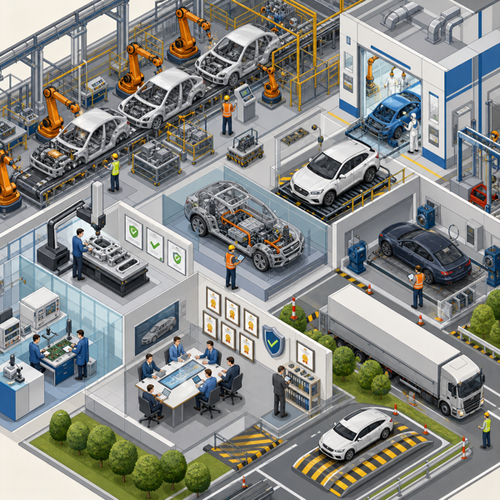
When it comes to modern road vehicles, the complexity and criticality of electrical and electronic equipment has never been greater. As trucks, buses, trailers, and passenger vehicles incorporate ever more automation, connectivity, and electrification features, compliance with international standards for connectors and functional safety isn’t just a regulatory matter—it’s essential for business productivity, security, system scalability, and market leadership. This article explores four pivotal international standards from the ISO family, each of which provides detailed requirements, tests, and implementation guidelines to secure road vehicle electrical systems and ensure their reliable operation. Understanding and applying these standards empowers organizations to create safer, more efficient, and future-proof automotive products.
Overview / Introduction
In the dynamic automotive industry, electrical and electronic systems have become the backbone of vehicle performance, safety, and user experience. From the robust four-pole connectors that power vital subsystems to the sophisticated frameworks safeguarding vehicle electronics from malfunction or cyber threats, standards play a crucial role in harmonizing technologies, mitigating risk, and enabling global supply chains. This article unpacks:
- Why having standardized practices is essential for manufacturers and suppliers
- What key ISO standards demand from road vehicle connectors and E/E systems
- The benefits businesses gain from embracing these standards, including greater productivity, resilience, and scalability
- Step-by-step guidance for implementing and maintaining compliance
After reading, both professionals and the broader public will grasp why these standards are foundational for the present and future of automotive technology.
Detailed Standards Coverage
ISO 20076:2019 – Voltage Class B Connectors: Test Methods and Performance Requirements
Road vehicles — Test methods and performance requirements for voltage class B connectors
This standard targets connectors operating within “voltage class B” (typically above 60 V DC and below 1500 V DC, which covers most electric vehicle propulsion and high-voltage accessory systems). It provides robust test methods and defines the general performance requirements for both single- and multi-pole connectors used with vehicle wiring harnesses.
The document applies only to connectors designed for repair and maintenance disconnects, not for charging ports or internal device connections. The scope covers cable conductor sizes from 1.5 mm² up to 120 mm², ensuring broad applicability from small passenger EVs to large commercial vehicles.
Key test categories include:
- Mechanical (tensile strength, locking integrity, resistance to drop and vibration)
- Electrical (insulation resistance, voltage withstand, temperature rise, connection resistance)
- Environmental (water tightness, thermal cycling, dust infiltration, thermal aging)
- Safety features such as unintentional release resistance, coding, polarization effectiveness, and disengagement force
Who needs to comply:
- Electric vehicle connector designers and manufacturers
- Automotive engineering teams integrating high-voltage cables
- Aftermarket service providers maintaining electric vehicle subassemblies
Practical implications: Compliance assures customers and regulators that connectors will safely handle the required voltages, resist environmental stress, and maintain secure operation over time—crucial for the safety and reliability of electric vehicles.
Key highlights:
- Rigid mechanical and electrical testing protocols
- Lifecycle (aging and cycling) validation under real-world stress conditions
- Focused on safety for high-voltage EV connectors
Access the full standard:View ISO 20076:2019 on iTeh Standards
ISO 26262-10:2018 – Functional Safety: Guidelines on ISO 26262
Road vehicles — Functional safety — Part 10: Guidelines on ISO 26262
ISO 26262-10:2018 is the cornerstone guidance document in the ISO 26262 family, offering clarity and elaboration on the entire series. Beyond mere safety system requirements, it introduces fundamental concepts and structured methodologies for ensuring that safety-related electrical/electronic (E/E) systems in series production vehicles perform reliably—all across their lifecycle—from concept through decommissioning.
This part does not impose requirements directly but helps organizations understand and apply functional safety principles—such as risk assessment, confirmation measures, safety case lifecycle, and Automotive Safety Integrity Levels (ASIL). It is of key importance for:
- Integrating functional safety in a company’s specific development framework
- Understanding fault types (systematic, random), behavior under failures, and interaction of E/E components
- Managing the overall safety lifecycle for new and existing systems, even when incorporating components developed outside ISO 26262
Who needs to comply:
- Automotive systems engineers and safety officers
- Vehicle OEMs and suppliers responsible for E/E systems
- Functional safety consultants and process managers
Practical implications: Adopting ISO 26262-10 ensures coherent safety management across teams and suppliers, simplifies regulatory approval, and dramatically reduces risk of catastrophic system failures—protecting both users and brands.
Key highlights:
- Extensive guidelines on implementing and tailoring ISO 26262 throughout the product and process lifecycle
- Explains ASIL assignment, risk analysis, and safety lifecycle management
- Essential for firms integrating legacy and new safety-related systems
Access the full standard:View ISO 26262-10:2018 on iTeh Standards
ISO 26262-8:2018 – Functional Safety: Supporting Processes
Road vehicles — Functional safety — Part 8: Supporting processes
This standard identifies supporting processes essential to achieving overall functional safety as outlined in ISO 26262, with a focus on organization-wide, cross-cutting functions. It provides detailed process-level requirements for tasks such as safety requirements management, configuration and change management, verification, documentation control, tool qualification, hardware evaluation, and proven-in-use arguments.
The standard addresses both systems developed under ISO 26262 and integration of existing (legacy) components, ensuring that all safety-related systems are managed and verified to a consistent, high standard—no matter their origin. For organizations using distributed development models, ISO 26262-8 clarifies interfaces and supplier collaboration agreements, making compliance manageable across the extended supply chain.
Who needs to comply:
- Safety managers
- System architects overseeing cross-team developments
- Automotive OEMs and suppliers integrating third-party/legacy safety systems
Practical implications: Implementing this standard helps coordinate distributed global development, improving traceability, accountability, and adaptation to post-production modifications. It is indispensable for demonstrating a robust, audit-ready safety case.
Key highlights:
- Formal requirements for safety management, supplier coordination, and documentation
- Detailed process checks for verification, configuration management, and change handling
- Enables seamless integration of both new and legacy safety-related hardware/software
Access the full standard:View ISO 26262-8:2018 on iTeh Standards
Industry Impact & Compliance
Adhering to these standards is not just about avoiding penalties—it’s about building organizational resilience and achieving industry-leading quality. Here’s why:
- Business value: Standards like ISO 15170-2 and ISO 20076 assure clients, partners, and end-users that products are robust, safe, and interoperable—opening global markets and reducing liability risks.
- Regulatory requirement: Increasingly, regional regulations reference or require compliance with these ISO standards as a pre-condition for market access or government contracts.
- Operational excellence: Standardization reduces the chance of costly failures, recalls, or safety incidents. It fosters clear communication across the supply chain, improves manufacturing consistency, and accelerates innovation cycles by providing common reference points.
- Scaling and maintenance: Properly implemented standards allow for easier integration of new technologies (e.g., EV systems, autonomous driving modules) and simpler maintenance over the product lifetime—saving costs and boosting productivity.
- Risks of non-compliance: Non-compliance can result in denied market access, expensive recalls, reputational damage, or—most seriously—threats to user safety and legal consequences after an incident.
Implementation Guidance
Successfully adopting and maintaining these standards requires a structured approach:
- Gap Analysis: Compare existing practices to the standard’s requirements, identifying gaps in process, testing, or documentation.
- Training: Equip teams (engineering, production, quality, safety) with detailed knowledge of the standard’s goals, practical specifications, and documentation needs.
- Process Integration: Embed standard requirements into engineering processes—from design and prototyping to testing, production, and maintenance. Use tools for configuration and change management, especially for ISO 26262.
- Supplier Management: Ensure vendors and partners are likewise compliant. Use the standard as a foundation for quality agreements and periodic audits.
- Verification & Audit: Establish robust verification plans and periodic internal/external audits to ensure ongoing compliance.
- Continuous Improvement: Leverage feedback (internal testing, field performance, audit findings) to refine processes and future-proof systems as standards evolve.
Best Practices:
- Begin standardization at the earliest stages of design to minimize re-engineering efforts later
- Involve all stakeholders (engineering, sourcing, compliance, service) in implementation planning
- Maintain clear, accessible records that can withstand external audit and provide traceability for all key decisions
- Regularly participate in industry forums and training to remain up-to-date with evolving standards
Organizational resources might include hiring or designating functional safety engineers, investing in training programs, subscribing to standards databases, and participating in national/international standards committees.
Conclusion / Next Steps
The future of road vehicles—whether diesel-powered, electric, or autonomous—relies on the seamless, safe, and consistent functioning of electrical and electronic equipment. Compliance with ISO standards like ISO 15170-2:2001, ISO 20076:2019, ISO 26262-10:2018, and ISO 26262-8:2018 is no longer optional for companies seeking market leadership, operational efficiency, and customer trust.
Key takeaways:
- Standardization increases system reliability, simplifies global trade, and boosts productivity
- Adhering to these benchmarks demonstrates proactive risk management and industry best practices
- Investing in implementation pays off with fewer recalls, stronger brand reputation, and improved regulatory compliance
Recommendations:
- Continually review and update your organization’s processes in line with the latest editions
- Make use of platforms like iTeh Standards to access full documents, stay informed, and share knowledge internally
- Create a systematic, cross-functional compliance plan and treat standards not as bureaucratic hurdles, but business enablers
Ready to secure your company’s future in the evolving automotive landscape? Explore the standards above and partner with reliable resources like iTeh Standards to ensure safe, productive, and scalable growth in the world of road vehicles.
Categories
- Latest News
- New Arrivals
- Generalities
- Services and Management
- Natural Sciences
- Health Care
- Environment
- Metrology and Measurement
- Testing
- Mechanical Systems
- Fluid Systems
- Manufacturing
- Energy and Heat
- Electrical Engineering
- Electronics
- Telecommunications
- Information Technology
- Image Technology
- Precision Mechanics
- Road Vehicles
- Railway Engineering
- Shipbuilding
- Aircraft and Space
- Materials Handling
- Packaging
- Textile and Leather
- Clothing
- Agriculture
- Food technology
- Chemical Technology
- Mining and Minerals
- Petroleum
- Metallurgy
- Wood technology
- Glass and Ceramics
- Rubber and Plastics
- Paper Technology
- Paint Industries
- Construction
- Civil Engineering
- Military Engineering
- Entertainment