


Understanding Essential Standards for Thermosetting Materials: Unsaturated-Polyester & Epoxy Resin Compounds
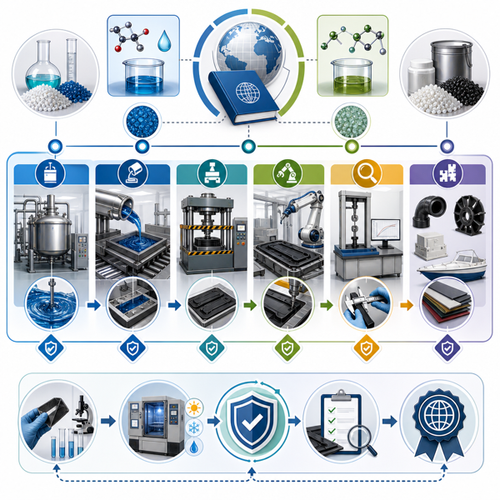
Ensuring product consistency, maximizing efficiency, and maintaining material safety have become non-negotiable priorities for businesses in the fast-evolving rubber and plastics sector. Among the most critical industrial materials are thermosetting polymers, essential for durable, high-performance products across a range of manufacturing sectors. At the core of reliable thermoset usage are authoritative international standards—specifically those governing unsaturated-polyester powder moulding compounds and epoxy resins. This article provides a deep dive into two such standards: SIST EN ISO 14530-3:2000 and SIST EN ISO 3673-1:2000.
Adopting and implementing these standards isn’t just about compliance—it’s a strategic move enabling organizations to drive productivity, boost material security, guarantee product quality, and expand confidently into new markets. Whether you are a manufacturer, polymer chemist, process engineer, or quality assurance manager, understanding these guidelines is vital for business scaling and future-proofing operations.
Overview / Introduction
The rubber and plastics industry is foundational to countless modern products—from automotive components to consumer electronics and infrastructure. Thermosetting materials, particularly unsaturated-polyester compounds and epoxy resins, are prized for their mechanical strength, chemical resistance, and versatile processing options.
In recent years, precise material performance and regulatory compliance have become fundamental requirements, not only to satisfy client demands but also to ensure longevity, safety, and reliability. International standards offer universally recognized specifications, reducing risks and ensuring that products perform as intended. This guide explores:
- The key international standards governing thermosetting material properties and classification.
- Who needs to comply and why it matters for scaling operations, productivity, and security.
- How these specifications foster innovation, reduce production errors, and harmonize supply chains.
Detailed Standards Coverage
SIST EN ISO 14530-3:2000 - Requirements for Unsaturated-Polyester Powder Moulding Compounds
Plastics - Unsaturated-Polyester Powder Moulding Compounds (UP-PMCs) – Part 3: Requirements for Selected Moulding Compounds (ISO 14530-3:1999)
SIST EN ISO 14530-3:2000 is a cornerstone standard for unsaturated-polyester powder moulding compounds (UP-PMCs), focusing on those with distinct compositions and properties that are technologically and economically significant. The standard defines precise requirements for both the physical and chemical properties of UP-PMCs, as well as for the test specimens created through compression or injection moulding processes.
What This Standard Covers
- Scope: Details requirements for UP-PMCs with unique formulation characteristics, widely used in industries like automotive, electronics, and construction for parts demanding high durability and chemical resistance.
- Classification: Compound types are categorized based on composition and functional properties, using a designation system outlined in ISO 14530-1.
- Testing methodology: Specifies test methods and conditions (largely from ISO 14530-2) to ensure consistent evaluation of product performance.
Key Requirements and Specifications
- Minimum standards for mechanical properties (e.g., tensile and flexural strength)
- Chemical resistance and environmental stability
- Reproducibility in test results through standardized specimen preparation
- Comprehensive reporting structure for manufacturers and suppliers
Target Industries and Organizations
This standard is vital for:
- UP-PMC manufacturers
- Suppliers and converters in plastics processing
- Automotive part makers
- Electrical and electronics component manufacturers
- Quality assurance and R&D labs working with thermosetting compounds
Practical Implementation Implications
Implementing this standard supports a systematic approach to product development, procurement, and customer delivery. Conformance assures clients that supplied compounds consistently meet industry expectations for safety, performance, and durability.
Unique features such as categorization by the designation system improve communication and traceability across global supply chains. With universal testing methods, it becomes much easier to compare suppliers, audit quality, and certify both new and legacy compound batches.
Key highlights:
- Standardizes test methods to enable direct comparison across different suppliers
- Facilitates product qualification for regulated markets and critical applications
- Enhances traceability and reporting for both technical and economic decision-making
Access the full standard:View SIST EN ISO 14530-3:2000 on iTeh Standards
SIST EN ISO 3673-1:2000 - Designation System for Epoxy Resins
Plastics - Epoxy Resins – Part 1: Designation (ISO 3673-1:1996)
Epoxy resins represent another major class of thermosetting polymers vital for coatings, adhesives, and advanced composites. The SIST EN ISO 3673-1:2000 standard defines a systematic method for assigning designations to commercial epoxy resins. This coded system conveys critical information such as chemical base, main performance properties, and the presence of modifiers, additives, or solvents.
What This Standard Covers
- Scope: Provides a structured classification for all epoxy resin products, assisting both suppliers and end-users in selecting the appropriate resin for each application.
- Methodology: Assigns an "EP" symbol followed by a five-digit code. The code reflects significant details (chemical family, viscosity, modifications), promoting clear and effective communication across the industry.
Key Requirements and Specifications
- Use of standardized nomenclature for consistent material identification
- Encodes base chemical type, property benchmarks, and secondary characteristics
- Supports manufacturers in issuing reliable technical datasheets
- Links to common test methods for density, viscosity, and epoxy equivalent
Target Industries and Organizations
Ideal for wide-ranging users including:
- Epoxy resin producers and formulators
- Procurement teams for adhesives, coatings, and composite manufacturing
- Quality control managers and product designers
- Regulatory agencies evaluating material declarations
Practical Implementation Implications
Applying the designation system reduces misunderstandings during procurement and product development. It provides an instant snapshot of a resin’s suitability for intended uses, streamlining both internal R&D and customer interactions. Technical documentation becomes more reliable and actionable, assisting compliance and long-term traceability of products.
Key highlights:
- Simplifies comparison and selection of epoxy resin grades across suppliers
- Supports regulatory and quality documentation
- Reduces the risk of costly material misapplication in sensitive end uses
Access the full standard:View SIST EN ISO 3673-1:2000 on iTeh Standards
Industry Impact & Compliance
Complying with international standards for thermosetting materials offers immense advantages:
- Productivity: By instituting consistent material properties and test methods, process interruptions and production errors are greatly reduced. Teams spend less time troubleshooting and more time innovating.
- Security: Traceable, standardized compounds ensure predictability in mechanical and chemical performance—essential for safety- and mission-critical sectors (e.g., automotive, railway, and aerospace).
- Scaling: Uniform specifications enable seamless integration with new suppliers and streamlined qualification of materials for expanded product lines and geographies.
- Market Access: Meeting these rigorous standards is often a prerequisite for entering international supply chains or selling into regulated industries.
Risks of Non-Compliance
Neglecting these standards can lead to serious business risks:
- Increased likelihood of field failures, material recalls, and warranty claims
- Loss of supplier or client trust due to inconsistent performance
- Regulatory fines or blocked market entry in certain jurisdictions
Implementation Guidance
Common Implementation Approaches
- Gap analysis: Assess current material specifications and testing processes versus the relevant standard’s requirements.
- Staff training: Educate R&D, production, and quality teams on new classification and test methods.
- Material documentation: Collect and update technical datasheets, incorporating the correct designation codes and test results.
- Supplier evaluation: Audit your suppliers for conformity with ISO standard practices and designation systems.
- Internal audits: Establish periodic checks to ensure ongoing compliance and pursue continuous improvement.
Best Practices for Adopting These Standards
- Integrate standard requirements early during product design and procurement
- Use official test methods to verify incoming material quality
- Build standard designations and physical property data into digital inventory/ERP systems
- Communicate standard conformance clearly with customers and in marketing materials
Resources for Organizations
- Training modules on international thermosetting standards
- Testing laboratories accredited for ISO/EN property evaluation
- Digital tools for designation management and traceability
- Technical support from standards organizations like iTeh Standards and industry associations
Conclusion / Next Steps
Thermosetting materials such as UP-PMCs and epoxy resins underpin many of the world’s most innovative and high-performance products. Adopting essential standards like SIST EN ISO 14530-3:2000 and SIST EN ISO 3673-1:2000 gives manufacturers and suppliers the competitive edge—enabling robust quality systems, customer confidence, and regulatory agility.
By following these standards, organizations not only maximize productivity and streamline scaling but also ensure operational security and sustainable growth. For professionals in the rubber and plastics industry, staying current and compliant with global best practices is an investment in quality and reputation.
Explore the full texts of these key standards on iTeh Standards to take the next step toward best-in-class thermosetting material management, implementation, and compliance.
Categories
- Latest News
- New Arrivals
- Generalities
- Services and Management
- Natural Sciences
- Health Care
- Environment
- Metrology and Measurement
- Testing
- Mechanical Systems
- Fluid Systems
- Manufacturing
- Energy and Heat
- Electrical Engineering
- Electronics
- Telecommunications
- Information Technology
- Image Technology
- Precision Mechanics
- Road Vehicles
- Railway Engineering
- Shipbuilding
- Aircraft and Space
- Materials Handling
- Packaging
- Textile and Leather
- Clothing
- Agriculture
- Food technology
- Chemical Technology
- Mining and Minerals
- Petroleum
- Metallurgy
- Wood technology
- Glass and Ceramics
- Rubber and Plastics
- Paper Technology
- Paint Industries
- Construction
- Civil Engineering
- Military Engineering
- Entertainment