


August 2026: New Standard Enhances Methanol Bunkering for Marine Vessels
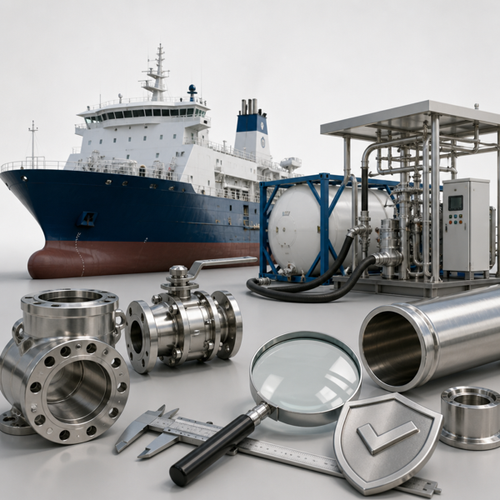
The landscape of marine fuel operations is rapidly evolving in response to environmental, safety, and regulatory priorities. In August 2026, a pivotal step was taken for the shipbuilding and marine structures sector: the publication of ISO 22120:2026 — Ships and Marine Technology — Specification for Bunkering of Methanol Fuelled Vessels. This single, yet comprehensive, international standard establishes robust requirements for the safe transfer and handling of methanol as a marine fuel. For vessel operators, technical leaders, and compliance officers, ISO 22120:2026 represents a new benchmark for safer, more efficient marine fuel bunkering worldwide.
Overview
The shipbuilding and marine structures industry is undergoing transformative change, with alternative fuels like methanol becoming increasingly pivotal for lowering greenhouse gas emissions and meeting global sustainability goals. The adoption of such alternative fuels, however, brings unique operational risks and challenges—particularly during bunkering, the process of transferring fuel to a vessel.
International standards are essential to ensure uniform safety, operational, and quality practices across diverse vessel types and geographies. They mitigate risks associated with hazardous substances, protect crew and port communities, and facilitate robust regulatory compliance. This article dissects ISO 22120:2026, detailing how it streamlines the bunkering of methanol-fuelled vessels and offers actionable guidance for maritime stakeholders.
Detailed Standards Coverage
ISO 22120:2026 - Specification for Bunkering of Methanol Fuelled Vessels
Ships and Marine Technology — Specification for Bunkering of Methanol Fuelled Vessels
This new standard from ISO is a direct response to rising methanol usage as a clean marine fuel, aimed at both international and domestic vessels. ISO 22120:2026 provides comprehensive requirements for methanol bunkering transfer systems and equipment, covering five central elements:
- Transfer Systems
- Operational Procedures
- Risk Assessment
- Safety Protection
- Personnel Training
Scope and Structure
The standard is crafted to provide flexibility and applicability across a wide range of ships and bunkering settings. It dovetails with major regulatory regimes, including the IMO International Code of Safety for Ships Using Gases or Other Low-flashpoint Fuels (IGF Code) and the IMO Interim Guidelines for the Safety of Ships Using Methyl/Ethyl Alcohol as Fuel (MSC.1/Circ.1621).
Key Requirements and Specifications
- Transfer System Provisions: Defines detailed specifications for equipment such as hoses, flanges, loading arms, emergency shutdown (ESD) systems, and emergency release systems (ERS). Hoses must conform to standards like ISO 27126, EN 13765, and EN 12115, be hydrostatically tested, and be visibly marked with key operating parameters.
- Facility Requirements: Mobile and fixed facilities must ensure safe transfer, avoidance of hazardous vapour dispersal, and maintenance in line with best industry practice. Competent organizations or qualified engineers must certify that a terminal achieves a high safety level.
- Operational Procedures: Outlines required pre-transfer checks, compatibility assessments, inerting and drying of lines, safe connection and disconnection protocols, and robust documentation processes.
- Risk Assessment: Mandates both qualitative (HAZOP, FMEA) and quantitative (QRA) risk assessments depending on complexity and scenario. Defines procedures for establishing hazardous, safety, and security zones based on detailed risk modeling.
- Safety Protection: Addresses requirements for PPE, fire and explosion protection systems (including infrared fire detection for methanol’s invisible flames), static electricity control, lightning protection, and emergency procedures.
- Training Requirements: Sets out comprehensive mandatory and scenario-based training programs for both vessel and shore-side personnel involved in methanol bunkering operations.
Target Audience
Compliance with ISO 22120:2026 is essential for:
- Shipbuilders and ship operators
- Terminal and port operators
- Fuel suppliers and bunkering service providers
- Engineers responsible for transfer system design and maintenance
- Quality managers and compliance officers overseeing marine safety
Practical Implementation
Organizations must ensure:
- Procurement and deployment of compliant equipment
- Development of site-specific procedures and checklists
- Regular risk assessments for every operation
- Robust record-keeping and documentation aligned with Annexes A and B of the standard
- Ongoing competency and scenario-based personnel training
Key highlights:
- Mandates stringent specifications for methanol transfer equipment and emergency systems
- Integrates qualitative and quantitative risk assessment methodologies
- Codifies advanced safety practices, including PPE and fire protection
Access the full standard:View ISO 22120:2026 on iTeh Standards
Industry Impact & Compliance
The release of ISO 22120:2026 arrives at a critical time for maritime decarbonization efforts. By standardizing bunkering for methanol-fuelled vessels, the industry gains a uniform benchmark for:
- Minimizing operational and environmental risks associated with alternative fuels
- Satisfying insurance, regulatory, and client audit requirements
- Facilitating alignment with major international guidelines (IMO, IGF Code)
- Enabling cross-border and multi-vessel operational harmonization
Compliance Considerations
- Operators must conduct gap analyses to benchmark existing bunkering practices against ISO 22120:2026 requirements.
- Implementation should be prioritized for newbuild vessels, retrofitting of bunkering infrastructure, and staff upskilling.
- Transitional periods may be defined by local authorities or flag states; proactive adoption avoids non-compliance risks such as interrupted operations or reputational harm.
Benefits of Early Adoption
- Enhanced crew safety and asset protection
- Greater confidence for clients, insurers, and regulators
- Increased operational efficiency and readiness for future fuel innovations
- Reduced likelihood of costly incidents or regulatory penalties
Risks of Non-Compliance
- Legal and regulatory repercussions
- Operational shutdowns during audits or incidents
- Increased risk of occupational injuries and environmental damage
Technical Insights
Overarching Technical Requirements
Across its coverage, ISO 22120:2026 emphasizes:
- Compatibility: All methanol-compatible hoses, couplings, and loading arms must meet rigorous standards and be regularly tested, marked, and inspected.
- Emergency Preparedness: Integrated ESD and ERS systems connected across both the bunkering facility and vessel, designed for coordinated and rapid response.
- Fire Safety: Methanol’s unique risk profile demands enhanced fire detection (infrared), robust foam-based extinguishing systems, and redundancy in alarms and power supply.
- Static and Electrical Safety: Bonding, grounding, and insulation procedures are meticulously detailed to mitigate ignition risks due to static discharge or differences in electrical potential.
Implementation Best Practices
- Conduct routine training, including scenario-based drills and refresher courses, for all personnel
- Regularly audit transfer equipment and maintain records according to manufacturer and classification society requirements
- Establish site-specific bunkering plans and risk assessments, updating them following any operational changes
- Coordinate closely with local port authorities to define and enforce safety and security zones
Certification and Testing Considerations
- Leverage recognized industry standards for all transfer system components
- Document all qualification, testing, and inspection activities— particularly for hoses, safety devices, and communications
- Validate compliance through third-party audits where appropriate
Conclusion and Next Steps
The introduction of ISO 22120:2026 marks a major leap forward for safe and sustainable operations in shipbuilding and marine structures. As methanol emerges as a key solution for cutting marine emissions, standardized, rigorous bunkering practices become essential for all industry participants.
Key takeaways:
- ISO 22120:2026 delivers holistic guidance on methanol bunkering safety and technical excellence
- Rapid adoption is highly recommended to stay ahead of regulatory and client expectations
- Ongoing personnel training, system testing, and operational reviews are essential for sustained compliance
Recommendations:
- Begin with a comprehensive review of current practices relative to the new standard
- Engage with recognized organizations or classification societies for compliance support
- Explore the full standard on iTeh Standards, and subscribe for future updates on marine fuel safety and innovation
Ready to implement safer methanol bunkering?Access ISO 22120:2026 now on iTeh Standards
Stay informed with iTeh Standards for the latest and most authoritative guidance in marine technology and shipbuilding.
Categories
- Latest News
- New Arrivals
- Generalities
- Services and Management
- Natural Sciences
- Health Care
- Environment
- Metrology and Measurement
- Testing
- Mechanical Systems
- Fluid Systems
- Manufacturing
- Energy and Heat
- Electrical Engineering
- Electronics
- Telecommunications
- Information Technology
- Image Technology
- Precision Mechanics
- Road Vehicles
- Railway Engineering
- Shipbuilding
- Aircraft and Space
- Materials Handling
- Packaging
- Textile and Leather
- Clothing
- Agriculture
- Food technology
- Chemical Technology
- Mining and Minerals
- Petroleum
- Metallurgy
- Wood technology
- Glass and Ceramics
- Rubber and Plastics
- Paper Technology
- Paint Industries
- Construction
- Civil Engineering
- Military Engineering
- Entertainment