


ASTM C1523-17
(Test Method)Standard Test Method for Determining Modulus, Tear and Adhesion Properties of Precured Elastomeric Joint Sealants
Standard Test Method for Determining Modulus, Tear and Adhesion Properties of Precured Elastomeric Joint Sealants
SIGNIFICANCE AND USE
5.1 Seals are manufactured in flat extruded shapes and are primarily used to span joint openings. The seal is adhered to construction substrates utilizing a liquid applied adhesive, to seal building openings such as panel joints, metal flashing joints or other joints in place of conventional liquid applied sealants. In actual use, failure of an applied seal in an active joint is usually manifested by cohesive failure of the seal; adhesive failure between the adhesive and the substrate; adhesive failure between the adhesive and the seal; cohesive failure of the substrate or tear propagation parallel to the joint length.
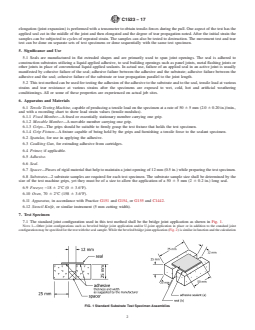
FIG. 1 Standard Substrate Test Specimen Assemblies
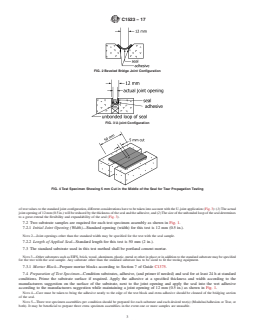
FIG. 2 Beveled Bridge Joint Configuration
FIG. 3 U-joint Configuration
FIG. 4 Test Specimen Showing 5 mm Cut in the Middle of the Seal for Tear Propagation Testing
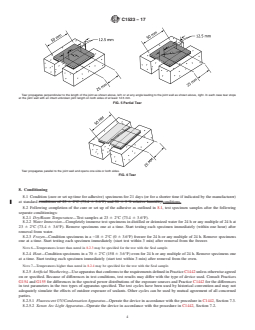
FIG. 5 Partial Tear
Tear propagates perpendicular to the length of the joint as shown above, left; or at any angle leading to the joint wall as shown above, right. In each case tear stops at the joint wall with an intact unbroken joint length on both sides of at least 12.5 mm.
FIG. 6 Tear
Tear propagates parallel to the joint wall and opens one side or both sides.
5.2 This test method can be used for testing the adhesion of the adhesive to the substrate and to the seal, tensile load at various strains and tear resistance at various strains after the specimens are exposed to wet, cold, hot and artificial weathering conditionings. All or some of these properties are experienced on actual job sites.
SCOPE
1.1 This test method describes a laboratory procedure for measuring modulus, tear, joint movement ability and adhesion properties of applied, Precured Elastomeric Joint Sealants, hereinafter referred to as “applied seal” and if not applied, hereinafter referred to as “seal,” on portland cement mortar as a standard substrate and or other substrates. It tests these properties after dry, wet, frozen, heat aged or artificially weather-aged conditionings, or both.
1.2 The values stated in SI units are to be regarded as the standard. The values given in parentheses are provided for information only.
1.3 This standard does not purport to address all of the safety concerns, if any, associated with its use. It is the responsibility of the user of this standard to establish appropriate safety and health practices and determine the applicability of regulatory limitations prior to use.
1.4 The committee with jurisdiction over this standard is not aware of any similar standard published by another committee or organization.
1.5 This international standard was developed in accordance with internationally recognized principles on standardization established in the Decision on Principles for the Development of International Standards, Guides and Recommendations issued by the World Trade Organization Technical Barriers to Trade (TBT) Committee.
General Information
- Status
- Published
- Publication Date
- 31-May-2017
- Technical Committee
- C24 - Building Seals and Sealants
- Drafting Committee
- C24.30 - Adhesion
Relations
- Effective Date
- 01-Jun-2017
- Refers
ASTM C1375-00(2020) - Standard Guide for Substrates Used in Testing Building Seals and Sealants - Effective Date
- 01-Jan-2020
- Effective Date
- 01-Mar-2019
- Effective Date
- 01-Mar-2018
- Effective Date
- 01-Nov-2017
- Effective Date
- 01-Jan-2017
- Effective Date
- 15-Nov-2016
- Effective Date
- 01-Sep-2016
- Effective Date
- 01-May-2014
- Effective Date
- 01-Mar-2014
- Effective Date
- 01-Feb-2014
- Refers
ASTM C1375-00(2014) - Standard Guide for Substrates Used in Testing Building Seals and Sealants - Effective Date
- 01-Jan-2014
- Effective Date
- 01-Nov-2013
- Effective Date
- 01-Dec-2012
- Effective Date
- 01-Dec-2012
Overview
ASTM C1523-17 is the internationally recognized standard test method for determining the modulus, tear strength, and adhesion properties of precured elastomeric joint sealants. Developed by ASTM International, this standard outlines laboratory procedures essential for evaluating the performance of applied sealants, providing critical guidance for manufacturers, specifiers, and testing laboratories involved in construction and building envelope projects.
This standard specifically focuses on applied seals adhered to construction substrates, such as panel joints, metal flashing joints, and other interface points where conventional liquid sealants may otherwise be used. Evaluations are performed after exposing specimens to a range of job-site relevant conditions, including wet, cold, heat, freeze, and artificial weathering. The tests assess vital properties such as tensile modulus, tear propagation, joint movement ability, and adhesive bond, ensuring product reliability and safety in real-world applications.
Key Topics
- Test Procedures: Detailed laboratory routines for preparing and conditioning sealant samples on standard substrates (commonly portland cement mortar) and exposing them to dry, wet, frozen, elevated temperature, and weathered environments.
- Joint Configurations: Utilization of flat extruded seals arranged in standard “bridge,” “beveled bridge,” or “U-joint” configurations to simulate typical construction joints.
- Adhesion and Cohesion: Assessment of adhesive strength to substrates and seals, as well as the cohesive integrity of the sealant material after exposure.
- Tear Resistance: Methods for evaluating tear initiation and propagation, both perpendicular and parallel to joint length, under mechanical stress.
- Strain and Modulus Testing: Measurement of tensile forces at various elongations to determine mechanical performance at controlled deformations.
- Data Reporting: Requirements for documentation of material identification, joint configuration, conditioning regime, load/strain data, and any observed failure modes.
Applications
ASTM C1523-17 finds primary application in the building and construction industry, especially for quality assurance of precured elastomeric joint sealants used in:
- Architectural Joint Sealing: Ensuring sealant performance in panel systems, curtain walls, metal flashing, expansion joints, and facade connections.
- Weatherproofing: Selection and qualification of seals for exterior applications exposed to environmental stressors such as rain, freezing, thermal cycling, and UV degradation.
- Durability Assessments: Verifying the long-term effectiveness of joint seals following artificial weathering and harsh physical conditioning, which simulates real-world operation.
- Product Development: Assisting manufacturers in evaluating new formulations, adhesive systems, and substrate compatibility.
Contractors, quality control laboratories, and product specifiers rely on ASTM C1523-17 to confirm that applied precured elastomeric sealants will deliver required in-service durability, movement accommodation, and weather resistance.
Related Standards
Implementation and understanding of ASTM C1523-17 are complemented by several related ASTM documents:
- ASTM C717: Terminology of Building Seals and Sealants
- ASTM C1375: Guide for Substrates Used in Testing Building Seals and Sealants
- ASTM C1442: Practice for Conducting Tests on Sealants Using Artificial Weathering Apparatus
- ASTM D1566: Terminology Relating to Rubber
- ASTM G113, G151, G154, G155: Practices and terminology for natural and artificial weathering testing of nonmetallic materials
These referenced standards provide definitions, substrate guidelines, and accelerated weathering test protocols, ensuring consistent and reliable comparison of sealant performance within and across laboratories.
Adhering to ASTM C1523-17 supports compliance with international best practices, as endorsed by the World Trade Organization TBT Committee, reinforcing confidence in the durability and safety of building joint sealants used worldwide.
Buy Documents
ASTM C1523-17 - Standard Test Method for Determining Modulus, Tear and Adhesion Properties of Precured Elastomeric Joint Sealants
REDLINE ASTM C1523-17 - Standard Test Method for Determining Modulus, Tear and Adhesion Properties of Precured Elastomeric Joint Sealants
Get Certified
Connect with accredited certification bodies for this standard

Smithers Quality Assessments
US management systems and product certification.

DIN CERTCO
DIN Group product certification.
Sponsored listings
Frequently Asked Questions
ASTM C1523-17 is a standard published by ASTM International. Its full title is "Standard Test Method for Determining Modulus, Tear and Adhesion Properties of Precured Elastomeric Joint Sealants". This standard covers: SIGNIFICANCE AND USE 5.1 Seals are manufactured in flat extruded shapes and are primarily used to span joint openings. The seal is adhered to construction substrates utilizing a liquid applied adhesive, to seal building openings such as panel joints, metal flashing joints or other joints in place of conventional liquid applied sealants. In actual use, failure of an applied seal in an active joint is usually manifested by cohesive failure of the seal; adhesive failure between the adhesive and the substrate; adhesive failure between the adhesive and the seal; cohesive failure of the substrate or tear propagation parallel to the joint length. FIG. 1 Standard Substrate Test Specimen Assemblies FIG. 2 Beveled Bridge Joint Configuration FIG. 3 U-joint Configuration FIG. 4 Test Specimen Showing 5 mm Cut in the Middle of the Seal for Tear Propagation Testing FIG. 5 Partial Tear Tear propagates perpendicular to the length of the joint as shown above, left; or at any angle leading to the joint wall as shown above, right. In each case tear stops at the joint wall with an intact unbroken joint length on both sides of at least 12.5 mm. FIG. 6 Tear Tear propagates parallel to the joint wall and opens one side or both sides. 5.2 This test method can be used for testing the adhesion of the adhesive to the substrate and to the seal, tensile load at various strains and tear resistance at various strains after the specimens are exposed to wet, cold, hot and artificial weathering conditionings. All or some of these properties are experienced on actual job sites. SCOPE 1.1 This test method describes a laboratory procedure for measuring modulus, tear, joint movement ability and adhesion properties of applied, Precured Elastomeric Joint Sealants, hereinafter referred to as “applied seal” and if not applied, hereinafter referred to as “seal,” on portland cement mortar as a standard substrate and or other substrates. It tests these properties after dry, wet, frozen, heat aged or artificially weather-aged conditionings, or both. 1.2 The values stated in SI units are to be regarded as the standard. The values given in parentheses are provided for information only. 1.3 This standard does not purport to address all of the safety concerns, if any, associated with its use. It is the responsibility of the user of this standard to establish appropriate safety and health practices and determine the applicability of regulatory limitations prior to use. 1.4 The committee with jurisdiction over this standard is not aware of any similar standard published by another committee or organization. 1.5 This international standard was developed in accordance with internationally recognized principles on standardization established in the Decision on Principles for the Development of International Standards, Guides and Recommendations issued by the World Trade Organization Technical Barriers to Trade (TBT) Committee.
SIGNIFICANCE AND USE 5.1 Seals are manufactured in flat extruded shapes and are primarily used to span joint openings. The seal is adhered to construction substrates utilizing a liquid applied adhesive, to seal building openings such as panel joints, metal flashing joints or other joints in place of conventional liquid applied sealants. In actual use, failure of an applied seal in an active joint is usually manifested by cohesive failure of the seal; adhesive failure between the adhesive and the substrate; adhesive failure between the adhesive and the seal; cohesive failure of the substrate or tear propagation parallel to the joint length. FIG. 1 Standard Substrate Test Specimen Assemblies FIG. 2 Beveled Bridge Joint Configuration FIG. 3 U-joint Configuration FIG. 4 Test Specimen Showing 5 mm Cut in the Middle of the Seal for Tear Propagation Testing FIG. 5 Partial Tear Tear propagates perpendicular to the length of the joint as shown above, left; or at any angle leading to the joint wall as shown above, right. In each case tear stops at the joint wall with an intact unbroken joint length on both sides of at least 12.5 mm. FIG. 6 Tear Tear propagates parallel to the joint wall and opens one side or both sides. 5.2 This test method can be used for testing the adhesion of the adhesive to the substrate and to the seal, tensile load at various strains and tear resistance at various strains after the specimens are exposed to wet, cold, hot and artificial weathering conditionings. All or some of these properties are experienced on actual job sites. SCOPE 1.1 This test method describes a laboratory procedure for measuring modulus, tear, joint movement ability and adhesion properties of applied, Precured Elastomeric Joint Sealants, hereinafter referred to as “applied seal” and if not applied, hereinafter referred to as “seal,” on portland cement mortar as a standard substrate and or other substrates. It tests these properties after dry, wet, frozen, heat aged or artificially weather-aged conditionings, or both. 1.2 The values stated in SI units are to be regarded as the standard. The values given in parentheses are provided for information only. 1.3 This standard does not purport to address all of the safety concerns, if any, associated with its use. It is the responsibility of the user of this standard to establish appropriate safety and health practices and determine the applicability of regulatory limitations prior to use. 1.4 The committee with jurisdiction over this standard is not aware of any similar standard published by another committee or organization. 1.5 This international standard was developed in accordance with internationally recognized principles on standardization established in the Decision on Principles for the Development of International Standards, Guides and Recommendations issued by the World Trade Organization Technical Barriers to Trade (TBT) Committee.
ASTM C1523-17 is classified under the following ICS (International Classification for Standards) categories: 83.060 - Rubber. The ICS classification helps identify the subject area and facilitates finding related standards.
ASTM C1523-17 has the following relationships with other standards: It is inter standard links to ASTM C1523-10, ASTM C1375-00(2020), ASTM C717-19, ASTM C717-18, ASTM C717-17a, ASTM C717-17, ASTM C717-16a, ASTM C717-16, ASTM C717-14a, ASTM G113-14, ASTM C717-14, ASTM C1375-00(2014), ASTM C717-13, ASTM C717-12b, ASTM G154-12. Understanding these relationships helps ensure you are using the most current and applicable version of the standard.
ASTM C1523-17 is available in PDF format for immediate download after purchase. The document can be added to your cart and obtained through the secure checkout process. Digital delivery ensures instant access to the complete standard document.
Standards Content (Sample)
This international standard was developed in accordance with internationally recognized principles on standardization established in the Decision on Principles for the
Development of International Standards, Guides and Recommendations issued by the World Trade Organization Technical Barriers to Trade (TBT) Committee.
Designation: C1523 −17
Standard Test Method for
Determining Modulus, Tear and Adhesion Properties of
Precured Elastomeric Joint Sealants
This standard is issued under the fixed designation C1523; the number immediately following the designation indicates the year of
original adoption or, in the case of revision, the year of last revision.Anumber in parentheses indicates the year of last reapproval.A
superscript epsilon (´) indicates an editorial change since the last revision or reapproval.
1. Scope C1442Practice for Conducting Tests on Sealants Using
Artificial Weathering Apparatus
1.1 This test method describes a laboratory procedure for
D1566Terminology Relating to Rubber
measuring modulus, tear, joint movement ability and adhesion
G113Terminology Relating to Natural andArtificialWeath-
properties of applied, Precured Elastomeric Joint Sealants,
ering Tests of Nonmetallic Materials
hereinafter referred to as “applied seal” and if not applied,
G151PracticeforExposingNonmetallicMaterialsinAccel-
hereinafter referred to as “seal,” on portland cement mortar as
erated Test Devices that Use Laboratory Light Sources
a standard substrate and or other substrates. It tests these
G154Practice for Operating Fluorescent Ultraviolet (UV)
properties after dry, wet, frozen, heat aged or artificially
Lamp Apparatus for Exposure of Nonmetallic Materials
weather-aged conditionings, or both.
G155Practice for Operating XenonArc LightApparatus for
1.2 The values stated in SI units are to be regarded as the
Exposure of Non-Metallic Materials
standard. The values given in parentheses are provided for
information only.
3. Terminology
1.3 This standard does not purport to address all of the
3.1 Definitions—Refer to Terminology C717 for definitions
safety concerns, if any, associated with its use. It is the
of the following terms used in this test method: adhesive
responsibility of the user of this standard to establish appro-
failure, cohesive failure, primer, modulus, and standard condi-
priate safety and health practices and determine the applica-
tions and to Terminology D1566 for tear and to Terminology
bility of regulatory limitations prior to use.
G113 for definitions related to artificial weathering.
1.4 Thecommitteewithjurisdictionoverthisstandardisnot
aware of any similar standard published by another committee
4. Summary of Test Method
or organization.
4.1 Model joints are prepared, the seal is adhered to the
1.5 This international standard was developed in accor-
substrate utilizing an adhesive sealant specified by the
dance with internationally recognized principles on standard-
manufacturer,hereinafterreferredtoasadhesive,thenexposed
ization established in the Decision on Principles for the
to a variety of conditionings such as heat, cold, artificial
Development of International Standards, Guides and Recom-
weatheringorwaterimmersion.Aspecificsetofspecimenscan
mendations issued by the World Trade Organization Technical
go through each conditioning or separate specimens can be
Barriers to Trade (TBT) Committee.
used for each conditioning. After exposure the test specimens
are subjected to an elongation (strain) and held at this elonga-
2. Referenced Documents
tion for as long as is desired. The elongation (joint expansion)
2.1 ASTM Standards:
is performed with a tensometer to obtain tensile-forces during
C717Terminology of Building Seals and Sealants
the pull. One aspect of the test has the applied seal cut in the
C1375Guide for Substrates Used in Testing Building Seals
middle of the joint and then elongated and the degree of tear
and Sealants
propagation noted. After the initial strain the samples can be
subjected to cycles of repeated strain.The samples can also be
tested to destruction. The movement test and tear test can be
ThistestmethodisunderthejurisdictionofASTMCommitteeC24onBuilding
Seals and Sealants and is the direct responsibility of Subcommittee C24.30 on done on separate sets of test specimens or done sequentially
Adhesion.
with the same test specimen.
Current edition approved June 1, 2017. Published June 2017. Originally
approved in 2002. Last previous approved in 2010 as C1523–10. DOI: 10.1520/
5. Significance and Use
C1523-17.
For referenced ASTM standards, visit the ASTM website, www.astm.org, or
5.1 Seals are manufactured in flat extruded shapes and are
contact ASTM Customer Service at service@astm.org. For Annual Book of ASTM
primarily used to span joint openings. The seal is adhered to
Standards volume information, refer to the standard’s Document Summary page on
the ASTM website. construction substrates utilizing a liquid applied adhesive, to
Copyright © ASTM International, 100 Barr Harbor Drive, PO Box C700, West Conshohocken, PA 19428-2959. United States
C1523 − 17
seal building openings such as panel joints, metal flashing
joints or other joints in place of conventional liquid applied
sealants. In actual use, failure of an applied seal in an active
joint is usually manifested by cohesive failure of the seal;
adhesive failure between the adhesive and the substrate;
adhesive failure between the adhesive and the seal; cohesive
failure of the substrate or tear propagation parallel to the joint
length.
5.2 This test method can be used for testing the adhesion of
FIG. 2 Beveled Bridge Joint Configuration
the adhesive to the substrate and to the seal, tensile load at
various strains and tear resistance at various strains after the
specimens are exposed to wet, cold, hot and artificial weath-
ering conditionings. All or some of these properties are
experienced on actual job sites.
6. Apparatus and Materials
6.1 Tensile Testing Machine, capable of producing a tensile
load on the specimen at a rate of 50 6 5 mm (2.0 6 0.20
in.)/min., and with a recording chart to show load strain values
(tensile modulus).
FIG. 3 U-joint Configuration
6.1.1 Fixed Member—A fixed or essentially stationary
member carrying one grip.
6.1.2 Movable Member—A movable member carrying one
grip.
6.1.3 Grips—The grips should be suitable to firmly grasp
the test fixture that holds the test specimen.
6.1.4 Grip Fixture—A fixture capable of being held by the
grips and furnishing a tensile force to the sealant specimen.
6.2 Spatulas, for use in applying the adhesive.
6.3 Caulking Gun, for extruding adhesive from cartridges.
6.4 Primer, if applicable.
6.5 Adhesive.
FIG. 4 Test Specimen Showing 5 mm Cut in the Middle of the
6.6 Seal. Seal for Tear Propagation Testing
6.7 Spacer—Pieces of rigid material that help to maintain a
joint opening of 12 mm (0.5 in.) while preparing the test
specimen.
6.9 Freezer, −18 6 2°C (0 6 3.6°F).
6.8 Substrates—2 substrate samples are required for each
6.10 Oven, 70 6 2°C (158 6 3.6°F).
test specimen. The substrate sample size shall be determined
by the size of the test machine grips, yet they must be of a size 6.11 Apparatus, in accordance with Practice G151 and
toallowtheapplicationofa50 65mm(2 60.2in.)longseal. G154,or G155 and C1442.
FIG. 1 Standard Substrate Test Specimen Assemblies
C1523 − 17
Tear propagates perpendicular to the length of the joint as shown above, left; or at any angle leading to the joint wall as shown above, right. In each case tear stops
at the joint wall with an intact unbroken joint length on both sides of at least 12.5 mm.
FIG. 5 Partial Tear
NOTE 3—Other substrates such as EIFS, brick, wood, aluminum,
plastic,metalorotherinplaceorinadditiontothestandardsubstratemay
be specified for the test with the seal sample.Any substrate other than the
standard substrate has to be sized to fit the testing equipment.
7.3.1 Mortar Block—Prepare mortar blocks according to
Section 7 of Guide C1375.
7.4 Preparation of Test Specimen—Condition substrates,
adhesive, (and primer if needed) and seal for at least 24 h at
standard conditions. Prime the substrate surface if required.
Apply the adhesive at a specified thickness and width accord-
ing to the manufacturers suggestion on the surface of the
substrate, next to the joint opening and apply the seal into the
Tear propagates parallel to the joint wall and opens one side or both sides. wet adhesive according to the manufacturers suggestion while
FIG. 6 Tear
maintainingajointopeningof12mm(0.5in.)asshowninFig.
1.
NOTE4—Caremustbetakentobringtheadhesiveneatlytotheedgeof
6.12 Stencil Knife, or similar instrument (5 mm cutting
thetestblockandextraadhesiveshouldbecleanedofthebridgingsection
width).
of the seal.
NOTE 5—Three test specimen assemblies per condition should be
7. Test Specimen
preparedforeachsubstrateandeachdesiredtest(s)(Modulus/Adhesionor
Tear, or both). It may be beneficial to prepare three extra specimen
7.1 Thestandardjointconfigurationusedinthistestmethod
assemblies in the event one or more samples are unusable.
shall be the bridge joint application as shown in Fig. 1.
NOTE 1—Other joint configurations such as beveled bridge joint
8. Conditioning
application and/or U-joint application in place or in addition to the
standard joint configuration may be specified for the test with the seal
8.1 Condition (cure or set up time for adhesive) specimens
sample. While the beveled bridge joint application (Fig. 2) is similar in
for 21 days (or for a shorter time if indicated by the manufac-
function and the calculation of test values to the standard joint
turer) at standard conditions.
configuration, different considerations have to be taken into account with
theU-jointapplication(Fig.3):(1)Theactualjointopeningof12mm(0.5
8.2 Following completion of the cure or set up of the
in.) will be reduced by the thickness of the seal and the adhesive, and (2)
adhesive as outlined in 8.1, test specimen samples after the
The size of the unbonded loop of the seal determines to a great extend the
following separate conditionings:
flexibility and expandability of the seal (Fig. 3).
8.2.1 Dry/Room Temperature—Test samples at 23 6 2°C
7.2 Two substrate samples are required for each test speci-
(73.4 6 3.6°F).
men assembly as shown in Fig. 1.
8.2.2 Water Immersion—Completely immerse test speci-
7.2.1 Initial Joint Opening (Width)—Standard opening
mensindistilledordeionizedwaterfor24horanymultipleof
(width) for this test is 12 mm (0.5 in.).
24hat23 6 2°C (73.4 6 3.6°F). Remove specimens one at a
NOTE2—Jointopeningsotherthanthestandardwidthmaybespecified
time. Start testing each specimen immediately (within one
for the test with the seal sample.
hour) after removal from water.
7.2.2 LengthofAppliedSeal—Standardlengthforthistestis
8.2.3 Frozen—Condition specimens in a −18 6 2°C (0 6
50 mm (2 in.).
3.6°F) freezer for 24 h or any multiple of 24 h. Remove
7.3 The standard substrate used in this test method shall be specimens one at a time. Start testing each specimen immedi-
portland cement mortar. ately (start test within 3 min) after removal from the freezer.
C1523 − 17
NOTE 6—Temperatures lower than noted in 8.2.3 may be specified for
specimen into equipment. Secure specimen in the grips of the
the test with the Seal sample.
tensile testing machine and extend at a rate of 50 65mm(2
8.2.4 Heat—Condition specimens in a 70 6 2°C (158 6 60.2in.)/mi
...
This document is not an ASTM standard and is intended only to provide the user of an ASTM standard an indication of what changes have been made to the previous version. Because
it may not be technically possible to adequately depict all changes accurately, ASTM recommends that users consult prior editions as appropriate. In all cases only the current version
of the standard as published by ASTM is to be considered the official document.
Designation: C1523 − 10 C1523 − 17
Standard Test Method for
Determining Modulus, Tear and Adhesion Properties of
Precured Elastomeric Joint Sealants
This standard is issued under the fixed designation C1523; the number immediately following the designation indicates the year of
original adoption or, in the case of revision, the year of last revision. A number in parentheses indicates the year of last reapproval. A
superscript epsilon (´) indicates an editorial change since the last revision or reapproval.
1. Scope
1.1 This test method describes a laboratory procedure for measuring modulus, tear, joint movement ability and adhesion
properties of applied, Precured Elastomeric Joint Sealants, hereinafter referred to as “applied seal” and if not applied, hereinafter
referred to as “seal,” on portland cement mortar as a standard substrate and or other substrates. It tests these properties after dry,
wet, frozen, heat aged or artificially weather-aged conditionings, or both.
1.2 The values stated in SI units are to be regarded as the standard. The values given in parentheses are provided for information
only.
1.3 This standard does not purport to address all of the safety concerns, if any, associated with its use. It is the responsibility
of the user of this standard to establish appropriate safety and health practices and determine the applicability of regulatory
limitations prior to use.
1.4 The committee with jurisdiction over this standard is not aware of any similar standard published by another committee or
organization.
1.5 This international standard was developed in accordance with internationally recognized principles on standardization
established in the Decision on Principles for the Development of International Standards, Guides and Recommendations issued
by the World Trade Organization Technical Barriers to Trade (TBT) Committee.
2. Referenced Documents
2.1 ASTM Standards:
C717 Terminology of Building Seals and Sealants
C1375 Guide for Substrates Used in Testing Building Seals and Sealants
C1442 Practice for Conducting Tests on Sealants Using Artificial Weathering Apparatus
D1566 Terminology Relating to Rubber
G113 Terminology Relating to Natural and Artificial Weathering Tests of Nonmetallic Materials
G151 Practice for Exposing Nonmetallic Materials in Accelerated Test Devices that Use Laboratory Light Sources
G154 Practice for Operating Fluorescent Ultraviolet (UV) Lamp Apparatus for Exposure of Nonmetallic Materials
G155 Practice for Operating Xenon Arc Light Apparatus for Exposure of Non-Metallic Materials
3. Terminology
3.1 Definitions—Refer to Terminology C717 for definitions of the following terms used in this test method: adhesive failure,
cohesive failure, primer, modulus, and standard conditions and to Terminology D1566 for tear and to Terminology G113 for
definitions related to artificial weathering.
4. Summary of Test Method
4.1 Model joints are prepared, the seal is adhered to the substrate utilizing an adhesive sealant specified by the manufacturer,
hereinafter referred to as adhesive, then exposed to a variety of conditionings such as heat, cold, artificial weathering or water
immersion. A specific set of specimens can go through each conditioning or separate specimens can be used for each conditioning.
After exposure the test specimens are subjected to an elongation (strain) and held at this elongation for as long as is desired. The
This test method is under the jurisdiction of ASTM Committee C24 on Building Seals and Sealants and is the direct responsibility of Subcommittee C24.30 on Adhesion.
Current edition approved March 1, 2010June 1, 2017. Published March 2010June 2017. Originally approved in 2002. Last previous approved in 20042010 as
C1523–04.–10. DOI: 10.1520/C1523-10.10.1520/C1523-17.
For referenced ASTM standards, visit the ASTM website, www.astm.org, or contact ASTM Customer Service at service@astm.org. For Annual Book of ASTM Standards
volume information, refer to the standard’s Document Summary page on the ASTM website.
Copyright © ASTM International, 100 Barr Harbor Drive, PO Box C700, West Conshohocken, PA 19428-2959. United States
C1523 − 17
elongation (joint expansion) is performed with a tensometer to obtain tensile-forces during the pull. One aspect of the test has the
applied seal cut in the middle of the joint and then elongated and the degree of tear propagation noted. After the initial strain the
samples can be subjected to cycles of repeated strain. The samples can also be tested to destruction. The movement test and tear
test can be done on separate sets of test specimens or done sequentially with the same test specimen.
5. Significance and Use
5.1 Seals are manufactured in flat extruded shapes and are primarily used to span joint openings. The seal is adhered to
construction substrates utilizing a liquid applied adhesive, to seal building openings such as panel joints, metal flashing joints or
other joints in place of conventional liquid applied sealants. In actual use, failure of an applied seal in an active joint is usually
manifested by cohesive failure of the seal; adhesive failure between the adhesive and the substrate; adhesive failure between the
adhesive and the seal; cohesive failure of the substrate or tear propagation parallel to the joint length.
5.2 This test method can be used for testing the adhesion of the adhesive to the substrate and to the seal, tensile load at various
strains and tear resistance at various strains after the specimens are exposed to wet, cold, hot and artificial weathering
conditionings. All or some of these properties are experienced on actual job sites.
6. Apparatus and Materials
6.1 Tensile Testing Machine, capable of producing a tensile load on the specimen at a rate of 50 6 5 mm (2.0 6 0.20 in.)/min.,
and with a recording chart to show load strain values (tensile modulus).
6.1.1 Fixed Member—A fixed or essentially stationary member carrying one grip.
6.1.2 Movable Member—A movable member carrying one grip.
6.1.3 Grips—The grips should be suitable to firmly grasp the test fixture that holds the test specimen.
6.1.4 Grip Fixture—A fixture capable of being held by the grips and furnishing a tensile force to the sealant specimen.
6.2 Spatulas, for use in applying the adhesive.
6.3 Caulking Gun, for extruding adhesive from cartridges.
6.4 Primer, if applicable.
6.5 Adhesive.
6.6 Seal.
6.7 Spacer—Pieces of rigid material that help to maintain a joint opening of 12 mm (0.5 in.) while preparing the test specimen.
6.8 Substrates—2 substrate samples are required for each test specimen. The substrate sample size shall be determined by the
size of the test machine grips, yet they must be of a size to allow the application of a 50 6 5 mm (2 6 0.2 in.) long seal.
6.9 Freezer, −18 6 2°C (0 6 3.6°F).
6.10 Oven, 70 6 2°C (158 6 3.6°F).
6.11 Apparatus, in accordance with Practice G151 and G154, or G155 and C1442.
6.12 Stencil Knife, or similar instrument (5 mm cutting width).
7. Test Specimen
7.1 The standard joint configuration used in this test method shall be the bridge joint application as shown in Fig. 1.
NOTE 1—Other joint configurations such as beveled bridge joint application and/or U-joint application in place or in addition to the standard joint
configuration may be specified for the test with the seal sample. While the beveled bridge joint application (Fig. 2) is similar in function and the calculation
FIG. 1 Standard Substrate Test Specimen Assemblies
C1523 − 17
FIG. 2 Beveled Bridge Joint Configuration
FIG. 3 U-joint Configuration
FIG. 4 Test Specimen Showing 5 mm Cut in the Middle of the Seal for Tear Propagation Testing
of test values to the standard joint configuration, different considerations have to be taken into account with the U-joint application (Fig. 3): (1) The actual
joint opening of 12 mm (0.5 in.) will be reduced by the thickness of the seal and the adhesive, and (2) The size of the unbonded loop of the seal determines
to a great extend the flexibility and expandability of the seal (Fig. 3).
7.2 Two substrate samples are required for each test specimen assembly as shown in Fig. 1.
7.2.1 Initial Joint Opening (Width)—Standard opening (width) for this test is 12 mm (0.5 in.).
NOTE 2—Joint openings other than the standard width may be specified for the test with the seal sample.
7.2.2 Length of Applied Seal—Standard length for this test is 50 mm (2 in.).
7.3 The standard substrate used in this test method shall be portland cement mortar.
NOTE 3—Other substrates such as EIFS, brick, wood, aluminum, plastic, metal or other in place or in addition to the standard substrate may be specified
for the test with the seal sample. Any substrate other than the standard substrate has to be sized to fit the testing equipment.
7.3.1 Mortar Block—Prepare mortar blocks according to Section 7 of Guide C1375.
7.4 Preparation of Test Specimen—Condition substrates, adhesive, (and primer if needed) and seal for at least 24 h at standard
conditions. Prime the substrate surface if required. Apply the adhesive at a specified thickness and width according to the
manufacturers suggestion on the surface of the substrate, next to the joint opening and apply the seal into the wet adhesive
according to the manufacturers suggestion while maintaining a joint opening of 12 mm (0.5 in.) as shown in Fig. 1.
NOTE 4—Care must be taken to bring the adhesive neatly to the edge of the test block and extra adhesive should be cleaned of the bridging section
of the seal.
NOTE 5—Three test specimen assemblies per condition should be prepared for each substrate and each desired test(s) (Modulus/Adhesion or Tear, or
both). It may be beneficial to prepare three extra specimen assemblies in the event one or more samples are unusable.
C1523 − 17
Tear propagates perpendicular to the length of the joint as shown above, left; or at any angle leading to the joint wall as shown above, right. In each case tear stops
at the joint wall with an intact unbroken joint length on both sides of at least 12.5 mm.
FIG. 5 Partial Tear
Tear propagates parallel to the joint wall and opens one side or both sides.
FIG. 6 Tear
8. Conditioning
8.1 Condition (cure or set up time for adhesive) specimens for 21 days (or for a shorter time if indicated by the manufacturer)
at standard conditions of 23 6 2°C (73.4 6 3.6°F) and 50 6 5 % relative humidity.conditions.
8.2 Following completion of the cure or set up of the adhesive as outlined in 8.1, test specimen samples after the following
separate conditionings:
8.2.1 Dry/Room Temperature—Test samples at 23 6 2°C (73.4 6 3.6°F).
8.2.2 Water Immersion—Completely immerse test specimens in distilled or deionized water for 24 h or any multiple of 24 h at
23 6 2°C (73.4 6 3.6°F). Remove specimens one at a time. Start testing each specimen immediately (within one hour) after
removal from water.
8.2.3 Frozen—Condition specimens in a −18 6 2°C (0 6 3.6°F) freezer for 24 h or any multiple of 24 h. Remove specimens
one at a time. Start testing each specimen immediately (start test within 3 min) after removal from the freezer.
NOTE 6—Temperatures lower than noted in 8.2.3 may be specified for the test with the Seal sample.
8.2.4 Heat—Condition specimens in a 70 6 2°C (158 6 3.6°F) oven for 24 h or any multiple of 24
...
Questions, Comments and Discussion
Ask us and Technical Secretary will try to provide an answer. You can facilitate discussion about the standard in here.
Loading comments...