

ASTM F1057-21
(Practice)Standard Practice for Estimating the Quality of Extruded Poly (Vinyl Chloride) (PVC) Pipe by the Heat Reversion Technique
General Information
- Abstract
SIGNIFICANCE AND USE
2.1 This practice is applicable to distinguish between properly and improperly extruded PVC plastic pipe. It can be used to:
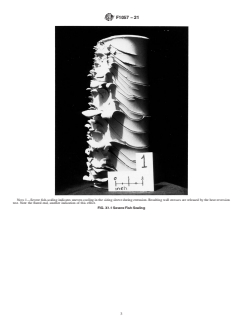
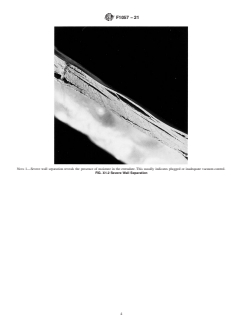
2.1.1 Reveal incomplete exsiccation of compound before or during extrusion (Note 1),
2.1.2 Determine the presence of stress in the pipe wall produced by the extrusion process (Note 2),
2.1.3 Determine whether unfused areas are present, and
2.1.4 Reveal contamination.
Note 1: Residual moisture in the compound vaporizes at extrusion temperatures and is normally evacuated as it forms vapor. Pockets of moisture trapped in the pipe wall result from incomplete exsiccation of the compound, and may reduce the physical properties of the pipe.
Note 2: Minor residual stress in the pipe will not impair field performance and handleability. High-residual stress has no proven effect on performance, but may impair handleability during installation.
SCOPE
1.1 This practice covers a procedure for estimating the quality of extruded poly (vinyl chloride) (PVC) plastic pipes by observing the reaction of pipe specimens after exposure to hot air in the oven at 180 °C ± 5 °C (356 °F ± 9 °F) for 30 minutes minimum time duration.
1.2 The values stated in SI units are to be regarded as standard. The values given in parentheses after SI units are provided for information only and are not considered standard.
1.3 This standard does not purport to address all of the safety concerns, if any, associated with its use. It is the responsibility of the user of this standard to establish appropriate safety, health, and environmental practices and determine the applicability of regulatory limitations prior to use.
1.4 This international standard was developed in accordance with internationally recognized principles on standardization established in the Decision on Principles for the Development of International Standards, Guides and Recommendations issued by the World Trade Organization Technical Barriers to Trade (TBT) Committee.
- Status
- Published
- Publication Date
- 31-Oct-2021
- Technical Committee
- F17 - Plastic Piping Systems
- Drafting Committee
- F17.40 - Test Methods
Buy Documents
ASTM F1057-21 - Standard Practice for Estimating the Quality of Extruded Poly (Vinyl Chloride) (PVC) Pipe by the Heat Reversion Technique
REDLINE ASTM F1057-21 - Standard Practice for Estimating the Quality of Extruded Poly (Vinyl Chloride) (PVC) Pipe by the Heat Reversion Technique
Overview
ASTM F1057-21 is a standard practice developed by ASTM International for estimating the quality of extruded poly (vinyl chloride) (PVC) plastic pipe using the heat reversion technique. This standard outlines a systematic procedure to identify issues in PVC pipe extrusion, such as incomplete drying of the compound, residual stress, unfused areas, and contamination within the pipe structure. By exposing pipe specimens to hot air at specified conditions, manufacturers and quality control personnel can reliably assess the uniformity and processing quality of PVC pipes, ensuring compliance with industry expectations and safety requirements.
Key Topics
- Heat Reversion Technique: This standard specifies exposing PVC pipe samples to hot air at 180 °C ± 5 °C (356 °F ± 9 °F) for a minimum of 30 minutes. The physical responses of the pipes to this heat exposure are observed and analyzed.
- Detection of Manufacturing Defects: The technique can reveal:
- Incomplete exsiccation (drying) of the compound before or during extrusion
- The presence of residual stress in the pipe wall caused by the extrusion process
- Areas of unfused material
- Contamination by foreign materials or poorly mixed compounds
- Evaluation of Sample Condition: After heating, pipes are visually inspected for signs of:
- Wall separation, fish-scaling, blistering, and contamination
- Changes in the shape of pipe ends and the inner and outer surfaces
- The appearance of the cut edges
- Reporting Requirements: All findings, including pipe marking, form, date of test, temperature, and observed defects, must be reported to ensure transparency and traceability.
Applications
The ASTM F1057-21 standard is instrumental in several practical applications:
- Quality Control in Manufacturing: PVC pipe manufacturers use the heat reversion test during production to distinguish between properly and improperly extruded pipes. This ensures only high-quality pipes enter the market.
- Material Selection and Process Validation: The standard helps identify processing parameters that may need adjustment, such as drying procedures or extrusion settings.
- Field Performance Assurance: By identifying issues like residual stress or contamination, the standard reduces the risk of premature pipe failure or installation difficulties.
- Pipe Certification and Compliance: The heat reversion technique is often referenced in product specifications and regulatory requirements, assisting organizations in demonstrating compliance.
Related Standards
For comprehensive quality assurance and in-depth understanding of plastic piping systems, consider the following related ASTM standards:
- ASTM D1785 - Specification for Poly(Vinyl Chloride) (PVC) Plastic Pipe, Schedules 40, 80, and 120
- ASTM F441/F441M - Specification for Chlorinated Poly(Vinyl Chloride) (CPVC) Plastic Pipe
- ASTM F678 - Specification for Poly(Vinyl Chloride) (PVC) Plastic Pipe
- ASTM D1598 - Test Method for Time-to-Failure of Plastic Pipe Under Constant Internal Pressure
By adhering to ASTM F1057-21 and relevant related standards, organizations can maintain high levels of quality and safety in PVC piping products, supporting reliable performance in diverse industrial and infrastructure applications.
Keywords: ASTM F1057-21, PVC pipe quality, heat reversion test, PVC pipe extrusion, pipe contamination, residual stress, unfused areas, plastic piping standards.
Buy Documents
ASTM F1057-21 - Standard Practice for Estimating the Quality of Extruded Poly (Vinyl Chloride) (PVC) Pipe by the Heat Reversion Technique
REDLINE ASTM F1057-21 - Standard Practice for Estimating the Quality of Extruded Poly (Vinyl Chloride) (PVC) Pipe by the Heat Reversion Technique
Get Certified
Connect with accredited certification bodies for this standard

Institut za varilstvo d.o.o. (Welding Institute)
Slovenia's leading welding institute since 1952. ISO 3834, EN 1090, pressure equipment certification, NDT personnel, welder qualification. Only IIW Au
Sponsored listings
Frequently Asked Questions
ASTM F1057-21 is a standard published by ASTM International. Its full title is "Standard Practice for Estimating the Quality of Extruded Poly (Vinyl Chloride) (PVC) Pipe by the Heat Reversion Technique". This standard covers: SIGNIFICANCE AND USE 2.1 This practice is applicable to distinguish between properly and improperly extruded PVC plastic pipe. It can be used to: 2.1.1 Reveal incomplete exsiccation of compound before or during extrusion (Note 1), 2.1.2 Determine the presence of stress in the pipe wall produced by the extrusion process (Note 2), 2.1.3 Determine whether unfused areas are present, and 2.1.4 Reveal contamination. Note 1: Residual moisture in the compound vaporizes at extrusion temperatures and is normally evacuated as it forms vapor. Pockets of moisture trapped in the pipe wall result from incomplete exsiccation of the compound, and may reduce the physical properties of the pipe. Note 2: Minor residual stress in the pipe will not impair field performance and handleability. High-residual stress has no proven effect on performance, but may impair handleability during installation. SCOPE 1.1 This practice covers a procedure for estimating the quality of extruded poly (vinyl chloride) (PVC) plastic pipes by observing the reaction of pipe specimens after exposure to hot air in the oven at 180 °C ± 5 °C (356 °F ± 9 °F) for 30 minutes minimum time duration. 1.2 The values stated in SI units are to be regarded as standard. The values given in parentheses after SI units are provided for information only and are not considered standard. 1.3 This standard does not purport to address all of the safety concerns, if any, associated with its use. It is the responsibility of the user of this standard to establish appropriate safety, health, and environmental practices and determine the applicability of regulatory limitations prior to use. 1.4 This international standard was developed in accordance with internationally recognized principles on standardization established in the Decision on Principles for the Development of International Standards, Guides and Recommendations issued by the World Trade Organization Technical Barriers to Trade (TBT) Committee.
SIGNIFICANCE AND USE 2.1 This practice is applicable to distinguish between properly and improperly extruded PVC plastic pipe. It can be used to: 2.1.1 Reveal incomplete exsiccation of compound before or during extrusion (Note 1), 2.1.2 Determine the presence of stress in the pipe wall produced by the extrusion process (Note 2), 2.1.3 Determine whether unfused areas are present, and 2.1.4 Reveal contamination. Note 1: Residual moisture in the compound vaporizes at extrusion temperatures and is normally evacuated as it forms vapor. Pockets of moisture trapped in the pipe wall result from incomplete exsiccation of the compound, and may reduce the physical properties of the pipe. Note 2: Minor residual stress in the pipe will not impair field performance and handleability. High-residual stress has no proven effect on performance, but may impair handleability during installation. SCOPE 1.1 This practice covers a procedure for estimating the quality of extruded poly (vinyl chloride) (PVC) plastic pipes by observing the reaction of pipe specimens after exposure to hot air in the oven at 180 °C ± 5 °C (356 °F ± 9 °F) for 30 minutes minimum time duration. 1.2 The values stated in SI units are to be regarded as standard. The values given in parentheses after SI units are provided for information only and are not considered standard. 1.3 This standard does not purport to address all of the safety concerns, if any, associated with its use. It is the responsibility of the user of this standard to establish appropriate safety, health, and environmental practices and determine the applicability of regulatory limitations prior to use. 1.4 This international standard was developed in accordance with internationally recognized principles on standardization established in the Decision on Principles for the Development of International Standards, Guides and Recommendations issued by the World Trade Organization Technical Barriers to Trade (TBT) Committee.
ASTM F1057-21 is classified under the following ICS (International Classification for Standards) categories: 23.040.20 - Plastics pipes. The ICS classification helps identify the subject area and facilitates finding related standards.
ASTM F1057-21 is available in PDF format for immediate download after purchase. The document can be added to your cart and obtained through the secure checkout process. Digital delivery ensures instant access to the complete standard document.
Standards Content (Sample)
This international standard was developed in accordance with internationally recognized principles on standardization established in the Decision on Principles for the
Development of International Standards, Guides and Recommendations issued by the World Trade Organization Technical Barriers to Trade (TBT) Committee.
Designation: F1057 − 21
Standard Practice for
Estimating the Quality of Extruded Poly (Vinyl Chloride)
(PVC) Pipe by the Heat Reversion Technique
This standard is issued under the fixed designation F1057; the number immediately following the designation indicates the year of
original adoption or, in the case of revision, the year of last revision. A number in parentheses indicates the year of last reapproval. A
superscript epsilon (´) indicates an editorial change since the last revision or reapproval.
NOTE 2—Minor residual stress in the pipe will not impair field
1. Scope*
performance and handleability. High-residual stress has no proven effect
1.1 This practice covers a procedure for estimating the
on performance, but may impair handleability during installation.
qualityofextrudedpoly(vinylchloride)(PVC)plasticpipesby
observing the reaction of pipe specimens after exposure to hot
3. Apparatus
air in the oven at 180 °C 6 5 °C (356 °F 6 9 °F) for 30
3.1 Air Circulating Oven, thermostatically controlled, ca-
minutes minimum time duration.
pable of operating at 180 °C 6 5 °C (356 °F 6 9 °F) and
1.2 The values stated in SI units are to be regarded as
capable of meeting the recovery requirement of 4.3.
standard. The values given in parentheses after SI units are
Additionally, the oven must have heat generation (power)
provided for information only and are not considered standard.
capacity such that the recovery is achieved while at a constant
oven set point. The air temperature within the oven (that is, the
1.3 This standard does not purport to address all of the
test temperature) is to be monitored within 3 in. from the outer
safety concerns, if any, associated with its use. It is the
edge of the test specimen; make assurances that the tempera-
responsibility of the user of this standard to establish appro-
ture measuring probe does not contact the test specimen.
priate safety, health, and environmental practices and deter-
mine the applicability of regulatory limitations prior to use.
NOTE 3—The oven should be vented to the outside of the building.
1.4 This international standard was developed in accor-
NOTE 4—Monitoring of the test temperature within the oven may
dance with internationally recognized principles on standard-
require a secondary temperature monitoring device in addition to the
temperature monitoring device within the oven control system.
ization established in the Decision on Principles for the
Development of International Standards, Guides and Recom-
4. Procedure
mendations issued by the World Trade Organization Technical
Barriers to Trade (TBT) Committee.
4.1 Prepare specimens of pipe 150 mm (6 in.) long or longer
with ends cut square so that they stand perpendicular on end
2. Significance and Use
when placed in the oven.
2.1 This practice is applicable to distinguish between prop- 4.1.1 Cut staves from pipes whose size prevents insertion of
full round specimens in the oven. Prepare large-diameter pipe
erly and improperly extruded PVC plastic pipe. It can be used
to: staves so that their lengths parallel to the pipe axis are 150 mm
(6 in.) or longer.
2.1.1 Reveal incomplete exsiccation of compound before or
during extrusion (Note 1),
4.2 Examine the specimens and note any unusual features
2.1.2 Determine the presence of stress in the pipe wall
such as discoloration, inclusions, or pinholes in the cut edge.
produced by the extrusion process (Note 2),
4.3 Place the specimens of whole pipe in the preheated oven
2.1.3 Determine whether unfused areas are present, and
so that each specimen stands on end with sufficient separation
2.1.4 Reveal contamination.
between them so that hot air can flow freely between the pipes.
NOTE 1—Residual moisture in the compound vaporizes at extrusion
Place specimens of pipe staves on the floor of the preheated
temperatures and is normally evacuated as it forms vapor. Pockets of
ovensothattheyrestontheirlongitudinaledgesandsothathot
moisture trapped in the pipe wall result from incomplete exsiccation of the
air can flow freely around them. Record the time when the air
compound, and may reduce the physical properties of the pipe.
in the oven directly adjacent to the test specimen recovers to
180 °C (356 °F). Recovery must occur within 15 minutes or
less.
This practice is under the jurisdiction of ASTM Committee F17 on Plastic
Piping Systems and is the direct responsibility of Subcommittee F17.40 on Test
4.3.1 Pipe specimens with wall thickness less than 25.4 mm
Methods.
(1.0 in.):After an additional 30 minutes of exposure within the
Current edition approved Nov. 1, 2021. Published November 2021. Originally
test temperature tolerance of 180 °C 6 5 °C (356 °F 6 9 °F),
approved in 1987. Last previous edition approved in 2019 as F1057–19. DOI:
10.1520/F1057-21. remove the specimens, taking care not to alter any heat effects.
*A Summary of Changes section appears at the end of this standard
Copyright © ASTM International, 100 Barr Harbor Drive, PO Box C700, West Conshohocken, PA 19428-2959. United States
F1057 − 21
4.3.2 Pipe specimens with wall thickness greater than 25.4 6. Report
mm to 38.1 mm (1.0 to 1.5 in.) maximum: After an additional
6.1 Report the following information, where applicable:
45 minutes of exposure within the test temperature tolerance of
6.1.1 Information given by the pipe marking, including the
180 °C 6 5 °C (356 °F 6 9 °F), remove the specimens, taking
nominal size of pipe, the type of pipe, and the date code;
care not to alter any heat effects.
6.1.2 Form in which the pipe was tested;
NOTE5—Forpipewithwallthicknessgreaterthan38.1mm(1.5in.)the
exposure time may need to be extended beyond 45 minutes. The extended
6.1.3 Date of the test and test temperature;
expo
...
This document is not an ASTM standard and is intended only to provide the user of an ASTM standard an indication of what changes have been made to the previous version. Because
it may not be technically possible to adequately depict all changes accurately, ASTM recommends that users consult prior editions as appropriate. In all cases only the current version
of the standard as published by ASTM is to be considered the official document.
Designation: F1057 − 19 F1057 − 21
Standard Practice for
Estimating the Quality of Extruded Poly (Vinyl Chloride)
(PVC) Pipe by the Heat Reversion Technique
This standard is issued under the fixed designation F1057; the number immediately following the designation indicates the year of
original adoption or, in the case of revision, the year of last revision. A number in parentheses indicates the year of last reapproval. A
superscript epsilon (´) indicates an editorial change since the last revision or reapproval.
1. Scope*
1.1 This practice covers a procedure for estimating the quality of extruded poly (vinyl chloride) (PVC) plastic pipes by observing
the reaction of pipe specimens after exposure to hot air in the oven at 180180 °C 6 5 °C (356(356 °F 6 9 °F) for 30 minutes
minimum time duration.
1.2 The values stated in SI units are to be regarded as standard. The values given in parentheses after SI units are provided for
information only and are not considered standard.
1.3 This standard does not purport to address all of the safety concerns, if any, associated with its use. It is the responsibility
of the user of this standard to establish appropriate safety, health, and environmental practices and determine the applicability of
regulatory limitations prior to use.
1.4 This international standard was developed in accordance with internationally recognized principles on standardization
established in the Decision on Principles for the Development of International Standards, Guides and Recommendations issued
by the World Trade Organization Technical Barriers to Trade (TBT) Committee.
2. Significance and Use
2.1 This practice is applicable to distinguish between properly and improperly extruded PVC plastic pipe. It can be used to:
2.1.1 Reveal incomplete exsiccation of compound before or during extrusion (Note 1),
2.1.2 Determine the presence of stress in the pipe wall produced by the extrusion process (Note 2),
2.1.3 Determine whether unfused areas are present, and
2.1.4 Reveal contamination.
NOTE 1—Residual moisture in the compound vaporizes at extrusion temperatures and is normally evacuated as it forms vapor. Pockets of moisture trapped
in the pipe wall result from incomplete exsiccation of the compound, and may reduce the physical properties of the pipe.
NOTE 2—Minor residual stress in the pipe will not impair field performance and handleability. High-residual stress has no proven effect on performance,
but may impair handleability during installation.
This practice is under the jurisdiction of ASTM Committee F17 on Plastic Piping Systems and is the direct responsibility of Subcommittee F17.40 on Test Methods.
Current edition approved Feb. 1, 2019Nov. 1, 2021. Published March 2019November 2021. Originally approved in 1987. Last previous edition approved in 20172019 as
F1057–17.–19. DOI: 10.1520/F1057-19.10.1520/F1057-21.
*A Summary of Changes section appears at the end of this standard
Copyright © ASTM International, 100 Barr Harbor Drive, PO Box C700, West Conshohocken, PA 19428-2959. United States
F1057 − 21
3. Apparatus
3.1 Air Circulating Oven, thermostatically controlled, capable of operating at 180180 °C 6 5 °C (356(356 °F 6 9 °F) and capable
of meeting the recovery requirement of 4.3. Additionally, the oven must have heat generation (power) capacity such that the
recovery is achieved while at a constant oven set point. The air temperature within the oven (that is, the test temperature) is to be
monitored within 3 in. from the outer edge of the test specimen; make assurances that the temperature measuring probe does not
contact the test specimen.
NOTE 3—The oven should be vented to the outside of the building.
NOTE 4—Monitoring of the test temperature within the oven may require a secondary temperature monitoring device in addition to the temperature
monitoring device within the oven control system.
4. Procedure
4.1 Prepare specimens of pipe 150 mm (6 in.) long or longer with ends cut square so that they stand perpendicular on end when
placed in the oven.
4.1.1 Cut staves from pipes whose size prevents insertion of full round specimens in the oven. Prepare large-diameter pipe staves
so that their lengths parallel to the pipe axis are 150 mm (6 in.) or longer.
4.2 Examine the specimens and note any unusual features such as discoloration, inclusions, or pinholes in the cut edge.
4.3 Place the specimens of whole pipe in the preheated oven so that each specimen stands on end with sufficient separation
between them so that hot air can flow freely between the pipes. Place specimens of pipe staves on the floor of the preheated oven
so that they rest on their longitudinal edges and so that hot air can flow freely around them. Record the time when the air in the
oven directly adjacent to the test specimen recovers to 180 °C (356 °F). Recovery must occur within 15 minutes or less.
4.3.1 Pipe specimens with wall thickness less than 25.4 mm (1.0 in.): After an additional 30 minutes of exposure within the test
temperature tolerance of 180180 °C 6 5 °C (356(356 °F 6 9 °F), remove the specimens, taking care not to alter any heat effects.
4.3.2 Pipe specimens with wall thickness greater than 25.4 mm to 12738.1 mm (1.0 to 1.5 in.) maximum: After an additional 45
minutes of exposure within the test temperature tolerance of 180180 °C 6 5 °C (356(356 °F 6 9 °F), remove the specimens, taking
care not to alter any heat effects.
NOTE 5—For pipe with wall thickness greater than 12738.1 mm (1.5 in.) the exposure time may need to be extended beyond 45 minutes. The extended
exposure time should be sufficient to allow cutting of the sample under test, which is typically achieved by a minimum core temperature within the sample
of approximately 110 °C (230 °F).
4.4 Examine the specimens within 3 minutes after removal from the oven, while still hot. With a shar
...