

ASTM F2807-13(2018)
(Specification)Standard Specification for Multilayer Polyethylene-Polyamide (PE-PA) Pipe for Pressure Piping Applications
General Information
- Abstract
ABSTRACT
This specification establishes the requirements and test methods for 1/2 in. through 14 in. multilayer polyethylene-polyamide (PE-PA) pipe, which is a two-layer pipe (PE pipe layer bonded to an inner layer of PA). It covers the multilayer pipe for use in piping applications where the permeation and chemical resistance of PA compounds may be useful to protect the PE pipe layer, such as oil and gas producing applications that convey oil, dry or wet gas, and multiphase fluids. Electrofusion and mechanical joints are typically used for this multilayer pipe.
SCOPE
1.1 This specification covers requirements and test methods for 1/2 in. through 14 in. multilayer polyethylene-polyamide (PE-PA) pipe, which is a two-layer pipe (PE pipe layer bonded to an inner layer of PA). The multilayer pipe covered by this specification is intended for use in piping applications where the permeation and chemical resistance of polyamide (PA) compounds may be useful to protect the PE pipe layer, such as oil and gas producing applications that convey oil, dry or wet gas, and multiphase fluids.
Note 1: Permeability and chemical resistance depends on the type of PA used. The PA layer delays but does not prevent liquid hydrocarbons effects. Therefore, the hydrocarbon chemical design factor for this multilayer pipe should be the same as for PE pipe layer—see X1.2.
1.2 Electrofusion and mechanical joints are typically used for this multilayer pipe.
1.3 Unless specified otherwise, all the pipe requirements in this specification are for the multilayer pipe.
1.4 The PA layer is not taken into consideration for the design pressure of multilayer pipe meeting this specification. Design pressure rating is determined from the PE pipe layer alone—see Appendix X1.
1.5 Units—The values stated in inch-pound units are to be regarded as the standard. The values given in parentheses are mathematical conversions to SI units that are provided for information only and are not considered standard.
1.6 The text of this standard references notes and footnotes which provide explanatory material. These notes and footnotes (excluding those in figures and tables) shall not be considered as requirements of the standard.
1.7 The following precautionary caveat pertains only to the test method portion, Section 6, of this specification. This standard does not purport to address all of the safety concerns, if any, associated with its use. It is the responsibility of the user of this standard to establish appropriate safety, health, and environmental practices and determine the applicability of regulatory limitations prior to use.
1.8 This international standard was developed in accordance with internationally recognized principles on standardization established in the Decision on Principles for the Development of International Standards, Guides and Recommendations issued by the World Trade Organization Technical Barriers to Trade (TBT) Committee.
- Status
- Published
- Publication Date
- 31-Dec-2017
- Technical Committee
- F17 - Plastic Piping Systems
- Drafting Committee
- F17.68 - Energy Piping Systems
Overview
ASTM F2807-13(2018) specifies the requirements and test methods for multilayer polyethylene-polyamide (PE-PA) pipe ranging from 1/2 inch to 14 inches in diameter. This standard, issued by ASTM International, covers two-layer pressure pipes consisting of an outer PE layer bonded to an inner PA layer. The design addresses the need for improved chemical resistance and reduced permeation in demanding piping applications, particularly in the oil and gas sector. Typical applications include conveying oil, dry or wet gas, and multiphase fluids, where the polyamide (PA) inner layer protects the polyethylene (PE) layer from aggressive chemical environments.
Key Topics
- Scope and Construction: Details the composition of PE-PA pipes, focusing on a PE outer layer and a chemically resistant PA inner layer. The PA layer is designed to enhance permeation and chemical resistance but does not contribute to structural pressure resistance.
- Performance Requirements: Defines dimensional tolerances, wall thicknesses, ovality limits, and burst strength. All pressure and mechanical property evaluations pertain to the PE pipe layer, as the PA layer serves only a protective function.
- Testing and Compliance: Establishes protocols for sustained pressure testing, hydrostatic burst tests, tensile strength, adhesion between layers, permeability, and chemical compatibility. Compliance with these requirements helps ensure product quality and consistent field performance.
- Marking and Traceability: Outlines strict requirements for pipe marking, including clear material identification, manufacturer information, production date, and batch codes, ensuring full traceability for quality assurance.
- Joining Methods: Specifies that electrofusion and mechanical joining techniques are commonly used for connecting multilayer pipes. Heat fusion is permitted when no hydrocarbons are present at the joint interface.
Applications
ASTM F2807-13(2018) multilayer PE-PA pipes are primarily suited for the following pressure piping applications:
- Oil and Gas Production: Used in gathering lines and transmission systems where fluids may contain corrosive chemicals or hydrocarbons. The PA inner layer offers an additional barrier, extending pipe life in challenging environments.
- Multiphasic Fluid Transport: Effective for pipelines carrying mixtures of oil, gas, and other substances, where permeation resistance and chemical protection are essential for safety and longevity.
- Gas Distribution: The multilayer design provides enhanced safety for transporting dry or wet gases and helps prevent contamination or environmental release.
- Industrial Piping Systems: Suitable for pressure applications requiring robust chemical and permeation resistance, such as in chemical plants and processing facilities.
Related Standards
Several key ASTM, ISO, and national standards are referenced by or related to ASTM F2807-13(2018):
- ASTM D1598 & D1599: Test methods for time-to-failure and short-term hydraulic pressure resistance of plastic pipe.
- ASTM D2837: Methods for determining the hydrostatic design basis for thermoplastic piping materials.
- ASTM F1290: Practice for electrofusion joining of polyolefin pipes.
- ISO 1167 & ISO 3126: International standards for the resistance of thermoplastic pipes to internal pressure and for measurement of pipe dimensions.
- Plastics Pipe Institute (PPI) TR-3 & TR-4: Guidelines on hydrostatic design basis ratings and pressure design factors for thermoplastic pipes.
- SAE J 2260 and EN 14125: Industry-specific standards for multi-layered nonmetallic fuel system tubing and thermoplastic pipework.
By conforming to ASTM F2807-13(2018), manufacturers, designers, and installers can ensure that multilayer PE-PA pressure pipes deliver enhanced performance, safety, and reliable service in chemically challenging and high-pressure environments. This standard supports robust material selection, testing, and traceability practices, all vital in maintaining the integrity of critical piping systems.
Relations
- Effective Date
- 01-Jan-2018
- Effective Date
- 01-Apr-2020
- Effective Date
- 01-Apr-2020
- Effective Date
- 01-Feb-2020
- Effective Date
- 01-Feb-2020
- Effective Date
- 01-Sep-2019
- Effective Date
- 01-Aug-2019
- Effective Date
- 01-Jan-2019
- Effective Date
- 01-Jan-2019
- Effective Date
- 01-Jan-2019
- Effective Date
- 01-Sep-2018
- Refers
ASTM D1600-18 - Standard Terminology for Abbreviated Terms Relating to Plastics (Withdrawn 2024) - Effective Date
- 01-Jan-2018
- Effective Date
- 01-Aug-2017
- Effective Date
- 01-Mar-2017
- Effective Date
- 01-Feb-2017
Get Certified
Connect with accredited certification bodies for this standard

Institut za varilstvo d.o.o. (Welding Institute)
Slovenia's leading welding institute since 1952. ISO 3834, EN 1090, pressure equipment certification, NDT personnel, welder qualification. Only IIW Au
Sponsored listings
Frequently Asked Questions
ASTM F2807-13(2018) is a technical specification published by ASTM International. Its full title is "Standard Specification for Multilayer Polyethylene-Polyamide (PE-PA) Pipe for Pressure Piping Applications". This standard covers: ABSTRACT This specification establishes the requirements and test methods for 1/2 in. through 14 in. multilayer polyethylene-polyamide (PE-PA) pipe, which is a two-layer pipe (PE pipe layer bonded to an inner layer of PA). It covers the multilayer pipe for use in piping applications where the permeation and chemical resistance of PA compounds may be useful to protect the PE pipe layer, such as oil and gas producing applications that convey oil, dry or wet gas, and multiphase fluids. Electrofusion and mechanical joints are typically used for this multilayer pipe. SCOPE 1.1 This specification covers requirements and test methods for 1/2 in. through 14 in. multilayer polyethylene-polyamide (PE-PA) pipe, which is a two-layer pipe (PE pipe layer bonded to an inner layer of PA). The multilayer pipe covered by this specification is intended for use in piping applications where the permeation and chemical resistance of polyamide (PA) compounds may be useful to protect the PE pipe layer, such as oil and gas producing applications that convey oil, dry or wet gas, and multiphase fluids. Note 1: Permeability and chemical resistance depends on the type of PA used. The PA layer delays but does not prevent liquid hydrocarbons effects. Therefore, the hydrocarbon chemical design factor for this multilayer pipe should be the same as for PE pipe layer—see X1.2. 1.2 Electrofusion and mechanical joints are typically used for this multilayer pipe. 1.3 Unless specified otherwise, all the pipe requirements in this specification are for the multilayer pipe. 1.4 The PA layer is not taken into consideration for the design pressure of multilayer pipe meeting this specification. Design pressure rating is determined from the PE pipe layer alone—see Appendix X1. 1.5 Units—The values stated in inch-pound units are to be regarded as the standard. The values given in parentheses are mathematical conversions to SI units that are provided for information only and are not considered standard. 1.6 The text of this standard references notes and footnotes which provide explanatory material. These notes and footnotes (excluding those in figures and tables) shall not be considered as requirements of the standard. 1.7 The following precautionary caveat pertains only to the test method portion, Section 6, of this specification. This standard does not purport to address all of the safety concerns, if any, associated with its use. It is the responsibility of the user of this standard to establish appropriate safety, health, and environmental practices and determine the applicability of regulatory limitations prior to use. 1.8 This international standard was developed in accordance with internationally recognized principles on standardization established in the Decision on Principles for the Development of International Standards, Guides and Recommendations issued by the World Trade Organization Technical Barriers to Trade (TBT) Committee.
ABSTRACT This specification establishes the requirements and test methods for 1/2 in. through 14 in. multilayer polyethylene-polyamide (PE-PA) pipe, which is a two-layer pipe (PE pipe layer bonded to an inner layer of PA). It covers the multilayer pipe for use in piping applications where the permeation and chemical resistance of PA compounds may be useful to protect the PE pipe layer, such as oil and gas producing applications that convey oil, dry or wet gas, and multiphase fluids. Electrofusion and mechanical joints are typically used for this multilayer pipe. SCOPE 1.1 This specification covers requirements and test methods for 1/2 in. through 14 in. multilayer polyethylene-polyamide (PE-PA) pipe, which is a two-layer pipe (PE pipe layer bonded to an inner layer of PA). The multilayer pipe covered by this specification is intended for use in piping applications where the permeation and chemical resistance of polyamide (PA) compounds may be useful to protect the PE pipe layer, such as oil and gas producing applications that convey oil, dry or wet gas, and multiphase fluids. Note 1: Permeability and chemical resistance depends on the type of PA used. The PA layer delays but does not prevent liquid hydrocarbons effects. Therefore, the hydrocarbon chemical design factor for this multilayer pipe should be the same as for PE pipe layer—see X1.2. 1.2 Electrofusion and mechanical joints are typically used for this multilayer pipe. 1.3 Unless specified otherwise, all the pipe requirements in this specification are for the multilayer pipe. 1.4 The PA layer is not taken into consideration for the design pressure of multilayer pipe meeting this specification. Design pressure rating is determined from the PE pipe layer alone—see Appendix X1. 1.5 Units—The values stated in inch-pound units are to be regarded as the standard. The values given in parentheses are mathematical conversions to SI units that are provided for information only and are not considered standard. 1.6 The text of this standard references notes and footnotes which provide explanatory material. These notes and footnotes (excluding those in figures and tables) shall not be considered as requirements of the standard. 1.7 The following precautionary caveat pertains only to the test method portion, Section 6, of this specification. This standard does not purport to address all of the safety concerns, if any, associated with its use. It is the responsibility of the user of this standard to establish appropriate safety, health, and environmental practices and determine the applicability of regulatory limitations prior to use. 1.8 This international standard was developed in accordance with internationally recognized principles on standardization established in the Decision on Principles for the Development of International Standards, Guides and Recommendations issued by the World Trade Organization Technical Barriers to Trade (TBT) Committee.
ASTM F2807-13(2018) is classified under the following ICS (International Classification for Standards) categories: 23.040.20 - Plastics pipes. The ICS classification helps identify the subject area and facilitates finding related standards.
ASTM F2807-13(2018) has the following relationships with other standards: It is inter standard links to ASTM F2807-13, ASTM F2619/F2619M-20, ASTM F412-20, ASTM D4218-20, ASTM D1603-20, ASTM F2619/F2619M-19, ASTM D2290-19a, ASTM F1290-19, ASTM F412-19, ASTM D2290-19, ASTM D1599-18, ASTM D1600-18, ASTM F412-17a, ASTM D6779-17, ASTM F412-17. Understanding these relationships helps ensure you are using the most current and applicable version of the standard.
ASTM F2807-13(2018) is available in PDF format for immediate download after purchase. The document can be added to your cart and obtained through the secure checkout process. Digital delivery ensures instant access to the complete standard document.
Standards Content (Sample)
This international standard was developed in accordance with internationally recognized principles on standardization established in the Decision on Principles for the
Development of International Standards, Guides and Recommendations issued by the World Trade Organization Technical Barriers to Trade (TBT) Committee.
Designation: F2807 −13 (Reapproved 2018)
Standard Specification for
Multilayer Polyethylene-Polyamide (PE-PA) Pipe for
Pressure Piping Applications
This standard is issued under the fixed designation F2807; the number immediately following the designation indicates the year of
original adoption or, in the case of revision, the year of last revision. A number in parentheses indicates the year of last reapproval. A
superscript epsilon (´) indicates an editorial change since the last revision or reapproval.
1. Scope environmental practices and determine the applicability of
regulatory limitations prior to use.
1.1 This specification covers requirements and test methods
1.8 This international standard was developed in accor-
for ⁄2 in. through 14 in. multilayer polyethylene-polyamide
dance with internationally recognized principles on standard-
(PE-PA) pipe, which is a two-layer pipe (PE pipe layer bonded
ization established in the Decision on Principles for the
to an inner layer of PA). The multilayer pipe covered by this
Development of International Standards, Guides and Recom-
specification is intended for use in piping applications where
mendations issued by the World Trade Organization Technical
the permeation and chemical resistance of polyamide (PA)
Barriers to Trade (TBT) Committee.
compounds may be useful to protect the PE pipe layer, such as
oil and gas producing applications that convey oil, dry or wet
2. Referenced Documents
gas, and multiphase fluids.
NOTE 1—Permeability and chemical resistance depends on the type of
2.1 ASTM Standards:
PA used. The PA layer delays but does not prevent liquid hydrocarbons
D618 Practice for Conditioning Plastics for Testing
effects. Therefore, the hydrocarbon chemical design factor for this
D1598 Test Method for Time-to-Failure of Plastic Pipe
multilayer pipe should be the same as for PE pipe layer—see X1.2.
Under Constant Internal Pressure
1.2 Electrofusion and mechanical joints are typically used
D1599 Test Method for Resistance to Short-Time Hydraulic
for this multilayer pipe.
Pressure of Plastic Pipe, Tubing, and Fittings
D1600 Terminology forAbbreviatedTerms Relating to Plas-
1.3 Unless specified otherwise, all the pipe requirements in
this specification are for the multilayer pipe. tics
D1603 Test Method for Carbon Black Content in Olefin
1.4 The PA layer is not taken into consideration for the
Plastics
design pressure of multilayer pipe meeting this specification.
D2122 Test Method for Determining Dimensions of Ther-
Design pressure rating is determined from the PE pipe layer
moplastic Pipe and Fittings
alone—see Appendix X1.
D2290 Test Method for Apparent Hoop Tensile Strength of
1.5 Units—The values stated in inch-pound units are to be
Plastic or Reinforced Plastic Pipe
regarded as the standard. The values given in parentheses are
D2837 Test Method for Obtaining Hydrostatic Design Basis
mathematical conversions to SI units that are provided for
forThermoplasticPipeMaterialsorPressureDesignBasis
information only and are not considered standard.
for Thermoplastic Pipe Products
1.6 The text of this standard references notes and footnotes D3350 Specification for Polyethylene Plastics Pipe and Fit-
tings Materials
which provide explanatory material. These notes and footnotes
(excluding those in figures and tables) shall not be considered D4218 Test Method for Determination of Carbon Black
Content in Polyethylene Compounds By the Muffle-
as requirements of the standard.
Furnace Technique
1.7 The following precautionary caveat pertains only to the
D6779 Classification System for and Basis of Specification
test method portion, Section 6, of this specification. This
for Polyamide Molding and Extrusion Materials (PA)
standard does not purport to address all of the safety concerns,
F412 Terminology Relating to Plastic Piping Systems
if any, associated with its use. It is the responsibility of the user
F1290 PracticeforElectrofusionJoiningPolyolefinPipeand
of this standard to establish appropriate safety, health, and
Fittings
This specification is under the jurisdiction ofASTM Committee F17 on Plastic
Piping Systems and is the direct responsibility of Subcommittee F17.68 on Energy
Piping Systems. For referenced ASTM standards, visit the ASTM website, www.astm.org, or
Current edition approved Jan. 1, 2018. Published January 2018. Originally contact ASTM Customer Service at service@astm.org. For Annual Book of ASTM
approved in 2013. Last previous edition approved in 2013 as F2807–13. DOI: Standards volume information, refer to the standard’s Document Summary page on
10.1520/F2807-13R18. the ASTM website.
Copyright © ASTM International, 100 Barr Harbor Drive, PO Box C700, West Conshohocken, PA 19428-2959. United States
F2807 − 13 (2018)
F2619/F2619M SpecificationforHigh-DensityPolyethylene 3.1.4 rounding equipment, n—tooling, devices, clamps, and
(PE) Line Pipe so forth, used to temporarily hold the pipe round while a
joining procedure (heat fusion, electrofusion, or mechanical) is
2.2 Federal Specifications:
performed.
Fed. Std. No. 123 Marking for Shipment (Civil Agencies)
MIL-STD 129 Military Marking for Shipment and Storage
4. Compound Requirements
2.3 ISO Standards:
4.1 PE Compound Requirements—The PE compound used
ISO 1167 Thermoplastics pipes for the conveyance of
to make the PE pipe layer shall be virgin compound and shall
fluids—Resistance to internal pressure
have a Plastics Pipe Institute (PPI) hydrostatic design basis
ISO 3126 Plastic piping systems—Plastic piping
(HDB) rating in accordance with PPI TR-3 using Test Method
components—Measurement and determination of dimen-
D2837.ThePEcompoundusedforthePEpipelayershallhave
sions
apipematerialdesignationcodeofPE4710inaccordancewith
ISO 6259 Thermoplastics pipes—Determination of tensile
PPI TR-3 Section F.7 and shall be listed in PPI TR-4, and shall
properties
meet Specification D3350 requirements, with a minimum cell
ISO 8510-2 Adhesives—Peel test for a flexible-to-rigid
class of 444474C.
specimen assembly—180° peel
4.1.1 Additive Classes—PE compounds shall be Code C as
2.4 Plastic Pipe Institute:
defined in Specification D3350. Code C compound shall
PPI TR-3 Policies and Procedures for Developing Hydro-
contain 2.0 to 3.0 percent carbon black as measured by Test
static Design Basis (HDB), Pressure Design Basis (PDB),
Method D1603 or D4218. The pipe manufacturer shall mea-
Strength Design Basis (SDB), and Minimum Required
sure carbon black content of the compound once per week.
Strength (MRS) Ratings for Thermoplastic Piping Mate-
4.1.2 Chemical Resistance—Testing shall be conducted per
rials or Pipe
6.10 on specimens of PE compound from compression molded
PPI TR-4 PPI Listing of Hydrostatic Design Basis (HDB),
plaques or from a ring specimen prepared from pipe.
Strength Design Basis (SDB), Pressure Design Basis
NOTE 2—This test is only an indication of what may happen as a result
(PDB) and Minimum Required Strength (MRS) Ratings
of short-term exposure to these chemicals. Contact the manufacturer for
for Thermoplastic Piping Materials or Pipe
specific chemical resistance information for this product.
PPI TR-9 Recommended Design Factors and Design Coef-
4.1.3 Elevated Temperature—The PE 4710 compound shall
ficients for Thermoplastic Pressure Pipe
haveanHDBat140 °F(60 °C)ofatleast1000psilistedinPPI
PPI TR-23 Guidelines for Establishing the Pressure Rating
TR-4.
for Multilayer and Co-extruded Plastic Pipes
4.2 PA Compound Requirements—The PA compound shall
2.5 Other Documents:
be a non-reinforced PA with the three-digit cell class (group,
SAE J 2260 Nonmetallic Fuel System Tubing with One or
class, grade) in accordance with Classification D6779 per
More Layers
Table 1.
EN 14125 Thermoplastic and flexible metal pipework for
4.2.1 Chemical Resistance—Based on the intended applica-
underground installation at petrol filling stations
tion and the corresponding need for chemical resistance, the
multilayer pipe manufacturer shall provide chemical resistance
3. Terminology
properties for the type of PAcompound used in the PAlayer of
3.1 Definitions:
this multilayer pipe.
3.1.1 Definitions are in accordance with Terminology F412,
4.2.2 Color—The PAlayer shall have a different color from
and abbreviations are in accordance with Terminology D1600,
theblackPEpipelayersothatitcanbeeasilyrecognized,such
unless otherwise specified.
as the APWA color coding system of yellow for gas and oil
3.1.2 multilayer pipe, n—plastic pipe comprised of more
lines.
than one layer.
4.3 Rework Compound—To prevent possible contamination
3.1.3 re-rounding equipment, n—tooling used to reform the
between PE and PA, rework (regrind) shall not be used for the
pipe and permanently reduce ovality to 5 % or less.
polyethylene and polyamide layers.
4.4 Documentation—A documentation system to allow for
traceability of compounds used in the manufacture of the
Available from U.S. Government Publishing Office, 732 N. Capitol St., NW,
multilayer pipe product meeting the requirements of this
Washington, DC 20401, http://www.gpo.gov.
specification shall exist and be supplied to the purchaser, if
Available from DLA Document Services, Building 4/D, 700 Robbins Ave.,
requested.
Philadelphia, PA 19111-5094, http://quicksearch.dla.mil.
Available from International Organization for Standardization (ISO), ISO
Central Secretariat, BIBC II, Chemin de Blandonnet 8, CP 401, 1214 Vernier,
Geneva, Switzerland, http://www.iso.org.
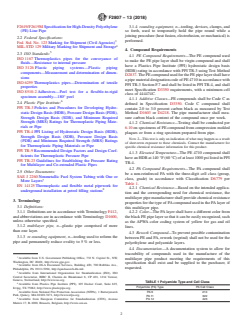
TABLE 1 Polyamide Type and Cell Class
Available from Plastics Pipe Institute (PPI), 105 Decker Court, Suite 825,
Polyamide (PA) Type PA Cell Class
Irving, TX 75062, http://www.plasticpipe.org.
Available from National Fire Protection Association (NFPA), 1 Batterymarch
PA 6 214
Park, Quincy, MA 02169-7471, http://www.nfpa.org.
PA 11 322
Available from European Committee for Standardization (CEN), Avenue PA 12 423
Marnix 17, B-1000, Brussels, Belgium, http://www.cen.eu.
F2807 − 13 (2018)
5. Multilayer Pipe Requirements multilayer pipe shall be made on a sample cut from the coil,
and in case of disagreement, conditioned per 6.3.
5.1 General—Multilayer pipe shall be supplied in either
coils or straight lengths. Pipe that will be supplied in coils shall
NOTE 3—Other factors, that is, installation compaction, static soil
meet the minimum test values required by this specification loading, and dynamic vehicular loads may increase the ovality; therefore,
5 % was chosen as the limit for the amount contributed by manufacturing,
after being bent to minimum radius used for coiling and then
packing, in-plant storage, and shipping. Before or during installation,
uncoiled or straightened prior to testing.
coiled multilayer pipe larger than 3 in. IPS (89 mm) should be processed
5.1.1 The multilayer pipe shall meet all the performance
bytheinstallerthroughre-roundingequipmentthatcorrectsovalityto5 %
requirements of this specification. There shall be no delamina-
or less.
tion of the bonded PA layer during coiling, shipping, handling NOTE 4—Ovality is a packaging condition that occurs when roundable
pipe is wound into a coil—the pipe flattens out as it is coiled. Ovality is
or operation of the multilayer pipe.
corrected when joining equipment is applied to roundable pipe, or by field
5.2 Workmanship—The multilayer pipe shall be homoge-
processing roundable pipe through re-rounding and straightening equip-
ment during installation.
neous throughout each layer. The multilayer pipe shall be free
of visible cracks, holes, foreign inclusion, blisters, and dents,
5.3.3.1 Length—The multilayer pipe shall be supplied in
or other injurious defects. Each respective layer of the multi-
straight lengths or coils as agreed upon between the manufac-
layer pipe shall be as uniform as commercially practicable in
turer and the purchaser. The length shall not be less than the
color, opacity, density, and other physical properties.
minimum length agreed upon when corrected to 73 °F (23 °C).
5.3 Multilayer Pipe Dimensions and Tolerances:
5.4 Sustained Pressure—To assure slow crack growth resis-
5.3.1 PE Pipe Layer Dimensions—The PE dimensions shall
tance of the multilayer pipe construction, the multilayer pipe
be specified by wall thickness and outside diameter.
shall not fail as defined in Test Method D1598, when tested in
5.3.1.1 Diameters—The average outside diameter of the
accordance with 6.6.
polyethylene pipe layer shall meet the requirements given in
5.5 Minimum Hydrostatic Burst Pressure:
Table 2 when measured in accordance with 6.5.1.1.
5.5.1 Multilayer pipe shall have a minimum burst stress of
5.3.1.2 Toe-In—When measured in accordance with 6.5.1.1,
3200 psi (22.1 MPa) when tested in accordance with 6.7 using
or in accordance with the manufacturer’s procedures for
the wall thickness for the multilayer pipe.
multilayer pipe dimensions, the outside diameter at the cut end
ofthemultilayerpipeshallnotbemorethan1.5%smallerthan 5.5.2 For multilayer pipe sizes above 4-in. nominal
diameter, the apparent ring tensile strength test per 5.6 is an
the undistorted outside diameter. Measurement of the undis-
torted outside diameter shall be made no closer than 1.5 pipe acceptable alternative.
diameters or 11.8 in. (300 mm), whichever distance is less,
5.6 Apparent Tensile Stress at Yield—Multilayer pipe shall
fromthecutendofthemultilayerpipe.Theundistortedoutside
have a minimum apparent tensile stress at yield of 3200 psi
diameter of the PE pipe layer shall meet the requirements of
(22.1 MPa) when tested in accordance with 6.8 using the wall
Table 2.
thickness for the multilayer pipe.
5.3.1.3 Wall Thickness—The wall thickness of the PE pipe
5.7 Adhesion (Bonding) of PE and PA Layers:
layer shall be as specified in Table 3 when measured in
5.7.1 The PA layer shall be bonded to the PE pipe layer
accordance with 6.5.1.2.
either with a bonding layer or by chemical means so that the
5.3.2 PA Layer Wall thickness—The minimum wall thick-
peel force adhesion requirement of 5.7.2 is met. Layers shall
ness of the PA layer shall be 0.039 in. (1.0 mm) and the
not delaminate upon rapid decompression from the design
maximum wall thickness shall be 0.047 in. (1.2 mm) when
pressure to atmospheric pressure at the design temperature in
measured in accordance with 6.5.1.2.
the operating environment.
5.3.3 Ovality—The ovality (cross section) of 3 in. IPS (88.9
mm) and smaller multilayer pipe shall not exceed 5 % when 5.7.2 When manufactured, the peel force adhesion for the
determined in accordance with 6.5.2. Measurements of coiled PE pipe layer bonded to the PAlayer shall be greater than 28.5
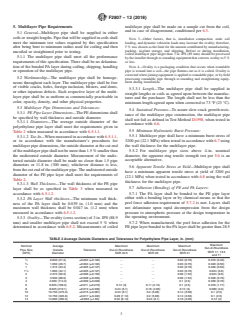
TABLE 2 Average Outside Diameters and Tolerances for Polyethylene Pipe Layer, in. (mm)
Maximum
Nominal Average Maximum Maximum Maximum
Out-of-Roundness
Pipe Size Outside Tolerance Out-of-Roundness Out-of-Roundness Out-of-Roundness
SDR 17, 13.5
(NPS) Diameter SDR 32.5 SDR 26 SDR 21
and 11
⁄2 0.840 (21.3) ±0.004 (±0.102) . . 0.03 (0.76) 0.016 (0.40)
⁄4 1.050 (26.7) ±0.004 (±0.102) . . 0.03 (0.76) 0.020 (0.50)
1 1.315 (33.4) ±0.005 (±0.127) . . 0.03 (0.76) 0.020 (0.50)
1 ⁄4 1.660 (42.1) ±0.005 (±0.127) . . 0.03 (0.76) 0.024 (0.6)
2 2.375 (60.3) ±0.006 (±0.152) . . 0.06 (1.52) 0.024 (0.6)
3 3.500 (88.9) ±0.008 (±0.203) . . 0.06 (1.52) 0.030 (0.76)
4 4.500 (114.3) ±0.009 (±0.229) . . 0.1 (2.5) 0.030 (0.76)
6 6.625 (168.3) ±0.011 (±0.279) 0.12 (3) 0.11 (2.74) 0.1 (2.5) 0.070 (1.77)
8 8.625 (219.1) ±0.013 (±0.330) 0.24 (6.1) 0.16 (4.06) 0.12 (3) 0.080 (2.0)
10 10.750 (273.0) ±0.015 (±0.381) 0.24 (6.1) 0.2 (5.08) 0.14 (3.58) 0.1 (2.5)
12 12.750 (323.8) ±0.017 (±0.432) 0.28 (7.12) 0.2 (5.08) 0.14 (3.58) 0.1 (2.5)
14 14.000 (355.6) ±0.063 (±1.60) 0.32 (8.12) 0.24 (6.1) 0.16 (4.06) 0.12 (3)
F2807 − 13 (2018)
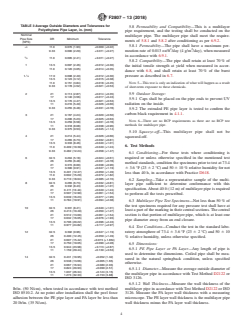
TABLE 3 Average Outside Diameters and Tolerances for
5.8 Permeability and Compatibility—This is a multilayer
Polyethylene Pipe Layer, in. (mm)
pipe requirement, and the testing shall be conducted on the
Nominal
multilayer pipe. The multilayer pipe shall meet the require-
Pipe Size DR Minimum Tolerance
ments of 5.8.1 and 5.8.2 after conditioning as per 6.9.2.
(NPS)
1 5.8.1 Permeability—The pipe shall have a maximum per-
⁄2 11.0 0.076 (1.93) +0.009 (+0.22)
2 2
9.33 0.090 (2.29) +0.011 (+0.27)
meation rate of 0.013 oz/ft /day (4 g/m /day), when measured
in accordance with 6.9.1.
⁄4 11.0 0.095 (2.41) +0.011 (+0.27)
5.8.2 Compatibility—The pipe shall retain at least 70 % of
1 13.5 0.097 (2.46) +0.012 (+0.30)
the initial tensile strength at yield when measured in accor-
11.0 0.120 (3.05) +0.014 (+0.35)
dance with 6.8, and shall retain at least 70 % of the burst
1- ⁄4 17.0 0.098 (2.49) +0.012 (+0.30) pressure as described in 6.7.
13.5 0.123 (3.12) +0.015 (+0.38)
11.0 0.151 (3.84) +0.018 (+0.45)
NOTE 5—This test is only an indication of what will happen as a result
9.33 0.178 (4.52) +0.021 (+0.53)
of short-term exposure to these chemicals.
2 21 0.113 (2.87) +0.014 (+0.35) 5.9 Outdoor Storage:
17 0.140 (3.56) +0.017 (+0.43)
5.9.1 Caps shall be placed on the pipe ends to prevent UV
13.5 0.176 (4.47) +0.021 (+0.53)
radiation on the inside.
11 0.216 (5.49) +0.026 (+0.66)
9.33 0.255 (6.48) +0.031 (+0.78)
5.9.2 The extruded PE pipe layer is tested to confirm the
carbon black requirement in 4.1.1.
3 21 0.167 (4.24) +0.020 (+0.50)
17 0.206 (5.23) +0.025 (+0.63)
NOTE 6—There are no RCP requirements as there are no RCP test
13.5 0.259 (6.58) +0.031 (+0.78)
methods for multilayer pipe.
11 0.318 (8.08) +0.038 (+0.96)
9.33 0.375 (9.53) +0.045 (+1.14)
5.10 Squeeze-off—This multilayer pipe shall not be
4 21 0.214 (5.44) +0.026 (+0.66)
squeezed-off.
17 0.265 (6.73) +0.032 (+0.81)
13.5 0.333 (8.46) +0.040 (+1.01)
6. Test Methods
11.0 0.409
...