

ASTM E3251-23
(Test Method)Standard Test Method for Microbial Ingress Testing on Single-Use Systems
General Information
- Abstract
SIGNIFICANCE AND USE
4.1 Single-use systems (SUSs) used for biopharmaceutical manufacturing must maintain sterility and product quality of the fluid inside. Such articles or systems should therefore be validated as providing an effective barrier against microbial ingress. The microbial barrier properties of a SUS may be demonstrated using deterministic physical tests that have been correlated to microbial integrity. Such physical test methods are described in Test Method E3336. Two microbial test methods (aerosol exposure and immersion exposure) are described in this test method that can be used to demonstrate microbial integrity of a SUS or determine the MALL, the maximum defect size that does not allow microbial ingress, into a SUS.
4.2 It is important to note that the results of microbial ingress tests are heavily dependent on the conditions under which the test is performed and are not suitable for routine checking of a SUS due to the test’s destructive nature.
4.2.1 Any size defect may be forced to fail under sufficiently aggressive conditions (including a large enough sample size, high differential pressure, or high hydrostatic pressure, for example) that would not ordinarily reflect normal use conditions. Thus, it is necessary to clearly define the relevant conditions for a test through a risk assessment of both the actual SUS claims and its final use (Practice E3244). Once that is established, the size of defect that can be detected under those conditions can be determined, if required, using defined defects.
4.2.2 “Relevant conditions” refers to worse-case actual use conditions but does not mean that a SUS must be tested under theoretically absolute (extreme) “worst-case” conditions.
4.2.3 Testing may be performed on individual components or entire systems. Considerations for defining “relevant conditions” and testing design should be based on a risk assessment for the SUS intended use and should include:
4.2.3.1 A channel created by a defect or breach through the...
SCOPE
1.1 The microbial test method outlined in this test method applies to microbial ingress risk assessment of a single-use system (SUS) or its individual components that require integrity testing either by the assembly supplier or the end user of the assembly based on a potential risk of a breach to the product or manufacturing process.
1.2 The aim of microbial ingress testing of sterile SUSs used in biopharmaceutical manufacturing is two-fold:
1.2.1 Firstly, it is used to evaluate the ability of a SUS fluid path to remain sterile after a SUS has been challenged by microbial exposure. Microbial exposure is achieved either by directly placing a SUS into a container of microbial challenge solution, or by delivering an aerosolized microbial challenge onto a SUS that is placed inside a test chamber designed to generate and deliver the aerosol. The choice of the test challenge organism should be justified based on a risk assessment of the SUS and conditions of use.
1.2.2 Additionally, microbial ingress testing can be used to determine the maximum allowable leakage limit (MALL) that does not allow microbial ingress under specific test conditions. The defect size that can be detected by specific physical integrity testing methods (see Test Method E3336) can be correlated to this MALL in order to claim microbial integrity. Test articles bearing calibrated defects over a range of dimensions, including up to a defect size expected to consistently allow microbial ingress as a positive control (defect-based positive control), may be tested to determine the MALL.
1.3 Both purposes for microbial ingress testing as described in 1.2.1 and 1.2.2 can either be conducted by liquid immersion or aerosol exposure. For the purpose described in 1.2.2, the type of exposure should be determined according to the SUS’s use-case conditions and a risk assessment.
1.4 The method used to create a breach, hole or defect in single-use film or...
- Status
- Published
- Publication Date
- 14-Mar-2023
- Technical Committee
- E55 - Manufacture of Pharmaceutical and Biopharmaceutical Products
- Drafting Committee
- E55.07 - Single Use Systems
Overview
ASTM E3251-23: Standard Test Method for Microbial Ingress Testing on Single-Use Systems establishes procedures for evaluating the microbial barrier integrity of single-use systems (SUS) in biopharmaceutical manufacturing. Maintaining the sterility of process fluids in disposable equipment is critical for ensuring product quality and safety. This standard outlines microbial ingress test methods-using both aerosol and immersion exposures-to assess the ability of SUS or individual components to resist microbial penetration under defined conditions. The result is robust integrity assurance, supporting both regulatory compliance and risk management throughout the SUS life cycle.
Key Topics
Purpose and Scope
- Applies to microbial ingress risk assessment for single-use systems and components.
- Designed for both assembly suppliers and end users.
- Test methods help identify the maximum allowable leakage limit (MALL) that prevents microbial ingress.
Microbial Ingress Test Methods
- Two validated approaches: aerosol exposure and immersion exposure.
- Aerosol exposure involves delivering an aerosolized microbial challenge to the SUS in a controlled chamber.
- Immersion exposure submerges the SUS in a microbial challenge solution.
Controls and Validation
- Utilizes positive and negative controls to confirm the method’s reliability.
- Requires method validation including Installation Qualification (IQ), Operational Qualification (OQ), and Performance Qualification (PQ).
- Emphasizes the need for rigorous risk assessment and defined test conditions, not extreme or theoretical worst-case scenarios.
Defect and Leakage Assessment
- Testing can reveal the defect size that could compromise sterility, guiding physical integrity testing correlations per ASTM E3336.
- Artificial calibrated defects may be introduced to establish the sensitivity and limit of the test.
Statistical Robustness and Limitations
- Microbial ingress tests are probabilistic and destructive; not intended for routine in-process checking.
- Results depend highly on test parameters-sample size, applied pressure, type of microorganism, and environmental conditions.
Applications
Biopharmaceutical Manufacturing
- Verifies the microbial barrier functionality of single-use assemblies, filters, bags, connectors, and tubing sets.
- Evaluates SUS and component integrity before deployment in critical process steps.
SUS Qualification and Supplier Audits
- Assists manufacturers and suppliers in substantiating the integrity claims of SUS.
- Supports qualification protocols and supplier management.
Risk Management and Process Validation
- Informs risk assessments for potential process contamination due to SUS failure.
- Correlates physical test findings with microbial ingress protection, strengthening product and process validation dossiers.
Regulatory Compliance
- Provides a recognized method to demonstrate package or system integrity for health authority inspections and submissions.
Related Standards
For effective SUS microbial ingress testing and comprehensive integrity assurance in the pharmaceuticals sector, the following standards and guidance documents are pertinent:
- ASTM E3336: Test Method for Physical Integrity Testing of Single-Use Systems.
- ASTM E3244: Practice for Integrity Assurance and Testing of Single-Use Systems.
- USP <1207>: Sterile Product Packaging – Integrity Evaluation.
- ISO 15747: Plastic Containers for Intravenous Injections.
- PDA TR 27: Pharmaceutical Package Integrity.
- 21 CFR § 211.94 (b): U.S. FDA regulations for drug product containers and closures.
- EU EudraLex Vol 4, Annex 2: Guidance on biological active substance manufacture.
Keywords: microbial ingress, single-use systems, biopharmaceutical manufacturing, sterility assurance, leakage limit, integrity testing, process validation, ASTM E3251, microbial barrier, MALL, risk assessment, SUS integrity.
Frequently Asked Questions
ASTM E3251-23 is a standard published by ASTM International. Its full title is "Standard Test Method for Microbial Ingress Testing on Single-Use Systems". This standard covers: SIGNIFICANCE AND USE 4.1 Single-use systems (SUSs) used for biopharmaceutical manufacturing must maintain sterility and product quality of the fluid inside. Such articles or systems should therefore be validated as providing an effective barrier against microbial ingress. The microbial barrier properties of a SUS may be demonstrated using deterministic physical tests that have been correlated to microbial integrity. Such physical test methods are described in Test Method E3336. Two microbial test methods (aerosol exposure and immersion exposure) are described in this test method that can be used to demonstrate microbial integrity of a SUS or determine the MALL, the maximum defect size that does not allow microbial ingress, into a SUS. 4.2 It is important to note that the results of microbial ingress tests are heavily dependent on the conditions under which the test is performed and are not suitable for routine checking of a SUS due to the test’s destructive nature. 4.2.1 Any size defect may be forced to fail under sufficiently aggressive conditions (including a large enough sample size, high differential pressure, or high hydrostatic pressure, for example) that would not ordinarily reflect normal use conditions. Thus, it is necessary to clearly define the relevant conditions for a test through a risk assessment of both the actual SUS claims and its final use (Practice E3244). Once that is established, the size of defect that can be detected under those conditions can be determined, if required, using defined defects. 4.2.2 “Relevant conditions” refers to worse-case actual use conditions but does not mean that a SUS must be tested under theoretically absolute (extreme) “worst-case” conditions. 4.2.3 Testing may be performed on individual components or entire systems. Considerations for defining “relevant conditions” and testing design should be based on a risk assessment for the SUS intended use and should include: 4.2.3.1 A channel created by a defect or breach through the... SCOPE 1.1 The microbial test method outlined in this test method applies to microbial ingress risk assessment of a single-use system (SUS) or its individual components that require integrity testing either by the assembly supplier or the end user of the assembly based on a potential risk of a breach to the product or manufacturing process. 1.2 The aim of microbial ingress testing of sterile SUSs used in biopharmaceutical manufacturing is two-fold: 1.2.1 Firstly, it is used to evaluate the ability of a SUS fluid path to remain sterile after a SUS has been challenged by microbial exposure. Microbial exposure is achieved either by directly placing a SUS into a container of microbial challenge solution, or by delivering an aerosolized microbial challenge onto a SUS that is placed inside a test chamber designed to generate and deliver the aerosol. The choice of the test challenge organism should be justified based on a risk assessment of the SUS and conditions of use. 1.2.2 Additionally, microbial ingress testing can be used to determine the maximum allowable leakage limit (MALL) that does not allow microbial ingress under specific test conditions. The defect size that can be detected by specific physical integrity testing methods (see Test Method E3336) can be correlated to this MALL in order to claim microbial integrity. Test articles bearing calibrated defects over a range of dimensions, including up to a defect size expected to consistently allow microbial ingress as a positive control (defect-based positive control), may be tested to determine the MALL. 1.3 Both purposes for microbial ingress testing as described in 1.2.1 and 1.2.2 can either be conducted by liquid immersion or aerosol exposure. For the purpose described in 1.2.2, the type of exposure should be determined according to the SUS’s use-case conditions and a risk assessment. 1.4 The method used to create a breach, hole or defect in single-use film or...
SIGNIFICANCE AND USE 4.1 Single-use systems (SUSs) used for biopharmaceutical manufacturing must maintain sterility and product quality of the fluid inside. Such articles or systems should therefore be validated as providing an effective barrier against microbial ingress. The microbial barrier properties of a SUS may be demonstrated using deterministic physical tests that have been correlated to microbial integrity. Such physical test methods are described in Test Method E3336. Two microbial test methods (aerosol exposure and immersion exposure) are described in this test method that can be used to demonstrate microbial integrity of a SUS or determine the MALL, the maximum defect size that does not allow microbial ingress, into a SUS. 4.2 It is important to note that the results of microbial ingress tests are heavily dependent on the conditions under which the test is performed and are not suitable for routine checking of a SUS due to the test’s destructive nature. 4.2.1 Any size defect may be forced to fail under sufficiently aggressive conditions (including a large enough sample size, high differential pressure, or high hydrostatic pressure, for example) that would not ordinarily reflect normal use conditions. Thus, it is necessary to clearly define the relevant conditions for a test through a risk assessment of both the actual SUS claims and its final use (Practice E3244). Once that is established, the size of defect that can be detected under those conditions can be determined, if required, using defined defects. 4.2.2 “Relevant conditions” refers to worse-case actual use conditions but does not mean that a SUS must be tested under theoretically absolute (extreme) “worst-case” conditions. 4.2.3 Testing may be performed on individual components or entire systems. Considerations for defining “relevant conditions” and testing design should be based on a risk assessment for the SUS intended use and should include: 4.2.3.1 A channel created by a defect or breach through the... SCOPE 1.1 The microbial test method outlined in this test method applies to microbial ingress risk assessment of a single-use system (SUS) or its individual components that require integrity testing either by the assembly supplier or the end user of the assembly based on a potential risk of a breach to the product or manufacturing process. 1.2 The aim of microbial ingress testing of sterile SUSs used in biopharmaceutical manufacturing is two-fold: 1.2.1 Firstly, it is used to evaluate the ability of a SUS fluid path to remain sterile after a SUS has been challenged by microbial exposure. Microbial exposure is achieved either by directly placing a SUS into a container of microbial challenge solution, or by delivering an aerosolized microbial challenge onto a SUS that is placed inside a test chamber designed to generate and deliver the aerosol. The choice of the test challenge organism should be justified based on a risk assessment of the SUS and conditions of use. 1.2.2 Additionally, microbial ingress testing can be used to determine the maximum allowable leakage limit (MALL) that does not allow microbial ingress under specific test conditions. The defect size that can be detected by specific physical integrity testing methods (see Test Method E3336) can be correlated to this MALL in order to claim microbial integrity. Test articles bearing calibrated defects over a range of dimensions, including up to a defect size expected to consistently allow microbial ingress as a positive control (defect-based positive control), may be tested to determine the MALL. 1.3 Both purposes for microbial ingress testing as described in 1.2.1 and 1.2.2 can either be conducted by liquid immersion or aerosol exposure. For the purpose described in 1.2.2, the type of exposure should be determined according to the SUS’s use-case conditions and a risk assessment. 1.4 The method used to create a breach, hole or defect in single-use film or...
ASTM E3251-23 is classified under the following ICS (International Classification for Standards) categories: 07.100.10 - Medical microbiology. The ICS classification helps identify the subject area and facilitates finding related standards.
ASTM E3251-23 is available in PDF format for immediate download after purchase. The document can be added to your cart and obtained through the secure checkout process. Digital delivery ensures instant access to the complete standard document.
Standards Content (Sample)
This international standard was developed in accordance with internationally recognized principles on standardization established in the Decision on Principles for the
Development of International Standards, Guides and Recommendations issued by the World Trade Organization Technical Barriers to Trade (TBT) Committee.
Designation: E3251 − 23
Standard Test Method for
Microbial Ingress Testing on Single-Use Systems
This standard is issued under the fixed designation E3251; the number immediately following the designation indicates the year of
original adoption or, in the case of revision, the year of last revision. A number in parentheses indicates the year of last reapproval. A
superscript epsilon (´) indicates an editorial change since the last revision or reapproval.
1. Scope outside of the scope of this test method. The sampling plan for
a given test article should be justified with the rationale of
1.1 The microbial test method outlined in this test method
sampling size to obtain a statistically meaningful effect (Prac-
applies to microbial ingress risk assessment of a single-use
tice E3244). Determining the appropriate number of SUS test
system (SUS) or its individual components that require integ-
articles will depend on a risk assessment of the SUS and the
rity testing either by the assembly supplier or the end user of
conditions of its use and is also outside of this test method’s
the assembly based on a potential risk of a breach to the
scope.
product or manufacturing process.
1.5 Units—The values stated in SI units are to be regarded
1.2 The aim of microbial ingress testing of sterile SUSs
as standard. No other units of measurement are included in this
used in biopharmaceutical manufacturing is two-fold:
standard.
1.2.1 Firstly, it is used to evaluate the ability of a SUS fluid
1.6 This standard does not purport to address all of the
path to remain sterile after a SUS has been challenged by
safety concerns, if any, associated with its use. It is the
microbial exposure. Microbial exposure is achieved either by
responsibility of the user of this standard to establish appro-
directly placing a SUS into a container of microbial challenge
priate safety, health, and environmental practices and deter-
solution, or by delivering an aerosolized microbial challenge
mine the applicability of regulatory limitations prior to use.
onto a SUS that is placed inside a test chamber designed to
1.7 This international standard was developed in accor-
generate and deliver the aerosol. The choice of the test
dance with internationally recognized principles on standard-
challenge organism should be justified based on a risk assess-
ization established in the Decision on Principles for the
ment of the SUS and conditions of use.
Development of International Standards, Guides and Recom-
1.2.2 Additionally, microbial ingress testing can be used to
mendations issued by the World Trade Organization Technical
determine the maximum allowable leakage limit (MALL) that
Barriers to Trade (TBT) Committee.
does not allow microbial ingress under specific test conditions.
The defect size that can be detected by specific physical
2. Referenced Documents
integrity testing methods (see Test Method E3336) can be
2.1 ASTM Standards:
correlated to this MALL in order to claim microbial integrity.
Test articles bearing calibrated defects over a range of E3244 Practice for Integrity Assurance and Testing of
Single-Use Systems
dimensions, including up to a defect size expected to consis-
tently allow microbial ingress as a positive control (defect- E3336 Test Method for Physical Integrity Testing of Single-
Use Systems
based positive control), may be tested to determine the MALL.
2.2 Other Documents:
1.3 Both purposes for microbial ingress testing as described
USP <1207> Sterile Product Packaging — Integrity
in 1.2.1 and 1.2.2 can either be conducted by liquid immersion
Evaluation, 2016
or aerosol exposure. For the purpose described in 1.2.2, the
ISO 15747 Plastic Containers for Intravenous Injections
type of exposure should be determined according to the SUS’s
use-case conditions and a risk assessment.
3. Terminology
1.4 The method used to create a breach, hole or defect in
3.1 Definitions:
single-use film or in a SUS test article, as well as the analytical
method used to physically characterize the defect size is
For referenced ASTM standards, visit the ASTM website, www.astm.org, or
contact ASTM Customer Service at service@astm.org. For Annual Book of ASTM
Standards volume information, refer to the standard’s Document Summary page on
This test method is under the jurisdiction of ASTM Committee E55 on the ASTM website.
Manufacture of Pharmaceutical and Biopharmaceutical Products and is the direct Available from U.S. Pharmacopeial Convention (USP), 12601 Twinbrook
responsibility of Subcommittee E55.07 on Single Use Systems. Pkwy., Rockville, MD 20852-1790, http://www.usp.org.
Current edition approved March 15, 2023. Published March 2023. Originally Available from International Organization for Standardization (ISO), ISO
approved in 2020. Previous edition approved in 2020 as E3251 – 20. DOI: Central Secretariat, BIBC II, Chemin de Blandonnet 8, CP 401, 1214 Vernier,
10.1520/E3251-23. Geneva, Switzerland, http://www.iso.org.
Copyright © ASTM International, 100 Barr Harbor Drive, PO Box C700, West Conshohocken, PA 19428-2959. United States
E3251 − 23
3.1.1 calibrated leak, n—a hole which is characterized by its 3.1.11 single-use system (SUS), n—process equipment used
size (for example, artificially created into a SUS, a SUS’s in (bio)pharmaceutical manufacturing, disposed of after use
material, or component and used for creating positive controls). and usually constructed of polymer-based materials.
3.1.1.1 Discussion—Often, the size is a nominal size which
3.1.12 viability-based positive control, n—a test article di-
is equivalent to a gas flow through an idealized geometry. A
rectly inoculated with a test organism. The purpose of this
commonly used idealized geometry is the “nominal diameter
positive control is to validate the viability of the test organism
orifice size,” corresponding to the size of a perfect circular hole
under the test conditions, throughout the test.
of negligible length that would give the same gas flow in the
3.2 Acronyms:
calibration conditions (for example, dry air flow rate measured
3.2.1 CFU—colony forming unit.
at 25 °C, with 1 bar inlet pressure and 1 atm outlet pressure).
g
3.2.2 IQ—installation qualification.
3.1.2 challenge solution, n—a liquid suspension containing
3.2.3 IT—integrity test.
a selected microorganism used to generate an aerosol or used
3.2.4 MALL—maximum allowable leakage limit.
for liquid immersion.
3.2.5 OQ—operational qualification.
3.1.3 defect-based positive control, n—a test article exposed
3.2.6 PQ—performance qualification.
to a challenge solution with a calibrated breach or defect. The
size of the breach or defect will depend on a previous
3.2.7 SUS—single-use system.
determination of the defect size that can be consistently
3.2.8 TSA—tryptic soy agar.
detected under given conditions. This positive control is used
3.2.9 TSB—tryptic soy broth.
as a control to ensure that the microorganism can pass through
a defect and can be detected by the test method.
4. Significance and Use
3.1.4 exposed negative control, n—a test article without 4.1 Single-use systems (SUSs) used for biopharmaceutical
defects exposed to a challenge solution. The purpose of the
manufacturing must maintain sterility and product quality of
exposed negative control is to confirm the correct preparation the fluid inside. Such articles or systems should therefore be
and assembly of the test article.
validated as providing an effective barrier against microbial
ingress. The microbial barrier properties of a SUS may be
3.1.5 growth promotion test, n—a test, using a negative
demonstrated using deterministic physical tests that have been
control after the complete incubation time, by inoculating ≤100
correlated to microbial integrity. Such physical test methods
CFU of the microbial challenge organism and incubating at the
are described in Test Method E3336. Two microbial test
appropriate temperature until either visible growth is seen, or a
methods (aerosol exposure and immersion exposure) are de-
maximum of 7 days is reached. The purpose of the growth
scribed in this test method that can be used to demonstrate
promotion test is to demonstrate that the selected solution can
microbial integrity of a SUS or determine the MALL, the
support microbial growth.
maximum defect size that does not allow microbial ingress,
3.1.6 integrity test, n—a test used to confirm the defined
into a SUS.
barrier properties of a SUS.
4.2 It is important to note that the results of microbial
3.1.7 leak, n—a breach in a SUS’s material or a gap between
ingress tests are heavily dependent on the conditions under
SUS’s components through which there is a break-down of the
which the test is performed and are not suitable for routine
barrier property of interest.
checking of a SUS due to the test’s destructive nature.
3.1.8 leak test, n—a test used to identify leaks not correlated 4.2.1 Any size defect may be forced to fail under sufficiently
to the defined barrier properties of a SUS. aggressive conditions (including a large enough sample size,
high differential pressure, or high hydrostatic pressure, for
3.1.9 maximum allowable leakage limit (MALL), n—the
example) that would not ordinarily reflect normal use condi-
greatest leakage rate (or leak size) tolerable for a given product
tions. Thus, it is necessary to clearly define the relevant
package to maintain its barrier properties under its use-case
conditions for a test through a risk assessment of both the
conditions (for example, prevent any risk to product safety,
actual SUS claims and its final use (Practice E3244). Once that
product quality, or operator and environmental safety).
is established, the size of defect that can be detected under
3.1.9.1 Discussion—In this test method’s context, the prod-
those conditions can be determined, if required, using defined
uct package is a SUS containing a (bio)pharmaceutical
defects.
product, but not a final dosage form.
4.2.2 “Relevant conditions” refers to worse-case actual use
3.1.10 non-exposed negative control, n—a test article that is conditions but does not mean that a SUS must be tested under
not exposed to a challenge solution. The purpose of the theoretically absolute (extreme) “worst-case” conditions.
non-exposed negative control is to validate the test system’s
4.2.3 Testing may be performed on individual components
sterility. This could be accomplished by filling a SUS control or entire systems. Considerations for defining “relevant condi-
with growth medium and incubating for several days to ensure
tions” and testing design should be based on a risk assessment
that the SUS test article was not contaminated upon filling. for the SUS intended use and should include:
E3251 − 23
4.2.3.1 A channel created by a defect or breach through the 4.5 These procedures should be conducted in a microbio-
film thickness or through a seam or connection which must be logical laboratory by trained personnel. It is assumed that basic
5, 6
filled with liquid to allow microbial passage. microbiological equipment and supplies for conducting routine
4.2.3.2 Factors that could influence liquid filling of a microbiological manipulations (for example, standard plate
channel, including a liquid’s viscosity, defect size and type, counts, autoclave sterilization, etc.) are available.
plastic materials and pressure applied inside the SUS.
MICROBIAL INGRESS TEST METHOD BY
4.2.3.3 Rationale for selecting a defect type should be based
AEROSOL EXPOSURE
on the probable type of defect(s) that could occur during the
SUS life cycle
5. Summary of Test Method
4.2.3.4 Rationale for selection of defect sizes should be
5.1 Pre-treat SUS test articles or SUS internal fluid path
based on a deterministic physical testing method (detection
with methods consistent to those used to sterilize the SUS
limit)
according to process requirements (for example, sanitize,
4.2.3.5 Consideration of pressure(s) differential applied dur-
sterilize or receive pre-sterilized).
ing testing to simulate conditions that a SUS may be subjected
5.2 Fill the SUS test articles with sterile culture media,
to during actual use conditions (Practice E3244).
(appropriate to the test organism), sufficiently to wet all
4.3 The selection of challenge microorganism and minimum
surfaces, and place filled test articles into the aerosol exposure
target challenge concentration should be based on a risk
chamber. The internal surface of all SUS test articles must be
assessment, justified, and validated, as necessary, for the limit
maintained wet with media during the whole exposure. Air
6 2
of detection. A minimum of 10 CFU/cm surface area (aero-
inside the SUS must be removed to permit wetting of the entire
sol) or 10 CFU/mL (liquid immersion) is typically used (ISO
SUS test article interior. All external surfaces should be
15747 and Aliaskarisohi ).
exposed to the aerosol.
4.4 SUS test articles bearing calibrated defects may be
5.3 Prepare the challenge solution at the required microbial
produced and tested to allow either the determination of the
concentration to deliver the minimum target challenge.
minimum defect size that can be detected by a microbial test
5.4 Subject test articles to the aerosolized microorganism
method under given conditions (for example, microbial in-
challenge solution within an exposure chamber, under system
gress) or to determine the MALL of SUSs under use-case
parameters (flow rate, exposure time) designed to deliver the
conditions (for example, aerosol test).
minimum target challenge.
4.4.1 If the test objective is to determine the MALL and
5.5 Remove the SUS from the aerosol chamber and incubate
demonstrate correlation between physical integrity test sensi-
tivity and microbial ingress, selection of the calibrated defect at appropriate conditions for the test microorganism. Visually
examine the test articles for the presence or absence of growth.
(laser-drilled hole, capillary, copper wire) should be based on
the most probable type of defect that could occur during the
6. Apparatus
SUS’s life cycle.
6.1 Aerosol exposure equipment (an example of which is
4.4.2 The selection of defect sizes should be based on the
illustrated in Fig. 1) comprises an aerosol chamber, in which
expected transition from ingress to no ingress under the SUS’s
test articles are placed on a carrier plate and the challenge
intended use-case conditions, alternatively, worst-case condi-
microorganism is aerosolized. HEPA filters are attached to the
tions can be selected. As described in the Practice E3244, a
top of the chamber to maintain an atmospheric pressure. The
typical range is from 1 μm to 100 μm. The defect sizes should
bottom, underneath the aerosol chamber, contains equipment
be calibrated by a defined method.
required for aerosolization and aerosol evacuation. The air
4.4.3 One approach for determining the MALL of a SUS
compressor system, air dryer, and liquid nebulizer delivers
film material is to test single-use film coupons with calibrated
aerosol formation and diffusion within the chamber. The air
defects, in holders. This enables higher throughput testing;
blower ensures evacuation of any remaining aerosol still in
however, using coupons as test articles may not represent a
suspension at the end of the settling time.
scale-down model of an entire SUS.
4.4.4 Another approach is to validate the test method on
6.2 To test film coupons bearing calibrated defects, a
alternative container-like vials. The principle remains the single-use film coupon holder (an example of which is shown
same. The alternative container must be able to hold the
in Fig. 2) can be used. This comprises a holder that secures the
minimum size defect. film coupon and allows film coupon exposure to the aerosol
challenge.
7. Materials
Keller, S., “Determination of the Leak Size Critical to Package Sterility
Maintenance,” in PhD dissertation, Virginia Polytechnic Institute State University, 7.1 Example challenge microorganism: Bacillus atrophaeus
VA, 1998.
(ATCC 9372), spore suspension. Alternative challenge micro-
Gibney, M., “Predicting Package Defects: Quantification of Critical Leak
organisms can be used with justification for their selection.
Size,” MS thesis, Faculty of Virginia Polytechnic Institute and State University,
2000.
7.2 Laminar flow cabinet for aseptic filling of test articles.
Aliaskarisohi, S., Hogreve, M., Langlois, C., Cutting, J., Barbaroux, M., Cappia
Incubator(s) large enough to contain SUS test articles, regu-
J.-M., and Menier, M.-C., “Single-Use System Integrity I: Using a Microbial Ingress
lated at 30–35 °C, or as appropriate to the chosen challenge
Test Method to Determine the Maximum Allowable Leakage Limit (MALL),” PDA
Journal of Pharmaceutical Science and Technology, April 2019. microorganism.
E3251 − 23
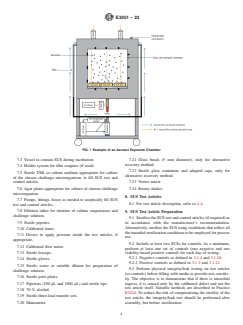
FIG. 1 Example of an Aerosol Exposure Chamber
7.3 Vessel to contain SUS during incubation. 7.21 Glass beads (5 mm diameter), only for alternative
recovery method.
7.4 Holder system for film coupons (if used).
7.22 Sterile glass containers and adapted caps, only for
7.5 Sterile TSB, or culture medium appropriate for culture
alternative recovery method.
of the chosen challenge microorganism, to fill SUS test and
control articles. 7.23 Vortex mixer.
7.6 Agar plates appropriate for culture of chosen challenge 7.24 Rotary shaker.
microorganism.
8. SUS Test Articles
7.7 Pumps, fittings, hoses as needed to aseptically fill SUS
8.1 For test article description, refer to 4.4.
test and control articles.
7.8 Dilution tubes for titration of culture suspensions and
9. SUS Test Article Preparation
challenge solution.
9.1 Sterilize the SUS test and control articles (if required) as
7.9 Sterile pipettes.
in accordance with the manufacturer’s recommendation.
Alternatively, sterilize the SUS using conditions that reflect all
7.10 Calibrated timer.
the intended sterilization conditions to be employed for process
7.11 Device to apply pressure inside the test articles, if
use.
appropriate.
9.2 Include at least two SUSs for controls. As a minimum,
7.12 Calibrated flow meter.
perform at least one set of controls (one negative and one
7.13 Sterile forceps.
...
This document is not an ASTM standard and is intended only to provide the user of an ASTM standard an indication of what changes have been made to the previous version. Because
it may not be technically possible to adequately depict all changes accurately, ASTM recommends that users consult prior editions as appropriate. In all cases only the current version
of the standard as published by ASTM is to be considered the official document.
Designation: E3251 − 20 E3251 − 23
Standard Test Method for
Microbial Ingress Testing on Single-Use Systems
This standard is issued under the fixed designation E3251; the number immediately following the designation indicates the year of
original adoption or, in the case of revision, the year of last revision. A number in parentheses indicates the year of last reapproval. A
superscript epsilon (´) indicates an editorial change since the last revision or reapproval.
1. Scope
1.1 The microbial test method outlined in this document test method applies to microbial ingress risk assessment of a single-use
system (SUS) or its individual components that require integrity testing either by the assembly supplier or the end user of the
assembly based on a potential risk of a breach to the product or manufacturing process.
1.2 The aim of microbial ingress testing of sterile SUSs used in biopharmaceutical manufacturing is two-fold:
1.2.1 Firstly, it is used to evaluate the ability of a SUS fluid path to remain sterile after a SUS has been challenged by microbial
exposure. Microbial exposure is achieved either by directly placing a SUS into a container of microbial challenge solution, or by
delivering an aerosolized microbial challenge onto a SUS that is placed inside a test chamber designed to generate and deliver the
aerosol. The choice of the test challenge organism should be justified based on a risk assessment of the SUS and conditions of use.
1.2.2 Additionally, microbial ingress testing can be used to determine the maximum allowable leakage limit (MALL) that does
not allow microbial ingress under specific test conditions. The defect size that can be detected by specific physical integrity testing
methods (see Test Method E3336) can be correlated to this MALL in order to claim microbial integrity. Test articles bearing
calibrated defects over a range of dimensions, including up to a defect size expected to consistently allow microbial ingress as a
positive control (defect-based positive control), may be tested to determine the MALL.
1.3 Both purposes for microbial ingress testing as described in 1.2.1 and 1.2.2 can either be conducted by liquid immersion or
aerosol exposure. For the purpose described in 1.2.2, the type of exposure should be determined according to the SUS’s use-case
conditions and a risk assessment.
1.4 The method used to create a breach, hole or defect in single-use film or in a SUS test article, as well as the analytical method
used to physically characterize the defect size is outside of the scope of this document. test method. The sampling plan for a given
test article should be justified with the rationale of sampling size to obtain a statistically meaningful effect (Practice E3244).
Determining the appropriate number of SUS test articles will depend on a risk assessment of the SUS and the conditions of its use
and is also outside of this document’s test method’s scope.
1.5 Units—The values stated in SI units are to be regarded as standard. No other units of measurement are included in this
standard.
1.6 This standard does not purport to address all of the safety concerns, if any, associated with its use. It is the responsibility
of the user of this standard to establish appropriate safety, health, and environmental practices and determine the applicability of
regulatory limitations prior to use.
This test method is under the jurisdiction of ASTM Committee E55 on Manufacture of Pharmaceutical and Biopharmaceutical Products and is the direct responsibility
of Subcommittee E55.04 on General Biopharmaceutical Standards.
Current edition approved May 1, 2020March 15, 2023. Published May 2020March 2023. Originally approved in 2020. Previous edition approved in 2020 as E3251 – 20.
DOI: 10.1520/E3251-20.10.1520/E3251-23.
Copyright © ASTM International, 100 Barr Harbor Drive, PO Box C700, West Conshohocken, PA 19428-2959. United States
E3251 − 23
1.7 This international standard was developed in accordance with internationally recognized principles on standardization
established in the Decision on Principles for the Development of International Standards, Guides and Recommendations issued
by the World Trade Organization Technical Barriers to Trade (TBT) Committee.
2. Referenced Documents
2.1 ASTM Standards:
E3244 Practice for Integrity Assurance and Testing of Single-Use Systems
E3336 Test Method for Physical Integrity Testing of Single-Use Systems
2.2 Other Documents:
USP <1207> Sterile Product Packaging — Integrity Evaluation, 2016
ISO 15747 Plastic Containers for Intravenous Injections
3. Terminology
3.1 Definitions:
3.1.1 (calibrated) artificial defect, calibrated leak, n—an artificial breach or defect (that is, laser-drilled hole, capillary)
representing typical failure modes, intentionally introduced into a test article.a hole which is characterized by its size (for example,
artificially created into a SUS, a SUS’s material, or component and used for creating positive controls).
3.1.1.1 Discussion—
Often, the size is a nominal size which is equivalent to a gas flow through an idealized geometry. A commonly used idealized
geometry is the “nominal diameter orifice size,” corresponding to the size of a perfect circular hole of negligible length that would
give the same gas flow in the calibration conditions (for example, dry air flow rate measured at 25 °C, with 1 bar inlet pressure
g
and 1 atm outlet pressure).
3.1.2 challenge solution, n—a liquid suspension containing a selected microorganism used to generate an aerosol or used for liquid
immersion.
3.1.3 defect-based positive control, n—a test article exposed to a challenge solution with a calibrated breach or defect. The size
of the breach or defect will depend on a previous determination of the defect size that can be consistently detected under given
conditions. This positive control is used as a control to ensure that the microorganism can pass through a defect and can be detected
by the test method.
3.1.4 exposed negative control, n—a test article without defects exposed to a challenge solution. The purpose of the exposed
negative control is to confirm the correct preparation and assembly of the test article.
3.1.5 growth promotion test, n—a test, using a negative control after the complete incubation time, by inoculating ≤100 CFU of
the microbial challenge organism and incubating at the appropriate temperature until either visible growth is seen, or a maximum
of 7 days is reached. The purpose of the growth promotion test is to demonstrate that the selected solution can support microbial
growth.
3.1.6 integrity test, n—a test used to confirm the defined barrier properties of a SUS.
3.1.7 leak, n—a breach in a SUS’s material or a gap between SUS’s components through which there is a break-down of the barrier
property of interest.
3.1.8 leak test, n—a test used to identify leaks not correlated to the defined barrier properties of a SUS.
3.1.9 maximum allowable leakage limit (MALL), n—the greatest leakage rate (or leak size) tolerable for a given product package
to maintain its barrier properties under its use-case conditions (for example, prevent any risk to product safety, product quality, or
operator and environmental safety).
For referenced ASTM standards, visit the ASTM website, www.astm.org, or contact ASTM Customer Service at service@astm.org. For Annual Book of ASTM Standards
volume information, refer to the standard’s Document Summary page on the ASTM website.
Available from U.S. Pharmacopeial Convention (USP), 12601 Twinbrook Pkwy., Rockville, MD 20852-1790, http://www.usp.org.
Available from International Organization for Standardization (ISO), ISO Central Secretariat, BIBC II, Chemin de Blandonnet 8, CP 401, 1214 Vernier, Geneva,
Switzerland, http://www.iso.org.
E3251 − 23
3.1.9.1 Discussion—
In this test method’s context, the product package is a SUS containing a (bio)pharmaceutical product, but not a final dosage form.
3.1.10 non-exposed negative control, n—a test article that is not exposed to a challenge solution. The purpose of the non-exposed
negative control is to validate the test system’s sterility. This could be accomplished by filling a SUS control with growth medium
and incubating for several days to ensure that the SUS test article was not contaminated upon filling.
3.1.11 single-use system (SUS), n—process equipment used in (bio)pharmaceutical manufacturing, disposed of after use and
usually constructed of polymer-based materials.
3.1.12 viability-based positive control, n—a test article directly inoculated with a test organism. The purpose of this positive
control is to validate the viability of the test organism under the test conditions, throughout the test.
3.2 Acronyms:
3.2.1 CFU—colony forming unit.
3.2.2 IQ—installation qualification.
3.2.3 IT—integrity test.
3.2.4 MALL—maximum allowable leakage limit.
3.2.5 OQ—operational qualification.
3.2.6 PQ—performance qualification.
3.2.7 SUS—single-use system.
3.2.8 TSA—tryptic soy agar.
3.2.9 TSB—tryptic soy broth.
4. Significance and Use
4.1 Single-use systems (SUSs) used for biopharmaceutical manufacturing must maintain sterility and product quality of the fluid
inside. Such articles or systems should therefore be validated as providing an effective barrier against microbial ingress. The
microbial barrier properties of a SUS may be demonstrated using deterministic physical tests that have been correlated to microbial
integrity. Such physical test methods are described in Test Method E3336. Two microbial test methods (aerosol exposure and
immersion exposure) are described in this test method that can be used to demonstrate microbial integrity of a SUS or determine
the MALL, the maximum defect size that does not allow microbial ingress, into a SUS.
4.2 It is important to note that the results of microbial ingress tests are heavily dependent on the conditions under which the test
is performed and are not suitable for routine checking of a SUS due to the test’s destructive nature.
4.2.1 Any size defect may be forced to fail under sufficiently aggressive conditions (including a large enough sample size, high
differential pressure, or high hydrostatic pressure, for example) that would not ordinarily reflect normal use conditions. Thus, it
is necessary to clearly define the relevant conditions for a test through a risk assessment of both the actual SUS claims and its final
use (Practice E3244). Once that is established, the size of defect that can be detected under those conditions can be determined,
if required, using defined defects.
4.2.2 “Relevant conditions” refers to worse-case actual use conditions but does not mean that a SUS must be tested under
theoretically absolute (extreme) “worst-case” conditions.
4.2.3 Testing may be performed on individual components or entire systems. Considerations for defining “relevant conditions” and
testing design should be based on a risk assessment for the SUS intended use and should include:
E3251 − 23
4.2.3.1 A channel created by a defect or breach through the film thickness or through a seam or connection which must be filled
5, 6
with liquid to allow microbial passage.
4.2.3.2 Factors that could influence liquid filling of a channel, including a liquid’s viscosity, defect size and type, plastic materials
and pressure applied inside the SUS.
4.2.3.3 Rationale for selecting a defect type should be based on the probable type of defect(s) that could occur during the SUS
life cycle
4.2.3.4 Rationale for selection of defect sizes should be based on a deterministic physical testing method (detection limit)
4.2.3.5 Consideration of pressure(s) differential applied during testing to simulate conditions that a SUS may be subjected to
during actual use conditions (Practice E3244).
4.3 The selection of challenge microorganism and minimum target challenge concentration should be based on a risk assessment,
6 2 6
justified, and validated, as necessary, for the limit of detection. A minimum of 10 CFU/cm surface area (aerosol) or 10 CFU/mL
(liquid immersion) is typically used (ISO 15747 and Aliaskarisohi ).
4.4 SUS test articles bearing calibrated defects may be produced and tested to allow either the determination of the minimum
defect size that can be detected by a microbial test method under given conditions (for example, microbial ingress) or to determine
the MALL of SUSs under use-case conditions (for example, aerosol test).
4.4.1 If the test objective is to determine the MALL and demonstrate correlation between physical integrity test sensitivity and
microbial ingress, selection of the artificialcalibrated defect (laser-drilled hole, capillary, copper wire) should be based on the most
probable type of defect that could occur during the SUS’s life cycle.
4.4.2 The selection of defect sizes should be based on the expected transition from ingress to no ingress under the SUS’s intended
use-case conditions, alternatively, worst-case conditions can be selected. As described in the Practice E3244, a typical range is from
1 μm to 100 μm. The defect sizes should be calibrated by a defined method.
4.4.3 One approach for determining the MALL of a SUS film material is to test single-use film coupons with calibrated defects,
in holders. This enables higher throughput testing; however, using coupons as test articles may not represent a scale-down model
of an entire SUS.
4.4.4 Another approach is to validate the test method on alternative container-like vials. The principle remains the same. The
alternative container must be able to hold the minimum size defect.
4.5 These procedures should be conducted in a microbiological laboratory by trained personnel. It is assumed that basic
microbiological equipment and supplies for conducting routine microbiological manipulations (for example, standard plate counts,
autoclave sterilization, etc.) are available.
MICROBIAL INGRESS TEST METHOD BY AEROSOL EXPOSURE
5. Summary of Test Method
5.1 Pre-treat SUS test articles or SUS internal fluid path with methods consistent to those used to sterilize the SUS according to
process requirements (for example, sanitize, sterilize or receive pre-sterilized).
5.2 Fill the SUS test articles with sterile culture media, (appropriate to the test organism), sufficiently to wet all surfaces, and place
filled test articles into the aerosol exposure chamber. The internal surface of all SUS test articles must be maintained wet with
Keller, S., “Determination of the Leak Size Critical to Package Sterility Maintenance,” in PhD dissertation, Virginia Polytechnic Institute State University, VA, 1998.
Gibney, M., “Predicting Package Defects: Quantification of Critical Leak Size,” MS thesis, Faculty of Virginia Polytechnic Institute and State University, 2000.
Aliaskarisohi, S., Hogreve, M., Langlois, C., Cutting, J., Barbaroux, M., Cappia J.-M., and Menier, M.-C., “Single-Use System Integrity I: Using a Microbial Ingress
Test Method to Determine the Maximum Allowable Leakage Limit (MALL),” PDA Journal of Pharmaceutical Science and Technology, April 2019.
E3251 − 23
media during the whole exposure. Air inside the SUS must be removed to permit wetting of the entire SUS test article interior.
All external surfaces should be exposed to the aerosol.
5.3 Prepare the challenge solution at the required microbial concentration to deliver the minimum target challenge.
5.4 Subject test articles to the aerosolized microorganism challenge solution within an exposure chamber, under system parameters
(flow rate, exposure time) designed to deliver the minimum target challenge.
5.5 Remove the SUS from the aerosol chamber and incubate at appropriate conditions for the test microorganism. Visually
examine the test articles for the presence or absence of growth.
6. Apparatus
6.1 Aerosol exposure equipment (an example of which is illustrated in Fig. 1) comprises an aerosol chamber, in which test articles
are placed on a carrier plate and the challenge microorganism is aerosolized. HEPA filters are attached to the top of the chamber
to maintain an atmospheric pressure. The bottom, underneath the aerosol chamber, contains equipment required for aerosolization
and aerosol evacuation. The air compressor system, air dryer, and liquid nebulizer delivers aerosol formation and diffusion within
the chamber. The air blower ensures evacuation of any remaining aerosol still in suspension at the end of the settling time.
6.2 To test film coupons bearing artificial calibrated defects, a single-use film coupon holder (an example of which is shown in
Fig. 2) can be used. This comprises a holder that secures the film coupon and allows film coupon exposure to the aerosol challenge.
7. Materials
7.1 Example challenge microorganism: Bacillus atrophaeus (ATCC 9372), spore suspension. Alternative challenge microorgan-
isms can be used with justification for their selection.
7.2 Laminar flow cabinet for aseptic filling of test articles. Incubator(s) large enough to contain SUS test articles, regulated at
30–35°C,30–35 °C, or as appropriate to the chosen challenge microorganism.
FIG. 1 Example of an Aerosol Exposure Chamber
E3251 − 23
FIG. 2 Example of a Single-Use Film Coupon Holder
7.3 Vessel to contain SUS during incubation.
7.4 Holder system for film coupons (if used).
7.5 Sterile TSB, or culture medium appropriate for culture of the chosen challenge microorganism, to fill SUS test and control
articles.
7.6 Agar plates appropriate for culture of chosen challenge microorganism.
7.7 Pumps, fittings, hoses as needed to aseptically fill SUS test and control articles.
7.8 Dilution tubes for titration of culture suspensions and challenge solution.
7.9 Sterile pipettes.
7.10 Calibrated timer.
E3251 − 23
7.11 Device to apply pressure inside the test articles, if appropriate.
7.12 Calibrated flow meter.
7.13 Sterile forceps.
7.14 Sterile gloves.
7.15 Sterile water or suitable diluent for preparation of challenge solution.
7.16 Sterile petri plates.
7.17 Pipettors (100 μL and 1000 μL) and sterile tips.
7.18 70 % alcohol.
7.19 Sterile three-lead transfer sets.
7.20 Manometer.
7.21 Glass beads (5 mm diameter), only for alternative recovery method.
7.22 Sterile glass containers and adapted caps, only for alterna
...