


ASTM F3487-20
(Guide)Standard Guide for Assessing the Service Life of a Brush Part Intended to Clean a Medical Device
Standard Guide for Assessing the Service Life of a Brush Part Intended to Clean a Medical Device
SIGNIFICANCE AND USE
5.1 This guide describes the use of test methods in Guides F3275 and F3276 to assess the service life of a brush part intended to clean a medical device.
5.2 In the case of a brush part intended to clean a lumen, the force required to move a brush part within a tube, an indicator of the friction a brush exerts on a surface, is a measurable parameter that can change over time and will decrease as the brush part loses integrity.
5.3 In the case of a brush part intended to clean the external surface, the force required to move the brush across a surface and the pressure the brush exerts on that surface are measurable parameters that can change over time and will decrease as the brush part loses integrity.
5.4 By providing objective, repeatable methods for evaluating performance under test conditions, this guide can improve the ability to assess the effectiveness of various brush part designs.
SCOPE
1.1 This guide describes methods for assessing the service life, under prescribed laboratory conditions, of a brush part designed to clean a medical device. The method utilizes force testers to mechanically actuate a brush part at a constant rate. This action continues until the brush part demonstrates a significant reduction in cleaning power as measured by the force exerted during testing.
1.2 The test methods utilized in this guide are those described in Guides F3275 and F3276. In this guide, the number of repetitions is open-ended and determined by the measurable fatigue of the brush part as measured by a reduction in force, as well as any observation of wear or damage to the brush part.
1.3 Brushes designed to clean medical devices after clinical use play an important role in the effective reprocessing of those medical devices. Instructions for use from the brush manufacturer should supply information related to the service life of the brush. This may be stated in terms of (1) a time period; (2) the number of uses; (3) inspection of the brush for wear and damage.
1.4 Inspection for wear should always be a part of the instructions for use of a brush. Application of this guide can help to determine like mode(s) of observable failure of a brush part.
1.5 Units—The values stated in SI units are to be regarded as standard. No other units of measurement are included in this standard.
1.6 This standard does not purport to address all of the safety concerns, if any, associated with its use. It is the responsibility of the user of this standard to establish appropriate safety, health, and environmental practices and determine the applicability of regulatory limitations prior to use.
1.7 This international standard was developed in accordance with internationally recognized principles on standardization established in the Decision on Principles for the Development of International Standards, Guides and Recommendations issued by the World Trade Organization Technical Barriers to Trade (TBT) Committee.
General Information
- Status
- Published
- Publication Date
- 14-Oct-2020
- Technical Committee
- F04 - Medical and Surgical Materials and Devices
- Drafting Committee
- F04.15 - Material Test Methods
Overview
ASTM F3487-20: Standard Guide for Assessing the Service Life of a Brush Part Intended to Clean a Medical Device is an internationally recognized standard developed by ASTM International. This guide outlines objective and repeatable methods for evaluating the service life of brush parts specifically designed for cleaning medical devices, both internally (lumen cleaning) and externally (surface cleaning). By using controlled test conditions as described in referenced ASTM Guides F3275 and F3276, this standard supports manufacturers and users in determining the performance and wear characteristics of cleaning brushes essential for effective medical device reprocessing.
Regular assessment of brush service life is critical for infection control, ensuring compliance with healthcare regulations, and optimizing cost-effective device maintenance.
Key Topics
Service Life Assessment
The standard provides methodologies to assess when a brush part loses its cleaning efficacy, using force testers to simulate repeated cleaning motions under laboratory conditions.Internal vs. External Cleaning
- Lumen Cleaning: Measures the force required to move a brush inside a tube (representing device channels). Diminished force indicates wear or reduced cleaning ability.
- Surface Cleaning: Assesses the force and pressure exerted as the brush moves across device surfaces, tracking how these parameters decline over time.
Indicators of Wear or End-of-Life
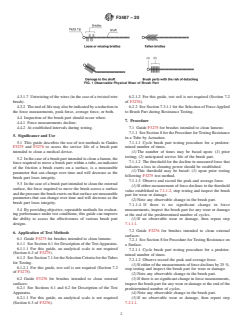
Observable signs for brush replacement include:- Missing, fallen, bent, or twisted bristles
- Bent shafts (common in lumen-cleaning brushes)
- Damage to the brush block or handle
- Untwisting of wires (for twisted-wire brushes)
- A measurable decrease (typically ≥25%) in cleaning force
Testing Protocols
The guide specifies the use of mechanical force testers to actuate the brush at a constant rate. Cycles are repeated until a significant loss of force or visible damage occurs. Data such as peak and average forces, number of cycles, and visual assessments are key reporting elements.
Applications
Medical Device Manufacturing and Quality Assurance
Brush manufacturers utilize the standard to demonstrate product performance and validate brush life claims, ensuring brushes meet regulatory and hospital requirements for reprocessing.Healthcare Facilities and Sterile Processing
Hospitals and clinics can use standardized service life data to establish maintenance schedules, guide user inspection protocols, and select appropriate cleaning brushes for reusable medical instruments.Product Labeling and Instructions for Use
The guide supports manufacturers in developing accurate "instructions for use," detailing recommended service life in terms of duration, usage count, and wear inspection criteria.Design and Innovation
Objective service life testing improves the ability to compare brush designs, facilitating innovation in cleaning tool development for complex medical devices.
Related Standards
ASTM F3275
Guide for Using a Force Tester to Evaluate Performance of a Brush Part Designed to Clean the Internal Channel of a Medical Device.ASTM F3276
Guide for Using a Force Tester to Evaluate the Performance of a Brush Part Designed to Clean the External Surface of a Medical Device.ISO 17664
Information to be provided by manufacturer for the processing of resterilizable medical devices (relevant for brush service life and cleaning efficacy).AAMI ST79
Comprehensive guide to steam sterilization and sterility assurance in healthcare facilities, which includes references to cleaning and inspection tools.
Keywords: ASTM F3487-20, brush service life, medical device cleaning, brush wear assessment, healthcare reprocessing, cleaning efficacy, device maintenance, sterile processing, ASTM medical standards.

Get Certified
Connect with accredited certification bodies for this standard

BSI Group
BSI (British Standards Institution) is the business standards company that helps organizations make excellence a habit.

TÜV Rheinland
TÜV Rheinland is a leading international provider of technical services.

TÜV SÜD
TÜV SÜD is a trusted partner of choice for safety, security and sustainability solutions.
Sponsored listings
Frequently Asked Questions
ASTM F3487-20 is a guide published by ASTM International. Its full title is "Standard Guide for Assessing the Service Life of a Brush Part Intended to Clean a Medical Device". This standard covers: SIGNIFICANCE AND USE 5.1 This guide describes the use of test methods in Guides F3275 and F3276 to assess the service life of a brush part intended to clean a medical device. 5.2 In the case of a brush part intended to clean a lumen, the force required to move a brush part within a tube, an indicator of the friction a brush exerts on a surface, is a measurable parameter that can change over time and will decrease as the brush part loses integrity. 5.3 In the case of a brush part intended to clean the external surface, the force required to move the brush across a surface and the pressure the brush exerts on that surface are measurable parameters that can change over time and will decrease as the brush part loses integrity. 5.4 By providing objective, repeatable methods for evaluating performance under test conditions, this guide can improve the ability to assess the effectiveness of various brush part designs. SCOPE 1.1 This guide describes methods for assessing the service life, under prescribed laboratory conditions, of a brush part designed to clean a medical device. The method utilizes force testers to mechanically actuate a brush part at a constant rate. This action continues until the brush part demonstrates a significant reduction in cleaning power as measured by the force exerted during testing. 1.2 The test methods utilized in this guide are those described in Guides F3275 and F3276. In this guide, the number of repetitions is open-ended and determined by the measurable fatigue of the brush part as measured by a reduction in force, as well as any observation of wear or damage to the brush part. 1.3 Brushes designed to clean medical devices after clinical use play an important role in the effective reprocessing of those medical devices. Instructions for use from the brush manufacturer should supply information related to the service life of the brush. This may be stated in terms of (1) a time period; (2) the number of uses; (3) inspection of the brush for wear and damage. 1.4 Inspection for wear should always be a part of the instructions for use of a brush. Application of this guide can help to determine like mode(s) of observable failure of a brush part. 1.5 Units—The values stated in SI units are to be regarded as standard. No other units of measurement are included in this standard. 1.6 This standard does not purport to address all of the safety concerns, if any, associated with its use. It is the responsibility of the user of this standard to establish appropriate safety, health, and environmental practices and determine the applicability of regulatory limitations prior to use. 1.7 This international standard was developed in accordance with internationally recognized principles on standardization established in the Decision on Principles for the Development of International Standards, Guides and Recommendations issued by the World Trade Organization Technical Barriers to Trade (TBT) Committee.
SIGNIFICANCE AND USE 5.1 This guide describes the use of test methods in Guides F3275 and F3276 to assess the service life of a brush part intended to clean a medical device. 5.2 In the case of a brush part intended to clean a lumen, the force required to move a brush part within a tube, an indicator of the friction a brush exerts on a surface, is a measurable parameter that can change over time and will decrease as the brush part loses integrity. 5.3 In the case of a brush part intended to clean the external surface, the force required to move the brush across a surface and the pressure the brush exerts on that surface are measurable parameters that can change over time and will decrease as the brush part loses integrity. 5.4 By providing objective, repeatable methods for evaluating performance under test conditions, this guide can improve the ability to assess the effectiveness of various brush part designs. SCOPE 1.1 This guide describes methods for assessing the service life, under prescribed laboratory conditions, of a brush part designed to clean a medical device. The method utilizes force testers to mechanically actuate a brush part at a constant rate. This action continues until the brush part demonstrates a significant reduction in cleaning power as measured by the force exerted during testing. 1.2 The test methods utilized in this guide are those described in Guides F3275 and F3276. In this guide, the number of repetitions is open-ended and determined by the measurable fatigue of the brush part as measured by a reduction in force, as well as any observation of wear or damage to the brush part. 1.3 Brushes designed to clean medical devices after clinical use play an important role in the effective reprocessing of those medical devices. Instructions for use from the brush manufacturer should supply information related to the service life of the brush. This may be stated in terms of (1) a time period; (2) the number of uses; (3) inspection of the brush for wear and damage. 1.4 Inspection for wear should always be a part of the instructions for use of a brush. Application of this guide can help to determine like mode(s) of observable failure of a brush part. 1.5 Units—The values stated in SI units are to be regarded as standard. No other units of measurement are included in this standard. 1.6 This standard does not purport to address all of the safety concerns, if any, associated with its use. It is the responsibility of the user of this standard to establish appropriate safety, health, and environmental practices and determine the applicability of regulatory limitations prior to use. 1.7 This international standard was developed in accordance with internationally recognized principles on standardization established in the Decision on Principles for the Development of International Standards, Guides and Recommendations issued by the World Trade Organization Technical Barriers to Trade (TBT) Committee.
ASTM F3487-20 is classified under the following ICS (International Classification for Standards) categories: 11.040.01 - Medical equipment in general. The ICS classification helps identify the subject area and facilitates finding related standards.
ASTM F3487-20 is available in PDF format for immediate download after purchase. The document can be added to your cart and obtained through the secure checkout process. Digital delivery ensures instant access to the complete standard document.
Standards Content (Sample)
This international standard was developed in accordance with internationally recognized principles on standardization established in the Decision on Principles for the
Development of International Standards, Guides and Recommendations issued by the World Trade Organization Technical Barriers to Trade (TBT) Committee.
Designation: F3487 − 20
Standard Guide for
Assessing the Service Life of a Brush Part Intended to
Clean a Medical Device
This standard is issued under the fixed designation F3487; the number immediately following the designation indicates the year of
original adoption or, in the case of revision, the year of last revision. A number in parentheses indicates the year of last reapproval. A
superscript epsilon (´) indicates an editorial change since the last revision or reapproval.
1. Scope Development of International Standards, Guides and Recom-
mendations issued by the World Trade Organization Technical
1.1 This guide describes methods for assessing the service
Barriers to Trade (TBT) Committee.
life, under prescribed laboratory conditions, of a brush part
designed to clean a medical device. The method utilizes force
2. Referenced Documents
testers to mechanically actuate a brush part at a constant rate.
2.1 ASTM Standards:
This action continues until the brush part demonstrates a
F3275 Guide for Using a Force Tester to Evaluate Perfor-
significant reduction in cleaning power as measured by the
mance of a Brush Part Designed to Clean the Internal
force exerted during testing.
Channel of a Medical Device
1.2 The test methods utilized in this guide are those de-
F3276 Guide for Using a Force Tester to Evaluate the
scribed in Guides F3275 and F3276. In this guide, the number
Performance of a Brush Part Designed to Clean the
of repetitions is open-ended and determined by the measurable
External Surface of a Medical Device
fatigue of the brush part as measured by a reduction in force,
as well as any observation of wear or damage to the brush part.
3. Terminology
1.3 Brushes designed to clean medical devices after clinical
3.1 Definitions:
useplayanimportantroleintheeffectivereprocessingofthose
3.1.1 brush set—working end of the brush that comes in
medical devices. Instructions for use from the brush manufac-
contact with the targeted surface of the substrate.
turershouldsupplyinformationrelatedtotheservicelifeofthe
4. Summary of Guide
brush. This may be stated in terms of (1) a time period; (2) the
number of uses; (3) inspection of the brush for wear and
4.1 This guide describes the application of test methods
damage.
described in Guides F3275 and F3276 to assess the service life
1.4 Inspection for wear should always be a part of the of a brush part intended to clean a medical device.
instructions for use of a brush. Application of this guide can
4.2 Through exhaustive repetitions of the applicable
help to determine like mode(s) of observable failure of a brush
method, the service life of the brush part can be estimated and
part.
described.
1.5 Units—The values stated in SI units are to be regarded
4.3 Determination of end-of-life:
as standard. No other units of measurement are included in this
4.3.1 The end-of-life for a brush part may be determined by
standard.
observable physical wear of the brush part. This may include
1.6 This standard does not purport to address all of the (see Fig. 1):
safety concerns, if any, associated with its use. It is the
4.3.1.1 Missing bristles,
responsibility of the user of this standard to establish appro- 4.3.1.2 Fallen bristles,
priate safety, health, and environmental practices and deter- 4.3.1.3 Twisted bristles,
mine the applicability of regulatory limitations prior to use. 4.3.1.4 Bent bristles,
1.7 This international standard was developed in accor- 4.3.1.5 Bentshaftofthebrush(typicallybrushesintendedto
dance with internationally recognized principles on standard- clean lumens),
ization established in the Decision on Principles for the 4.3.1.6 Damage to the block of the brush part (typically
brushes intended to clean surfaces), and
This guide is under the jurisdiction of ASTM Committee F04 on Medical and
Surgical Materials and Devices and is the direct responsibility of Subcommittee For referenced ASTM standards, visit the ASTM website, www.astm.org, or
F04.15 on Material Test Methods. contact ASTM Customer Service at service@astm.org. For Annual Book of ASTM
Current edition approved Oct. 15, 2020. Published November 2020. DOI: Standards volume information, refer to the standard’s Document Summary page on
10.1520/F3487-20. the ASTM website.
Copyright © ASTM International, 100 Barr Harbor Drive, PO Box C700, West Conshohocken, PA 19428-2959. United States
F3487 − 20
FIG. 1 Observable Physical Wear of Brush Part
4.3.1.7 Untwistingofthewires(inthecaseofatwistedwire 6.2.1.2 For this guide, test soil is not required (Section 7.2
brush). of F3276).
4.3.2 Theend-of-lifemayalsobeindicatedbyareductionin 6.2.2 See Section 7.3.1.1 for the Selection of ForceApplied
the force measurements, peak force, average force, or both.
to Brush Part during Resistance Testing.
4.4 Inspection of the brush part should occur when:
7. Procedure
4.4.1 Force measurements decline;
4.4.2 At established intervals during testing.
7.1 Guide F3275 for brushes intended to clean lumens:
7.1.1 See Section 8 for the Procedure forTesting Resistance
5. Significance and Use
in a Tube by Actuation.
5.1 This guide describes the use of test methods in Guides 7.1.1.1 Cycle brush part testing procedure for a predeter-
F3275 and F3276 to assess the service life of a brush part mined number of times.
intended to clean a medical device. (1) The number of times may be based upon: (1) prior
testing; (2) anticipated service life of the brush part.
5.2 In the case of a brush part intended to clean a lumen, the
7.1.1.2 The threshold for the decline in measured force that
force required to move a brush part within a tube, an indicator
indicates a loss in cleaning power should be established.
of the friction a brush exerts on a surface, is a measurable
(1) This threshold may be based: (1) upon prior testing
parameter that can change over time and will decrease as the
following F3275 test method.
brush part loses integrity.
7.1.1.3 Observe and record the peak and average force.
5.3 In the case of a brush part intended to clean the external
(1) If either measurement of force declines to the threshold
surface, the force required to move the brush across a surface
value established in 7.1.1.2, stop testing and inspect the brush
andthepressurethebrushexertsonthatsurfacearemeasurable
part for wear or damage.
parameters that can change over time and will decrease as the
(2) Note any observable change in the brush part.
brush part loses integrity.
7.1.1.4 If there is no significant change in force
5.4 By providing objective, repeatable methods for evaluat-
measurements, inspect the brush part for any wear or damage
ing performance under test conditions, this guide can improve at the end of the predetermined number of cycles.
the ability to assess the effectiveness of various brush part (1) If no observable wear or damage, then repeat step
designs. 7.1.1.1.
7.2 Guide F3276 for brushes intended to clean external
6. Application of Test Methods
surfaces:
6.1 Guide F3275 for brushes intended to clean lumens:
7.2.1 See Section 8 for Procedure for Testing Resistance on
6.1.1 See Section 6.1 for Description of the TestApparatus.
a Surface.
6.1.1.1 For this guide, an analytical scale is not required
7.2.1.1 Cycle brush part testing procedure for a predeter-
(Section 6.2 of F3275).
mined number of times.
6.1.2 SeeSection7.1fortheSelectionCriteriafortheTubes
7.2.1.2 Observe record the peak and average force.
for Testing.
(1) Ifeitherofthemeasurementsofforcedeclinesby25 %,
6.1.2.1 For this guide, test soil is not required (Section 7.2
stop testing and inspect the brush part for wear or damage.
of F3275).
(2) Note any observable change in the brush part.
6.2 Guide F3276 for brushes intended to clean external (3) If there is no significant change in force measurements,
surfaces: inspect the brush part for any wear or damage at the end of the
6.2.1 See Sections 6.1 and 6.2 for Description of the Test predetermined number of cycles.
Apparatus. (4) Note any observable change in the brush part.
6.2.1.1 For this guide, an analytical scale is not required (5) If no observable wear or damage, then repeat step
(Section 6.3 of F3276). 7.2.1.1.
F3487 − 20
8. Report 8.3.3 If the peak and average within 25 % of the starting
value, report:
8.1 See Section 12.1 of Guide F3275 and Section 12.1 of
8.3.3.1 The number of repetitions.
Guide F3276, respectively, for information to be reported on
8.3.3.2 The observed condition of the brush.
the physical composition of the brush part.
8.3.3.3 The total number of repetitions when t
...
Questions, Comments and Discussion
Ask us and Technical Secretary will try to provide an answer. You can facilitate discussion about the standard in here.
Loading comments...