

ASTM E488/E488M-22
(Test Method)Standard Test Methods for Strength of Anchors in Concrete Elements
General Information
- Abstract
SIGNIFICANCE AND USE
4.1 These test methods are intended to provide reproducible data from which acceptance criteria, design data, and specifications can be developed for anchors intended to be installed in concrete.
SCOPE
1.1 These test methods address the tensile and shear strengths of post-installed and cast-in-place anchors in test members made of cracked or uncracked concrete. Loadings include quasi-static, seismic, fatigue and shock. Environmental exposures include freezing and thawing, moisture, decreased and elevated temperatures and corrosion. These test methods provide basic testing procedures for use with product-specific evaluation and acceptance standards and are intended to be performed in a testing laboratory. Product-specific evaluation and acceptance standards may add specific details and appropriate parameters as needed to accomplish the testing. Only those tests required by the specifying authority need to be performed.
1.2 These test methods are intended for use with post-installed and cast-in-place anchors designed for installation perpendicular to a plane surface of a test member.
1.3 This standard prescribes separate procedures for static, seismic, fatigue and shock testing. Nothing in this standard, however, shall preclude combined tests incorporating two or more of these types of loading (such as seismic, fatigue and shock tests in series).
1.4 Both inch-pound and SI units are provided in this standard. The testing may be performed in either system and reported in that system, and the results converted to the other. However, anchor diameters, threads, and related testing equipment shall be in accordance with either inch-pound or SI provisions.
1.5 This standard does not purport to address all of the safety concerns, if any, associated with its use. It is the responsibility of the user of this standard to establish appropriate safety, health, and environmental practices and determine the applicability of regulatory limitations prior to use.
1.6 This international standard was developed in accordance with internationally recognized principles on standardization established in the Decision on Principles for the Development of International Standards, Guides and Recommendations issued by the World Trade Organization Technical Barriers to Trade (TBT) Committee.
- Status
- Published
- Publication Date
- 28-Feb-2022
- Technical Committee
- E06 - Performance of Buildings
- Drafting Committee
- E06.13 - Structural Performance of Connections in Building Construction
Overview
ASTM E488/E488M-22: Standard Test Methods for Strength of Anchors in Concrete Elements provides comprehensive procedures to evaluate the tensile and shear strength of both post-installed and cast-in-place anchors embedded in concrete. Developed by ASTM International, this standard aims to ensure that anchors used in concrete structures meet consistent and reliable performance criteria under a variety of loading and environmental conditions. By offering reproducible test data, it forms the foundation for establishing acceptance criteria, design data, and product specifications across the construction industry.
Key Topics
Scope of Testing:
- Addresses tensile and shear strength for anchors in cracked and uncracked concrete.
- Covers static, seismic (including simulated seismic), fatigue, and shock loading methods.
- Applies to both post-installed and cast-in-place anchors, including those installed perpendicular to a plane concrete surface.
Environmental Exposures:
- Considers freeze-thaw cycles, moisture, temperature extremes, and corrosion impacts.
- Enables evaluation of anchor performance in realistic service conditions.
Testing Procedures:
- Prescribes separate, detailed methodologies for various load types (static, dynamic, combined).
- Specifies requirements for test setup, specimen preparation, fixture dimensions, load application, and data recording.
- Allows testing and reporting in both inch-pound and SI (metric) units.
Safety and Responsibility:
- Highlights the need for appropriate safety, health, and environmental practices during testing.
- Places responsibility on users to determine applicable regulatory requirements.
Applications
ASTM E488/E488M-22 is essential in a wide range of construction and engineering applications where the performance of anchors in concrete is critical. These include:
Commercial and Residential Construction:
- Verification of anchor strength for supporting structural and non-structural elements like beams, walls, façade attachments, and equipment mounts.
Infrastructure Projects:
- Anchoring systems in bridges, tunnels, retaining walls, and other civil engineering structures benefit from standardized performance benchmarks.
Seismic-Prone Regions:
- Ensures anchors meet specific strength and ductility requirements under earthquake-induced loads and aftershocks.
Quality Assurance and Product Certification:
- Manufacturers, specifiers, and authorities having jurisdiction use these methods for anchor qualification, acceptance, and quality control.
Research and Development:
- Provides a reproducible framework for evaluating new anchor designs or installation systems under varied loading and exposure scenarios.
Related Standards
To ensure comprehensive and consistent testing, ASTM E488/E488M-22 references additional key ASTM and ANSI standards, such as:
- ASTM C31/C31M - Practice for Making and Curing Concrete Test Specimens in the Field
- ASTM C33/C33M - Specification for Concrete Aggregates
- ASTM C39/C39M - Test Method for Compressive Strength of Cylindrical Concrete Specimens
- ASTM C42/C42M - Test Method for Obtaining and Testing Drilled Cores and Sawed Beams of Concrete
- ASTM E4 - Practices for Force Calibration and Verification of Testing Machines
- ANSI B212.15 - Carbide-Tipped Masonry Drills for precision anchor installation
By adhering to ASTM E488/E488M-22 and its referenced standards, professionals can ensure consistent, reliable, and internationally recognized testing of anchors in concrete elements, enhancing safety and performance in building and infrastructure construction.
Keywords: ASTM E488, anchor strength testing, concrete anchors, tensile strength, shear strength, seismic anchors, construction standards, post-installed anchors, building safety, test methods for anchors in concrete
Relations
- Refers
ASTM C31/C31M-24a - Standard Practice for Making and Curing Concrete Test Specimens in the Field - Effective Date
- 01-Apr-2024
- Refers
ASTM C31/C31M-24 - Standard Practice for Making and Curing Concrete Test Specimens in the Field - Effective Date
- 01-Jan-2024
- Effective Date
- 01-Jan-2024
- Refers
ASTM C39/C39M-23 - Standard Test Method for Compressive Strength of Cylindrical Concrete Specimens - Effective Date
- 01-Dec-2023
- Effective Date
- 01-Apr-2019
- Effective Date
- 01-Nov-2018
- Effective Date
- 01-Jul-2018
- Effective Date
- 15-Mar-2018
- Refers
ASTM C31/C31M-18 - Standard Practice for Making and Curing Concrete Test Specimens in the Field - Effective Date
- 01-Jan-2018
- Effective Date
- 01-Sep-2017
- Refers
ASTM C39/C39M-17b - Standard Test Method for Compressive Strength of Cylindrical Concrete Specimens - Effective Date
- 01-Aug-2017
- Refers
ASTM C330/C330M-17 - Standard Specification for Lightweight Aggregates for Structural Concrete - Effective Date
- 01-May-2017
- Effective Date
- 01-Oct-2016
- Effective Date
- 01-Sep-2016
- Refers
ASTM C39/C39M-16b - Standard Test Method for Compressive Strength of Cylindrical Concrete Specimens - Effective Date
- 01-Aug-2016
Get Certified
Connect with accredited certification bodies for this standard

DIBt (Deutsches Institut für Bautechnik)
German Institute for Building Technology.
DIN CERTCO
DIN Group product certification.

Aboma Certification B.V.
Specialized in construction, metal, and transport sectors.
Sponsored listings
Frequently Asked Questions
ASTM E488/E488M-22 is a standard published by ASTM International. Its full title is "Standard Test Methods for Strength of Anchors in Concrete Elements". This standard covers: SIGNIFICANCE AND USE 4.1 These test methods are intended to provide reproducible data from which acceptance criteria, design data, and specifications can be developed for anchors intended to be installed in concrete. SCOPE 1.1 These test methods address the tensile and shear strengths of post-installed and cast-in-place anchors in test members made of cracked or uncracked concrete. Loadings include quasi-static, seismic, fatigue and shock. Environmental exposures include freezing and thawing, moisture, decreased and elevated temperatures and corrosion. These test methods provide basic testing procedures for use with product-specific evaluation and acceptance standards and are intended to be performed in a testing laboratory. Product-specific evaluation and acceptance standards may add specific details and appropriate parameters as needed to accomplish the testing. Only those tests required by the specifying authority need to be performed. 1.2 These test methods are intended for use with post-installed and cast-in-place anchors designed for installation perpendicular to a plane surface of a test member. 1.3 This standard prescribes separate procedures for static, seismic, fatigue and shock testing. Nothing in this standard, however, shall preclude combined tests incorporating two or more of these types of loading (such as seismic, fatigue and shock tests in series). 1.4 Both inch-pound and SI units are provided in this standard. The testing may be performed in either system and reported in that system, and the results converted to the other. However, anchor diameters, threads, and related testing equipment shall be in accordance with either inch-pound or SI provisions. 1.5 This standard does not purport to address all of the safety concerns, if any, associated with its use. It is the responsibility of the user of this standard to establish appropriate safety, health, and environmental practices and determine the applicability of regulatory limitations prior to use. 1.6 This international standard was developed in accordance with internationally recognized principles on standardization established in the Decision on Principles for the Development of International Standards, Guides and Recommendations issued by the World Trade Organization Technical Barriers to Trade (TBT) Committee.
SIGNIFICANCE AND USE 4.1 These test methods are intended to provide reproducible data from which acceptance criteria, design data, and specifications can be developed for anchors intended to be installed in concrete. SCOPE 1.1 These test methods address the tensile and shear strengths of post-installed and cast-in-place anchors in test members made of cracked or uncracked concrete. Loadings include quasi-static, seismic, fatigue and shock. Environmental exposures include freezing and thawing, moisture, decreased and elevated temperatures and corrosion. These test methods provide basic testing procedures for use with product-specific evaluation and acceptance standards and are intended to be performed in a testing laboratory. Product-specific evaluation and acceptance standards may add specific details and appropriate parameters as needed to accomplish the testing. Only those tests required by the specifying authority need to be performed. 1.2 These test methods are intended for use with post-installed and cast-in-place anchors designed for installation perpendicular to a plane surface of a test member. 1.3 This standard prescribes separate procedures for static, seismic, fatigue and shock testing. Nothing in this standard, however, shall preclude combined tests incorporating two or more of these types of loading (such as seismic, fatigue and shock tests in series). 1.4 Both inch-pound and SI units are provided in this standard. The testing may be performed in either system and reported in that system, and the results converted to the other. However, anchor diameters, threads, and related testing equipment shall be in accordance with either inch-pound or SI provisions. 1.5 This standard does not purport to address all of the safety concerns, if any, associated with its use. It is the responsibility of the user of this standard to establish appropriate safety, health, and environmental practices and determine the applicability of regulatory limitations prior to use. 1.6 This international standard was developed in accordance with internationally recognized principles on standardization established in the Decision on Principles for the Development of International Standards, Guides and Recommendations issued by the World Trade Organization Technical Barriers to Trade (TBT) Committee.
ASTM E488/E488M-22 is classified under the following ICS (International Classification for Standards) categories: 91.060.01 - Elements of buildings in general. The ICS classification helps identify the subject area and facilitates finding related standards.
ASTM E488/E488M-22 has the following relationships with other standards: It is inter standard links to ASTM C31/C31M-24a, ASTM C31/C31M-24, ASTM E8/E8M-24, ASTM C39/C39M-23, ASTM C150/C150M-19, ASTM F1624-12(2018), ASTM E575-05(2018), ASTM C42/C42M-18, ASTM C31/C31M-18, ASTM E2265-17, ASTM C39/C39M-17b, ASTM C330/C330M-17, ASTM C42/C42M-16, ASTM F606/F606M-16, ASTM C39/C39M-16b. Understanding these relationships helps ensure you are using the most current and applicable version of the standard.
ASTM E488/E488M-22 is available in PDF format for immediate download after purchase. The document can be added to your cart and obtained through the secure checkout process. Digital delivery ensures instant access to the complete standard document.
Standards Content (Sample)
This international standard was developed in accordance with internationally recognized principles on standardization established in the Decision on Principles for the
Development of International Standards, Guides and Recommendations issued by the World Trade Organization Technical Barriers to Trade (TBT) Committee.
Designation: E488/E488M − 22
Standard Test Methods for
Strength of Anchors in Concrete Elements
This standard is issued under the fixed designation E488/E488M; the number immediately following the designation indicates the year
of original adoption or, in the case of revision, the year of last revision.Anumber in parentheses indicates the year of last reapproval.
A superscript epsilon (´) indicates an editorial change since the last revision or reapproval.
This standard has been approved for use by agencies of the U.S. Department of Defense.
1. Scope ization established in the Decision on Principles for the
Development of International Standards, Guides and Recom-
1.1 These test methods address the tensile and shear
mendations issued by the World Trade Organization Technical
strengths of post-installed and cast-in-place anchors in test
Barriers to Trade (TBT) Committee.
members made of cracked or uncracked concrete. Loadings
includequasi-static,seismic,fatigueandshock.Environmental
2. Referenced Documents
exposures include freezing and thawing, moisture, decreased
and elevated temperatures and corrosion. These test methods 2.1 ASTM Standards:
provide basic testing procedures for use with product-specific
C31/C31MPractice for Making and Curing Concrete Test
evaluation and acceptance standards and are intended to be Specimens in the Field
performed in a testing laboratory. Product-specific evaluation C33/C33MSpecification for Concrete Aggregates
and acceptance standards may add specific details and appro- C39/C39MTest Method for Compressive Strength of Cylin-
priate parameters as needed to accomplish the testing. Only drical Concrete Specimens
those tests required by the specifying authority need to be C42/C42MTest Method for Obtaining and Testing Drilled
performed. Cores and Sawed Beams of Concrete
C150/C150MSpecification for Portland Cement
1.2 These test methods are intended for use with post-
C330/C330MSpecification for Lightweight Aggregates for
installed and cast-in-place anchors designed for installation
Structural Concrete
perpendicular to a plane surface of a test member.
E4Practices for Force Calibration and Verification of Test-
1.3 This standard prescribes separate procedures for static,
ing Machines
seismic, fatigue and shock testing. Nothing in this standard,
E8/E8MTest Methods for Tension Testing of Metallic Ma-
however, shall preclude combined tests incorporating two or
terials
more of these types of loading (such as seismic, fatigue and
E468Practice for Presentation of Constant Amplitude Fa-
shock tests in series).
tigue Test Results for Metallic Materials
1.4 Both inch-pound and SI units are provided in this E575Practice for Reporting Data from Structural Tests of
standard. The testing may be performed in either system and Building Constructions, Elements, Connections, and As-
reported in that system, and the results converted to the other. semblies
However, anchor diameters, threads, and related testing equip- E631Terminology of Building Constructions
ment shall be in accordance with either inch-pound or SI E2265Terminology for Anchors and Fasteners in Concrete
and Masonry
provisions.
F606/F606MTest Methods for Determining the Mechanical
1.5 This standard does not purport to address all of the
Properties of Externally and Internally Threaded
safety concerns, if any, associated with its use. It is the
Fasteners, Washers, Direct Tension Indicators, and Rivets
responsibility of the user of this standard to establish appro-
F1624Test Method for Measurement of Hydrogen Em-
priate safety, health, and environmental practices and deter-
brittlement Threshold in Steel by the Incremental Step
mine the applicability of regulatory limitations prior to use.
Loading Technique
1.6 This international standard was developed in accor-
G5Reference Test Method for Making Potentiodynamic
dance with internationally recognized principles on standard-
Anodic Polarization Measurements
These test methods are under the jurisdiction of ASTM Committee E06 on
Performance of Buildings and are the direct responsibility of Subcommittee E06.13
on Structural Performance of Connections in Building Construction. For referenced ASTM standards, visit the ASTM website, www.astm.org, or
Current edition approved March 1, 2022. Published March 2022. Originally contact ASTM Customer Service at service@astm.org. For Annual Book of ASTM
approved in 1976. Last previous edition approved in 2018 as E488/E488M–18. Standards volume information, refer to the standard’s Document Summary page on
DOI: 10.1520/E0488_E0488-22. the ASTM website.
Copyright © ASTM International, 100 Barr Harbor Drive, PO Box C700, West Conshohocken, PA 19428-2959. United States
E488/E488M − 22
2.2 ANSI Standard:
f’ = specified compressive strength of reference
c,ref
B212.15American National Standard for Cutting Tools—
concrete test member, psi [MPa].
Carbide-Tipped Masonry Drills and Blanks for Carbide-
f’ = specified compressive strength of concrete test
c,test
Tipped Masonry Drills
member, psi [MPa].
h = effective embedment depth, measured from the
ef
3. Terminology
concrete surface to the deepest point at which
3.1 Definitions:
the anchor tension load is transferred to the
3.1.1 For definitions of general terms related to building concrete, in. [mm].
construction used in this standard, refer to Terminology E631, h = minimum member thickness, in. [mm].
min
h = distance between embedded end of concrete
and for definitions of terms related to anchoring, refer to
nom
screw and concrete surface, in. [mm].
Terminology E2265.
n = number of test cycles.
3.2 Definitions of Terms Specific to This Standard: ct
n = number of permitted pretest crack cycles.
3.2.1 load-controlled undercut anchor, n—a post-installed pt
N = characteristicpulloutresistanceincrackedcon-
p,cr
anchor that derives its tensile holding strength by the mechani-
crete for the minimum specified concrete
cal interlock provided by installing the anchor by tensioning,
strength of 2500 psi [17 MPa], as determined
which causes the sleeve to expand into the predrilled undercut.
from tests in cracked concrete, lb [N].
3.2.2 post-installed anchor, n—an anchor that is installed
N = mean ultimate steel capacity determined from
st,mean
after the placement and hardening of concrete.
tensile tests on full-sized anchor specimens, lb
3.2.3 run-out, n—a condition in which failure does not
[N].
occur within the specified number of load cycles in a fatigue
N = sustained load, lb [N].
sust,l
test. N = sustainedloadusedforconfinedreferencetests,
sust,con
lb [N].
3.2.4 standard temperature, n—73 °F [23 °C] 6 8°F
N = specified constant tension load, lb [N].
sust,ft
[6°C].
N = mean ultimate load determined from confined
u,con,mean
3.2.5 test member, n—the base material in which the anchor
reference tests, lb [N].
is installed and which resists forces from the anchor.
N = mean ultimate load determined from tests, lb
u,mean
[N].
3.3 Symbols:
N = tensileloadintestsofanchorslocatedincracks
w
c = distance from the center of an anchor shaft to
a whose opening width is cycled, lb [N].
the edge of test member, in. [mm].
s = minimum anchor spacing, determined from
min
c = minimumdistancefromthecenterofananchor
min test, in. [mm].
shaft to the edge of test member, determined
t = effective thickness of shear sleeves (see d), in.
fix
from tests, in. [mm].
[mm].
d = nominal diameter of anchor to be tested, in.
t = thickness of confining plate for tension tests,
pl
[mm].
≥d, in. [mm].
d = diameter of hole in shear sleeve, ≥d, in. [mm].
T = specifiedormaximumsettingtorqueforexpan-
fix
inst
d = diameter of drilled borehole in test specimen,
sion or prestressing of an anchor, ft·lb [N·m].
hole
in. [mm].
T = specified maximum setting torque to prevent
screw
d = diameter of carbide-tipped drill bit with diam-
m anchor failure during installation, ft-lb [N-m].
eter on low end of tolerance range for new bit,
W = largest crack width during test, in. [mm].
representing moderately used bit, in. [mm]. W = smallest crack width during test, in. [mm].
d = diameter of carbide-tipped drill bit with diam-
W = largest crack width at beginning of test, in.
max 3
eter on high end of tolerance range for new bit, [mm].
representing bit as large as would be expected ℓ = side length of test cube, in. [mm].
side
in use, in. [mm].
d = diameter of carbide-tipped drill bit with diam-
4. Significance and Use
min
eter below low end of tolerance range for new
4.1 These test methods are intended to provide reproducible
bit representing a well-used bit, in. [mm].
data from which acceptance criteria, design data, and specifi-
d = outside diameter of post-installed anchor, in.
o
cationscanbedevelopedforanchorsintendedtobeinstalledin
[mm].
concrete.
d = diameter of hole in confining plate for confined
opening
tension tests, in. [mm].
5. Apparatus
F = crack-inducing force, applied to reinforcing
cr
bars, lb [N].
5.1 Testing Equipment:
f’ = specified concrete compressive strength, psi
c
5.1.1 General—Use calibrated electronic load and displace-
[MPa].
ment measuring devices meeting the specified sampling rate.
Use load-measuring equipment with an accuracy of 61%of
the anticipated ultimate load and calibrated in accordance with
Available fromAmerican National Standards Institute (ANSI), 25 W. 43rd St.,
4th Floor, New York, NY 10036, http://www.ansi.org. Practices E4. Use displacement measuring devices with an
E488/E488M − 22
accuracy of 60.001 in. [60.025 mm] and crack-width mea- of a shear test setup. For tests on anchor groups, the axis of the
suring devices with an accuracy of 60.0005 in. [60.013 mm]. displacement-measuring device shall coincide with the cen-
For recording load and displacement measurements, use a troid of the group. Table 1 gives the minimum required clear
data-acquisition system capable of recording at least 120data distance from the test support to the anchor shear loading
points per instrument for each individual test, prior to reaching
toward a free edge.
peak load.The testing equipment shall have sufficient capacity
5.2 Group Test Equipment—Measure the simultaneous dis-
to prevent yielding of its components under the anticipated
placement of all anchors or groups of anchors tested. Only one
ultimate load, and shall have sufficient stiffness to ensure that
set of displacement-measuring devices is required for a group
the applied tension loads remain parallel to the axes of the
of anchors. Displacement measurements as described in 5.1.1
anchors and that the applied shear loads remain parallel to the
include components of deformation not directly associated
surface of the test member during testing.
with displacement of the anchor relative to the test member,
5.1.2 Tension Test Equipment—The support for the tension
such as elastic elongation of the loading rod, deformation of
test equipment shall be of sufficient size to prevent failure of
the loading plate, sleeves, shims, attachment hardware, and
the surrounding test member. The loading rod shall be of
local test member material. Using supplementary measuring
sufficient diameter to develop the anticipated ultimate strength
devices or calibration test data for the installed test set-up with
of the anchorage hardware with an elastic elongation not
a rigid anchor replacing the anchor to be tested, identify such
exceeding 10% of the anticipated elastic elongation of the
deformation components and subtract them from the total
anchor, and shall be attached to the anchorage system by a
measured displacement. To evaluate the findings, use the
connector that will minimize the direct transfer of bending
average displacement indicated by the instruments in each
stress to the anchor. The displacement measuring device(s)
group.
shall be positioned to measure the movement of the anchors
with respect to points on the test member so that the device is
5.3 Loading Plates:
not influenced during the test by deflection or failure of the
5.3.1 For tension loading the plate thickness t in the
fix
anchor or test member. See Fig. 1 and Fig. 2 for examples of
immediate vicinity of the test anchor shall be equal to or
typical test setups.
greater than the nominal anchor diameter to be tested.
NOTE 1—Other support geometries are acceptable.
5.3.2 For shear testing the plate thickness t in the imme-
fix
Table 1 gives the minimum required clear distance from the diate vicinity of the test anchor shall be equal to the nominal
1 1
test support to the anchor for tension and shear loading. anchor diameter to be tested, – ⁄16in. + ⁄8 in. [–1.5mm + 3.0
5.1.3 Shear Test Equipment—Position the displacement- mm]. The hole in the loading plate shall have a diameter of
measuring device(s) to measure displacement in the direction 0.06in. 60.03in. [3.0mm 61.5mm] greater than the speci-
of the applied load only. Place the device on the test member fied diameter of the test anchor unless another diameter is
sothatthesensingelementbearsperpendicularlyontheanchor specified. The shape of the hole in the loading plate shall
correspond to that of the anchor cross section. When sleeve
or on a contact plate located on the loading plate, or use
another method that restricts deflections other than those in the inserts of the required diameter are used they shall be periodi-
direction of the applied load. See Fig. 4 for a typical example cally inspected and replaced to meet these requirements and
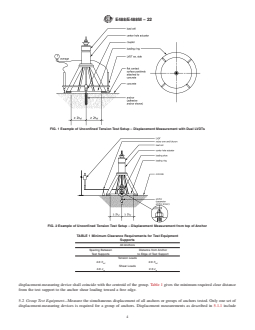
FIG. 1 Example of Unconfined Tension Test Setup – Displacement Measurement with Dual LVDTs
E488/E488M − 22
FIG. 2 Example of Unconfined Tension Test Setup – Displacement Measurement from top of Anchor
TABLE 1 Minimum Clearance Requirements for Test Equipment
5.5 Cracked Concrete Testing:
Supports
5.5.1 EquipmentforControllingCracks—Thetestapparatus
All Anchors
shall be capable of controlling the crack width. A typical
Spacing Between Distance from Anchor
tension test setup for cracked concrete is shown in Fig. 6.
Test Supports to Edge of Test Support
NOTE 2—Fig. 6 shows testing of multiple anchors. Smaller test
Tension Loads
members can be used for testing single anchors.
4.0 h 2.0 h
ef ef
Shear Loads
4.0 c 2.0 c 6. Test Specimens
a a
6.1 Anchorage System—The anchors or anchorage system
shall be representative of the type and lot to be used in field
prevent eccentric loading of sleeve. See Fig. 5 for a represen- construction, and shall include the attachment hardware nor-
tative shear plate with sleeves. The contact area between the mally required for use.
loading plate through which the anchor is installed and the test
6.2 Test Member—The requirements of the test member in
member shall be as given in Table 2, unless otherwise
which the anchor is to be embedded and tested shall be
specified. Chamfer or smooth the edges of the loading plate so
specified. The location and orientation of any reinforcement
that it does not dig into the concrete. Place a sheet of
embedded in concrete members shall meet the requirements of
polytetrafluoroethylene (PTFE) or other friction-limiting ma-
6.3 and 6.4.
terials with a minimum thickness of 0.020in. [0.5mm] be-
6.2.1 Concrete Test Members:
tweentheloadingplateandbasematerialsurface.Thefriction-
6.2.1.1 Casting and Curing of Concrete Test Members—
limitingmaterialshallpreventcontactoftheloadingplatewith
Concrete used in testing shall meet the requirements of
the base material.
Sections 6.2.1.2 through 6.2.1.4(3)(b) unless otherwise speci-
5.4 Unconfined and Confined Test Equipment:
fied.
5.4.1 Unconfined Tests—Fig. 1 and Fig. 2 show a typical 6.2.1.2 Casttestmemberseitherhorizontallyorvertically.If
unconfined tension test setup with supports spaced as required
the member is cast vertically, the maximum height of a
to permit the unrestricted development of a conical concrete concrete lift shall be 5ft [1.5m]. In general, the thickness of
fracture surface. The values given in Table 1 for required
the test member depends on the testing requirements. The test
clearances between the anchor and the test support shall be member shall be at least 1.5 h thick, unless the specific test
ef
considered to satisfy this requirement. application requires a specific thickness.
5.4.2 Confined Tests—Fig. 3 shows a typical confined ten- 6.2.1.3 Surface Finish—The surface of the test member
sion test setup for anchors, in which the reaction force is shall be a formed or steel-troweled finish unless otherwise
transferred into the concrete close to the anchor.The confining specified.
plate shall have a hole with diameter between 1.5 d and 6.2.1.4 Concrete for Test Members—Concrete for test mem-
hole
2.0 d , and a thickness t ≥ d. Place a sheet of polytetrafluo- bers shall meet the requirements of 6.2.1.4 (1) through
hole fix
roethylene (PTFE) or other friction-limiting materials with a 6.2.1.4(3)(b).
minimum thickness of 0.020in. [0.5mm] between the loading (1) Aggregates—For normalweight concrete, use aggre-
plate and base material surface. The friction-limiting material gates conforming to Specification C33/C33M, with a maxi-
shall prevent contact of the confining plate with the base mum size of 1in. [25mm] or Specification C330/C330M for
material. lightweight concrete.
E488/E488M − 22
FIG. 3 Example of Confined Tension Test Setup – Adhesive Anchor Shown
FIG. 4 Example of a Shear Test Setup
(2) Cement—Use only portland cement conforming to (3) Concrete Strength—Compressive strength specimens
SpecificationC150/C150Mfornormalweightconcreteorlight- shall be prepared and tested in accordance with Practice
weight concrete, unless otherwise specified. If any other C31/C31M and Test Method C39/C39M.
cementitious materials (for example, slag, fly ash, silica fume, (a)Cure concrete cylinders in accordance with Practice
or limestone powder) or chemical admixtures (for example, C31/C31M or Test Method C39/C39M under the same envi-
air-entraining agents, water reducers, high-range water ronmentalconditionsasthetestmembers.Removemoldsfrom
reducers, shrinkage-compensating admixtures, corrosion the cylinders at the same time that the forms are removed from
inhibitors, set retarders, and set accelerators) are used in the the test members. Unless otherwise specified, at the time of
concrete test members, report them. anchor testing, the concrete shall be at least 21days old.
E488/E488M − 22
FIG. 5 Example of Shear Plate with Sleeves
TABLE 2 Shear Loading Plate Bearing Area as a Function of
anchor, whose base is perpendicular to the direction of load,
Anchor Diameter
and whose internal vertex angle is 120degrees.
A,B
Anchor Diameter, d
Shear Loading Plate Contact Area,
o
2 2
6.4 Cracked Concrete Test Members—Test members shall
in. [cm ]
in. [mm]
be permitted to contain reinforcement to allow handling, the
minimum maximum
< ⁄8 [<10] 8 [50] 12 [80] distribution of loads transmitted by test equipment, or both.
3 5
⁄8 # d < ⁄8 [16] 12 [80] 18 [115]
o
Place the reinforcement so that the capacity of the tested
5 7
⁄8 # d < ⁄8 [22] 18 [115] 25 [160]
o
7 anchor is not affected. See Fig. 7 for a representative concrete
⁄8 # d < 2 [50] 25 [160] 40 [260]
o
d # 2 [50] 40 [260] 60 [385] test member for cracked concrete.
o
A
6.4.1 The crack width shall be approximately uniform
Shear loading plate contact area with PTFE or other friction-limiting material.
B
Calculated uniform bearing stress on contact area due to self-weight of loading
throughout the member thickness. The thickness of the test
plate and associated loading apparatus shall not exceed 5 psi [0.03 MPa].
member shall be not less than the greater of 1.5 h and 4in.
ef
[100mm]. To control the location of cracks and to help ensure
that the anchors are installed to the full depth in the crack,
crackinducersshallbepermittedtobeinstalledinthemember,
Establishthecompressivestrengthoftheconcretetestmember
provided that they are not situated so as to influence the test
at the time of anchor testing by interpolation between the
results. For test members that use internal reinforcement to
strengths of control samples at the start and at the end of
control the crack width, place the reinforcement so that it does
testing, or at closer intervals as specified. Alternately, test
not influence the performance of the anchors. Use a cross-
enough control samples to plot a strength-versus-age graph,
sectional reinforcement ratio of about 1%. Reinforcement
and use interpolation to estimate the concrete strength at the
shall be permitted in the failure cone of concrete. The center-
day of test.
to-center distance between the reinforcement and the anchor
(b)When evaluating the test results, if there is a question
shall be greater than 0.4 h , and the center-to-center distance
ef
whether the strength of the concrete cylinders represents the
between adjacent top and bottom crack-control reinforcement
concrete strength of the test member, verify the compressive
shall not be less than 10in. [250mm].
strengthofatleastthreecoreswithdiametersfrom3in.to6in.
[75mmto150mm],takenfromthetestmemberoutsideofthe
7. General Testing Procedures
zoneswheretheconcretehasbeendamagedbytheanchortest.
7.1 Anchor Installation—The installation equipment and
Prepare the core samples, test them in the dry condition, and
procedures shall be as described by the manufacturer, and
evaluate the results in accordance with the provisions of Test
reported according to 15.1.7. Anchors shall be installed in
Method C42/C42M.
accordance with the Manufacturer’s Printed Installation In-
6.3 Uncracked Concrete Test Members—Use test members
structions (MPII). Any deviations from the Manufacturer’s
that are unreinforced, except as permitted by 6.3.1.
Printed Installation Instructions (MPII) observed when testing
6.3.1 The test member shall be permitted to contain rein-
shall be described in the report.
forcementtoallowhandling,thedistributionofloadstransmit-
7.2 Anchor Placement—Install anchors in a formed face of
ted by the test equipment, or both. Place such reinforcement so
the concrete or in concrete with a steel-troweled finish.
that the capacity of the tested anchor is not affected. This
requirement shall be considered to be met if the reinforcement 7.3 Drill Bit Requirements—Drill holes with a hammer
is located outside a cone of concrete whose vertex is at the (rotary-percussive) drill using carbide-tipped, hammer-drill
E488/E488M − 22
FIG. 6 Example of Test Setup for Cracked Concrete
FIG. 7 Example of Test Member for Testing in Cracked Concrete
bits conforming to Table 3 or Table 4, unless otherwise by the specified crack width while the anchor is not loaded.
specified. Table 3 is based on the requirements of
Measure the crack opening using measurement devices ori-
ANSIB212.15.ForcorebitsorotherbitsnotcoveredbyTable
ented perpendicular to the crack.
3 or Table 4, use a tolerance range analogous to that of Table
7.5.2 Subject the anchor to the specified loading sequence
3 or Table 4 unless otherwise specified.
while monitoring the crack width.
7.4 NumberofAnchorTestSpecimens—Theminimumnum-
7.5.3 During the test, maintain a continuous record of the
ber of replicate anchor test specimens shall be specified as part
load applied to the anchor and displacement of the anchor, and
of the testing program.
for the crack cycling test, the crack width.
7.5 Cracked Concrete Testing—Use the procedure specified
7.6 Load Application:
in 7.5.1 – 7.5.3 for testing anchors in cracked concrete.
7.6.1 Initial Load—Apply an initial load up to 5% of the
7.5.1 Perform tests in concrete specimens meeting the
estimated maximum load capacity of the anchorage system to
requirementsof6.4,withthecrackwidth wasspecifiedforthe
be tested, in order to bring all members into full bearing.
given test. Initiate the crack and install the anchor in a closed
7.6.2 Rate of Loading—Increasetheloadordisplacementso
crack according to 7.1 so that the axis of the anchor lies
that peak load occurs after 1min to 3min from the start of
approximately in the plane of the crack. Install the measure-
ment devices for measuring crack widths, and widen the crack testing.
E488/E488M − 22
TABLE 3 Required Diameters of Carbide Hammer-Drill Bits,
a sampling rate of once per second shall be acceptable for
US Customary Units
satisfying this requirement.
Nominal
Tolerance Ranges
8. Monotonic Load Tests
Diameter,
d ,in. d ,in. d ,in.
in. min m max
8.1 Tension Load Tests in Uncracked Concrete:
⁄4 0.252 to 0.256 0.260 to 0.263 0.266 to 0.268
8.1.1 Tension Tests for Single Anchors Without Edge and
⁄16 0.319 to 0.323 0.327 to 0.331 0.333 to 0.335
⁄8 0.381 to 0.385 0.390 to 0.393 0.396 to 0.398
Spacing Effects:
⁄16 0.448 to 0.452 0.458 to 0.462 0.465 to 0.468
8.1.1.1 Center the loading system over the anchor or an-
⁄2 0.510 to 0.514 0.520 to 0.524 0.527 to 0.530
chors to be tested so that test system supports meet the
⁄16 0.573 to 0.577 0.582 to 0.586 0.589 to 0.592
⁄8 0.639 to 0.643 0.650 to 0.654 0.657 to 0.660
placement requirements of Table 1 (see Figs. 1-3). Provide
⁄16 0.702 to 0.706 0.713 to 0.717 0.720 to 0.723
uniformcontactbetweenthesurfaceofthetestmemberandthe
⁄4 0.764 to 0.768 0.775 to 0.779 0.784 to 0.787
13 support system. In the final alignment of the support system,
⁄16 0.827 to 0.831 0.837 to 0.841 0.846 to 0.849
⁄32 0.858 to 0.862 0.869 to 0.873 0.878 to 0.881
ensure that the forces to be applied through the loading rod are
⁄8 0.892 to 0.896 0.905 to 0.909 0.914 to 0.917
perpendicular to the surface of the test member section. The
⁄16 0.955 to 0.959 0.968 to 0.972 0.977 to 0.980
amount of torque or pretension applied to the anchor by the
1 1.017 to 1.021 1.030 to 1.034 1.039 to 1.042
1 ⁄8 1.145 to 1.149 1.160 to 1.164 1.172 to 1.175
attachingnutorlockingdeviceandtheprocedureusedshallbe
1 ⁄16 1.208 to 1.212 1.223 to 1.227 1.235 to 1.238
specified for each series of tests.
1 ⁄4 1.270 to 1.274 1.285 to 1.289 1.297 to 1.300
8.1.1.2 Unless otherwise specified, position and attach the
1 ⁄16 1.333 to 1.337 1.352 to 1.356 1.364 to 1.367
1 ⁄8 1.395 to 1.399 1.410 to 1.414 1.422 to 1.425
loadingrodsothattheloadshallbeappliedconcentricallywith
1 ⁄16 1.458 to 1.462 1.472 to 1.476 1.484 to 1.487
the anchor axis. Where groups of anchors are to be loaded
1 ⁄2 1.520 to 1.524 1.535 to 1.539 1.547 to 1.550
9 simultaneously through a common loading fixture, specify the
1 ⁄16 1.570 to 1.574 1.588 to 1.592 1.605 to 1.608
1 ⁄8 1.637 to 1.641 1.655 to 1.659 1.673 to 1.675
details of the fixture’s stiffness, rotational restraint, and point
1 ⁄4 1.754 to 1.758 1.772 to 1.776 1.789 to 1.792
and angle of load application.
2 1.990 to 1.994 2.008 to 2.012 2.025 to 2.028
8.1.2 Verification of Full Concrete Capacity in Corner with
Two Edges—This test requires that the loading apparatus be
designedsoastopermitanunrestrictedconcreteconebreakout
TABLE 4 Required Diameters of Carbide Hammer-Drill Bits,
SI Units failure at the corner (see Fig. 8). Where necessary to meet this
requirement, the loading apparatus shall be supported outside
Nominal
Tolerance Ranges
Diameter,
the test member.
d ,mm d ,mm d ,mm
mm min m max
8.1.3 Minimum Spacing and Edge Distance to Preclude
6 6.05 to 6.15 6.20 to 6.30 6.35 to 6.40
Splitting—Test anchors in uncracked concrete. Install two
7 7.05 to 7.20 7.25 to 7.35 7.40 to 7.45
anchors at the minimum spacing s and the minimum edge
8 8.05 to 8.20 8.25 to 8.35 8.40 to 8.45
min
10 10.10 to 10.20 10.25 to 10.35 10.40 to 10.45
distance c in test members with the minimum thickness h
min min
11 11.10to11.20 11.25to11.35 11.45to11.50
to be reported for the anchor. Place the two anchors in a line
12 12.10 to 12.20 12.25 to 12.35 12.45 to 12.50
parallel to the edge of a concrete test element at a distance of
13 13.10 to 13.20 13.25 to 13.35 13.45 to 13.50
14 14.10 to 14.20 14.25 to 14.35 14.45 to 14.50
at least 3h from other groups. Select s , c , and h ,
min min min min
15 15.10 to 15.20 15.25 to 15.35 15.45 to 15.50
depending on the anchor characteristics.
16 16.10 to 16.20 16.25 to 16.35 16.45 to 16.50
Separatebearingplatesshallbepermittedtobeusedforeach
18 18.10 to 18.20 18.25 to 18.35 18.45 to 18.50
19 19.10 to 19.20 19.30 to 19.40 19.50 to 19.55
anchor to simplify the detection of concrete cracking. The
20 20.10 to 20.20 20.30 to 20.40 20.50 to 20.55
distance to the edge of the bearing plate from the centerline of
22 22.10 to 22.20 22.30 to 22.40 22.50 to 22.55
24 24.10 to 24.20 24.30 to 24.40 24.50 to 24.55 the corresponding anchor shall be at least three times the
25 25.10 to 25.20 25.30 to 25.40 25.50 to 25.55
anchor diameter.
28 28.10 to 28.20 28.30 to 28.40 28.50 to 28.55
8.1.3.1 For torque-controlled anchors, apply load to the
30 30.10 to 30.20 30.30 to 30.40 30.50 to 30.55
32 32.15 to 32.25 32.35 to 32.50 32.60 to 32.70 anchors by torquing alternately in increments of 0.2T .After
inst
34 34.15 to 34.25 34.35 to 34.50 34.60 to 34.70
each increment, inspect the concrete surface for cracks. Stop
35 35.15 to 35.25 35.35 to 35.50 35.60 to 35.70
the test when concrete splitting or anchor material failure
37 37.15 to 37.25 37.35 to 37.50 37.60 to 37.70
40 40.15 to 40.25 40.40 to 40.60 40.70 to 40.80 prevents the torque from being increased further. For each test,
44 44.15 to 44.25 44.40 to 44.60 44.70 to 44.80
recordthemaximumtorque.Recordthetorqueattheformation
48 48.15 to 48.25 48.40 to 48.60 48.70 to 48.80
of the first hairline crack at one or both anchors and the
52 52.15 to 52.25 52.40 to 52.60 52.80 to 52.95
maximum torque that can be applied to the anchors.
8.1.3.2 For load-controlled undercut anchors, screw
anchors, and adhesive anchors, install the anchors according to
7.6.3 Control of Loading or the Displacement—Conductthe
the manufacturer’s installation instructions and load the group
test under load or displacement control. If the descending
of two anchors in tension to failure.
branch of the load-displacement curve is desired, use
8.1.3.3 For displacement-controlled anchors and undercut
displacement-control.
anchors that are intended to perform properly without an
7.7 Data Recording—Record load and displacement at a installation torque, install the anchors according to the manu-
sampling rate sufficient to approximate continuous load and facturer’s installation instructions and load the group of two
displacementcurvesandcapturepeakvalues.Forstatictesting, anchors in tension to failure.
E488/E488M − 22
FIG. 8 Example of Test Setup for Corner Splitting Test
8.2 Tension Load Tests in Cracked Concrete: Duetothedesignoftheanchorbeingtested,thecrackwidthw
8.2.1 Tests in a Static Crack—Perform the test according to is permitted to increase without external control during the test
8.1.1, except that for anchors evaluated for use in cracked from its initial value of w (see Fig. 9).The difference between
concrete, tension tests shall be permitted to be performed in the greatest and smallest crack widths during each cycle
cracked concrete with a crack width w.
(opening and closing cycles) shall be at least w – w.Ifatany
1 2
8.2.2 Tests in Cracked Concrete Where Crack-Width is timeduringthetestthevalueofw –w fallsbelowaminimum
1 2
Cycled—Table 5 gives the parameters to be used for the
specified value, increase the upper-bound value of the crack
crack-width cycling test unless otherwise specified. Before inducing load until the minimum value of w – w is restored.
1 2
installingtheanchor,crackopeningandclosingcycles n shall
pt
8.2.2.1 Measure the load-displacement relationship up to
be permitted to be applied to stabilize crack formation. Install
load N . Afterward, under N , measure the displacements of
w w
the anchor according to 7.1 so that the axis of the anchor lies
the anchor and the crack-opening widths w and w as
1 2
approximately in the plane of the crack. After the anchor is
specified.
installed, widen the crack by a width w . Apply a sustained
8.2.2.2 After completing the cycles of crack opening and
tensile load of N . Cycle the crack width between the maxi-
w
closing, unload the anchor, measure the residual displacement,
mum crack opening width of w and the initial minimum crack
and perform a tension test to failure with a specified crack
width of w .
width w at the start of the tension test.
NOTE 3—w is additive to any widening resulting from the anchor
8.3 Shear Capacity Tests in Uncracked Concrete:
installation.
8.3.1 Tests for Single Anchor Without Edge and Spacing
As the crack width is varied cyclically, keep N constant
w
Effects—Position the loading system so that the placement of
withinatoleranceof 65%.Openandclosethecrack n times
ct
thetestsystemsupportsmeetstherequirementsofTable1(see
atthespecifiedfrequency,keepingthecrackwidth w constant.
Fig. 4).Areaction bridge is not required along the edge of the
test member where concrete breakout in shear does not limit
TABLE 5 Parameters for Crack-Width Cycling Test
the shear resistance.
A
Parameter Symbol Value
8.3.2 Position and fasten the test member in the support
Permitted pretest
system so that the test surface of the test member is parallel to
n 10
pt
crack cycles
the loading plate and the axis of the loading rod. Place the
No. of test cycles n 1000
ct
Frequency of crack
loading plate-rod assembly onto the test member and secure it
– #0.2 Hz
width cycles
in place with the appropriate nut or other locking device
Largest crack width
w $0.012 in. [0.3 mm]
typicallyusedfortheparticularanchorinstallationtobetested.
during test
Smallest crack width
The amount of force exerted on the loading plate by the
w $0.005 in. [0.1 mm]
during test
attachingnutorlockingdeviceshallbeuniformforeachseries
Smallest crack width
w 0.004 in. [0.1 mm]
of tests performed.
at beginning of test
Smallest value of
0.004 in. [0.1 mm]
8.4 Shear Capacity in Cracked Concrete—Perform the test
w – w
1 2
according to 8.3, except that for anchors evaluated for use in
f
Static load during test N c,test
w
N 5 0.3N
Œ
w p,cr crackedconcrete,sheartestsshallbepermittedtobeperformed
f '
c
A in cracked concrete with a crack width w with the load applied
Recommended value, unless otherwise established by other criteria.
parallel to the crack.
E488/E488M − 22
FIG. 9 Crack-width Requirements for Crack Cycling
9. Dynamic Load Tests width. Subject the anchors to the specified sinusoidal shear
loading sequence, applied parallel to the direction of the crack.
9.1 Repeated Load Test—Subject the anchor to a pulsating
The frequency of loading shall be specified. To reduce the
tensile load that varies sinusoidally between specified maxi-
potential for uncontrolled slip during load reversal, the alter-
mum and minimum loads. The loading frequency and number
nating shear loading shall be permitted to be approximated by
of loading cycles shall be as specified. Measure anchor
displacement continuously or up to the maximum load during theapplicationoftwohalf-sinusoidalloadcyclesatthedesired
the first loading, and then at specified intervals up to the frequency, connected by a reduced-speed, ramped load as
maximumnumberofintervals.Attheendofthecyclicloading,
showninFig.10.Recordthecrackwidth,anchordisplacement
test the anchor in tension to failure.
and applied shear load in accordance with 7.5. Plot the
load-displacement history in the form of hysteretic loops.
9.2 Simulated Seismic Tension Tests—Perform these tests in
After the simulated seismic-shear cycles, open the crack to a
cracks when specified. Install the anchor in a closed crack in
accordancewith7.1and7.5.1.Testinternallythreadedanchors width not less than the crack opening width as measured at the
with the bolt as specified by the manufacturer. Open the crack
end of the cyclic shear test, and load the anchor in shear to
by the specified amount in addition to the initial hairline crack
failure. Record the maximum shear load (residual shear
width. Apply the sinusoidal tension loading sequence at the
capacity), the corresponding displacement, and plot the load-
specified frequency. Record the crack width, anchor
displacement curve.
displacement, and applied tension load in accordance with 7.5.
9.4 Fatigue Tests:
9.2.1 After the simulated seismic-tension cycles, open the
crack to a width not less than the crack-opening width as 9.4.1 Equipment—Any testing machine as described in the
Apparatus section shall be permitted to be used, provided the
measured at the end of the cyclic test, and load the anchor in
tension to failure. Record the maximum tension load (residual requirementsofspecificloadingrateandaccuracyaremet.The
tensioncapacity)andthecorrespondingdisplacement,andplot testequipmentshallnotproduceresonantvibrationsduringthe
the load-displacement curve.
tests.
9.4.2 Number of Test Specimens—Base the number of test
9.3 Simulated Seismic Shear Tests—Perform tests in cracks
specimens on the purpose of the test. If the objective is to
when specified. Install each anchor in a closed crack in
obtain runout at or below the endurance limit (that is, 2×10
accordancewith7.1and7.5.1.Testinternallythreadedanchors
withaboltasspecifiedbythemanufacturer.Openthecrackby cycles) at a given load, three samples that reach runout are
the specified amount in addition to the initial hairline crack sufficient. If the test objective is to determine the endurance
FIG. 10 Permitted Approximation of Simulated Seismic Shear Cycle
E488/E488M − 22
limit(maximumloadthatwillreachrunout),thenperformtests 10. Torque Tests
in accordance with Practice E468.
10.1 General Test Conditions—Fig. 11 shows the essential
9.4.3 Fatigue Test Procedure—Apply the specified fatigue
elements of the typical test setup. The double-sided abrasive
testprogram,includingthemethod,loadlevels,frequency,and
paper or equivalent shall have sufficient roughness to prevent
number of cycles.
rotation of the washer relative to the test fixture during the
9.4.4 Oncethecyclictesthasbeencompleted,applyastatic
application of torque. Other methods of preventing rotation of
tension load in accordance with the section on Static Tests to
the washer shall be permitted provided that they do not affect
determine its residual strength and failure mode in accordance
the performance of the anchor. Apply increasing torque and
with the section on Failure Criteria.
record the torque and corresponding induced tension in the
9.5 Shock Test:
anchorbolt.Thewashershallnotturnduringtheapplicationof
9.5.1 Equipment—This test method is not intended to pro-
torque.
hibit the use of any testing or loading device which provides
the performance described in the Apparatus section.
11. Environmental Effects Tests for Adhesive Anchors
9.5.2 Number of Test Specimens—The purpose and type of
11.1 Sensitivity to Hole Cleaning (Reduced Cleaning
the shock test determines the required number of test speci-
Effort)—These tests are performed to quantify the performance
mens.
of adhesive anchors installed in adverse conditions.
9.5.2.1 If the purpose is to determine if an anchor will
11.1.1 Sensitivity to Hole Cleaning, Dry Substrate:
withstandaspecifiedshockload(magnitudeandduration),test
at least three replicates of each anchor diameter at a particular 11.1.1.1 This test presumes a method of hole cleaning that
load magnitude and duration. includes blowing out the hole with air and cleaning the wall of
9.5.2.2 If the purpose is to determine the maximum shock the hole with a brush. Other methods are acceptable; however,
loading an anchor can withstand without failure, use a suitable the manufacture’s installation instructions for the product shall
test method (such as a staircase method) to obtain anchor contain sufficient detail to permit the determination of a
failure. Three separate anchor tests at a given load without numeric reduction of the cleaning effort. For hole cleaning
failure shall be sufficient to establish the maximum shock methods that involve blowing and brushing operations, suffi-
capacity of the anchorage system. cient detail is defined as:
9.5.3 Shock Test Procedure: (1)Requirements for all equipment to be used in the
9.5.3.1 Tension Test—Position the loading system as de- process, including air/vacuum pressure, assembly of nozzle
scribed in 8.1.1.1. and associated components as required, and brush materials
9.5.3.2 Shear Test—Position the loading system as de- and dimensions.
scribed in 8.3.1. (2)Acceptable methods and minimum number and dura-
9.5.4 Rate of Loading Tension or Shear—Apply a specified tionoftheoperationsrequiredforremovalofdrillingdustfrom
numberofshockstoeachanchorinatriangular(ramp)loading the hole (blowing).
rate with a duration of 30 ms per shock, or as otherwise (3)Acceptable methods and minimum number and dura-
specified.After application of the shock loads, test the anchors
tionoftheoperationsrequiredforremovalofdrillingdustfrom
in tension in accordance with the Static Tests section to the wall of the hole (brushing).
measure residual static tensile capacity, if required. (4)The required sequence of operations.
FIG. 11 Example of Torque Test Setup
E488/E488M − 22
11.1.1.2 Drill the hole downwards to the depth determined 11.2 Sensitivity to Installation in Water-Saturated
bythemanufacturer.Unlessotherwisespecified,cleanthehole Concrete—Perform the test in accordance with 11.1.2;
using only 50% of the specified minimum number of opera- however, hole cleaning shall be conducted in accordance with
tions defined in 11.1.1.1, rounding down to the next whole the manufacturer’s installation instructions for the product.
Install anchors in accordance with 7.1. Conduct confined
number of operations. Do not modify the sequence of opera-
tions defined in 11.1.1.1. Install anchors in accordance with tension test in accordance with 5.4.2 and 8.1.1.
7.1.Conductconfinedtensiontestinaccordancewith5.4.2and
11.3 Sensitivity to Installation in Water-Filled Hole in
8.1.1.
Saturated Concrete—Perform the test in accordance with
11.1.2 Sensitivity to Hole Cleaning with Installation in
11.1.3; however, hole cleaning shall be conducted in accor-
Water-Saturated Concrete:
dance with the manufacturer’s published installation instruc-
11.1.2.1 For Holes Drilled with a Carbide Drill Bit—Drilla tions for the product. Install anchors in accordance with 7.1.
pilot hole downwards to the specified depth with a bit Conduct confined tension test in accordance with 5.4.2 and
approximately half the diameter of the specified hole diameter. 8.1.1.
Remove the drilling dust from the hole. Fill the pilot hole with
11.4 Sensitivity to Installation in Submerged Concrete—
tap water and ensure that the hole remains flooded for a
Perform the test in accordance with 11.1.4; however, hole
minimumof8days(192h).Immediatelypriortoinstallingthe
cleaning shall be conducted in accordance with the manufac-
anchor, remove all freestanding water with a vacuum and
turer’s installation instructions for the product. Install anchors
re-drill the hole with the specified drill bit diameter. Clean the
in accordance with 7.1. Conduct confined tension test in
hole in accordance with 11.1.1.2. Install anchors in accordance
accordance with 5.4.2 and 8.1.1.
with 7.1. Conduct confined tension test in accordance with
11.5 Sensitivity to Freezing and Thawing:
5.4.2 and 8.1.1.
11.5.1 General Test Conditions—Perform sustained tension
11.1.2.2 For Water-Flushed Holes—Prepare and clean the
tests in uncracked concrete, followed by confined tension tests
hole in accordance with 11.1.2.1; however, if the manufactur-
to failure.
ers installation instructions specify flushing of the hole with
11.5.2 The test member shall consist of a cube or cylinder
water prior to anchor installation, flush the hole in accordance
with side length (or diameter) 8 in. ≤ ℓ ≤ 12 in.
with the manufacturer’s recommendations. Immediately prior
side
1 5
[200mm≤ ℓ ≤300mm]foranchordiameters ⁄2in.to ⁄8in.
to anchor installation, remove all freestanding water with a
side
[12mm to 16mm]. For anchor diameters d greater than ⁄8 in.
vacuum. Install anchors in accordance with 7.1. Conduct
[16 mm], the test member shall have side length
confined tension test in accordance with 5.4.2 and 8.1.1.
15d≤ ℓ ≤25d. The dimensions of the test member shall be
side
11.1.3 Sensitivity to Hole Cleaning with Installation in
chosentoavoidsplittingofthetestm
...
This document is not an ASTM standard and is intended only to provide the user of an ASTM standard an indication of what changes have been made to the previous version. Because
it may not be technically possible to adequately depict all changes accurately, ASTM recommends that users consult prior editions as appropriate. In all cases only the current version
of the standard as published by ASTM is to be considered the official document.
Designation: E488/E488M − 18 E488/E488M − 22
Standard Test Methods for
Strength of Anchors in Concrete Elements
This standard is issued under the fixed designation E488/E488M; the number immediately following the designation indicates the year
of original adoption or, in the case of revision, the year of last revision. A number in parentheses indicates the year of last reapproval.
A superscript epsilon (´) indicates an editorial change since the last revision or reapproval.
This standard has been approved for use by agencies of the U.S. Department of Defense.
1. Scope
1.1 These test methods address the tensile and shear strengths of post-installed and cast-in-place anchors in test members made
of cracked or uncracked concrete. Loadings include quasi-static, seismic, fatigue and shock. Environmental exposures include
freezing and thawing, moisture, decreased and elevated temperatures and corrosion. These test methods provide basic testing
procedures for use with product-specific evaluation and acceptance standards and are intended to be performed in a testing
laboratory. Product-specific evaluation and acceptance standards may add specific details and appropriate parameters as needed to
accomplish the testing. Only those tests required by the specifying authority need to be performed.
1.2 These test methods are intended for use with post-installed and cast-in-place anchors designed for installation perpendicular
to a plane surface of a test member.
1.3 This standard prescribes separate procedures for static, seismic, fatigue and shock testing. Nothing in this standard, however,
shall preclude combined tests incorporating two or more of these types of loading (such as seismic, fatigue and shock tests in
series).
1.4 Both inch-pound and SI units are provided in this standard. The testing may be performed in either system and reported in
that system, and the results converted to the other. However, anchor diameters, threads, and related testing equipment shall be in
accordance with either inch-pound or SI provisions.
1.5 This standard does not purport to address all of the safety concerns, if any, associated with its use. It is the responsibility
of the user of this standard to establish appropriate safety, health, and environmental practices and determine the applicability of
regulatory limitations prior to use.
1.6 This international standard was developed in accordance with internationally recognized principles on standardization
established in the Decision on Principles for the Development of International Standards, Guides and Recommendations issued
by the World Trade Organization Technical Barriers to Trade (TBT) Committee.
2. Referenced Documents
2.1 ASTM Standards:
C31/C31M Practice for Making and Curing Concrete Test Specimens in the Field
C33/C33M Specification for Concrete Aggregates
These test methods are under the jurisdiction of ASTM Committee E06 on Performance of Buildings and are the direct responsibility of Subcommittee E06.13 on
Structural Performance of Connections in Building Construction.
Current edition approved Sept. 1, 2018March 1, 2022. Published September 2018March 2022. Originally approved in 1976. Last previous edition approved in 20152018
as E488/E488M–15.–18. DOI: 10.1520/E0488_E0488–18.10.1520/E0488_E0488-22.
For referenced ASTM standards, visit the ASTM website, www.astm.org, or contact ASTM Customer Service at service@astm.org. For Annual Book of ASTM Standards
volume information, refer to the standard’s Document Summary page on the ASTM website.
Copyright © ASTM International, 100 Barr Harbor Drive, PO Box C700, West Conshohocken, PA 19428-2959. United States
E488/E488M − 22
C39/C39M Test Method for Compressive Strength of Cylindrical Concrete Specimens
C42/C42M Test Method for Obtaining and Testing Drilled Cores and Sawed Beams of Concrete
C150/C150M Specification for Portland Cement
C330/C330M Specification for Lightweight Aggregates for Structural Concrete
E4 Practices for Force Calibration and Verification of Testing Machines
E8/E8M Test Methods for Tension Testing of Metallic Materials
E468 Practice for Presentation of Constant Amplitude Fatigue Test Results for Metallic Materials
E575 Practice for Reporting Data from Structural Tests of Building Constructions, Elements, Connections, and Assemblies
E631 Terminology of Building Constructions
E2265 Terminology for Anchors and Fasteners in Concrete and Masonry
F606/F606M Test Methods for Determining the Mechanical Properties of Externally and Internally Threaded Fasteners,
Washers, Direct Tension Indicators, and Rivets
F1624 Test Method for Measurement of Hydrogen Embrittlement Threshold in Steel by the Incremental Step Loading Technique
G5 Reference Test Method for Making Potentiodynamic Anodic Polarization Measurements
2.2 ANSI Standard:
B212.15 American National Standard for Cutting Tools—Carbide-Tipped Masonry Drills and Blanks for Carbide-Tipped
Masonry Drills
3. Terminology
3.1 Definitions:
3.1.1 For definitions of general terms related to building construction used in this standard, refer to Terminology E631, and for
definitions of terms related to anchoring, refer to Terminology E2265.
3.2 Definitions of Terms Specific to This Standard:
3.2.1 load-controlled undercut anchor, n—a post-installed anchor that derives its tensile holding strength by the mechanical
interlock provided by installing the anchor by tensioning, which causes the sleeve to expand into the predrilled undercut.
3.2.2 post-installed anchor, n—an anchor that is installed after the placement and hardening of concrete.
3.2.3 run-out, n—a condition in which failure does not occur within the specified number of load cycles in a fatigue test.
3.2.4 standard temperature, n—73 °F [23 °C] 6 8 °F [6 °C].
3.2.5 test member, n—the base material in which the anchor is installed and which resists forces from the anchor.
3.3 Symbols:
c = distance from the center of an anchor shaft to the edge of test member, in. [mm].
a
c = minimum distance from the center of an anchor shaft to the edge of test member, determined from tests, in. [mm].
min
d = nominal diameter of anchor to be tested, in. [mm].
d = diameter of hole in shear sleeve, ≥d, in. [mm].
fix
d = diameter of drilled borehole in test specimen, in. [mm].
hole
d = diameter of carbide-tipped drill bit with diameter on low end of tolerance range for new bit, representing
m
moderately used bit, in. [mm].
d = diameter of carbide-tipped drill bit with diameter on high end of tolerance range for new bit, representing bit as
max
large as would be expected in use, in. [mm].
d = diameter of carbide-tipped drill bit with diameter below low end of tolerance range for new bit representing a
min
well-used bit, in. [mm].
d = outside diameter of post-installed anchor, in. [mm].
o
d = diameter of hole in confining plate for confined tension tests, in. [mm].
opening
F = crack-inducing force, applied to reinforcing bars, lb [N].
cr
f’ = specified concrete compressive strength, psi [MPa].
c
f’ = specified compressive strength of reference concrete test member, psi [MPa].
c,ref
f’ = specified compressive strength of concrete test member, psi [MPa].
c,test
Available from American National Standards Institute (ANSI), 25 W. 43rd St., 4th Floor, New York, NY 10036, http://www.ansi.org.
E488/E488M − 22
h = effective embedment depth, measured from the concrete surface to the deepest point at which the anchor tension
ef
load is transferred to the concrete, in. [mm].
h = minimum member thickness, in. [mm].
min
h = distance between embedded end of concrete screw and concrete surface, in. [mm].
nom
n = number of test cycles.
ct
n = number of permitted pretest crack cycles.
pt
N = characteristic pullout resistance in cracked concrete for the minimum specified concrete strength of 2500 psi [17
p,cr
MPa], as determined from tests in cracked concrete, lb [N].
N = mean ultimate steel capacity determined from tensile tests on full-sized anchor specimens, lb [N].
st,mean
N = sustained load, lb [N].
sust,l
N = sustained load used for confined reference tests, lb [N].
sust,con
N = specified constant tension load, lb [N].
sust,ft
N = mean ultimate load determined from confined reference tests, lb [N].
u,con,mean
N = mean ultimate load determined from tests, lb [N].
u,mean
N = tensile load in tests of anchors located in cracks whose opening width is cycled, lb [N].
w
s = minimum anchor spacing, determined from test, in. [mm].
min
t = effective thickness of shear sleeves (see d), in. [mm].
fix
t = thickness of confining plate for tension tests, ≥d, in. [mm].
pl
T = specified or maximum setting torque for expansion or prestressing of an anchor, ft·lb [N·m].
inst
T = specified maximum setting torque to prevent anchor failure during installation, ft-lb [N-m].
screw
W = largest crack width during test, in. [mm].
W = smallest crack width during test, in. [mm].
W = largest crack width at beginning of test, in. [mm].
ℓ = side length of test cube, in. [mm].
side
4. Significance and Use
4.1 These test methods are intended to provide reproducible data from which acceptance criteria, design data, and specifications
can be developed for anchors intended to be installed in concrete.
5. Apparatus
5.1 Testing Equipment:
5.1.1 General—Use calibrated electronic load and displacement measuring devices meeting the specified sampling rate. Use
load-measuring equipment with an accuracy of 61 % of the anticipated ultimate load and calibrated in accordance with Practices
E4. Use displacement measuring devices with an accuracy of 60.001 in. [60.025 mm] and crack-width measuring devices with
an accuracy of 60.0005 in. [60.013 mm]. For recording load and displacement measurements, use a data-acquisition system
capable of recording at least 120 data points per instrument for each individual test, prior to reaching peak load. The testing
equipment shall have sufficient capacity to prevent yielding of its components under the anticipated ultimate load, and shall have
sufficient stiffness to ensure that the applied tension loads remain parallel to the axes of the anchors and that the applied shear loads
remain parallel to the surface of the test member during testing.
5.1.2 Tension Test Equipment—The support for the tension test equipment shall be of sufficient size to prevent failure of the
surrounding test member. The loading rod shall be of sufficient diameter to develop the anticipated ultimate strength of the
anchorage hardware with an elastic elongation not exceeding 10 % of the anticipated elastic elongation of the anchor, and shall
be attached to the anchorage system by a connector that will minimize the direct transfer of bending stress to the anchor. The
displacement measuring device(s) shall be positioned to measure the movement of the anchors with respect to points on the test
member so that the device is not influenced during the test by deflection or failure of the anchor or test member. See Fig. 1 and
Fig. 2 for examples of typical test setups.
NOTE 1—Other support geometries are acceptable.
Table 1 gives the minimum required clear distance from the test support to the anchor for tension and shear loading.
5.1.3 Shear Test Equipment—Position the displacement-measuring device(s) to measure displacement in the direction of the
applied load only. Place the device on the test member so that the sensing element bears perpendicularly on the anchor or on a
contact plate located on the loading plate, or use another method that restricts deflections other than those in the direction of the
applied load. See Fig. 4 for a typical example of a shear test setup. For tests on anchor groups, the axis of the
E488/E488M − 22
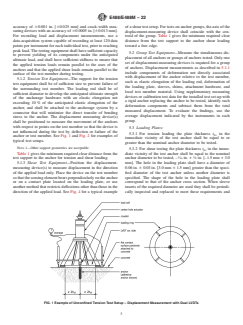
FIG. 1 Example of Unconfined Tension Test Setup – Displacement Measurement with Dual LVDTs
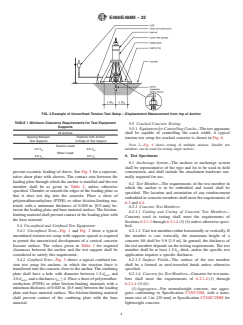
FIG. 2 Example of Unconfined Tension Test Setup – Displacement Measurement from top of Anchor
TABLE 1 Minimum Clearance Requirements for Test Equipment
Supports
All Anchors
Spacing Between Distance from Anchor
Test Supports to Edge of Test Support
Tension Loads
4.0 h 2.0 h
ef ef
Shear Loads
4.0 c 2.0 c
a a
displacement-measuring device shall coincide with the centroid of the group. Table 1 gives the minimum required clear distance
from the test support to the anchor shear loading toward a free edge.
5.2 Group Test Equipment—Measure the simultaneous displacement of all anchors or groups of anchors tested. Only one set of
displacement-measuring devices is required for a group of anchors. Displacement measurements as described in 5.1.1 include
E488/E488M − 22
FIG. 3 Example of Confined Tension Test Setup – Adhesive Anchor Shown
FIG. 4 Example of a Shear Test Setup
components of deformation not directly associated with displacement of the anchor relative to the test member, such as elastic
elongation of the loading rod, deformation of the loading plate, sleeves, shims, attachment hardware, and local test member
material. Using supplementary measuring devices or calibration test data for the installed test set-up with a rigid anchor replacing
the anchor to be tested, identify such deformation components and subtract them from the total measured displacement. To evaluate
the findings, use the average displacement indicated by the instruments in each group.
5.3 Loading Plates:
5.3.1 For tension loading the plate thickness t in the immediate vicinity of the test anchor shall be equal to or greater than the
fix
nominal anchor diameter to be tested.
E488/E488M − 22
5.3.2 For shear testing the plate thickness t in the immediate vicinity of the test anchor shall be equal to the nominal anchor
fix
1 1
diameter to be tested, – ⁄16 in. + ⁄8 in. [–1.5[–1.5 mm + 3.0 mm]. The hole in the loading plate shall have a diameter of
0.06 6 0.03 in. [3.0 6 1.5 mm]0.06 in. 6 0.03 in. [3.0 mm 6 1.5 mm] greater than the specified diameter of the test anchor unless
another diameter is specified. The shape of the hole in the loading plate shall correspond to that of the anchor cross section. When
sleeve inserts of the required diameter are used they shall be periodically inspected and replaced to meet these requirements and
prevent eccentric loading of sleeve. See Fig. 5 for a representative shear plate with sleeves. The contact area between the loading
plate through which the anchor is installed and the test member shall be as given in Table 2, unless otherwise specified. Chamfer
or smooth the edges of the loading plate so that it does not dig into the concrete. Place a sheet of polytetrafluoroethylene (PTFE)
or other friction-limiting materials with a minimum thickness of 0.020 in. [0.5 mm] between the loading plate and base material
surface. The friction-limiting material shall prevent contact of the loading plate with the base material.
5.4 Unconfined and Confined Test Equipment:
5.4.1 Unconfined Tests—Fig. 1 and Fig. 2 show a typical unconfined tension test setup with supports spaced as required to permit
the unrestricted development of a conical concrete fracture surface. The values given in Table 1 for required clearances between
the anchor and the test support shall be considered to satisfy this requirement.
5.4.2 Confined Tests—Fig. 3 shows a typical confined tension test setup for anchors, in which the reaction force is transferred into
the concrete close to the anchor. The confining plate shall have a hole with diameter between 1.5 d and 2.0 d , and a thickness
hole hole
t ≥ d. Place a sheet of polytetrafluoroethylene (PTFE) or other friction-limiting materials with a minimum thickness of 0.020 in.
fix
[0.5 mm] between the loading plate and base material surface. The friction-limiting material shall prevent contact of the confining
plate with the base material.
5.5 Cracked Concrete Testing:
5.5.1 Equipment for Controlling Cracks—The test apparatus shall be capable of controlling the crack width. A typical tension test
setup for cracked concrete is shown in Fig. 6.
NOTE 2—Fig. 6 shows testing of multiple anchors. Smaller test members can be used for testing single anchors.
6. Test Specimens
6.1 Anchorage System—The anchors or anchorage system shall be representative of the type and lot to be used in field
construction, and shall include the attachment hardware normally required for use.
FIG. 5 Example of Shear Plate with Sleeves
E488/E488M − 22
TABLE 2 Shear Loading Plate Bearing Area as a Function of
Anchor Diameter
A,B
Anchor Diameter, d
Shear Loading Plate Contact Area,
o
2 2
in. [cm ]
in. [mm]
minimum maximum
< ⁄8 [<10] 8 [50] 12 [80]
3 5
⁄8 # d < ⁄8 [16] 12 [80] 18 [115]
o
5 7
⁄8 # d < ⁄8 [22] 18 [115] 25 [160]
o
⁄8 # d < 2 [50] 25 [160] 40 [260]
o
d # 2 [50] 40 [260] 60 [385]
o
A
Shear loading plate contact area with PTFE or other friction-limiting material.
B
Calculated uniform bearing stress on contact area due to self-weight of loading
plate and associated loading apparatus shall not exceed 5 psi [0.03 MPa].
6.2 Test Member—The requirements of the test member in which the anchor is to be embedded and tested shall be specified. The
location and orientation of any reinforcement embedded in concrete members shall meet the requirements of 6.3 and 6.4.
6.2.1 Concrete Test Members:
6.2.1.1 Casting and Curing of Concrete Test Members—Concrete used in testing shall meet the requirements of Sections 6.2.1.2
through 6.2.1.4 (3) (b) unless otherwise specified.
6.2.1.2 Cast test members either horizontally or vertically. If the member is cast vertically, the maximum height of a concrete lift
shall be 5 ft [1.5 m]. In general, the thickness of the test member depends on the testing requirements. The test member shall be
at least 1.5 h thick, unless the specific test application requires a specific thickness.
ef
6.2.1.3 Surface Finish—The surface of the test member shall be a formed or steel-troweled finish unless otherwise specified.
6.2.1.4 Concrete for Test Members—Concrete for test members shall meet the requirements of 6.2.1.4 (1) through 6.2.1.4 (3) (b).
(1) Aggregates—For normalweight concrete, use aggregates conforming to Specification C33/C33M, with a maximum size of
1 in. [25 mm] or Specification C330/C330M for lightweight concrete.
(2) Cement—Use only portland cement conforming to Specification C150/C150M for normalweight concrete or lightweight
concrete, unless otherwise specified. If any other cementitious materials (for example, slag, fly ash, silica fume, or limestone
powder) or chemical admixtures (for example, air-entraining agents, water reducers, high-range water reducers, shrinkage-
compensating admixtures, corrosion inhibitors, set retarders, and set accelerators) are used in the concrete test members, report
them.
(3) Concrete Strength—Compressive strength specimens shall be prepared and tested in accordance with Practice C31/C31M
and Test Method C39/C39M.
(a) Cure concrete cylinders in accordance with Practice C31/C31M or Test Method C39/C39M under the same environmental
conditions as the test members. Remove molds from the cylinders at the same time that the forms are removed from the test
members. Unless otherwise specified, at the time of anchor testing, the concrete shall be at least 21 days old. Establish the
compressive strength of the concrete test member at the time of anchor testing by interpolation between the strengths of control
samples at the start and at the end of testing, or at closer intervals as specified. Alternately, test enough control samples to plot a
strength-versus-age graph, and use interpolation to estimate the concrete strength at the day of test.
(b) When evaluating the test results, if there is a question whether the strength of the concrete cylinders represents the
concrete strength of the test member, verify the compressive strength of at least three cores with diameters from 3 to 6 in.
[75 to 150 mm],3 in. to 6 in. [75 mm to 150 mm], taken from the test member outside of the zones where the concrete has been
damaged by the anchor test. Prepare the core samples, test them in the dry condition, and evaluate the results in accordance with
the provisions of Test Method C42/C42M.
6.3 Uncracked Concrete Test Members—Use test members that are unreinforced, except as permitted by 6.3.1.
6.3.1 The test member shall be permitted to contain reinforcement to allow handling, the distribution of loads transmitted by the
test equipment, or both. Place such reinforcement so that the capacity of the tested anchor is not affected. This requirement shall
be considered to be met if the reinforcement is located outside a cone of concrete whose vertex is at the anchor, whose base is
perpendicular to the direction of load, and whose internal vertex angle is 120 degrees.
6.4 Cracked Concrete Test Members—Test members shall be permitted to contain reinforcement to allow handling, the distribution
E488/E488M − 22
FIG. 6 Example of Test Setup for Cracked Concrete
of loads transmitted by test equipment, or both. Place the reinforcement so that the capacity of the tested anchor is not affected.
See Fig. 7 for a representative concrete test member for cracked concrete.
6.4.1 The crack width shall be approximately uniform throughout the member thickness. The thickness of the test member shall
be not less than the greater of 1.5 h and 4 in. [100 mm]. To control the location of cracks and to help ensure that the anchors are
ef
installed to the full depth in the crack, crack inducers shall be permitted to be installed in the member, provided that they are not
situated so as to influence the test results. For test members that use internal reinforcement to control the crack width, place the
reinforcement so that it does not influence the performance of the anchors. Use a cross-sectional reinforcement ratio of about 1 %.
Reinforcement shall be permitted in the failure cone of concrete. The center-to-center distance between the reinforcement and the
anchor shall be greater than 0.4 h , and the center-to-center distance between adjacent top and bottom crack-control reinforcement
ef
shall not be less than 10 in. [250 mm].
7. General Testing Procedures
7.1 Anchor Installation—The installation equipment and procedures shall be as described by the manufacturer, and reported
according to 15.1.7. Anchors shall be installed in accordance with the Manufacturer’s Printed Installation Instructions (MPII). Any
deviations from the Manufacturer’s Printed Installation Instructions (MPII) observed when testing shall be described in the report.
FIG. 7 Example of Test Member for Testing in Cracked Concrete
E488/E488M − 22
7.2 Anchor Placement—Install anchors in a formed face of the concrete or in concrete with a steel-troweled finish.
7.3 Drill Bit Requirements—Drill holes with a hammer (rotary-percussive) drill using carbide-tipped, hammer-drill bits
conforming to Table 3 or Table 4, unless otherwise specified. Table 3 is based on the requirements of ANSI B212.15. For core bits
or other bits not covered by Table 3 or Table 4, use a tolerance range analogous to that of Table 3 or Table 4 unless otherwise
specified.
7.4 Number of Anchor Test Specimens—The minimum number of replicate anchor test specimens shall be specified as part of the
testing program.
7.5 Cracked Concrete Testing—Use the procedure specified in 7.5.1 – 7.5.3 for testing anchors in cracked concrete.
7.5.1 Perform tests in concrete specimens meeting the requirements of 6.4, with the crack width w as specified for the given test.
Initiate the crack and install the anchor in a closed crack according to 7.1 so that the axis of the anchor lies approximately in the
plane of the crack. Install the measurement devices for measuring crack widths, and widen the crack by the specified crack width
while the anchor is not loaded. Measure the crack opening using measurement devices oriented perpendicular to the crack.
7.5.2 Subject the anchor to the specified loading sequence while monitoring the crack width.
7.5.3 During the test, maintain a continuous record of the load applied to the anchor and displacement of the anchor, and for the
crack cycling test, the crack width.
7.6 Load Application:
7.6.1 Initial Load—Apply an initial load up to 5 % of the estimated maximum load capacity of the anchorage system to be tested,
in order to bring all members into full bearing.
7.6.2 Rate of Loading—Increase the load or displacement so that peak load occurs after 11 min to 3 min from the start of testing.
7.6.3 Control of Loading or the Displacement—Conduct the test under load or displacement control. If the descending branch of
the load-displacement curve is desired, use displacement-control.
TABLE 3 Required Diameters of Carbide Hammer-Drill Bits,
US Customary Units
Nominal
Tolerance Ranges
Diameter,
d , in. d , in. d , in.
in. min m max
⁄4 0.252 to 0.256 0.260 to 0.263 0.266 to 0.268
⁄16 0.319 to 0.323 0.327 to 0.331 0.333 to 0.335
⁄8 0.381 to 0.385 0.390 to 0.393 0.396 to 0.398
⁄16 0.448 to 0.452 0.458 to 0.462 0.465 to 0.468
⁄2 0.510 to 0.514 0.520 to 0.524 0.527 to 0.530
⁄16 0.573 to 0.577 0.582 to 0.586 0.589 to 0.592
⁄8 0.639 to 0.643 0.650 to 0.654 0.657 to 0.660
⁄16 0.702 to 0.706 0.713 to 0.717 0.720 to 0.723
⁄4 0.764 to 0.768 0.775 to 0.779 0.784 to 0.787
⁄16 0.827 to 0.831 0.837 to 0.841 0.846 to 0.849
⁄32 0.858 to 0.862 0.869 to 0.873 0.878 to 0.881
⁄8 0.892 to 0.896 0.905 to 0.909 0.914 to 0.917
⁄16 0.955 to 0.959 0.968 to 0.972 0.977 to 0.980
1 1.017 to 1.021 1.030 to 1.034 1.039 to 1.042
1 ⁄8 1.145 to 1.149 1.160 to 1.164 1.172 to 1.175
1 ⁄16 1.208 to 1.212 1.223 to 1.227 1.235 to 1.238
1 ⁄4 1.270 to 1.274 1.285 to 1.289 1.297 to 1.300
1 ⁄16 1.333 to 1.337 1.352 to 1.356 1.364 to 1.367
1 ⁄8 1.395 to 1.399 1.410 to 1.414 1.422 to 1.425
1 ⁄16 1.458 to 1.462 1.472 to 1.476 1.484 to 1.487
1 ⁄2 1.520 to 1.524 1.535 to 1.539 1.547 to 1.550
1 ⁄16 1.570 to 1.574 1.588 to 1.592 1.605 to 1.608
1 ⁄8 1.637 to 1.641 1.655 to 1.659 1.673 to 1.675
1 ⁄4 1.754 to 1.758 1.772 to 1.776 1.789 to 1.792
2 1.990 to 1.994 2.008 to 2.012 2.025 to 2.028
E488/E488M − 22
TABLE 4 Required Diameters of Carbide Hammer-Drill Bits,
SI Units
Nominal
Tolerance Ranges
Diameter,
d , mm d , mm d , mm
mm
min m max
6 6.05 to 6.15 6.20 to 6.30 6.35 to 6.40
7 7.05 to 7.20 7.25 to 7.35 7.40 to 7.45
8 8.05 to 8.20 8.25 to 8.35 8.40 to 8.45
10 10.10 to 10.20 10.25 to 10.35 10.40 to 10.45
11 11.10 to 11.20 11.25 to 11.35 11.45 to 11.50
12 12.10 to 12.20 12.25 to 12.35 12.45 to 12.50
13 13.10 to 13.20 13.25 to 13.35 13.45 to 13.50
14 14.10 to 14.20 14.25 to 14.35 14.45 to 14.50
15 15.10 to 15.20 15.25 to 15.35 15.45 to 15.50
16 16.10 to 16.20 16.25 to 16.35 16.45 to 16.50
18 18.10 to 18.20 18.25 to 18.35 18.45 to 18.50
19 19.10 to 19.20 19.30 to 19.40 19.50 to 19.55
20 20.10 to 20.20 20.30 to 20.40 20.50 to 20.55
22 22.10 to 22.20 22.30 to 22.40 22.50 to 22.55
24 24.10 to 24.20 24.30 to 24.40 24.50 to 24.55
25 25.10 to 25.20 25.30 to 25.40 25.50 to 25.55
28 28.10 to 28.20 28.30 to 28.40 28.50 to 28.55
30 30.10 to 30.20 30.30 to 30.40 30.50 to 30.55
32 32.15 to 32.25 32.35 to 32.50 32.60 to 32.70
34 34.15 to 34.25 34.35 to 34.50 34.60 to 34.70
35 35.15 to 35.25 35.35 to 35.50 35.60 to 35.70
37 37.15 to 37.25 37.35 to 37.50 37.60 to 37.70
40 40.15 to 40.25 40.40 to 40.60 40.70 to 40.80
44 44.15 to 44.25 44.40 to 44.60 44.70 to 44.80
48 48.15 to 48.25 48.40 to 48.60 48.70 to 48.80
52 52.15 to 52.25 52.40 to 52.60 52.80 to 52.95
7.7 Data Recording—Record load and displacement at a sampling rate sufficient to approximate continuous load and displacement
curves and capture peak values. For static testing, a sampling rate of once per second shall be acceptable for satisfying this
requirement.
8. Monotonic Load Tests
8.1 Tension Load Tests in Uncracked Concrete:
8.1.1 Tension Tests for Single Anchors Without Edge and Spacing Effects:
8.1.1.1 Center the loading system over the anchor or anchors to be tested so that test system supports meet the placement
requirements of Table 1 (see Figs. 1-3). Provide uniform contact between the surface of the test member and the support system.
In the final alignment of the support system, ensure that the forces to be applied through the loading rod are perpendicular to the
surface of the test member section. The amount of torque or pretension applied to the anchor by the attaching nut or locking device
and the procedure used shall be specified for each series of tests.
8.1.1.2 Unless otherwise specified, position and attach the loading rod so that the load shall be applied concentrically with the
anchor axis. Where groups of anchors are to be loaded simultaneously through a common loading fixture, specify the details of
the fixture’s stiffness, rotational restraint, and point and angle of load application.
8.1.2 Verification of Full Concrete Capacity in Corner with Two Edges—This test requires that the loading apparatus be designed
so as to permit an unrestricted concrete cone breakout failure at the corner (see Fig. 8). Where necessary to meet this requirement,
the loading apparatus shall be supported outside the test member.
8.1.3 Minimum Spacing and Edge Distance to Preclude Splitting—Test anchors in uncracked concrete. Install two anchors at the
minimum spacing s and the minimum edge distance c in test members with the minimum thickness h to be reported for
min min min
the anchor. Place the two anchors in a line parallel to the edge of a concrete test element at a distance of at least 3h from other
min
groups. Select s ,c , and h , depending on the anchor characteristics.
min min min
Separate bearing plates shall be permitted to be used for each anchor to simplify the detection of concrete cracking. The distance
to the edge of the bearing plate from the center-linecenterline of the corresponding anchor shall be at least three times the anchor
diameter.
E488/E488M − 22
FIG. 8 Example of Test Setup for Corner Splitting Test
8.1.3.1 For torque-controlled anchors, apply load to the anchors by torquing alternately in increments of 0.2T . After each
inst
increment, inspect the concrete surface for cracks. Stop the test when concrete splitting or anchor material failure prevents the
torque from being increased further. For each test, record the maximum torque. Record the torque at the formation of the first
hairline crack at one or both anchors and the maximum torque that can be applied to the anchors.
8.1.3.2 For load-controlled undercut anchors, screw anchors, and adhesive anchors, install the anchors according to the
manufacturer’s installation instructions and load the group of two anchors in tension to failure.
8.1.3.3 For displacement-controlled anchors and undercut anchors that are intended to perform properly without an installation
torque, install the anchors according to the manufacturer’s installation instructions and load the group of two anchors in tension
to failure.
8.2 Tension Load Tests in Cracked Concrete:
8.2.1 Tests in a Static Crack—Perform the test according to 8.1.1, except that for anchors evaluated for use in cracked concrete,
tension tests shall be permitted to be performed in cracked concrete with a crack width w.
8.2.2 Tests in Cracked Concrete Where Crack-Width is Cycled—Table 5 gives the parameters to be used for the crack-width
cycling test unless otherwise specified. Before installing the anchor, crack opening and closing cycles n shall be permitted to be
pt
applied to stabilize crack formation. Install the anchor according to 7.1 so that the axis of the anchor lies approximately in the plane
TABLE 5 Parameters for Crack-Width Cycling Test
A
Parameter Symbol Value
Permitted pretest
n 10
pt
crack cycles
No. of test cycles n 1000
ct
Frequency of crack
– #0.2 Hz
width cycles
Largest crack width
w $0.012 in. [0.3 mm]
during test
Smallest crack width
w $0.005 in. [0.1 mm]
during test
Smallest crack width
w 0.004 in. [0.1 mm]
at beginning of test
Smallest value of
0.004 in. [0.1 mm]
w – w
1 2
f
Static load during test N c,test
w
N 50.3N
Œ
w p,cr
f '
c
A
Recommended value, unless otherwise established by other criteria.
E488/E488M − 22
of the crack. After the anchor is installed, widen the crack by a width w . Apply a sustained tensile load of N . Cycle the crack
1 w
width between the maximum crack opening width of w and the initial minimum crack width of w .
1 3
NOTE 3—w is additive to any widening resulting from the anchor installation.
As the crack width is varied cyclically, keep N constant within a tolerance of 65 %. Open and close the crack n times at the
w ct
specified frequency, keeping the crack width w constant. Due to the design of the anchor being tested, the crack width w is
1 2
permitted to increase without external control during the test from its initial value of w (see Fig. 9). The difference between the
greatest and smallest crack widths during each cycle (opening and closing cycles) shall be at least w – w . If at any time during
1 2
the test the value of w – w falls below a minimum specified value, increase the upper-bound value of the crack inducing load
1 2
until the minimum value of w – w is restored.
1 2
8.2.2.1 Measure the load-displacement relationship up to load N . Afterward, under N , measure the displacements of the anchor
w w
and the crack-opening widths w and w as specified.
1 2
8.2.2.2 After completing the cycles of crack opening and closing, unload the anchor, measure the residual displacement, and
perform a tension test to failure with a specified crack width w at the start of the tension test.
8.3 Shear Capacity Tests in Uncracked Concrete:
8.3.1 Tests for Single Anchor Without Edge and Spacing Effects—Position the loading system so that the placement of the test
system supports meets the requirements of Table 1 (see Fig. 4). A reaction bridge is not required along the edge of the test member
where concrete breakout in shear does not limit the shear resistance.
8.3.2 Position and fasten the test member in the support system so that the test surface of the test member is parallel to the loading
plate and the axis of the loading rod. Place the loading plate-rod assembly onto the test member and secure it in place with the
appropriate nut or other locking device typically used for the particular anchor installation to be tested. The amount of force exerted
on the loading plate by the attaching nut or locking device shall be uniform for each series of tests performed.
8.4 Shear Capacity in Cracked Concrete—Perform the test according to 8.3, except that for anchors evaluated for use in cracked
concrete, shear tests shall be permitted to be performed in cracked concrete with a crack width w with the load applied parallel
to the crack.
9. Dynamic Load Tests
9.1 Repeated Load Test—Subject the anchor to a pulsating tensile load that varies sinusoidally between specified maximum and
minimum loads. The loading frequency and number of loading cycles shall be as specified. Measure anchor displacement
continuously or up to the maximum load during the first loading, and then at specified intervals up to the maximum number of
intervals. At the end of the cyclic loading, test the anchor in tension to failure.
9.2 Simulated Seismic Tension Tests—Perform these tests in cracks when specified. Install the anchor in a closed crack in
accordance with 7.1 and 7.5.1. Test internally threaded anchors with the bolt as specified by the manufacturer. Open the crack by
the specified amount in addition to the initial hairline crack width. Apply the sinusoidal tension loading sequence at the specified
frequency. Record the crack width, anchor displacement, and applied tension load in accordance with 7.5.
FIG. 9 Crack-width Requirements for Crack Cycling
E488/E488M − 22
9.2.1 After the simulated seismic-tension cycles, open the crack to a width not less than the crack-opening width as measured at
the end of the cyclic test, and load the anchor in tension to failure. Record the maximum tension load (residual tension capacity)
and the corresponding displacement, and plot the load-displacement curve.
9.3 Simulated Seismic Shear Tests—Perform tests in cracks when specified. Install each anchor in a closed crack in accordance
with 7.1 and 7.5.1. Test internally threaded anchors with a bolt as specified by the manufacturer. Open the crack by the specified
amount in addition to the initial hairline crack width. Subject the anchors to the specified sinusoidal shear loading sequence,
applied parallel to the direction of the crack.
The frequency of loading shall be specified. To reduce the potential for uncontrolled slip during load reversal, the alternating
shear loading shall be permitted to be approximated by the application of two half-sinusoidal load cycles at the desired frequency,
connected by a reduced-speed, ramped load as shown in Fig. 10. Record the crack width, anchor displacement and applied shear
load in accordance with 7.5. Plot the load-displacement history in the form of hysteretic loops.
After the simulated seismic-shear cycles, open the crack to a width not less than the crack opening width as measured at the end
of the cyclic shear test, and load the anchor in shear to failure. Record the maximum shear load (residual shear capacity), the
corresponding displacement, and plot the load-displacement curve.
9.4 Fatigue Tests:
9.4.1 Equipment—Any testing machine as described in the Apparatus section shall be permitted to be used, provided the
requirements of specific loading rate and accuracy are met. The test equipment shall not produce resonant vibrations during the
tests.
9.4.2 Number of Test Specimens—Base the number of test specimens on the purpose of the test. If the objective is to obtain runout
at or below the endurance limit (that is, 2 × 10 cycles) at a given load, three samples that reach runout are sufficient. If the test
objective is to determine the endurance limit (maximum load that will reach runout), then perform tests in accordance with Practice
E468.
9.4.3 Fatigue Test Procedure—Apply the specified fatigue test program, including the method, load levels, frequency, and number
of cycles.
9.4.4 Once the cyclic test has been completed, apply a static tension load in accordance with the section on Static Tests to
determine its residual strength and failure mode in accordance with the section on Failure Criteria.
9.5 Shock Test:
9.5.1 Equipment—This test method is not intended to prohibit the use of any testing or loading device which provides the
performance described in the Apparatus section.
9.5.2 Number of Test Specimens—The purpose and type of the shock test determines the required number of test specimens.
FIG. 10 Permitted Approximation of Simulated Seismic Shear Cycle
E488/E488M − 22
9.5.2.1 If the purpose is to determine if an anchor will withstand a specified shock load (magnitude and duration), test at least three
replicates of each anchor diameter at a particular load magnitude and duration.
9.5.2.2 If the purpose is to determine the maximum shock loading an anchor can withstand without failure, use a suitable test
method (such as a staircase method) to obtain anchor failure. Three separate anchor tests at a given load without failure shall be
sufficient to establish the maximum shock capacity of the anchorage system.
9.5.3 Shock Test Procedure:
9.5.3.1 Tension Test—Position the loading system as described in 8.1.1.1.
9.5.3.2 Shear Test—Position the loading system as described in 8.3.1.
9.5.4 Rate of Loading Tension or Shear—Apply a specified number of shocks to each anchor in a triangular (ramp) loading rate
with a duration of 30 ms per shock, or as otherwise specified. After application of the shock loads, test the anchors in tension in
accordance with the Static Tests section to measure residual static tensile capacity, if required.
10. Torque Tests
10.1 General Test Conditions—Fig. 11 shows the essential elements of the typical test setup. The double-sided abrasive paper or
equivalent shall have sufficient roughness to prevent rotation of the washer relative to the test fixture during the application of
torque. Other methods of preventing rotation of the washer shall be permitted provided that they do not affect the performance of
the anchor. Apply increasing torque and record the torque and corresponding induced tension in the anchor bolt. The washer shall
not turn during the application of torque.
11. Environmental Effects Tests for Adhesive Anchors
11.1 Sensitivity to Hole Cleaning (Reduced Cleaning Effort)—These tests are performed to quantify the performance of adhesive
anchors installed in adverse conditions.
11.1.1 Sensitivity to Hole Cleaning, Dry Substrate:
11.1.1.1 This test presumes a method of hole cleaning that includes blowing out the hole with air and cleaning the wall of the hole
with a brush. Other methods are acceptable; however, the manufacture’s installation instructions for the product shall contain
sufficient detail to permit the determination of a numeric reduction of the cleaning effort. For hole cleaning methods that involve
blowing and brushing operations, sufficient detail is defined as:
FIG. 11 Example of Torque Test Setup
E488/E488M − 22
(1) Requirements for all equipment to be used in the process, including air/vacuum pressure, assembly of nozzle and associated
components as required, and brush materials and dimensions.
(2) Acceptable methods and minimum number and duration of the operations required for removal of drilling dust from the
hole (blowing).
(3) Acceptable methods and minimum number and duration of the operations required for removal of drilling dust from the
wall of the hole (brushing).
(4) The required sequence of operations.
11.1.1.2 Drill the hole downwards to the depth determined by the manufacturer. Unless otherwise specified, clean the hole using
only 50 % of the specified minimum number of operations defined in 11.1.1.1, rounding down to the next whole number of
operations. Do not modify the sequence of operations defined in 11.1.1.1. Install anchors in accordance with 7.1. Conduct confined
tension test in accordance with 5.4.2 and 8.1.1.
11.1.2 Sensitivity to Hole Cleaning with Installation in Water-Saturated Concrete:
11.1.2.1 For Holes Drilled with a Carbide Drill Bit—Drill a pilot hole downwards to the specified depth with a bit approximately
half the diameter of the specified hole diameter. Remove the drilling dust from the hole. Fill the pilot hole with tap water and ensure
that the hole remains flooded for a minimum of 8 days (192 h). Immediately prior to installing the anchor, remove all freestanding
water with a vacuum and re-drill the hole with the specified drill bit diameter. Clean the hole in accordance with 11.1.1.2. Install
anchors in accordance with 7.1. Conduct confined tension test in accordance with 5.4.2 and 8.1.1.
11.1.2.2 For Water-Flushed Holes—Prepare and clean the hole in accordance with 11.1.2.1; however, if the manufacturers
installation instructions specify flushing of the hole with water prior to anchor installation, flush the hole in accordance with the
manufacturer’s recommendations. Immediately prior to anchor installation, remove all freestanding water with a vacuum. Install
anchors in accordance with 7.1. Conduct confined tension test in accordance with 5.4.2 and 8.1.1.
11.1.3 Sensitivity to Hole Cleaning with Installation in Water-Filled Hole in Saturated Concrete:
11.1.3.1 For Holes Drilled with a Carbide Drill Bit—Prepare and clean the hole in accordance with 11.1.2.1; however, re-fill the
hole with tap water immediately prior to anchor installation. Install anchors in accordance with 7.1. Conduct confined tension test
in accordance with 5.4.2 and 8.1.1.
11.1.3.2 For Water-Flushed Holes—Prepare and clean the hole in accordance with 11.1.2.2; however, re-fill the hole with tap water
immediately prior to anchor installation. Install anchors in accordance with 7.1. Conduct confined tension test in accordanc
...