


ASTM F1917-23
(Specification)Standard Consumer Safety Performance Specification for Infant Bedding and Related Accessories
Standard Consumer Safety Performance Specification for Infant Bedding and Related Accessories
SCOPE
1.1 This consumer safety performance specification establishes safety performance requirements, test methods, and requirements for labeling to minimize the identified hazards to children presented by infant bedding and related accessories as identified in the introduction.
1.2 Infant bedding and related accessories includes the following items intended for use in a nursery: fitted sheets, blankets, dust ruffles, covers and drapes for canopies, pillows, mattress covers, diaper stackers, fabric wall hangings, crib bumper/liners, and comforters.
1.3 No infant bedding or related accessory produced after the approval date of the consumer safety performance specification shall indicate, either by label or other means, compliance with this specification unless it conforms to all applicable requirements contained herein.
1.4 The values stated in inch-pound units are to be regarded as standard. The values given in parentheses are mathematical conversions to SI units that are provided for information only and are not considered standard.
1.5 The following precautionary caveat pertains only to the test method portion, Section 7, of this specification: This standard does not purport to address all of the safety concerns, if any, associated with its use. It is the responsibility of the user of this standard to establish appropriate safety, health, and environmental practices and determine the applicability of regulatory limitations prior to use.
1.6 This international standard was developed in accordance with internationally recognized principles on standardization established in the Decision on Principles for the Development of International Standards, Guides and Recommendations issued by the World Trade Organization Technical Barriers to Trade (TBT) Committee.
General Information
- Status
- Published
- Publication Date
- 14-Jan-2023
- Technical Committee
- F15 - Consumer Products
- Drafting Committee
- F15.19 - Infant Bedding
Relations
- Effective Date
- 01-Jun-2009
- Effective Date
- 01-Nov-2007
- Effective Date
- 10-Aug-2002
Overview
ASTM F1917-23: Standard Consumer Safety Performance Specification for Infant Bedding and Related Accessories is a widely recognized standard developed by ASTM International to promote the safety of infant bedding products. This specification sets forth essential safety performance requirements, test methods, and labeling requirements designed to minimize hazards associated with nursery bedding items such as fitted sheets, blankets, canopies, pillows, mattress covers, crib bumper/liners, comforters, dust ruffles, diaper stackers, and fabric wall hangings.
The standard is intended to address common hazards identified by the U.S. Consumer Product Safety Commission (CPSC), focusing on reducing risks such as entanglement, strangulation, and asphyxiation during both normal use and reasonably foreseeable misuse. Products manufactured after the approval date must comply with all applicable requirements of this specification to claim conformity.
Key Topics
- Scope of Covered Products: The standard encompasses a wide range of nursery bedding and accessories including sheets, blankets, bumpers, pillows, mattress covers, dust ruffles, wall hangings, and more.
- Hazard Mitigation: Establishes measures to minimize risks of entanglement, strangulation, and suffocation, which are leading causes of injuries associated with infant bedding.
- Performance Requirements:
- Limits on length of decorative components and attachments to prevent hazardous loops.
- Prohibition of monofilament thread in construction.
- Requirements for attachment strength and ability to securely fasten crib bumpers/liners.
- Maximum thickness and firmness standards for crib bumpers/liners.
- Material & Construction Standards: Specifications for supported and unsupported vinyl as well as fabric requirements, ensuring materials are safe when accessible to infants.
- Labeling & Warnings:
- Detailed guidelines for permanent and conspicuous product labeling.
- Mandatory warning information addressing specific hazards for different accessory types.
- Label compliance with ANSI Z535.4 standards for product safety signs and labels.
- Instructional Literature: Requirement for clear, readable instructions and warnings for assembly, use, maintenance, and cleaning.
Applications
ASTM F1917-23 is critical for manufacturers, distributors, retailers, and regulatory agencies involved in the design, production, or sale of infant bedding and related accessories. Ensuring compliance with this standard helps:
- Manufacturers design safer products that reduce the risk of injury for infants and children in a nursery setting.
- Retailers and importers verify that products in their supply chain conform to the latest consumer safety performance criteria.
- Testing labs and quality control professionals conduct standardized assessments on nursery bedding for mechanical strength, material safety, and warning label durability.
- Regulatory bodies benchmark and enforce safety requirements to comply with the Consumer Product Safety Improvement Act (CPSIA) and related federal regulations.
Products such as crib bumpers, mattress covers, diaper stackers, fitted sheets, and decorative wall hangings must adhere to these requirements to be marketed as conforming to the standard, supporting consumer confidence and product liability protections.
Related Standards
- ASTM D3359: Test Methods for Rating Adhesion by Tape Test
- ANSI Z535.4: Product Safety Signs and Labels
- ANSI Z535.6: Product Safety Information in Manuals and Instructions
- 16 CFR 1501: Method for Identifying Toys and Articles Intended for Use by Children under 3 Years of Age Which Present Choking, Aspiration, or Ingestion Hazards
ASTM F1917-23 is developed according to internationally recognized principles on standardization and aligns with global best practices for child product safety.
Keywords: infant bedding safety, ASTM F1917-23, crib bumper standards, nursery accessory safety, baby bedding regulations, consumer protection, hazard mitigation, product labeling requirements
Buy Documents
ASTM F1917-23 - Standard Consumer Safety Performance Specification for Infant Bedding and Related Accessories
REDLINE ASTM F1917-23 - Standard Consumer Safety Performance Specification for Infant Bedding and Related Accessories
Frequently Asked Questions
ASTM F1917-23 is a technical specification published by ASTM International. Its full title is "Standard Consumer Safety Performance Specification for Infant Bedding and Related Accessories". This standard covers: SCOPE 1.1 This consumer safety performance specification establishes safety performance requirements, test methods, and requirements for labeling to minimize the identified hazards to children presented by infant bedding and related accessories as identified in the introduction. 1.2 Infant bedding and related accessories includes the following items intended for use in a nursery: fitted sheets, blankets, dust ruffles, covers and drapes for canopies, pillows, mattress covers, diaper stackers, fabric wall hangings, crib bumper/liners, and comforters. 1.3 No infant bedding or related accessory produced after the approval date of the consumer safety performance specification shall indicate, either by label or other means, compliance with this specification unless it conforms to all applicable requirements contained herein. 1.4 The values stated in inch-pound units are to be regarded as standard. The values given in parentheses are mathematical conversions to SI units that are provided for information only and are not considered standard. 1.5 The following precautionary caveat pertains only to the test method portion, Section 7, of this specification: This standard does not purport to address all of the safety concerns, if any, associated with its use. It is the responsibility of the user of this standard to establish appropriate safety, health, and environmental practices and determine the applicability of regulatory limitations prior to use. 1.6 This international standard was developed in accordance with internationally recognized principles on standardization established in the Decision on Principles for the Development of International Standards, Guides and Recommendations issued by the World Trade Organization Technical Barriers to Trade (TBT) Committee.
SCOPE 1.1 This consumer safety performance specification establishes safety performance requirements, test methods, and requirements for labeling to minimize the identified hazards to children presented by infant bedding and related accessories as identified in the introduction. 1.2 Infant bedding and related accessories includes the following items intended for use in a nursery: fitted sheets, blankets, dust ruffles, covers and drapes for canopies, pillows, mattress covers, diaper stackers, fabric wall hangings, crib bumper/liners, and comforters. 1.3 No infant bedding or related accessory produced after the approval date of the consumer safety performance specification shall indicate, either by label or other means, compliance with this specification unless it conforms to all applicable requirements contained herein. 1.4 The values stated in inch-pound units are to be regarded as standard. The values given in parentheses are mathematical conversions to SI units that are provided for information only and are not considered standard. 1.5 The following precautionary caveat pertains only to the test method portion, Section 7, of this specification: This standard does not purport to address all of the safety concerns, if any, associated with its use. It is the responsibility of the user of this standard to establish appropriate safety, health, and environmental practices and determine the applicability of regulatory limitations prior to use. 1.6 This international standard was developed in accordance with internationally recognized principles on standardization established in the Decision on Principles for the Development of International Standards, Guides and Recommendations issued by the World Trade Organization Technical Barriers to Trade (TBT) Committee.
ASTM F1917-23 is classified under the following ICS (International Classification for Standards) categories: 97.140 - Furniture; 97.190 - Equipment for children. The ICS classification helps identify the subject area and facilitates finding related standards.
ASTM F1917-23 has the following relationships with other standards: It is inter standard links to ASTM D3359-09e1, ASTM D3359-07, ASTM D3359-02. Understanding these relationships helps ensure you are using the most current and applicable version of the standard.
ASTM F1917-23 is available in PDF format for immediate download after purchase. The document can be added to your cart and obtained through the secure checkout process. Digital delivery ensures instant access to the complete standard document.
Standards Content (Sample)
This international standard was developed in accordance with internationally recognized principles on standardization established in the Decision on Principles for the
Development of International Standards, Guides and Recommendations issued by the World Trade Organization Technical Barriers to Trade (TBT) Committee.
Designation: F1917 − 23
Standard Consumer Safety Performance Specification for
Infant Bedding and Related Accessories
This standard is issued under the fixed designation F1917; the number immediately following the designation indicates the year of
original adoption or, in the case of revision, the year of last revision. A number in parentheses indicates the year of last reapproval. A
superscript epsilon (´) indicates an editorial change since the last revision or reapproval.
INTRODUCTION
This consumer safety performance specification addresses incidents associated with infant bedding
and related accessories identified by the U.S. Consumer Product Safety Commission (CPSC).
In response to incident data compiled by the CPSC, this specification attempts to minimize the
following hazards: entanglement, strangulation, asphyxiation. This specification is intended to cover
normal use and reasonably foreseeable misuse or abuse of the product(s).
NOTE 1—This consumer safety performance specification is not intended to address incidents and injuries resulting
from the interaction of other persons with children using these products or the incidents resulting from unforeseeable
abuse and misuse.
This specification is written within the current state-of-the-art of infant bedding technology and will
be updated whenever substantive information becomes available that necessitates additional require-
ments or justifies the revision of existing requirements.
1. Scope standard does not purport to address all of the safety concerns,
if any, associated with its use. It is the responsibility of the user
1.1 This consumer safety performance specification estab-
of this standard to establish appropriate safety, health, and
lishes safety performance requirements, test methods, and
environmental practices and determine the applicability of
requirements for labeling to minimize the identified hazards to
regulatory limitations prior to use.
children presented by infant bedding and related accessories as
1.6 This international standard was developed in accor-
identified in the introduction.
dance with internationally recognized principles on standard-
1.2 Infant bedding and related accessories includes the
ization established in the Decision on Principles for the
following items intended for use in a nursery: fitted sheets,
Development of International Standards, Guides and Recom-
blankets, dust ruffles, covers and drapes for canopies, pillows,
mendations issued by the World Trade Organization Technical
mattress covers, diaper stackers, fabric wall hangings, crib
Barriers to Trade (TBT) Committee.
bumper/liners, and comforters.
2. Referenced Documents
1.3 No infant bedding or related accessory produced after
the approval date of the consumer safety performance specifi- 2.1 ASTM Standards:
cation shall indicate, either by label or other means, compli- D3359 Test Methods for Rating Adhesion by Tape Test
ance with this specification unless it conforms to all applicable 2.2 ANSI Standard:
requirements contained herein. ANSI Z535.4 Product Safety Signs and Labels
ANSI Z535.6 Product Safety Information in Manuals,
1.4 The values stated in inch-pound units are to be regarded
Instructions, and Other Collateral Materials
as standard. The values given in parentheses are mathematical
conversions to SI units that are provided for information only
and are not considered standard.
1.5 The following precautionary caveat pertains only to the
test method portion, Section 7, of this specification: This
1 2
This consumer safety performance specification is under the jurisdiction of For referenced ASTM standards, visit the ASTM website, www.astm.org, or
ASTM Committee F15 on Consumer Products and is the direct responsibility of contact ASTM Customer Service at service@astm.org. For Annual Book of ASTM
Subcommittee F15.19 on Infant Bedding. Standards volume information, refer to the standard’s Document Summary page on
Current edition approved Jan. 15, 2023. Published February 2023. Originally the ASTM website.
ɛ1 3
approved in 1999. Last previous edition approved in 2020 as F1917 – 20 . DOI: Available from American National Standards Institute (ANSI), 25 W. 43rd St.,
10.1520/F1917-23. 4th Floor, New York, NY 10036, http://www.ansi.org.
Copyright © ASTM International, 100 Barr Harbor Drive, PO Box C700, West Conshohocken, PA 19428-2959. United States
F1917 − 23
2.3 Federal Regulations: 3.1.11 unsupported vinyl, n—sheet vinyl that is 100 % vinyl
16 CFR 1501 Method for Identifying Toys and Other Ar- and does not have any supporting material.
ticles Intended for Use by Children under 3 Years of Age
Which Present Choking, Aspiration, or Ingestion Hazards 4. Calibration and Standardization
Because of Small Parts
4.1 The relevant tests for an infant bedding product or
related accessory can be done in any order, except where
3. Terminology
specified.
3.1 Definitions of Terms Specific to This Standard:
4.2 Each test may be conducted on a different sample,
3.1.1 attachment means, n—flexible ribbons, strings, hook
unless otherwise specified.
and loop straps, ties, and similar devices attached to a crib
4.3 If during the course of conducting tests in accordance
bumper/liner for the purpose of attaching to a crib.
with this specification, a test sample sustains any permanent
3.1.2 conspicuous, adj—visible, when the product is in all
deformation or damage, an additional test sample shall be used
manufacturer’s recommended use positions, to a person stand-
for the remainder of the tests unless otherwise specified.
ing near the product at any one position around it but not
necessarily visible from all positions.
5. General Requirements
3.1.3 crib bumper/liner, n—any product intended to be
5.1 Any attachment means on a crib bumper/liner shall not
placed against any portion of the interior circumference of a
exceed 9.0 in. (230 mm) when measured in accordance with
crib, and that reduces or eliminates an infant’s access to the
7.1.
crib slats or spindles, the spaces between these components, or
both. 5.2 Decorative components as defined in 3.1.4 shall not
3.1.3.1 Discussion—Such products are commonly referred exceed 7 in. (180 mm) when tested in accordance with 7.1. If
to as crib bumpers, crib liners, mesh liners, bumper pads, any decorative components can tangle to form a loop, then the
bumper guards, and headboard panels, but do not include perimeter of the loop shall not exceed 14 in. (360 mm) when
products intended to cover only the top horizontal rail of a crib. measured in accordance with 7.1.
3.1.4 decorative components, n—ornamental components
5.3 Threads—Use of monofilament thread in the construc-
attached to a crib bumper/liner for the exclusive use of being a
tion of infant bedding and related accessories is prohibited.
decoration.
5.4 A crib bumper/liner shall be capable of being secured at
3.1.4.1 Discussion—Decorative components include, but
or near all corners and at the midpoints of the long sides of the
are not limited to, ribbons, strings, buttons, appliqués,
crib. A crib bumper/liner intended for circular cribs shall be
embellishments, etc.
capable of being secured at intervals not exceeding 26 in.
3.1.5 fabric, n—any woven, knit, flexible material that is
(660 mm).
intended to be sewn together as an assembly.
5.5 Labeling—Warning labels (whether paper or non-paper)
3.1.6 infant bedding and related accessories, n—includes
shall be permanent when tested in accordance in 7.5.
the following items intended for use in a nursery: fitted sheets,
5.5.1 Warning statements applied directly onto the surface
blankets, dust ruffles, covers and drapes for canopies, pillows,
of the product by hot stamping, heat transfer, printing, wood
mattress covers, diaper stackers, fabric wall hangings, crib
burning, and so forth shall be permanent when tested in
bumper/liner, and comforters.
accordance with 7.6.
3.1.7 mesh, n—either a woven fabric in which the warp and
5.5.2 Non-paper labels shall not liberate small parts when
filling yarns are interlaced, a knitted fabric in which the wales
tested in accordance with 7.6.
and courses yarns are interlocked, or any other type of fabric
5.5.3 Warning labels that are attached to the fabric of crib
that may be developed that provides openings therein.
bumper/liners with seams shall remain in contact with the
fabric around the entire perimeter of the label, when the
3.1.8 non-paper label, n—any label material, such as plastic
product is in all manufacturer-recommended use positions,
or metal, that either will not tear without the aid of tools or
when tested in accordance with 7.5.3.
tears leaving a sharply-defined edge or labels made from
fabric.
5.6 Product must comply with the applicable requirements
of the Consumer Product Safety Improvement Act.
3.1.9 paper label, n—any label material (except fabric) that
tears without the aid of tools and leaves a fibrous edge.
6. Performance Requirements
3.1.10 supported vinyl, n—sheet vinyl that has been lami-
nated or bonded to a supporting material such as nylon scrim,
6.1 Unsupported Vinyl:
a polyester non-woven, or other fabric material on the back or
6.1.1 Unsupported vinyl that is accessible to the infant when
has a supporting material integrated inside the vinyl sheet such
the product is installed in the manufacturer’s recommended use
that the material is not 100 % vinyl.
position shall be 0.012 in. (0.30 mm) nominal thickness or
thicker gauge. No minimum thickness is specified for sup-
ported vinyl. Any infant bedding or related accessory item
composed entirely or in part of unsupported vinyl shall be
Available from U.S. Consumer Product Safety Commission (CPSC),
Washington, D.C. 20207, website: www.cpsc.gov. tested in accordance with 7.2.
F1917 − 23
6.1.2 Unsupported vinyl that is not accessible to the infant
when the product is installed in the manufacturer’s recom-
mended use position, such as unsupported vinyl used as a
liquid barrier in a mattress cover and sandwiched between two
layers of fabric are not required to be tested accordance with
7.2.
6.2 Maximum Crib Bumper/Liner Thickness—Each section
of the crib bumper/liner shall slide through the crib bumper/
liner thickness test fixture (see Fig. 1) over its entire length
when tested in accordance with 7.3. The crib bumper/liner shall
FIG. 2 Crib Bumper/Liner Firmness Test Fixture
be tested in its pre-washed state and also after three wash/dry
cycles performed according to the manufacturer’s care instruc-
tions.
6.3 Attachment Means Strength—Following the testing
vertically, allow the weight to slowly draw the crib bumper/
specified in 7.4, an attachment means shall not fully detach
liner through the opening.
from the crib bumper/liner. Partial detachment or tearing is
NOTE 2—If attachment means interfere with the crib bumper/liner
allowed.
sliding through the crib bumper/liner thickness test fixture, ease the
attachment means through the fixture and then continue the test.
6.4 Crib Bumper Firmness—For crib bumpers with an
installed thickness of 0.59 in. (15 mm) or greater, no part of the
7.4 Attachment Means Strength—Apply a tensile force of
bumper shall contact the feeler arm of the firmness text fixture
20 lb on the attachment means in a perpendicular direction
(see Fig. 2), when tested in accordance with 7.7.
away from the attachment point to the crib bumper/liner. The
force shall be applied evenly within a period of 5 s, and
7. Test Methods
maintained for an additional 10 s. The loading device shall be
a self-indicating force gauge or other appropriate means having
7.1 Attachment Means and Decorative Components—
an accuracy of 60.5 lb (62 N).
Measure each attachment means or decorative component
7.4.1 Attachment means that share a common attachment
when it is extended to its maximum length under a force of
shall be tested together, as if they are one attachment.
5 lbf (22 N).
NOTE 3—There is no single clamp or attachment means specified for the
7.2 Vinyl Thickness Measurement—Using a paper
attachment means strength test. Any suitable means may be used to apply
micrometer, measure the thickness at four locations, one at
the force specified in 7.4, as long as it does not influence the test result.
each end and two in a location near the middle.
7.5 Permanency of Labels and Warnings:
7.3 Crib Bumper/Liner Thickness Test—Align the crib
7.5.1 A paper label (excluding labels attached by a seam)
bumper/liner thickness test fixture so that the surface of the
shall be considered permanent if, during an attempt to remove
fixture with the opening is horizontal. Insert a crib bumper/
it without the aid of tools or solvents, it cannot be removed, it
liner end into the opening so that the crib bumper/liner end
tears into pieces upon removal, or such action damages the
protrudes just beyond the lower surface of the test fixture and
surface to which it is attached.
attach a 5 lb static weight to the midpoint of the protruding crib
7.5.2 A non-paper label (excluding labels attached by a
bumper/liner end. Keeping the crib bumper/liner positioned
seam) shall be considered permanent if, during an attempt to
remove it without the aid of tools or solvents, it cannot be
removed or such action damages the surface to which it is
attached.
7.5.3 A warning label attached by a seam shall be consid-
ered permanent if it does not detach when subjected to a 15 lbf
(67 N) pull force applied in any direction most likely to cause
failure using a 0.75 in (19 mm) diameter clamp surface.
Gradually apply the force over 5 s and maintain for an
additional 10 s.
7.6 Adhesion Test for Warnings Applied Directly onto the
Surface of the Product:
7.6.1 Apply to tape test defined in Test Method B—Cross-
Cut Tape Test of Test Methods D3359, eliminating parallel
cuts.
7.6.2 Perform this test once in each different location where
warnings are applied.
7.6.3 The warning statements will be considered permanent
if the printing in the area tested is still legible and attached after
FIG. 1 Crib Bumper/Liner Thickness Test Fixture being subjected to this test.
F1917 − 23
7.6.4 A non-paper label, during an attempt to remove it care instructions. The crib bumper/liner shall be conditioned
without the aid of tools or solvents, shall not fit entirely within for 48 h prior to testing in an environment of 23 °C 6 2 °C
the small parts cylinder defined in 16 CFR 1501 if it can be (73.4 °F 6 3.6 °F) and a relative humidity of 50 % 6 5 %. The
removed. crib bumper/liner shall be fully assembled and dry prior to
testing.
7.7 Crib Bumper/Liner Firmness Test—Select one side of
7.7.2.2 Shake the crib bumper/liner to aerate and distribute
the crib bumper/liner. All marks described in this section shall
any filling materials evenly. Allow the crib bumper/liner to
be made at mid-bumper/liner height. For each crib bumper/
settle for 5 min.
liner intended for a short side of a crib, or segments of a crib
7.7.2.3 Place the side to test face up on a horizontal, flat,
bumper/liner intended for a short side of a crib, mark two
rigid surface for testing. The crib bumper/liner may be secured
points along the bumper/liner length: one at ⁄3 of the total
to the horizontal surface using the attachment means in a
length, and one at ⁄3 of the total length. For each crib
manner that approximate
...
This document is not an ASTM standard and is intended only to provide the user of an ASTM standard an indication of what changes have been made to the previous version. Because
it may not be technically possible to adequately depict all changes accurately, ASTM recommends that users consult prior editions as appropriate. In all cases only the current version
of the standard as published by ASTM is to be considered the official document.
´1
Designation: F1917 − 20 F1917 − 23
Standard Consumer Safety Performance Specification for
Infant Bedding and Related Accessories
This standard is issued under the fixed designation F1917; the number immediately following the designation indicates the year of
original adoption or, in the case of revision, the year of last revision. A number in parentheses indicates the year of last reapproval. A
superscript epsilon (´) indicates an editorial change since the last revision or reapproval.
ε NOTE—Subsection 9.2 was corrected editorially in November 2020.
INTRODUCTION
This consumer safety performance specification addresses incidents associated with infant bedding
and related accessories identified by the U.S. Consumer Product Safety Commission (CPSC).
In response to incident data compiled by the CPSC, this specification attempts to minimize the
following hazards: entanglement, strangulation, asphyxiation. This specification is intended to cover
normal use and reasonably foreseeable misuse or abuse of the product(s).
NOTE 1—This consumer safety performance specification is not intended to address incidents and injuries resulting from
the interaction of other persons with children using these products or the incidents resulting from unforeseeable abuse
and misuse.
This specification is written within the current state-of-the-art of infant bedding technology and will
be updated whenever substantive information becomes available that necessitates additional require-
ments or justifies the revision of existing requirements.
1. Scope
1.1 This consumer safety performance specification establishes safety performance requirements, test methods, and requirements
for labeling to minimize the identified hazards to children presented by infant bedding and related accessories as identified in the
introduction.
1.2 Infant bedding and related accessories includes the following items intended for use in a nursery: fitted sheets, blankets, dust
ruffles, covers and drapes for canopies, pillows, mattress covers, diaper stackers, fabric wall hangings, crib bumper/liners, and
comforters.
1.3 No infant bedding or related accessory produced after the approval date of the consumer safety performance specification shall
indicate, either by label or other means, compliance with this specification unless it conforms to all applicable requirements
contained herein.
1.4 The values stated in inch-pound units are to be regarded as standard. The values given in parentheses are mathematical
conversions to SI units that are provided for information only and are not considered standard.
This consumer safety performance specification is under the jurisdiction of ASTM Committee F15 on Consumer Products and is the direct responsibility of Subcommittee
F15.19 on Infant Bedding.
Current edition approved March 1, 2020Jan. 15, 2023. Published May 2020February 2023. Originally approved in 1999. Last previous edition approved in 20122020 as
ɛ1
F1917 – 12.F1917 – 20 . DOI: 10.1520/F1917-20E01.10.1520/F1917-23.
Copyright © ASTM International, 100 Barr Harbor Drive, PO Box C700, West Conshohocken, PA 19428-2959. United States
F1917 − 23
1.5 The following precautionary caveat pertains only to the test method portion, Section 7, of this specification: This standard
does not purport to address all of the safety concerns, if any, associated with its use. It is the responsibility of the user of this
standard to establish appropriate safety, health, and environmental practices and determine the applicability of regulatory
limitations prior to use.
1.6 This international standard was developed in accordance with internationally recognized principles on standardization
established in the Decision on Principles for the Development of International Standards, Guides and Recommendations issued
by the World Trade Organization Technical Barriers to Trade (TBT) Committee.
2. Referenced Documents
2.1 ASTM Standards:
D3359 Test Methods for Rating Adhesion by Tape Test
2.2 ANSI Standard:
ANSI Z535.4 Product Safety Signs and Labels
ANSI Z535.6 Product Safety Information in Manuals, Instructions, and Other Collateral Materials
For referenced ASTM standards, visit the ASTM website, www.astm.org, or contact ASTM Customer Service at service@astm.org. For Annual Book of ASTM Standards
volume information, refer to the standard’s Document Summary page on the ASTM website.
Available from American National Standards Institute (ANSI), 25 W. 43rd St., 4th Floor, New York, NY 10036, http://www.ansi.org.
F1917 − 23
2.3 Federal Regulations:
16 CFR 1501 Method for Identifying Toys and Other Articles Intended for Use by Children under 3 Years of Age Which Present
Choking, Aspiration, or Ingestion Hazards Because of Small Parts
3. Terminology
3.1 Definitions of Terms Specific to This Standard:
3.1.1 attachment means, n—flexible ribbons, strings, hook and loop straps, ties, and similar devices attached to a crib bumper/liner
for the purpose of attaching to a crib.
3.1.2 conspicuous, adj—visible, when the product is in all manufacturer’s recommended use positions, to a person standing near
the product at any one position around it but not necessarily visible from all positions.
3.1.3 crib bumper/liner, n—any product intended to be placed against any portion of the interior circumference of a crib, and that
reduces or eliminates an infant’s access to the crib slats or spindles, the spaces between these components, or both.
3.1.3.1 Discussion—
Such products are commonly referred to as crib bumpers, crib liners, mesh liners, bumper pads, bumper guards, and headboard
panels, but do not include products intended to cover only the top horizontal rail of a crib.
3.1.4 decorative components, n—ornamental components attached to a crib bumper/liner for the exclusive use of being a
decoration.
3.1.4.1 Discussion—
Decorative components include, but are not limited to, ribbons, strings, buttons, appliqués, embellishments, etc.
3.1.5 fabric, n—any woven, knit, flexible material that is intended to be sewn together as an assembly.
3.1.6 infant bedding and related accessories, n—includes the following items intended for use in a nursery: fitted sheets, blankets,
dust ruffles, covers and drapes for canopies, pillows, mattress covers, diaper stackers, fabric wall hangings, crib bumper/liner, and
comforters.
3.1.7 mesh, n—either a woven fabric in which the warp and filling yarns are interlaced, a knitted fabric in which the wales and
courses yarns are interlocked, or any other type of fabric that may be developed that provides openings therein.
3.1.8 non-paper label, n—any label material, such as plastic or metal, that either will not tear without the aid of tools or tears
leaving a sharply-defined edge or labels made from fabric.
3.1.9 paper label, n—any label material (except fabric) that tears without the aid of tools and leaves a fibrous edge.
3.1.10 supported vinyl, n—sheet vinyl that has been laminated or bonded to a supporting material such as nylon scrim, a polyester
non-woven, or other fabric material on the back or has a supporting material integrated inside the vinyl sheet such that the material
is not 100 % vinyl.
3.1.11 unsupported vinyl, n—sheet vinyl that is 100 % vinyl and does not have any supporting material.
4. Calibration and Standardization
4.1 The relevant tests for an infant bedding product or related accessory can be done in any order, except where specified.
4.2 Each test may be conducted on a different sample, unless otherwise specified.
4.3 If during the course of conducting tests in accordance with this specification, a test sample sustains any permanent deformation
or damage, an additional test sample shall be used for the remainder of the tests unless otherwise specified.
Available from U.S. Consumer Product Safety Commission (CPSC), Washington, D.C. 20207, website: www.cpsc.gov.
F1917 − 23
5. General Requirements
5.1 Any attachment means on a crib bumper/liner shall not exceed 9.0 in. (230 mm) when measured in accordance with 7.1.
5.2 Decorative components as defined in 3.1.4 shall not exceed 7 in. (180 mm) when tested in accordance with 7.1. If any
decorative components can tangle to form a loop, then the perimeter of the loop shall not exceed 14 in. (360 mm) when measured
in accordance with 7.1.
5.3 Threads—Use of monofilament thread in the construction of infant bedding and related accessories is prohibited.
5.4 A crib bumper/liner shall be capable of being secured at or near all corners and at the midpoints of the long sides of the crib.
A crib bumper/liner intended for circular cribs shall be capable of being secured at intervals not exceeding 26 in. (660 mm).
5.5 Labeling—Warning labels (whether paper or non-paper) shall be permanent when tested in accordance in 7.5.
5.5.1 Warning statements applied directly onto the surface of the product by hot stamping, heat transfer, printing, wood burning,
and so forth shall be permanent when tested in accordance with 7.6.
5.5.2 Non-paper labels shall not liberate small parts when tested in accordance with 7.6.
5.5.3 Warning labels that are attached to the fabric of crib bumper/liners with seams shall remain in contact with the fabric around
the entire perimeter of the label, when the product is in all manufacturer-recommended use positions, when tested in accordance
with 7.5.3.
5.6 Product must comply with the applicable requirements of the Consumer Product Safety Improvement Act.
6. Performance Requirements
6.1 Unsupported Vinyl:
6.1.1 Unsupported vinyl that is accessible to the infant when the product is installed in the manufacturer’s recommended use
position shall be 0.012 in. (0.30 mm) nominal thickness or thicker gauge. No minimum thickness is specified for supported vinyl.
Any infant bedding or related accessory item composed entirely or in part of unsupported vinyl shall be tested in accordance with
7.2.
6.1.2 Unsupported vinyl that is not accessible to the infant when the product is installed in the manufacturer’s recommended use
position, such as unsupported vinyl used as a liquid barrier in a mattress cover and sandwiched between two layers of fabric are
not required to be tested accordance with 7.2.
6.2 Maximum Crib Bumper/Liner Thickness—Each section of the crib bumper/liner shall slide through the crib bumper/liner
thickness test fixture (see Fig. 1) over its entire length when tested in accordance with 7.3. The crib bumper/liner shall be tested
in its pre-washed state and also after three wash/dry cycles performed according to the manufacturer’s care instructions.
6.3 Attachment Means Strength—Following the testing specified in 7.4, an attachment means shall not fully detach from the crib
bumper/liner. Partial detachment or tearing is allowed.
6.4 Crib Bumper Firmness—For crib bumpers with an installed thickness of 0.59 in. (15 mm) or greater, no part of the bumper
shall contact the feeler arm of the firmness text fixture (see Fig. 2), when tested in accordance with 7.7.
7. Test Methods
7.1 Attachment Means and Decorative Components—Measure each attachment means or decorative component when it is
extended to its maximum length under a force of 5 lbf (22 N).
F1917 − 23
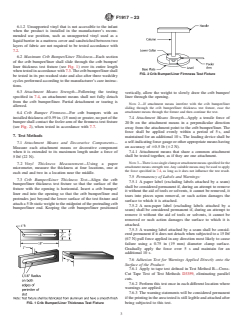
FIG. 1 Crib Bumper/Liner Thickness Test Fixture
FIG. 2 Crib Bumper/Liner Firmness Test Fixture
7.2 Vinyl Thickness Measurement—Using a paper micrometer, measure the thickness at four locations, one at each end and two
in a location near the middle.
7.3 Crib Bumper/Liner Thickness Test—Align the crib bumper/liner thickness test fixture so that the surface of the fixture with the
opening is horizontal. Insert a crib bumper/liner end into the opening so that the crib bumper/liner end protrudes just beyond the
lower surface of the test fixture and attach a 5 lb static weight to the midpoint of the protruding crib bumper/liner end. Keeping
the crib bumper/liner positioned vertically, allow the weight to slowly draw the crib bumper/liner through the opening.
NOTE 2—If attachment means interfere with the crib bumper/liner sliding through the crib bumper/liner thickness test fixture, ease the attachment means
through the fixture and then continue the test.
7.4 Attachment Means Strength—Apply a tensile force of 20 lb on the attachment means in a perpendicular direction away from
the attachment point to the crib bumper/liner. The force shall be applied evenly within a period of 5 s, and maintained for an
additional 10 s. The loading device shall be a self-indicating force gauge or other appropriate means having an accuracy of 60.5
lb (62 N).
7.4.1 Attachment means that share a common attachment shall be tested together, as if they are one attachment.
NOTE 3—There is no single clamp or attachment means specified for the attachment means strength test. Any suitable means may be used to apply the
force specified in 7.4, as long as it does not influence the test result.
7.5 Permanency of Labels and Warnings:
7.5.1 A paper label (excluding labels attached by a seam) shall be considered permanent if, during an attempt to remove it
withwithout the aid of tools or solvents, it cannot be removed, it tears into pieces upon removal, or such action damages the surface
to which it is attached.
F1917 − 23
7.5.2 A non-paper label (excluding labels attached by a seam) shall be considered permanent if, during an attempt to remove it
without the aid of tools or solvents, it cannot be removed or such action damages the surface to which it is attached.
7.5.3 A warning label attached by a seam shall be considered permanent if it does not detach when subjected to a 15 lbf (67 N)
pull force applied in any direction most likely to cause failure using a 0.75 in (19 mm) diameter clamp surface. Gradually apply
the force over 5 s and maintain for an additional 10 s.
7.6 Adhesion Test for Warnings Applied Directly onto the Surface of the Product:
7.6.1 Apply to tape test defined in Test Method B—Cross-Cut Tape Test of Test Methods D3359, eliminating parallel cuts.
7.6.2 Perform this test once in each different location where warnings are applied.
7.6.3 The warning statements will be considered permanent if the printing in the area tested is still legible and attached after being
subjected to this test.
7.6.4 A non-paper label, during an attempt to remove it without the aid of tools or solvents, shall not fit entirely within the small
parts cylinder defined in 16 CFR 1501 if it can be removed.
7.7 Crib Bumper/Liner Firmness Test—Select one side of the crib bumper/liner. All marks described in this section shall be made
at mid-bumper/liner height. For each crib bumper/liner intended for a short side of a crib, or segments of a crib bumper/liner
1 2
intended for a short side of a crib, mark two points along the bumper/liner length: one at ⁄3 of the total length, and one at ⁄3 of
the total length. For each crib bumper/liner intended for a long side of a crib, or segments of a crib bumper/liner intended for a
1 1 3
long side of a crib, mark three points along the bumper/liner length: ⁄4, ⁄2, and ⁄4 of the total length. There will be ten (10) marks
in total for a single continuous bumper/liner intended to cover all four sides of a standard full-size rectangular crib. For each crib
bumper/liner intended for a circular crib, divide the total bumper/liner length into ten (10) equa
...
Questions, Comments and Discussion
Ask us and Technical Secretary will try to provide an answer. You can facilitate discussion about the standard in here.
Loading comments...