


ASTM C1477-19
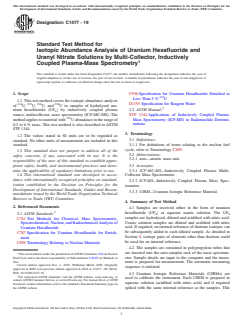
(Test Method)Standard Test Method for Isotopic Abundance Analysis of Uranium Hexafluoride and Uranyl Nitrate Solutions by Multi-Collector, Inductively Coupled Plasma-Mass Spectrometry
Standard Test Method for Isotopic Abundance Analysis of Uranium Hexafluoride and Uranyl Nitrate Solutions by Multi-Collector, Inductively Coupled Plasma-Mass Spectrometry
SIGNIFICANCE AND USE
5.1 The test method is capable of measuring uranium isotopic abundances of 234U, 235U, 236U, and 238U as required by Specifications C787 and C996.
SCOPE
1.1 This test method covers the isotopic abundance analysis of 234U, 235U, 236U, and 238U in samples of hydrolysed uranium hexafluoride (UF6) by inductively coupled plasma source, multicollector, mass spectrometry (ICP-MC-MS). The method applies to material with 235U abundance in the range of 0.2 to 6 % mass. This test method is also described in ASTM STP 1344.
1.2 The values stated in SI units are to be regarded as standard. No other units of measurement are included in this standard.
1.3 This standard does not purport to address all of the safety concerns, if any, associated with its use. It is the responsibility of the user of this standard to establish appropriate safety, health, and environmental practices and determine the applicability of regulatory limitations prior to use.
1.4 This international standard was developed in accordance with internationally recognized principles on standardization established in the Decision on Principles for the Development of International Standards, Guides and Recommendations issued by the World Trade Organization Technical Barriers to Trade (TBT) Committee.
General Information
- Status
- Published
- Publication Date
- 31-Oct-2019
- Technical Committee
- C26 - Nuclear Fuel Cycle
- Drafting Committee
- C26.05 - Methods of Test
Relations
- Effective Date
- 01-Nov-2019
- Effective Date
- 01-Jan-2024
- Effective Date
- 01-Mar-2020
- Effective Date
- 01-Mar-2020
- Effective Date
- 01-Feb-2018
- Effective Date
- 01-Jul-2015
- Effective Date
- 01-Jul-2015
- Effective Date
- 15-Jun-2014
- Effective Date
- 15-Jan-2014
- Effective Date
- 01-Jun-2013
- Effective Date
- 01-May-2013
- Effective Date
- 01-Jun-2011
- Effective Date
- 15-May-2011
- Effective Date
- 01-Nov-2010
- Effective Date
- 01-Oct-2010
Overview
ASTM C1477-19 is an international standard published by ASTM that defines a test method for the isotopic abundance analysis of uranium hexafluoride (UF₆) and uranyl nitrate solutions. This analysis is performed using multi-collector, inductively coupled plasma-mass spectrometry (ICP-MC-MS). The standard is vital for determining the isotopic ratios of uranium isotopes-including ^234U, ^235U, ^236U, and ^238U-primarily within the context of nuclear fuel cycle management, uranium enrichment processes, and regulatory compliance. The method applies specifically to materials where the ^235U content ranges from 0.2% to 6% by mass and aligns with specifications such as ASTM C787 and C996.
Key Topics
- Isotopic Abundance Measurement: Focuses on the precise quantification of uranium isotope ratios in both hydrolyzed uranium hexafluoride and uranyl nitrate solutions.
- ICP-MC-MS Technology: Utilizes advanced inductively coupled plasma-mass spectrometry with multi-collector setups for simultaneous detection of multiple isotopes, enhancing accuracy and throughput.
- Calibration and Mass Bias Correction: Employs uranium isotopic reference materials (UIRMs) and specific calibration techniques to correct for instrument-related biases and achieve reliable results.
- Sample Types and Preparation: Discusses procedures for analyzing both gaseous UF₆ converted to solution form and direct uranyl nitrate solutions, including steps for dilution and potential internal referencing with thorium isotopes.
- Interferences and Uncertainty: Outlines major sources of analytical error, such as isobaric interferences, mass bias, and memory effects, and provides guidance on mitigation and assessment of measurement uncertainty.
Applications
ASTM C1477-19 is essential in various domains that require accurate uranium isotopic analysis, including:
- Nuclear Fuel Cycle Operations: Supports process control and material accountability in uranium enrichment and nuclear energy production.
- Quality Control and Certification: Enables verification against international uranium hexafluoride specifications (like ASTM C787 and C996) through reliable isotope ratio data.
- Regulatory Compliance: Facilitates conformity with safety and non-proliferation regulations by providing accurate isotopic signatures.
- Research and Development: Used in analytical chemistry laboratories for the development of new uranium processing methods and for advancing radiochemical analysis techniques.
- Radiological Forensics: Assists in the identification and characterization of uranium samples in forensic and safeguard investigations.
Related Standards
To ensure comprehensive quality assurance and compatibility, ASTM C1477-19 references or is interconnected with several related standards:
- ASTM C761 – Test Methods for Chemical, Mass Spectrometric, Spectrochemical, Nuclear, and Radiochemical Analysis of Uranium Hexafluoride.
- ASTM C787 – Specification for Uranium Hexafluoride for Enrichment.
- ASTM C996 – Specification for Uranium Hexafluoride Enriched to Less Than 5% ^235U.
- ASTM C859 – Terminology Relating to Nuclear Materials.
- ASTM D1193 – Specification for Reagent Water.
- ASTM STP 1344 – Applications of Inductively Coupled Plasma-Mass Spectrometry (ICP-MS) to Radionuclide Determinations.
Practical Value
Adopting ASTM C1477-19 ensures laboratories and nuclear facilities can deliver high-accuracy, reproducible uranium isotopic data vital for nuclear fuel management, regulatory audits, and isotope traceability. Its focus on robust calibration, error reduction, and analytical best practices makes it an indispensable reference for organizations operating in the nuclear materials sector, addressing both technical precision and international compliance requirements.
Keywords: uranium isotopic abundance, ICP-MC-MS, uranium hexafluoride analysis, uranyl nitrate solution, isotope ratio, mass bias correction, nuclear fuel cycle, uranium enrichment, ASTM C1477-19.
Buy Documents
ASTM C1477-19 - Standard Test Method for Isotopic Abundance Analysis of Uranium Hexafluoride and Uranyl Nitrate Solutions by Multi-Collector, Inductively Coupled Plasma-Mass Spectrometry
REDLINE ASTM C1477-19 - Standard Test Method for Isotopic Abundance Analysis of Uranium Hexafluoride and Uranyl Nitrate Solutions by Multi-Collector, Inductively Coupled Plasma-Mass Spectrometry
Get Certified
Connect with accredited certification bodies for this standard

DNV
DNV is an independent assurance and risk management provider.

Lloyd's Register
Lloyd's Register is a global professional services organisation specialising in engineering and technology.
DNV Energy Systems
Energy and renewable energy certification.
Sponsored listings
Frequently Asked Questions
ASTM C1477-19 is a standard published by ASTM International. Its full title is "Standard Test Method for Isotopic Abundance Analysis of Uranium Hexafluoride and Uranyl Nitrate Solutions by Multi-Collector, Inductively Coupled Plasma-Mass Spectrometry". This standard covers: SIGNIFICANCE AND USE 5.1 The test method is capable of measuring uranium isotopic abundances of 234U, 235U, 236U, and 238U as required by Specifications C787 and C996. SCOPE 1.1 This test method covers the isotopic abundance analysis of 234U, 235U, 236U, and 238U in samples of hydrolysed uranium hexafluoride (UF6) by inductively coupled plasma source, multicollector, mass spectrometry (ICP-MC-MS). The method applies to material with 235U abundance in the range of 0.2 to 6 % mass. This test method is also described in ASTM STP 1344. 1.2 The values stated in SI units are to be regarded as standard. No other units of measurement are included in this standard. 1.3 This standard does not purport to address all of the safety concerns, if any, associated with its use. It is the responsibility of the user of this standard to establish appropriate safety, health, and environmental practices and determine the applicability of regulatory limitations prior to use. 1.4 This international standard was developed in accordance with internationally recognized principles on standardization established in the Decision on Principles for the Development of International Standards, Guides and Recommendations issued by the World Trade Organization Technical Barriers to Trade (TBT) Committee.
SIGNIFICANCE AND USE 5.1 The test method is capable of measuring uranium isotopic abundances of 234U, 235U, 236U, and 238U as required by Specifications C787 and C996. SCOPE 1.1 This test method covers the isotopic abundance analysis of 234U, 235U, 236U, and 238U in samples of hydrolysed uranium hexafluoride (UF6) by inductively coupled plasma source, multicollector, mass spectrometry (ICP-MC-MS). The method applies to material with 235U abundance in the range of 0.2 to 6 % mass. This test method is also described in ASTM STP 1344. 1.2 The values stated in SI units are to be regarded as standard. No other units of measurement are included in this standard. 1.3 This standard does not purport to address all of the safety concerns, if any, associated with its use. It is the responsibility of the user of this standard to establish appropriate safety, health, and environmental practices and determine the applicability of regulatory limitations prior to use. 1.4 This international standard was developed in accordance with internationally recognized principles on standardization established in the Decision on Principles for the Development of International Standards, Guides and Recommendations issued by the World Trade Organization Technical Barriers to Trade (TBT) Committee.
ASTM C1477-19 is classified under the following ICS (International Classification for Standards) categories: 27.120.30 - Fissile materials and nuclear fuel technology. The ICS classification helps identify the subject area and facilitates finding related standards.
ASTM C1477-19 has the following relationships with other standards: It is inter standard links to ASTM C1477-08(2014), ASTM C859-24, ASTM C996-20, ASTM C787-20, ASTM C761-18, ASTM C996-15, ASTM C787-15, ASTM C859-14a, ASTM C859-14, ASTM C859-13a, ASTM C859-13, ASTM C787-11, ASTM C761-11, ASTM C859-10b, ASTM C996-10. Understanding these relationships helps ensure you are using the most current and applicable version of the standard.
ASTM C1477-19 is available in PDF format for immediate download after purchase. The document can be added to your cart and obtained through the secure checkout process. Digital delivery ensures instant access to the complete standard document.
Standards Content (Sample)
This international standard was developed in accordance with internationally recognized principles on standardization established in the Decision on Principles for the
Development of International Standards, Guides and Recommendations issued by the World Trade Organization Technical Barriers to Trade (TBT) Committee.
Designation:C1477 −19
Standard Test Method for
Isotopic Abundance Analysis of Uranium Hexafluoride and
Uranyl Nitrate Solutions by Multi-Collector, Inductively
Coupled Plasma-Mass Spectrometry
This standard is issued under the fixed designation C1477; the number immediately following the designation indicates the year of
original adoption or, in the case of revision, the year of last revision. A number in parentheses indicates the year of last reapproval. A
superscript epsilon (´) indicates an editorial change since the last revision or reapproval.
1. Scope C996 Specification for Uranium Hexafluoride Enriched to
Less Than 5 % U
1.1 This test method covers the isotopic abundance analysis
234 235 236 238 D1193 Specification for Reagent Water
of U, U, U, and U in samples of hydrolysed ura-
nium hexafluoride (UF ) by inductively coupled plasma 2.2 ASTM Manual:
STP 1344 Applications of Inductively Coupled Plasma-
source, multicollector, mass spectrometry (ICP-MC-MS). The
methodappliestomaterialwith Uabundanceintherangeof Mass Spectrometry (ICP-MS) to Radionuclide Determi-
nations
0.2 to 6 % mass. This test method is also described in ASTM
STP 1344.
3. Terminology
1.2 The values stated in SI units are to be regarded as
3.1 Definitions:
standard. No other units of measurement are included in this
3.1.1 For definitions of terms relating to the nuclear fuel
standard.
cycle, refer to Terminology C859.
1.3 This standard does not purport to address all of the
3.2 Abbreviations:
safety concerns, if any, associated with its use. It is the
3.2.1 amu—atomic mass unit.
responsibility of the user of this standard to establish appro-
priate safety, health, and environmental practices and deter- 3.3 Acronyms:
mine the applicability of regulatory limitations prior to use. 3.3.1 ICP-MC-MS—Inductively Coupled Plasma Multi-
1.4 This international standard was developed in accor- Collector Mass Spectrometer.
dance with internationally recognized principles on standard-
3.3.2 ICP-MS—Inductively Coupled Plasma Mass Spec-
ization established in the Decision on Principles for the
trometer.
Development of International Standards, Guides and Recom-
3.3.3 UIRM—Uranium Isotopic Reference Material.
mendations issued by the World Trade Organization Technical
Barriers to Trade (TBT) Committee.
4. Summary of Test Method
2. Referenced Documents
4.1 Samples are received either in the form of uranium
hexafluoride (UF ) or aqueous uranic solution. The UF
2.1 ASTM Standards: 6 6
samples are hydrolysed, diluted and acidified with nitric acid.
C761 Test Methods for Chemical, Mass Spectrometric,
Uranic solution samples are diluted and acidified with nitric
Spectrochemical, Nuclear, and RadiochemicalAnalysis of
acid. If required, an internal reference of thorium isotopes can
Uranium Hexafluoride
be subsequently added to each diluted sample. As detailed in
C787 Specification for Uranium Hexafluoride for Enrich-
Section 8, isotope pairs of elements other than thorium could
ment
be used for an internal reference.
C859 Terminology Relating to Nuclear Materials
4.2 The samples are contained in polypropylene tubes that
are inserted into the auto-sampler rack of the mass spectrom-
This test method is under the jurisdiction ofASTM Committee C26 on Nuclear
eter. Sample details are input to the computer and the instru-
Fuel Cycle and is the direct responsibility of Subcommittee C26.05 on Methods of
Test.
ment is prepared for measurement. The automatic measuring
Current edition approved Nov. 1, 2019. Published March 2020. Originally
sequence is initiated.
approved in 2000. Last previous edition approved in 2014 as C1477 – 08 (2014).
DOI: 10.1520/C1477-19.
4.3 Uranium Isotopic Reference Materials (UIRMs) are
For referenced ASTM standards, visit the ASTM website, www.astm.org, or
used to calibrate the instrument. Each UIRM is prepared in
contact ASTM Customer Service at service@astm.org. For Annual Book of ASTM
aqueous solution (acidified with nitric acid) and if required
Standards volume information, refer to the standard’s Document Summary page on
the ASTM website. spiked with the same internal reference as the samples. This
Copyright © ASTM International, 100 Barr Harbor Drive, PO Box C700, West Conshohocken, PA 19428-2959. United States
C1477−19
calibration solution is measured and a mass bias parameter is Such effects are accentuated when samples that are depleted
calculatedthatisstoredandsubsequentlyimportedintoeachof in U are measured after enriched samples. Memory effects
the sample measurements to correct the measured uranium can be readily assessed by aspirating a 0.3 M nitric acid
isotopic ratios. solution and measuring the background U ion beam. The
sample introduction system should be periodically disas-
4.4 Measurements of isotopic ratios in the calibration solu-
sembled and cleaned, to minimise the background U ion
tion and the subsequent samples are initiated by customised
beam.
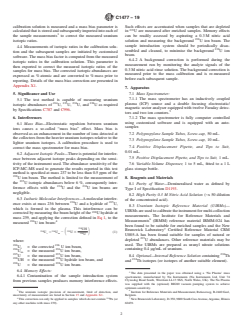
software. The mass bias factor is computed from the measured
6.4.2 A background correction is performed during the
isotopic ratios in the calibration solution. This parameter is
measurement run by monitoring the analyte signals of the
then exported to correct the measured isotopic ratios of the
0.3 M nitric acid rinse solution. The background correction is
samples for mass bias. The corrected isotopic abundances are
measured prior to the mass calibration and is re-measured
expressed as % atomic and are converted to % mass prior to
before each subsequent sample.
reporting. Details of the mass bias correction are presented in
Appendix X1.
7. Apparatus
5. Significance and Use
7.1 Mass Spectrometer:
7.1.1 The mass spectrometer has an inductively coupled
5.1 The test method is capable of measuring uranium
234 235 236 238
plasma (ICP) source and a double focusing electrostatic/
isotopic abundances of U, U, U, and U as required
magnetic sector analyser equipped with twelve Faraday detec-
by Specifications C787 and C996.
tors and two ion counters.
6. Interferences
7.1.2 The mass spectrometer is fully computer controlled
using customised software and is equipped with an auto-
6.1 Mass Bias—Electrostatic repulsion between uranium
sampler.
ions causes a so-called “mass bias” effect. Mass bias is
observed as an enhancement in the number of ions detected at
7.2 Polypropylene Sample Tubes, Screw-cap, 50 mL.
the collectors from the heavier uranium isotopes relative to the
7.3 Polypropylene Sample Tubes, Screw-cap, 10 mL.
lighter uranium isotopes. A calibration procedure is used to
7.4 Positive Displacement Pipette, and Tips to Suit,
correct the mass spectrometer for mass bias.
0.01 mL.
6.2 Adjacent Isotopic Peaks—There is potential for interfer-
7.5 Positive Displacement Pipette, and Tips to Suit, 1 mL.
ence between adjacent isotope peaks depending on the sensi-
tivity of the instrument used. The abundance sensitivity of the
7.6 Variable-Volume Dispenser, 1 to 5 mL, fitted to a 1 L
ICP-MC-MS used to generate the results reported in this test
glass storage bottle.
method is specified at mass 237 to be less than 0.5 ppm of the
8. Reagents and Materials
U ion beam. The method is limited to the measurement of
the U isotopic abundances below 6 %, consequently inter-
8.1 Purity of Water—Demineralised water as defined by
234 236
ference effects with the U and the U ion beams are
Type I of Specification D1193.
negligible.
8.2 High Purity 0.3 M Nitric Acid Solution (~x 50 dilution
6.3 Isobaric Molecular Interferences—Amolecularinterfer-
of the concentrated acid).
236 235
ence exists at mass 236 between U and a hydride of U,
8.3 Uranium Isotopic Reference Material (UIRMs)—
which is formed in the plasma. This interference can be
UIRMsareusedtocalibratetheinstrumentformulti-collection
corrected by measuring the beam height of the U hydride at
measurements. The Institute for Reference Materials and
mass 239, and applying the correction defined in Eq 1,tothe
Measurements (IRMM) reference material IRMM-024 has
236 4
measured U ion beam:
been found to be suitable for enriched samples and the New
UH
Brunswick Laboratory Certified Reference Material CRM
236 236 235
U 5 U 2 U 3 (1)
S D
c m 238
U
U005-A has been found suitable for samples of natural or
depleted U abundances. Other reference materials may be
where:
used. The UIRMs are prepared as uranyl nitrate solutions
236 236
U = the corrected U ion beam,
c
236 236 containing 0.4 µg/mL of uranium.
U = the measured U ion beam,
m
235 235
U = the measured U ion beam, 8.4 Optional—Internal Reference Solution containing Th
238 238
UH = the measured U hydride ion beam, and
and Th isotopes (or isotopes of another suitable element).
238 238
U = the measured U ion beam.
6.4 Memory Effects:
The data presented in the paper was obtained using a ‘Nu Plasma’ mass
6.4.1 Contamination of the sample introduction system
spectrometer, manufactured by Nu Instruments (Nu Instruments Ltd, Unit 74
Clywedog Road South, Wrexham LL13 9XS, North Wales, UK). The Nu Plasma
from previous samples produces memory interference effects.
was supplied with the (optional) BIG80 vacuum pumping system to achieve
optimum sensitivity.
3 6
The uranium isotopic precision of measurement, limit of detection, and Institute for Reference Materials and Measurement, Retieseweg, B-2440 Geel,
uncertainty of measurement are listed in Section 15 and Appendix X1. Belgium.
4 239 7
This correction can only be applied to samples which do not contain Pu (or NewBrunswickLaboratory,D-350,9800SouthCassAvenue,Argonne,Illinois
any other nuclides with mass 239). 60439.
C1477−19
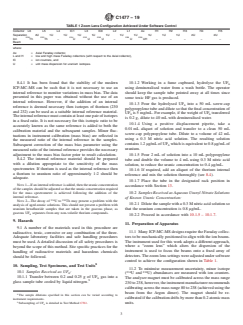
TABLE 1 Zoom Lens Configuration Achieved Under Software Control
Collector L6 L5 L4 IC1 L3 IC0 L2 L1 Ax H1 H2 H3 H4 H5
Separation 2U 1U 1U 1U 1U 1U 1U 1U 1U 1U 1U 2U 2U
230 232 234 235 236 238 238
Ion Th Th – U U U– U UH ––– – –
Beam
where:
Ax = Axial Faraday collector,
L and H = low and high mass Faraday collectors (with respect to the Axial collector),
IC = ion counters, and
U = unit mass dispersion for uranium isotopes.
8.4.1 It has been found that the stability of the modern 10.1.2 Working in a fume cupboard, hydrolyse the UF
ICP-MC-MS can be such that it is not necessary to use an
using demineralised water from a wash bottle. The operator
internal reference to monitor variations in mass bias. The data should keep the sample tube pointed away at all times since
presented in this paper was obtained without the use of an
some toxic HF gas is produced.
internal reference. However, if the addition of an internal
10.1.3 Pour the hydrolysed UF into a 50 mL screw-cap
reference is deemed necessary then isotopes of thorium (230
polypropylene tube and dilute so that the final concentration of
and 232) can be used as a suitable internal reference material.
UF is 5 mg/mL. For example, if the weight of UF transferred
6 6
Theinternalreferencemustcontainatleastonepairofisotopes
is 0.2 g, dilute to 40 mL with demineralised water.
in a fixed ratio. It is not necessary for this isotopic ratio to be
10.1.4 Using a positive displacement pipette, take a
accurately known as the same reference is added to both the
0.01 mL aliquot of solution and transfer to a clean 50 mL
calibration material and the subsequent samples. Minor fluc-
screw-cap polypropylene tube. Dilute to a volume of 42 mL
tuations in instrument calibration (mass bias) are reflected in
using a 0.3 M nitric acid solution. The resulting solution
the measured ratio of the internal reference in the samples.
contains 1.2 µg/mLof UF which is equivalent to 0.8 µg/mLof
Subsequent correction of the mass bias parameter using the
uranium.
measured ratio of the internal reference provides the necessary
adjustment to the mass bias factor prior to result calculation. 10.1.5 Pour 2 mL of solution into a 10 mL polypropylene
8.4.2 The internal reference material should be prepared
tube and double the volume to 4 mL using 0.3 M nitric acid
with a dilution appropriate to the sensitivity of the mass
solution, to reduce the uranic concentration to 0.4 µg/mL.
spectrometer. If thorium is used as the internal reference then
10.1.6 If required, add an aliquot of the thorium internal
a thorium to uranium ratio of approximately 1:2 should be
reference and mix the solution thoroughly (see 8.4).
adequate.
10.1.7 Place the tube in the designated rack position in
NOTE 1—If an internal reference is added, then the uranic concentration
accordance with Section 13.
ofthesamplesshouldbeadjustedsothattheuranicconcentrationrequired
for the mass spectrometer is achieved following the addition of the 10.2 SamplesReceivedasAqueousUranylNitrateSolutions
internal reference.
of Known Uranic Concentration:
234 230
NOTE 2—The decay of Uto Th may present a problem with the
10.2.1 Dilute the sample with a 0.3 M nitric acid solution so
analysis of aged-uranic solutions. This should not present a problem with
that the uranium concentration is 0.8 µg/mL.
uranium hexafluoride samples that are taken in the gaseous phase, as
gaseous UF separates from any non-volatile thorium compounds.
10.2.2 Proceed in accordance with 10.1.5 – 10.1.7.
9. Hazards
11. Preparation of Apparatus
9.1 A number of the materials used in this procedure are
11.1 Many ICP-MC-MS designs require the Faraday collec-
radioactive, toxic, corrosive or any com
...
This document is not an ASTM standard and is intended only to provide the user of an ASTM standard an indication of what changes have been made to the previous version. Because
it may not be technically possible to adequately depict all changes accurately, ASTM recommends that users consult prior editions as appropriate. In all cases only the current version
of the standard as published by ASTM is to be considered the official document.
Designation: C1477 − 08 (Reapproved 2014) C1477 − 19
Standard Test Method for
Isotopic Abundance Analysis of Uranium Hexafluoride and
Uranyl Nitrate Solutions by Multi-Collector, Inductively
Coupled Plasma-Mass Spectrometry
This standard is issued under the fixed designation C1477; the number immediately following the designation indicates the year of
original adoption or, in the case of revision, the year of last revision. A number in parentheses indicates the year of last reapproval. A
superscript epsilon (´) indicates an editorial change since the last revision or reapproval.
1. Scope
234 235 236 238
1.1 This test method covers the isotopic abundance analysis of U, U, U, and U in samples of hydrolysed uranium
hexafluoride (UF ) by inductively coupled plasma source, multicollector, mass spectrometry (ICP-MC-MS). The method applies
to material with U abundance in the range of 0.2 to 6 % mass. This test method is also described in ASTM STP 1344.STP 1344.
1.2 The values stated in SI units are to be regarded as standard. No other units of measurement are included in this standard.
1.3 This standard does not purport to address all of the safety concerns, if any, associated with its use. It is the responsibility
of the user of this standard to establish appropriate safety safety, health, and healthenvironmental practices and determine the
applicability of regulatory limitations prior to use.
1.4 This international standard was developed in accordance with internationally recognized principles on standardization
established in the Decision on Principles for the Development of International Standards, Guides and Recommendations issued
by the World Trade Organization Technical Barriers to Trade (TBT) Committee.
2. Referenced Documents
2.1 ASTM Standards:
C761 Test Methods for Chemical, Mass Spectrometric, Spectrochemical, Nuclear, and Radiochemical Analysis of Uranium
Hexafluoride
C787 Specification for Uranium Hexafluoride for Enrichment
C859 Terminology Relating to Nuclear Materials
C996 Specification for Uranium Hexafluoride Enriched to Less Than 5 % U
D1193 Specification for Reagent Water
2.2 Other Document:ASTM Manual:
STP 1344 Applications of Inductively Coupled Plasma-Mass Spectrometry (ICP-MS) to Radionuclide Determinations
3. Terminology
3.1 Definitions:
3.1.1 For definitions of terms relating to the nuclear fuel cycle, refer to Terminology C859.
3.2 Abbreviations:
3.2.1 amu—atomic mass unit.
3.3 Acronyms:
3.1.1 amu—atomic mass unit
3.3.1 ICP-MC-MS—Inductively Coupled Plasma Multi-Collector Mass SpectrometerSpectrometer.
3.3.2 ICP-MS—Inductively Coupled Plasma Mass SpectrometerSpectrometer.
3.3.3 UIRM—Uranium Isotopic Reference Material Material.
This test method is under the jurisdiction of ASTM Committee C26 on Nuclear Fuel Cycle and is the direct responsibility of Subcommittee C26.05 on Methods of Test.
Current edition approved Jan. 1, 2014Nov. 1, 2019. Published February 2014March 2020. Originally approved in 2000. Last previous edition approved in 20082014 as
C1477 – 08.C1477 – 08 (2014). DOI: 10.1520/C1477-08R14.10.1520/C1477-19.
For referenced ASTM standards, visit the ASTM website, www.astm.org, or contact ASTM Customer Service at service@astm.org. For Annual Book of ASTM Standards
volume information, refer to the standard’s Document Summary page on the ASTM website.
Copyright © ASTM International, 100 Barr Harbor Drive, PO Box C700, West Conshohocken, PA 19428-2959. United States
C1477 − 19
4. Summary of Test Method
4.1 Samples are received either in the form of uranium hexafluoride (UF ) or aqueous uranic solution. The UF samples are
6 6
hydrolysed, diluted and acidified with nitric acid. Uranic solution samples are diluted and acidified with nitric acid. If required,
an internal reference of thorium isotopes can be subsequently added to each diluted sample. As detailed in Section 8, isotope pairs
of elements other than thorium could be used for an internal reference.
4.2 The samples are contained in polypropylene tubes that are inserted into the auto-sampler rack of the mass spectrometer.
Sample details are input to the computer and the instrument is prepared for measurement. The automatic measuring sequence is
initiated.
4.3 Uranium Isotopic Reference Materials (UIRMs) are used to calibrate the instrument. Each UIRM is prepared in aqueous
solution (acidified with nitric acid) and if required spiked with the same internal reference as the samples. This calibration solution
is measured and a mass bias parameter is calculated that is stored and subsequently imported into each of the sample
measurements to correct the measured uranium isotopic ratios.
4.4 Measurements of isotopic ratios in the calibration solution and the subsequent samples are initiated by customised software.
The mass bias factor is computed from the measured isotopic ratios in the calibration solution. This parameter is then exported
to correct the measured isotopic ratios of the samples for mass bias. The corrected isotopic abundances are expressed as % atomic
and are converted to % mass prior to reporting. Details of the mass bias correction are presented in Appendix X1.
5. Significance and Use
234 235 236 238
5.1 The test method is capable of measuring uranium isotopic abundances of U, U, U, and U as required by
Specifications C787 and C996.
6. Interferences
6.1 Mass Bias—Electrostatic repulsion between uranium ions causes a so-called “mass bias” effect. Mass bias is observed as
an enhancement in the number of ions detected at the collectors from the heavier uranium isotopes relative to the lighter uranium
isotopes. A calibration procedure is used to correct the mass spectrometer for mass bias.
6.2 Adjacent Isotopic Peaks—There is potential for interference between adjacent isotope peaks depending on the sensitivity of
the instrument used. The abundance sensitivity of the ICP-MC-MS used to generate the results reported in this test method is
specified at mass 237 is specified to be less than 0.5 parts per million of the ppm of the U ion beam. The method is limited to
235 234
the measurement of of the U isotopic abundances below 6 %, consequently interference effects with the the U and and the
U ion beams are negligible.
236 235
6.3 Isobaric Molecular Interferences—A molecular interference exists at mass 236 between U and a hydride of U, which
is formed in the plasma. This interference can be corrected by measuring the beam height of the U hydride at mass 239, and
236 4
applying the correction defined in Eq 1, to the measured U ion beam:
UH
236 236 235
U 5 U 2 U3 (1)
S D
c m 238
U
where:
236 236
U = the corrected U ion beam,
c
236 236
U = the measured U ion beam,
m
235 235
U = the measured U ion beam,
238 238
UH = the measured U hydride ion beam, and
238 238
U = the measured U ion beam.
6.4 Memory Effects:
6.4.1 Contamination of the sample introduction system from previous samples produces memory interference effects. Such
effects are accentuated when samples that are depleted in U are measured after enriched samples. Memory effects can be readily
assessed by aspirating a 0.3 M 0.3 M nitric acid solution and measuring the background U ion beam. The sample introduction
system should be periodically disassembled and cleaned, to minimise the background U ion beam.
6.4.2 A background correction is performed during the measurement run by monitoring the analyte signals of the 0.3 M 0.3 M
nitric acid rinse solution. The background correction is measured prior to the mass calibration and is re-measured before each
subsequent sample.
7. Apparatus
7.1 Mass Spectrometer:
The uranium isotopic precision of measurement, limit of detection, and uncertainty of measurement are listed in Section 15 and Appendix X1.
This correction can only be applied to samples which do not contain Pu (or any other nuclides with mass 239).
C1477 − 19
7.1.1 The mass spectrometer has an inductively coupled plasma (ICP) source and a double focusing electrostatic/magnetic
sector analyser equipped with twelve Faraday detectors and two ion counters.
7.1.2 The mass spectrometer is fully computer controlled using customised software and is equipped with an auto-sampler.
7.2 Polypropylene Sample Tubes, Screw-Cap,Screw-cap, 50 mL.
7.3 Polypropylene Sample Tubes, Screw-Cap,Screw-cap, 10 mL.
7.4 Positive Displacement Pipette, and Tips to Suit, 0.01 mL.0.01 mL.
7.5 Positive Displacement Pipette, and Tips to Suit, 1 mL.
7.6 Variable-Volume Dispenser, 1 to 5 mL, fitted to a 1-L1 L glass storage bottle.
8. Reagents and Materials
8.1 Purity of Water—Demineralised water as defined by Type I of Specification D1193.
8.2 High Purity 0.3 M Nitric Acid Solution (~x 50 dilution of the concentrated acid).
8.3 Uranium Isotopic Reference Material (UIRMs)—UIRMs are used to calibrate the instrument for multi-collection
measurements. The Institute for Reference Materials and Measurements (IRMM) reference material IRMM-024 is used has been
found to be suitable for enriched samples and the New Brunswick Laboratory Certified Reference Material CRM U005-A is used
has been found suitable for samples of natural or depleted U abundances. Other reference materials may be used. The UIRMs
are prepared as uranyl nitrate solutions containing 0.4 μg/mL of uranium.
230 232
8.4 Optional—Internal Reference Solution containing Th and Th isotopes (or isotopes of another suitable element).
8.4.1 It has been found that the stability of the modern ICP-MC-MS can be such that it is not necessary to use an internal
reference to monitor variations in mass bias. The data presented in this paper was obtained without the use of an internal reference.
However, if the addition of an internal reference is deemed necessary then isotopes of thorium (230 and 232) can be used as a
suitable internal reference material. The internal reference must contain at least one pair of isotopes in a fixed ratio. It is not
necessary for this isotopic ratio to be accurately known as the same reference is added to both the calibration material and the
subsequent samples. Minor fluctuations in instrument calibration (mass bias) are reflected in the measured ratio of the internal
reference in the samples. Subsequent correction of the mass bias parameter using the measured ratio of the internal reference
provides the necessary adjustment to the mass bias factor prior to result calculation.
8.4.2 The internal reference material should be prepared with a dilution appropriate to the sensitivity of the mass spectrometer.
If thorium is used as the internal reference then a thorium to uranium ratio of approximately 1:2 should be adequate.
NOTE 1—If an internal reference is added, then the uranic concentration of the samples should be adjusted so that the uranic concentration required
for the mass spectrometer is achieved following the addition of the internal reference.
234 230
NOTE 2—The decay of U to Th may present a problem with the analysis of aged-uranic solutions. This should not present a problem with uranium
hexafluoride samples that are taken in the gaseous phase, as gaseous UF separates from any non-volatile thorium compounds.
9. Hazards
9.1 A number of the materials used in this procedure are radioactive, toxic, corrosive or any combination of the three. Adequate
laboratory facilities and safe handling procedures must be used. A detailed discussion of all safety procedures is beyond the scope
of this method. Site specific practices for the handling of radioactive materials and hazardous chemicals should be followed.
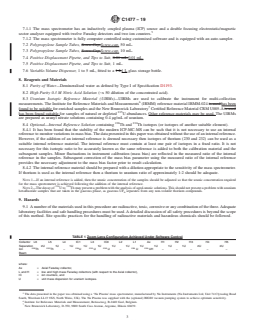
TABLE 1 Zoom Lens Configuration Achieved Under Software Control
Collector L6 L5 L4 IC1 L3 IC0 L2 L1 Ax H1 H2 H3 H4 H5
Separation 2U 1U 1U 1U 1U 1U 1U 1U 1U 1U 1U 2U 2U
230 232 234 235 236 238 238
Ion Th Th – U U U – U UH – – – – –
Beam
where:
Ax = Axial Faraday collector,
L and H = low and high mass Faraday collectors (with respect to the Axial collector),
IC = ion counters, and
U = unit mass dispersion for uranium isotopes.
The data presented in the paper was obtained using a ‘Nu Plasma’ mass spectrometer, manufactured by Nu Instruments (Nu Instruments Ltd, Unit 74 Clywedog Road
South, Wrexham LL13 9XS, North Wales, UK). The Nu Plasma was supplied with the (optional) BIG80 vacuum pumping system to achieve optimum sensitivity.
Institute for Reference Materials and Measurement, Retieseweg, B-2440 Geel, Belgium.
New Brunswick Laboratory, D-350, 9800 South Cass Avenue, Argonne, Illinois 60439.
C1477 − 19
10. Sampling, Test Specimens, and Test Units
10.1 Samples Received as UF :
10.1.1 Transfer between 0.2 g and 0.25 g of UF gas into a glass sample tube cooled by liquid nitrogen.
10.1.2 Working in a fume cupboard, hydrolyse the UF using demineralised water from a wash bottle. The operator should keep
the sample tube pointed away at all times since some toxic HF gas is produced.
10.1.3 Pour the hydrolysed UF into a 50 mL screw-cap polypropylene tube and dilute so that the final concentration of UF
6 6
is 5 mg/mL. For example, if the weight of UF transferred is 0.2 g, dilute to 40 mL with demineralised water.
10.1.4 Using a positive displacement pipette, take a 0.01 mL 0.01 mL aliquot of solution and transfer to a clean 50 mL
screw-cap polypropylene tube. Dilute to a volume of 42 mL using a 0.3 M nitric acid solution. The resulting solution contains 1.2
μg/mL of UF which is equivalent to 0.8 μg/mL of uranium.
10.1.5 Pour 2 mL of solution into a 10 mL polypropylene tube and double the volume to 4 mL using 0.3 M nitric acid solution,
to reduce the uranic concentration to 0.4 μg/mL.
10.1.6 If required, add an aliquot of the thorium internal reference and mix the solution thoroughly (see 8.4).
10.1.7 Place the tube in the designated rack position in accordance with Section 13.
10.2 Samples Received as Aqueous Uranyl Nitrate Solutions of Known Uranic Concentration:
10.2.1 Dilute the sample with a 0.3 M nitric acid solution so that the
...
Questions, Comments and Discussion
Ask us and Technical Secretary will try to provide an answer. You can facilitate discussion about the standard in here.
Loading comments...