

Electrical Engineering Standards: October 2026 Sees Essential Updates for Mining Safety, Luminaire Design, and Capacitor Materials
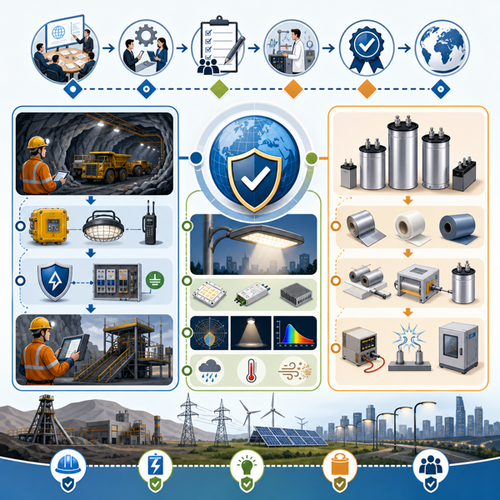
Industry professionals in electrical engineering are closely monitoring the publication of three pivotal international standards in October 2026. These recent updates address explosion protection in underground mines, enhanced safety for luminaires in hazardous environments, and advanced material specifications for capacitor production. This comprehensive summary—Part 3 of our October series—details vital requirements, technical changes, and what organizations must know to ensure ongoing regulatory compliance and operational efficiency.
Overview
Electrical engineering continues to evolve with international standards that address critical aspects of safety, performance, and product quality. In October 2026, three significant updates were published covering explosive atmospheres in mining, luminaires with limited surface temperatures, and specialized plastic films for capacitors. These standards are set to influence design, manufacturing, and maintenance practices across multiple sectors, directly impacting organizations involved in mining operations, industrial lighting solutions, and electrical components manufacturing.
Why do standards matter in this field?
- They protect lives and infrastructure by addressing safety risks like explosions and overheating.
- Standards ensure global interoperability of products and systems.
- Clear requirements streamline compliance and facilitate smoother certification processes.
This article will equip readers with:
- An understanding of what each new standard covers
- Key technical and compliance changes
- Practical guidance for implementation
- Insights into industry benefits and compliance risks
Detailed Standards Coverage
ISO/IEC 80079-38:2026 – Safety for Equipment in Explosive Atmospheres in Underground Mines
Explosive atmospheres — Part 38: Equipment and components in explosive atmospheres in underground mines
This dual-logo international standard establishes robust requirements for the construction, testing, and marking of Group I Ex Equipment and components used in hazardous underground mining environments. ISO/IEC 80079-38:2026 specifically addresses operational risks where explosive atmospheres, including firedamp (methane) and coal dust, may be present.
Scope & Applicability
- Applies to: All mining equipment—either individual items or integrated assemblies—used in potentially explosive underground settings.
- Atmospheric conditions: Safe operation is defined for temperatures −20°C to +60°C, pressure 80–110 kPa, and air with normal oxygen concentration.
- Explosion Protection Levels (EPLs): Now covering both Ma (highest protection for constant presence) and Mb (protection for abnormal presence). EPL Ma equipment must work safely even if one safety barrier fails.
- Expansion: Can be referenced for infrastructure such as tunnels where firedamp or coal dust may occur.
Key Requirements
- Strict construction, ignition hazard assessment, and documentation processes.
- Over-current and earth-fault protection, especially for electrical components.
- Mechanical and electrical protection for live parts, cables, batteries, fans, and gas monitoring systems.
- NEW: Enhanced marking requirements for both EPL Ma and Mb.
- Extended guidance for non-coal mines and detailed ventilation considerations.
- Outlines rigorous fire protection, materials compliance, and type testing for assemblies.
Notable Technical Changes (Second Edition)
- Hand tools removed from scope; focus on complex mining machinery and assemblies.
- Expanded treatment of batteries and requirements for cutting-edge battery safety.
- Inclusion of detailed guidance annexes and updated references to IEC 60079 standards.
- Examples for hazard assessment tailored for real mining machinery.
- Alignment of terminology and structure for global harmonization.
Key highlights:
- Dual coverage for both Ma and Mb explosion protection levels
- Comprehensive fire and ignition hazard management
- Upgraded requirements for type testing and marking of mining assemblies
Access the full standard:View ISO/IEC 80079-38:2026 on iTeh Standards
IEC 60598-2-24:2026 – Luminaires with Limited Surface Temperatures
Luminaires - Part 2-24: Particular requirements – Luminaires with limited surface temperatures
This third edition details essential specifications for luminaires designed to operate safely where combustible dust may settle on lighting fixtures— reducing ignition risks in industrial and storage environments.
Scope & Applicability
- Covers: Luminaires using electric light sources at supply voltages up to 1,000V.
- Focus: Limiting accessible surface temperatures to prevent ignition of deposited materials (e.g., industrial dust, textiles).
- Exclusions: Not a substitute for luminaires certified for explosive gas/dust atmospheres but rather for addressing ignitable deposits in less extreme conditions.
Core Requirements
- Maximum allowable surface temperature limits for accessibility and mounting.
- Enhanced classification system for luminaires based on shock protection, ingress protection (IP), and mounting surface compatibility.
- Extended marking and user information requirements.
- Detailed construction rules: thermal protection for built-in controlgear, restrictions on installation locations, and safety for maintenance activities.
- Additional protection against photobiological hazards and electrical faults.
Major Technical Revisions
- Alignment of clause numbers and format with the latest IEC 60598-1 for easier reference.
- Reworked and extended terms & definitions for better clarity.
- Comprehensive new rules on luminaire classification and mounting instructions.
- Advanced requirements for protection against over-temperature and enhanced fault testing.
Key highlights:
- Improved consistency with general luminaire standards
- More precise surface temperature and mounting location guidance
- Stronger provisions for maintenance safety and user information
Access the full standard:View IEC 60598-2-24:2026 on iTeh Standards
IEC 60674-3-1:2026 – Biaxially Oriented Polypropylene Films for Capacitors
Plastic films for electrical purposes – Part 3: Specifications for individual materials – Sheet 1: Biaxially oriented polypropylene (PP) films for capacitors
Biaxially oriented polypropylene (BOPP) films are the globally preferred dielectric material in power capacitors, vital for grid stability and electronic device performance. This third edition introduces expanded requirements and updated test methods for manufacturers and users of capacitor-grade plastic films.
Scope & Applicability
- Covers: Biaxially oriented polypropylene films intended as dielectric materials in capacitors.
- Material types: Includes films with smooth or rough surfaces, and single/double-side corona treatment for metallization.
- Users: Capacitor manufacturers, materials scientists, and suppliers.
Critical Requirements & Features
- Detailed physical properties (density, melting point, tensile strength, elongation at break, resistivity, dissipation factor, permittivity).
- Stringent DC electric strength tests at both room and elevated temperatures.
- Strict limits on the number of electrical weak spots per unit area.
- Expanded classification and designation for thickness and treatment type.
- Roll handling, joining, and labeling protocols for traceability.
Principal Changes from the Previous Edition
- Comprehensive editorial and technical revision for clarity and test consistency.
- Broader range of film thicknesses and new performance benchmarks.
- Additional requirements for thicker films, benefiting emerging capacitor designs.
- Improved methods for roll testing, labeling, and film quality tracking.
Key highlights:
- Broadened thickness options and improved mechanical/electrical test criteria
- Enhanced guidelines for labeling and surface treatment
- Greater flexibility for capacitor manufacturers to meet evolving market needs
Access the full standard:View IEC 60674-3-1:2026 on iTeh Standards
Industry Impact & Compliance
The updated standards introduced in October 2026 have far-reaching implications across electrical engineering sectors:
- Mining and Underground Operations: New requirements mean closer scrutiny of explosion protection strategies, especially for mixed or complex machinery assemblies in hazardous atmospheres. The inclusion of new battery safety clauses and expanded guidance for tunnels and non-coal mines highlight the need to update inventory and risk assessments immediately.
- Lighting/Facilities Management: Revised rules for luminaires help guard against secondary fire or explosion risks, demanding manufacturers, specifiers, and installers verify compliance with mounting, marking, and user instructions.
- Capacitor Manufacturing and Procurement: Enhanced film specifications allow for more sophisticated capacitor designs essential for modern grids and electronics. Buyers should mandate conformity with the updated standard to ensure quality, traceability, and long-term asset reliability.
Compliance considerations:
- Transition periods may apply; organizations should consult local regulations and certification bodies.
- Ignoring updated requirements may jeopardize certifications, insurance coverage, and legal liability.
- Early adoption positions organizations as safety and quality leaders.
Benefits include:
- Decreased risk of catastrophic failures or regulatory penalties
- Improved product quality and market acceptance
- Stronger credibility during audits and procurement reviews
Technical Insights
Across all three standards, a focus on rigorous testing, clear documentation, and traceability emerges as the foundation for compliance and technical excellence.
Common Requirements
- Testing: Specifications for product or material test methodologies are strict and standardized, ensuring consistency and repeatability.
- Documentation: Comprehensive marking and user information are emphasized, whether for Ex Equipment in mining, luminaires, or dielectric films.
- Component Suitability: Requirements now reflect modern component integration (e.g., advanced batteries, controlgear, multi-layer assemblies).
Best Practices for Implementation
- Early Gap Analysis: Audit existing equipment, product lines, or materials against new standards.
- Engage Supply Chains: Inform suppliers and partners of updated requirements; ensure every link in the value chain is compliant.
- Training: Regulatory, engineering, and field staff must be familiar with changes, especially hazard definitions and test procedures.
- Proactive Testing and Documentation: Use accredited labs, track detailed test results, and update all documentation on marking and use instructions.
Testing & Certification
- Mining equipment must undergo full testing per the updated hazard assessment regimes.
- Luminaires must be tested for maximum surface temperatures and IP ratings.
- Capacitor film suppliers should provide detailed test data for all batches, especially for electrical strength and weak point counts.
Conclusion / Next Steps
Electrical engineering’s October 2026 standards updates represent a major stride toward safer, more reliable, and better-documented equipment and materials across mining, lighting, and electronic components.
Key takeaways:
- Aligning products and processes with these standards is not just about compliance—it's about safeguarding people, assets, and organizational reputation.
- Proactive review and implementation of these requirements protect organizations from risk and unlock new business opportunities.
Recommendations:
- Review your current product portfolios and operational processes.
- Train teams and communicate the significance of upcoming compliance deadlines.
- Source standards directly for detailed requirements: leverage platforms like iTeh Standards for authoritative documents and expert support.
Stay ahead: Explore all the October 2026 electrical engineering standards and ensure your organization is ready for the future of safe, efficient, and compliant operations.
Categories
- Latest News
- New Arrivals
- Generalities
- Services and Management
- Natural Sciences
- Health Care
- Environment
- Metrology and Measurement
- Testing
- Mechanical Systems
- Fluid Systems
- Manufacturing
- Energy and Heat
- Electrical Engineering
- Electronics
- Telecommunications
- Information Technology
- Image Technology
- Precision Mechanics
- Road Vehicles
- Railway Engineering
- Shipbuilding
- Aircraft and Space
- Materials Handling
- Packaging
- Textile and Leather
- Clothing
- Agriculture
- Food technology
- Chemical Technology
- Mining and Minerals
- Petroleum
- Metallurgy
- Wood technology
- Glass and Ceramics
- Rubber and Plastics
- Paper Technology
- Paint Industries
- Construction
- Civil Engineering
- Military Engineering
- Entertainment