


Modern Wire Standards: Boosting Safety, Efficiency, and Reliability in Electrical Engineering
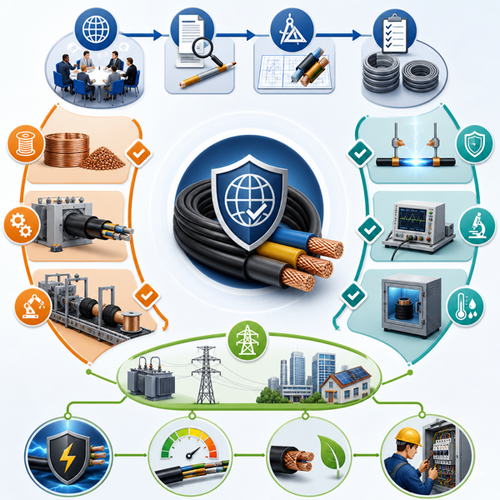
Modern electrical engineering depends on the quality, safety, and reliability of the fundamental components at its core—wires. As businesses adopt new technologies, the standards that define manufacturing, testing, and application of wires become not just a regulatory obligation but a lynchpin for productivity, security, and scalable growth. In this guide, we offer an accessible, comprehensive overview of four pivotal international standards on wires: IEC 60317-27-1:2020, IEC 60851-1:2021, IEC 61400-24:2019, and IEC TS 63263:2025. Each brings rigor and confidence to wire selection, production, and testing, ensuring organizations can adopt transformative technologies while meeting the highest safety and performance requirements.
Overview / Introduction
Wires provide the essential pathways for energy and information in every part of modern electrical infrastructure, from small devices to complex energy systems. As industries move towards digitalization, renewable power, and global connectivity, the demands on wires grow: greater reliability, improved electrical endurance, robust lightning protection, and clearly defined testing practices. International standards ensure all parties—manufacturers, engineers, project managers, and inspectors—speak the same technical language and achieve consistent, safe, and optimal outcomes.
This overview demystifies four key wire standards:
- Mechanical and material specifications for wires (IEC 60317-27-1)
- Unified test methods and terminology (IEC 60851-1)
- Specialized protection for wind generation (IEC 61400-24)
- Advanced endurance testing methods (IEC TS 63263)
By understanding these standards, businesses can be proactive—reducing operational risks, streamlining audits, and optimizing investments in smart and sustainable infrastructure.
Detailed Standards Coverage
IEC 60317-27-1:2020 – Paper Tape Covered Round Copper Wire
Full Title: Specifications for Particular Types of Winding Wires - Part 27-1: Paper Tape Covered Round Copper Wire
IEC 60317-27-1:2020 defines requirements for paper tape covered round copper winding wires, typically used in the windings of oil-immersed transformers. The standard covers wires with nominal conductor diameters from 0.50 mm to 5.00 mm and limits its scope to paper tapes as specified in IEC 60554-1 and IEC 60554-3-5. Its provisions cover dimensions, materials, appearance, electrical resistance, and packaging.
What this standard covers:
- Specifies conductor size, out-of-roundness, and increase in diameter due to insulating paper tape
- Describes essential mechanical and visual features: the wire must be free of copper dust and extraneous matter; paper tapes are to be firmly and evenly wrapped
- Stipulates agreement on parameters such as number of tape layers, tape type, thickness, overlap, and packaging between supplier and purchaser
- Endorses use primarily in transformer windings but also influences related electrical equipment
- Links directly to universal test and specification sheets (IEC 60317-0-1) for mutual consistency
Key requirements and specifications:
- Nominal conductor diameters: 0.50 mm up to 5.00 mm
- Paper tape covering: Minimum two layers, materials per IEC 60554 standards
- Appearance: Clean conductor, evenly applied paper, no adhesives except as anchors at tape ends
- Dimensions: Maximum overall diameter does not exceed sum of maximum bare diameter and the increase due to tape
- Testing: Methods as per referenced specifications; agreement needed for properties like flexibility, springiness, and packaging specifics
Who needs to comply:
- Transformer manufacturers and suppliers
- Wire and cable producers
- Quality assurance and testing laboratories
- Electrical utilities and infrastructure developers
Practical implications:
- Assures insulation quality and material compatibility, especially critical for transformer reliability and oil compatibility
- Ensures dimensional and appearance uniformity, key for high-volume automated winding processes
- Facilitates clear communication between suppliers and buyers—especially valuable for global trade
Notable features:
- Coverage includes full packaging and labeling requirements for traceability
- Incompatible properties, like inappropriate tests, are explicitly excluded to avoid confusion
- Essential references to other standards (IEC 60317-0-1, IEC 60554) to ensure harmonization and consistency
Key highlights:
- Defines mechanical and visual specifications for oil-immersed transformer wires
- Ensures consistency across manufacturing and sourcing
- Supports reliable transformer performance and safer grid operations
Access the full standard:View IEC 60317-27-1:2020 on iTeh Standards
IEC 60851-1:2021 – Winding Wires Test Methods: General
Full Title: Winding Wires - Test Methods - Part 1: General
IEC 60851-1:2021 is the foundational document establishing test method guidelines and terminology for all winding wire assessments. It provides the definitions, general testing conditions, and survey of further test parts (IEC 60851-2 through 60851-6), ensuring consistency over mechanical, chemical, electrical, and thermal property verification. The 2021 edition consolidates previous updates and amends, reflecting new technical advances and terminology.
What this standard covers:
- General scope, references, and terminology for wire testing
- Definitions of all terms relevant to winding wires (e.g., insulation, enamel, bonding layer)
- Atmospheric conditions, specimen handling, and preconditioning procedures
- Cross-references to the complete suite of test procedures for physical, chemical, electrical, thermal, and mechanical characteristics
- Addresses both routine and periodic conformance tests
Key requirements and specifications:
- All test specimens must be preconditioned at standardized conditions: 15–40 °C, 25–75% relative humidity
- Clear definitions for wire types, coating, grades, insulation types, and visual quality
- Test management and frequency must be agreed upon by supplier and purchaser when not outlined by regulation
- All testers and users must apply the same terminology and procedures for results to be valid across global markets
Who needs to comply:
- Wire manufacturers and test labs
- Certification bodies
- Equipment designers and OEMs
- Quality assurance professionals
Practical implications:
- Enables comparison of products regardless of origin—critical for global supply chains
- Supports ongoing quality control programs and helps in troubleshooting and failure analysis
- Establishes an aligned reference point for safety, performance, and compliance audits
Notable features:
- Integrates with the full suite of IEC 60851 test documents
- Includes comprehensive terminology—foundational for new staff and cross-discipline teams
- Flexible structure for local regulatory layering (customers and suppliers can agree on certain test frequencies)
Key highlights:
- Sets the universal language and procedure for wire testing
- Improves accuracy, repeatability, and comparability of test results
- Essential for harmonized international trade and product certification
Access the full standard:View IEC 60851-1:2021 on iTeh Standards
IEC 61400-24:2019 – Wind Energy Generation Systems: Lightning Protection
Full Title: Wind Energy Generation Systems - Part 24: Lightning Protection
As wind energy becomes a pillar of renewable power, wind turbines must withstand hazardous lightning strikes. IEC 61400-24:2019 defines comprehensive requirements for lightning protection of wind turbine generators (WTG) and their components: blades, hubs, towers, electrical systems, and connections. It offers detailed risk assessment, design, testing, and documentation directives for manufacturers and site operators. With increasingly tall and advanced turbines, robust lightning protection minimizes catastrophic losses, downtime, and environmental hazards.
What this standard covers:
- Defines lightning exposure and risk assessment methodologies specific to wind turbines
- Requirements for protection of blades, nacelles, towers, electrical and control systems against direct and indirect lightning effects
- Testing and verification methods for compliance, including strike attachment, physical damage, and current conduction
- Earthing, equipotential bonding, and surge protection device (SPD) requirements
- Documentation, inspection, and maintenance guidance
Key requirements and specifications:
- Risk assessment tailored to site-specific lightning occurrence and layout
- Protection levels for each turbine subcomponent (e.g., blade air-termination, tower grounding)
- Minimum performance expectations for each protection zone
- Specifications for SPD selection and installation for both low- and high-voltage circuits
- Continuous documentation throughout design, installation, and operational life cycle
Who needs to comply:
- Wind turbine manufacturers
- Wind farm developers and operators
- Electrical system designers for renewable installations
- Inspectors and safety managers
Practical implications:
- Critical to maximizing wind turbine availability and lifespan
- Reduces insurance risks and unplanned maintenance costs
- Supports regulatory approvals for wind farm installations
- Preserves the safety of onsite personnel and environmental integrity
Notable features:
- Aligns with other IEC standards for electrical and EMC protection
- Includes layered protection strategies for complex systems
- Offers annexes with small turbine guidelines and detailed risk calculation formulas
Key highlights:
- Essential for risk management in renewable energy projects
- Creates a unified framework for evaluating and mitigating lightning risk
- Streamlines compliance and maintenance for high-value energy assets
Access the full standard:View IEC 61400-24:2019 on iTeh Standards
IEC TS 63263:2025 – Electrical Endurance Under High Frequency Voltage Impulses
Full Title: Winding Wires - Test Methods - Electrical Endurance Under High Frequency Voltage Impulses
Emerging power electronics (such as EV drives and high-frequency inverters) expose wires to severe voltage surges and partial discharges. IEC TS 63263:2025 provides a comparative test method for assessing the lifetime of winding wires under repeated high-frequency voltage impulses, especially at elevated temperatures. It covers round and rectangular magnet wires and recognizes the influence of environmental, preparation, and operational variables on insulation degradation.
What this standard covers:
- Test equipment setup and conditions for simulating high-frequency voltage surges
- Preparation, preconditioning, and screening of wire specimens
- Test procedures, including impulse characteristics (shapes, voltages) and reporting format
- Focus on partial discharge endurance—a key factor for wires in advanced electrical drives and inverters
- Comparative nature: designed for benchmarking, not absolute lifespan prediction
Key requirements and specifications:
- Specimen preparation for both round and rectangular wires per precise handling guidelines
- Testing at specified voltage impulse durations, amplitudes, and frequencies
- Standardized reporting of electrical endurance for quality comparison and supplier qualification
- Equipment: impulses delivered via programmable supplies, validated via digital oscilloscopes for waveform assurance
Who needs to comply:
- Magnet wire manufacturers and users in automotive, industrial, and appliance markets
- Research labs benchmarking insulation life
- OEMs developing next-generation high-speed electrical motors or compact transformers
Practical implications:
- Enables robust wire selection for demanding applications involving rapid switching and voltage transients
- Reduces risk of premature winding failure in cutting-edge technologies
- Improves electrical safety and system reliability
Notable features:
- Designed for comparative product evaluation under identical test setups
- Direct relevance for electric drive and renewable power industries
- Facilitates supplier screening for advanced electronics supply chains
Key highlights:
- Provides a modern yardstick for wire performance under impulse conditions
- Supports safe, reliable adoption of advanced electronics in electrification trends
- Encourages innovation in wire insulation and product development
Access the full standard:View IEC TS 63263:2025 on iTeh Standards
Industry Impact & Compliance
The adoption of these wire standards transforms how organizations design, purchase, and operate electrical systems.
How do these standards affect businesses?
- Risk Reduction: By following international specifications, organizations significantly reduce risks related to product failures, equipment downtime, and workplace hazards.
- Market Access: Certified compliance is increasingly required for procurement contracts, regulatory permits, and cross-border trade in electrical components.
- Productivity Boost: Standardized materials and testing reduce rework and assure compatibility, increasing project efficiency and shortening development cycles.
- Scalability: When products meet universal specifications, organizations can scale production and deployment more easily across regions and industries—critical in an era of global supply chains and rapid expansion of infrastructure.
Compliance considerations
- Regular training on current standards for engineering and operations staff
- Integrating standards compliance in supplier selection, audits, and procurement
- Documenting testing protocols and third-party certifications during design and commissioning
Benefits of adopting these standards
- Improved safety and reliability
- Streamlined regulatory approval
- Enhanced brand trust and reduced warranty claims
- Lower total cost of ownership
- Stronger partnerships with OEMs and end-users
Risks of non-compliance
- Production delays due to quality issues
- Legal penalties or de-certification in regulated markets
- Increased insurance costs
- Reputational damage from safety or performance failures
Implementation Guidance
Common implementation approaches
- Gap Analysis: Audit current products and processes against latest standards.
- Supplier Management: Qualify vendors and raw materials to ensure input compliance.
- Process Integration: Update testing and inspection protocols to incorporate new test methods, labeling, and documentation guidelines.
- Workforce Training: Educate design, production, and maintenance teams on relevant clauses and compliance procedures.
Best practices for adopting these standards
- Involve cross-functional teams: engineering, quality, procurement, and maintenance.
- Automate record-keeping for tests, lot traceability, and certification documents.
- Engage external auditors or certification bodies for unbiased validation.
- Document exceptions, especially when using legacy systems or when adaptations are required for local market conditions.
Resources for organizations
- iTeh Standards platform for the latest official documents and updates
- IEC, national electrical and safety authorities
- Industry associations and technical forums
Conclusion / Next Steps
Today’s drive for digitalization, renewable energy, and electrification raises the bar for electrical reliability, safety, and scalability. Implementing pivotal wire standards—IEC 60317-27-1, IEC 60851-1, IEC 61400-24, and IEC TS 63263—is no longer optional for businesses aiming to lead in modern electrical engineering. These standards form a common foundation enabling safe innovation, efficient production, and effective risk management.
Recommendations:
- Perform a standards compliance audit for your wire-related products and suppliers
- Integrate these standards into quality management systems and staff training
- Stay updated with latest revisions and interpretations via iTeh Standards
By rigorously applying these guidelines, organizations can future-proof their operations, build trust with partners and clients, and position themselves for growth as electric power infrastructure continues to evolve.
Categories
- Latest News
- New Arrivals
- Generalities
- Services and Management
- Natural Sciences
- Health Care
- Environment
- Metrology and Measurement
- Testing
- Mechanical Systems
- Fluid Systems
- Manufacturing
- Energy and Heat
- Electrical Engineering
- Electronics
- Telecommunications
- Information Technology
- Image Technology
- Precision Mechanics
- Road Vehicles
- Railway Engineering
- Shipbuilding
- Aircraft and Space
- Materials Handling
- Packaging
- Textile and Leather
- Clothing
- Agriculture
- Food technology
- Chemical Technology
- Mining and Minerals
- Petroleum
- Metallurgy
- Wood technology
- Glass and Ceramics
- Rubber and Plastics
- Paper Technology
- Paint Industries
- Construction
- Civil Engineering
- Military Engineering
- Entertainment