


Winding Wires Standards: Ensuring Quality, Safety, and Efficiency in Modern Electrical Engineering
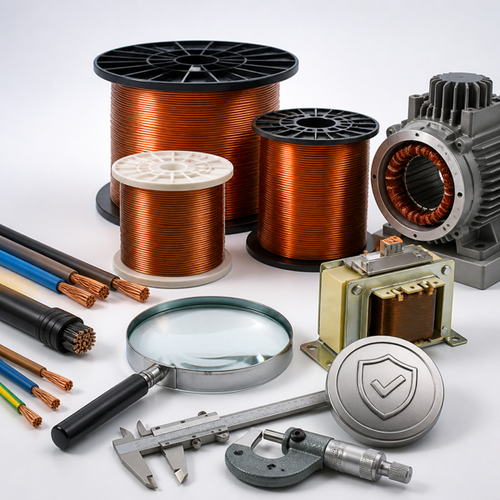
Modern electrical systems increasingly rely on robust, high-quality winding wires to ensure efficiency, safety, and longevity in an era of rapid technological advancement. With the expansion of electrification, automation, smart grids, and renewable energy solutions, adhering to up-to-date international standards is no longer optional—it is a must for businesses striving for operational excellence, security, and scalability. This in-depth guide covers four of the most relevant global standards for winding wires, offering businesses and professionals a comprehensive resource to enhance productivity and safeguard innovation.
Overview / Introduction
The electrical engineering sector is at the heart of technological progress, powering everything from traditional transformers to cutting-edge wind turbines and advanced electronic devices. Winding wires—specialized insulated conductors used in coils, motors, generators, and transformers—are a foundational element in these systems. However, as the complexity and expectations for electrical equipment evolve, so too do the demands for quality, reliability, and safety.
This is where international standards become crucial. They provide consensus-driven, rigorously tested requirements covering materials, manufacturing, test methods, and operational safety. Organizations that implement these standards gain a competitive edge: increased productivity, reduced downtime, improved safety, easier compliance demonstration, and the agility to scale up with new technologies. In this article, we’ll unravel four key IEC standards governing winding wires, making their requirements and impact accessible to a broad audience—from engineers and facility managers to business leaders.
What you’ll learn:
- The scope and main requirements of each standard
- Who should comply and why
- How these standards power productivity, safety, and technological scaling
- Actionable steps for implementation
Detailed Standards Coverage
IEC 60317-27-1:2020 – Paper Tape Covered Round Copper Wire
Specifications for particular types of winding wires – Part 27-1: Paper tape covered round copper wire
IEC 60317-27-1:2020 defines comprehensive specifications for round copper winding wires covered with two or more layers of paper tape. These wires are vital for winding coils in oil-immersed transformers—a mainstay in electric power transmission and distribution. Covering nominal conductor diameters from 0.5 mm up to 5 mm, the standard ensures compatibility and quality using paper tapes as specified by IEC 60554.
Key requirements and scope:
- Covers round copper conductors wrapped with two or more layers of specified paper tape
- Defines allowed conductor diameters, tolerances for dimensions, out-of-roundness, and increase in diameter from paper covering
- Specifies electrical resistance, elongation, and appearance
- Outlines agreement-based aspects—like type and thickness of paper, overlap, and packaging—between purchaser and supplier
- Details necessary labeling and traceability for each spool or packaging unit
Target Users:
- Transformer and electrical machinery manufacturers
- Wire processing companies
- Quality control laboratories
Practical Implications: Adhering ensures consistent quality in transformer windings, mitigates the risk of failure due to insulation defects or material mismatches, and streamlines procurement and supply chain due diligence—directly boosting productivity and scaling efforts.
Notable Features:
- Compatibility with IEC 60317-0-1, IEC 60554-1, and IEC 60554-3-5 referenced standards
- Conductor and paper type/overlap defined by mutual agreement for customization
- Mandatory packaging and labeling requirements improve traceability and batch control
Access the full standard:View IEC 60317-27-1:2020 on iTeh Standards
IEC 60851-1:2021 – General Test Methods for Winding Wires
Winding wires – Test methods – Part 1: General
IEC 60851-1:2021 consolidates the general approach, terminology, and principles underpinning all test methods for winding wires. Serving as the foundational document for the IEC 60851 series, it encompasses definitions, guidance on atmospheric conditions for testing, and a summary of the mechanical, chemical, electrical, and thermal tests outlined in later parts.
Key requirements and scope:
- Establishes basic principles and definitions used across all IEC winding wire test standards
- Outlines environmental and preconditioning requirements for accurate and reproducible testing
- Consolidates methods for dimensions, elongation, springiness, flexibility, adhesion, resistance to abrasion, breakdown voltage, solderability, and more
- Clarifies routine and periodic conformance test requirements
- Provides the baseline for certification and type testing of winding wire products
Target Users:
- Wire manufacturers
- Third-party test labs
- Electrical equipment certifiers
- Procurement professionals
Practical Implications: Use of this standard assures uniformity in testing globally, removes ambiguity from supplier-customer expectations, decreases failure rates, and accelerates new product introduction to the market by streamlining certification.
Notable Features:
- Thorough glossary and database references for all key terms
- Regular updates to incorporate technology advances and lessons learned
- Tracks the equivalence between clauses and tests in related IEC series for clear cross-referencing
Access the full standard:View IEC 60851-1:2021 on iTeh Standards
IEC 61400-24:2019 – Lightning Protection for Wind Energy Systems
Wind energy generation systems – Part 24: Lightning protection
IEC 61400-24:2019 is the key global standard for lightning protection in wind turbine generators and wind power systems, including both utility-scale and small wind turbines. It sets out the environmental context (lightning parameters and risk assessment), lays down requirements for protecting blades, structural elements, and all electrical and control systems, and details compliance validation methods.
Key requirements and scope:
- Defines the lightning environment for wind turbines, including protection levels and risk factors
- Specifies design, assessment, and validation of protection systems for blades, nacelles, towers, control and electrical systems
- Outlines detailed requirements for earthing (grounding) and equipotential bonding
- Mandates testing protocols for strike attachment and physical damage simulation
- Requires comprehensive documentation and periodic inspection, including after repairs or upgrades
Target Users:
- Wind turbine manufacturers and wind farm operators
- Electrical and civil engineers involved in renewable energy
- Maintenance and inspection teams
Practical Implications: Without proper protection, wind turbines are highly vulnerable to lightning strikes—leading to catastrophic failures, expensive repairs, or even total loss. This standard reduces such risks significantly, protecting both hardware and business investments while supporting safe scaling of renewable assets.
Notable Features:
- Clear separation between normative (mandatory) content and informative guidance
- Unified approach for both large and small wind turbines
- Focus on not just direct but also indirect and close-approach lightning effects
Access the full standard:View IEC 61400-24:2019 on iTeh Standards
IEC TS 63263:2025 – Electrical Endurance of Winding Wires under High Frequency Impulses
Winding wires – Test methods – Electrical endurance under high frequency voltage impulses
IEC TS 63263:2025 specifies a comparative test method to evaluate the lifetime of winding wires when exposed to electrical high frequency voltage impulses at elevated temperatures. This scenario is increasing relevant in fast-switching power and drive electronics, where partial discharges and insulation degradation can be accelerated by modern power electronics.
Key requirements and scope:
- Applies to both round and rectangular magnet wires
- Details specimen preparation, preconditioning, and environmental controls
- Specifies test equipment including waveform generators, ovens, and oscilloscope measurement
- Outlines procedures for applying repetitive impulse voltages and for recording breakdown events
- Emphasizes the comparative nature—permitting benchmarking rather than absolute lifetime definition
Target Users:
- Electrical insulation material developers
- Wire manufacturers and R&D labs
- Manufacturers of drives, inverters, and solid-state switching devices
Practical Implications: Use of this standard helps organizations select the appropriate wires for demanding applications, supports rapid qualification of novel insulation systems, and reduces the risk of premature equipment failure in high frequency environments.
Notable Features:
- Recognizes the complexity and impact of high-frequency, high-voltage stresses
- Complements existing endurance and reliability evaluation suites
- Directly supports innovation in fast-evolving areas like renewable energy and advanced power electronics
Access the full standard:View IEC TS 63263:2025 on iTeh Standards
Industry Impact & Compliance
Modern businesses are increasingly judged not just on the capabilities of their products, but also on how safely and responsibly those products are engineered, deployed, and maintained. For manufacturers and users of winding wires and the equipment built from them, compliance with these leading international standards delivers far more than regulatory approval.
How Standards Affect Businesses
- Assure product consistency: Reliable test methods and material specifications improve consistency, driving up yield and reducing scrap
- Form the backbone of international supply chains: Harmonized requirements simplify global sourcing and manufacturing partnerships
- Guard against liability and downtime: Proper specifications and testing, especially for safety-critical functions like lightning protection, reduce the risk and cost of failures
- Promote innovation: Unified terminology and modular certification accelerate trial and introduction of new technologies
Compliance Considerations
- Certification according to these standards is often required by law or customer contract, especially in regulated industries like power, renewables, and transportation
- Regular audits and inspections help maintain conformity and avoid costly disruptions
- Demonstration of compliance boosts credibility with investors, customers, and insurers
- Ongoing training and awareness programs are necessary to stay abreast of revisions or new editions
Benefits of Adoption
- Increased productivity and efficiency due to fewer non-conformities and shorter product development cycles
- Higher equipment uptime and longer service life
- Enhanced safety for personnel, the environment, and customer assets
- Future-proofed operations ready to scale with new technology—minimizing adaptation costs as requirements tighten worldwide
Risks of Non-Compliance
- Potential for catastrophic equipment failure or safety incidents
- Legal liability and recalls
- Higher costs due to inefficiency and rework
- Loss of reputation and customer trust
Implementation Guidance
Embracing and maintaining up-to-date standards in winding wires and related electrical engineering activities is an ongoing journey. Here’s how organizations can streamline compliance and maximize value:
Common Implementation Approaches
- Gap Assessment: Audit current practices and product specifications against the latest standard requirements
- Supplier Engagement: Work with vendors to ensure sourced components and materials are certified
- Testing and Validation: Invest in state-of-the-art testing facilities or partner with accredited laboratories for ongoing batch and type testing
- Documentation: Ensure that traceability, labeling, and record-keeping meet standard-mandated requirements, especially for safety-critical applications
- Training: Regularly update staff and partners on changes in standards and implementation best practices
Best Practices for Adoption
- Start with the foundational documents (IEC 60317 and IEC 60851 series), and build up specialized requirements as dictated by your application (such as IEC 61400-24 for wind energy, or IEC TS 63263 for advanced electronics)
- Leverage checklists and automated compliance management tools
- Incorporate compliance milestones into your R&D process—saving money and headaches during commercialization
- Use the support and guidance offered by reputable standards providers, such as iTeh Standards, for the latest updates and community resources
Resources for Organizations
- iTeh Standards platform for up-to-date IEC standards and revision alerts
- IEC’s Electropedia and online glossaries for shared understanding of terms
- Accredited testing labs and third-party certifiers for routine checks
- Professional forums and government or trade association resources for peer insights
Conclusion / Next Steps
Winding wires may appear to be a subtle component in the vast landscape of electrical engineering, but they are critical to the reliability, efficiency, and safety of countless systems worldwide. The four standards profiled here—IEC 60317-27-1, IEC 60851-1, IEC 61400-24, and IEC TS 63263—lay the technical foundation for thriving in a marketplace that constantly demands more: more performance, more protection, and more transparency.
Key takeaways:
- International standards for winding wires are essential for operational excellence, market expansion, and resilience against evolving risks
- Each standard not only sets out requirements, but also supports productivity, safety, and the capacity to innovate and scale with emerging technologies
- Deliberate, proactive adoption—supported by robust tools and resources—prepares organizations to lead, rather than follow, in a competitive global field
Ready to advance your compliance, productivity, and innovation initiatives?
- Explore and download the latest standards on iTeh Standards
- Engage with certified suppliers and accredited testing bodies
- Stay up to date and make standards-driven best practice your organization’s competitive advantage
Categories
- Latest News
- New Arrivals
- Generalities
- Services and Management
- Natural Sciences
- Health Care
- Environment
- Metrology and Measurement
- Testing
- Mechanical Systems
- Fluid Systems
- Manufacturing
- Energy and Heat
- Electrical Engineering
- Electronics
- Telecommunications
- Information Technology
- Image Technology
- Precision Mechanics
- Road Vehicles
- Railway Engineering
- Shipbuilding
- Aircraft and Space
- Materials Handling
- Packaging
- Textile and Leather
- Clothing
- Agriculture
- Food technology
- Chemical Technology
- Mining and Minerals
- Petroleum
- Metallurgy
- Wood technology
- Glass and Ceramics
- Rubber and Plastics
- Paper Technology
- Paint Industries
- Construction
- Civil Engineering
- Military Engineering
- Entertainment