


Wires Standards Explained: Key International Requirements for Electrical Engineering and Business Success
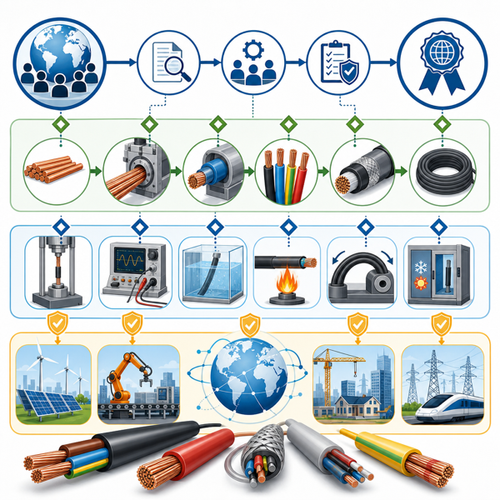
Modern electrical engineering relies on wire standards that ensure safety, reliability, and scalability. From industrial motors and transformers to electric vehicles and power grids, high-quality winding wires and robust communication protocols are essential. Today, businesses operating in global markets cannot afford inconsistency or safety lapses—adherence to international wire standards like those from the IEC and ISO is fundamental. In this comprehensive article, we’ll explore four crucial standards covering winding wires (both copper and aluminium), test methods for chemical properties, and protocols for vehicle-to-grid communication. Understanding and implementing these international standards increases productivity, reduces risk, and enables business growth by building trust, supporting regulatory compliance, and facilitating market access.
Overview / Introduction
Electrical engineering forms the backbone of modern industry, enabling the safe and effective transfer of energy and information across sectors from manufacturing and transport to renewable energy. Wires are the physical arteries of this domain, connecting circuits and carrying the very lifeblood of electrical systems.
But not all wires are created equal, and neither are the environments in which they operate. Factors like heat, chemicals, mechanical stress, and even cyber threats can undermine wire performance, causing costly downtime or safety incidents.
International standards for wires—meticulously developed by organizations such as the International Electrotechnical Commission (IEC) and the International Organization for Standardization (ISO)—address these risks. These standards provide consistent, globally recognized specifications for materials, dimensions, electrical and chemical properties, and testing protocols.
This article examines four influential standards:
- IEC 60317-0-1: General requirements for enamelled round copper winding wire
- IEC 60317-15: Polyesterimide enamelled round aluminium wire, class 180
- IEC 60851-4: Methods of test for winding wires—Chemical properties
- ISO 15118-4: Vehicle-to-grid communication interface protocol conformance
We’ll cover what each standard entails, who needs to comply, practical benefits, and implementation guidance, so businesses can harness productivity, security, and scalable growth through best practices in wire technology.
Detailed Standards Coverage
IEC 60317-0-1 - General Requirements for Enamelled Round Copper Winding Wire
Specifications for Particular Types of Winding Wires - Part 0: General Requirements - Section 1: Enamelled Round Copper Wire
What this standard covers IEC 60317-0-1 specifies the general requirements for enamelled round copper winding wires, used extensively in transformers, electric motors, generators, and a range of electromechanical equipment. This standard addresses fundamental characteristics—dimensions, electrical resistance, mechanical behaviour, thermal performance, and insulation properties—ensuring reliability and safety in demanding environments.
Key requirements and specifications
- Defines dimensions and tolerances for various wire grades
- Establishes minimum standards for electrical resistance, breakage, elongation, and insulation continuity
- Tests for heat shock, abrasion resistance, flexibility, chemical solvents, and transformer oil
- Sets criteria for temperature index (thermal endurance), solderability, dielectric strength, and mass loss
- Includes testing methods for pinholes, refrigerant resistance, and bonding performance
Who needs to comply Manufacturers and users of copper winding wires—particularly in heavy electrical machinery, electronics, power generation, and distribution—are the principal audience. Regulatory bodies, OEMs, and quality assurance professionals also reference this standard.
Practical implications Adhering to IEC 60317-0-1 assures customers and regulators of product safety, reliability under operational stress, and compatibility with global supply chains. It also simplifies procurement, as buyers can specify standard-compliant wires without bespoke testing.
Notable features
- Harmonizes with other IEC standards for winding wires
- Comprehensive coverage, replacing old standards (IEC 60182-1 and IEC 60182-2)
- Compatible with various insulation classes
Key highlights:
- Universal requirements for enamelled round copper wires
- Includes exhaustive test methods for mechanical and electrical performance
- Facilitates global trade by standardizing product specifications
Access the full standard:View IEC 60317-0-1 on iTeh Standards
IEC 60317-15 - Polyesterimide Enamelled Round Aluminium Wire, Class 180
Specifications for Particular Types of Winding Wires - Part 15: Polyesterimide Enamelled Round Aluminium Wire, Class 180
What this standard covers IEC 60317-15 specifies the requirements for enamelled round aluminium winding wires using polyesterimide insulation, classified as thermal class 180. These wires are essential in situations demanding lightweight solutions with the ability to operate at elevated temperatures (minimum temperature index of 180 °C; heat shock at 200 °C or above).
Key requirements and specifications
- Covers dimensions for two grades: Grade 1 (0.400 to 1.600 mm diameter) and Grade 2 (0.400 to 5.000 mm)
- Prescribes specific testing protocols for insulation, heat shock, abrasion resistance, and adhesion
- Introduces new requirements for visual appearance and a pinhole test for insulation integrity
- Certain legacy tests (springiness, cut-through, high temperature failure) determined as inappropriate for this specification
- Flexibility for modified polyesterimide resins, as long as fundamental chemical identity and performance are preserved
Who needs to comply Wire manufacturers, electrical machine builders, automotive/aerospace OEMs, and engineers specifying components for high-efficiency motors, coils, or transformers benefit from this standard. Aluminium wire is valued for being lighter and more cost-effective than copper.
Practical implications Compliance ensures wires will perform reliably at high temperatures with excellent electrical and mechanical properties, meeting the expectations of end-users and regulatory agencies. Robust insulation performance reduces the risk of short circuits or insulation breakdown, vital for safety and long service life.
Notable features
- Up-to-date with current industry capabilities through consolidated amendments
- Aligned with corresponding general requirements for aluminium wires (IEC 60317-0-3)
- Focuses on key operational risks (insulation pinholes, temperature resilience)
Key highlights:
- Specialized for high-temperature performance (Class 180)
- Lightweight, cost-effective alternative to copper in many applications
- Enhanced testing for insulation appearance and defects
Access the full standard:View IEC 60317-15 on iTeh Standards
IEC 60851-4 - Methods of Test for Winding Wires – Part 4: Chemical Properties
Methods of Test for Winding Wires - Part 4: Chemical Properties
What this standard covers IEC 60851-4 specifies chemical test methods for winding wires, enabling manufacturers and users to verify the performance and reliability of insulation systems. Chemical resistance is a crucial attribute for winding wires exposed to solvents, refrigerants, transformer oil, and soldering processes, directly impacting their safe operation and maintenance cycles.
Key requirements and specifications
- Test 12: Resistance to Solvents — Evaluates insulation durability after exposure
- Test 16: Resistance to Refrigerants — Assesses the wire's ability to withstand common cooling agents used in electrical equipment
- Test 17: Solderability — Determines the effectiveness of bonding to terminals or pads
- Test 20: Resistance to Transformer Oil — Checks if insulation maintains integrity after oil exposure, a common condition in transformers
- Defines precise equipment, procedures, and acceptance criteria for each test
Who needs to comply Manufacturers, testing laboratories, and quality assurance teams for winding wires—supplying industries like transformer manufacturing, electric motors, power electronics, and renewables—should follow these procedures.
Practical implications Following IEC 60851-4 fosters confidence in product performance, reduces the risk of premature failure, and supports regulatory or customer-driven quality assurance programs.
Notable features
- Integral part of the broader IEC 60851 series, harmonized with general and mechanical testing standards
- Structured to ensure compatibility across various winding wire types
- Unitized approach for evaluating insulation systems’ chemical robustness
Key highlights:
- Standardized test methods for chemical properties
- Ensures insulation reliability in real-world conditions (solvents, refrigerants, oils)
- Required for certification, market access, and international trade
Access the full standard:View IEC 60851-4 on iTeh Standards
ISO 15118-4:2018 - Road Vehicles, Vehicle-to-Grid Communication Interface, Part 4: Network and Application Protocol Conformance Test
Road Vehicles – Vehicle to Grid Communication Interface – Part 4: Network and Application Protocol Conformance Test
What this standard covers ISO 15118-4 establishes a comprehensive suite of conformance tests for verifying that electric vehicle (EV) and grid charging system components (EVCC—electric vehicle communication controller; SECC—supply equipment communication controller) comply with the network and application protocols defined in ISO 15118-2. This is critical for interoperable, secure EV charging and advanced energy management (vehicle-to-grid, V2G).
Key requirements and specifications
- Describes an Abstract Test Suite (ATS) covering both static (capability) and dynamic (behavioral) requirements
- Outlines test architecture and procedures, using TTCN-3 (Testing and Test Control Notation) for Layers 3 and above of the OSI model
- Ensures tested systems meet the observable protocol conformance required for secure, reliable V2G operations
- References additional conformance tests for data link and physical layers (in ISO 15118-5)
- Includes normative annexes for configuration, function, and protocol templates
Who needs to comply
- Automotive OEMs, electric vehicle charging equipment manufacturers, test labs, and technology integrators developing or evaluating V2G-capable systems
- Utilities, energy service companies, and infrastructure planners wanting plug-and-play interoperability for smart grid integration
Practical implications By ensuring conformance with ISO 15118-4, organizations help guarantee that EVs from diverse manufacturers can communicate with a wide variety of public and private charging systems—unlocking new business models, security, and user experiences in e-mobility.
Notable features
- Robust framework for comprehensive protocol testing at system and network layers
- Supports innovation in V2G technology (scheduled charging, load balancing, renewable integration)
- Clarifies scope: test suite detects issues, but doesn’t guarantee absolute protocol compliance or implementation correctness
Key highlights:
- Ensures secure, reliable EV-to-grid communications and user confidence
- Prerequisite for compliance in regulated or future-proofed e-mobility networks
- Supports scaling and digitalization in sustainable transportation
Access the full standard:View ISO 15118-4 on iTeh Standards
Industry Impact & Compliance
How These Standards Affect Businesses
In today’s electrical engineering landscape, international standards for wires are not just technical guidelines—they are essential for market participation, liability management, and sustainable growth. By aligning products and processes with globally accepted requirements, organizations unlock the following advantages:
- Quality Assurance: Consistent product quality supports repeatable manufacturing and superior customer satisfaction.
- Risk Mitigation: Adherence to best practices reduces likelihood of safety incidents, recalls, and legal issues.
- Regulatory Compliance: Enables access to global markets, meeting the requirements of end-users and government agencies.
- Interoperability: Ensures that products integrate seamlessly in complex, multi-vendor environments (e.g., in smart grids, EV charging ecosystems).
- Cost Reduction: Minimizes warranty claims and non-conformance costs through robust design and validated processes.
Benefits of Adopting Wire Standards
- Increased Productivity: Standard-compliant wires and tests reduce time spent on rework and troubleshooting.
- Enhanced Security: Strict requirements for insulation and communication protocols prevent both electrical hazards and cyber vulnerabilities, particularly in digitalizing sectors like transport.
- Scalability: Using standardized products allows businesses to ramp up production quickly and efficiently as demand grows, knowing components will perform predictably in any compliant system.
- Market Reputation and Trust: Demonstrates due diligence and technical leadership, contributing to brand equity and customer loyalty.
Risks of Non-Compliance
- Market Exclusion: Non-compliant products may be banned or face rejection by regulatory bodies and major clients.
- Increased Liability: Lapses can lead to costly failures, accidents, or data breaches.
- Operational Inefficiency: Custom, non-standard wires and tests necessitate extra QA steps, increase procurement complexity, and raise costs.
Implementation Guidance
Common Implementation Approaches
- Gap Analysis: Compare existing products and processes against the target standards to identify areas needing upgrades.
- Supplier Collaboration: Work closely with suppliers to source wire and insulation materials that are certified or tested to relevant IEC/ISO standards.
- Staff Training: Ensure that engineering and quality teams are familiar with the standards’ requirements and corresponding test methods.
- Document Control: Maintain records of compliance, including certificates, test reports, and process documentation, for both internal QA and market audits.
- Continuous Monitoring: Stay updated on revisions or new standards that may affect products or industry practices.
Best Practices for Adopting Wire Standards
- Adopt a standards-first approach during R&D and product design phases
- Integrate compliance checks into the regular quality management systems (QMS)
- Participate in industry groups or technical committees to stay ahead of regulatory and technological trends
- Use accredited laboratories for compliance testing
- Educate supply chain partners on the importance and requirements of wire standards
Resources for Organizations
- iTeh Standards platform: Access full text, amendments, and implementation guides for each standard
- IEC and ISO online catalogues for certified suppliers, testing labs, and technical FAQs
- Industry associations, webinars, and technical workshops for ongoing education
Conclusion / Next Steps
Wire standards are the unsung heroes of modern electrical engineering—quietly enabling safe, efficient, and scalable progress in industries that drive our world. As technology advances, these international requirements only grow in importance, underpinning everything from smart grids to electric vehicles.
For organizations aiming to boost productivity, security, and growth, adopting IEC and ISO standards for wires is not an option—it’s a necessity. These standards open doors to global markets, simplify compliance, and provide a robust foundation for innovation.
Key takeaways:
- Standards like IEC 60317-0-1, IEC 60317-15, IEC 60851-4, and ISO 15118-4 define the highest-quality benchmarks for wires and related communication protocols
- Compliance enhances product safety, reliability, and market acceptance while reducing operational risks
- Implementation is best achieved through structured gap analysis, training, supplier engagement, and continuous monitoring
Ready to future-proof your business? Explore the full texts of these standards and more on iTeh Standards (https://standards.iteh.ai), and ensure your products and processes set industry benchmarks for quality and innovation.
Categories
- Latest News
- New Arrivals
- Generalities
- Services and Management
- Natural Sciences
- Health Care
- Environment
- Metrology and Measurement
- Testing
- Mechanical Systems
- Fluid Systems
- Manufacturing
- Energy and Heat
- Electrical Engineering
- Electronics
- Telecommunications
- Information Technology
- Image Technology
- Precision Mechanics
- Road Vehicles
- Railway Engineering
- Shipbuilding
- Aircraft and Space
- Materials Handling
- Packaging
- Textile and Leather
- Clothing
- Agriculture
- Food technology
- Chemical Technology
- Mining and Minerals
- Petroleum
- Metallurgy
- Wood technology
- Glass and Ceramics
- Rubber and Plastics
- Paper Technology
- Paint Industries
- Construction
- Civil Engineering
- Military Engineering
- Entertainment