


Boosting Energy Efficiency and Safety: Key Standards for Modern Energy and Heat Transfer Engineering
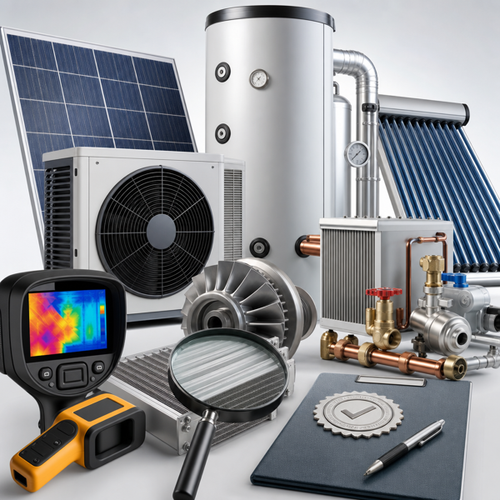
Efficient, secure, and scalable solutions in the energy sector depend on strict adherence to internationally recognized standards. As the global demand for reliable energy storage, flexible grid operation, and smarter energy use increases, businesses and power networks can't afford to overlook the pivotal role that well-crafted standards play. This article explores three of the most influential modern standards in energy and heat transfer engineering, providing insights into their purpose, requirements, and real-world benefits.
Overview / Introduction
Energy and heat transfer engineering lies at the heart of today’s renewable transformation and digital grid future. The decentralized nature of power generation, the surge in distributed energy resources, and a growing demand for electric vehicles and smart appliances make this sector especially dynamic. With this growth comes complexity and risk: systems must be not just efficient, but also inherently safe, highly interoperable, and ready for tomorrow's grid challenges.
Standards bring order and trust to this ever-evolving landscape. By adopting international best practices in electrical energy storage safety, grid islanding management, and demand-side resource evaluation, organizations ensure safer operations, maximize asset value, and prove compliance to regulators, investors, and customers alike. In this article, we will:
- Break down the scope and practical impact of three landmark IEC standards.
- Make their content accessible for energy professionals and newcomers alike.
- Offer actionable guidance for successful implementation.
- Explain how these standards contribute to business productivity, security, and scalability.
Detailed Standards Coverage
IEC 62933-5-4:2026 - Safety Test Methods for Grid-Integrated Lithium-Ion Battery Energy Storage Systems
Electrical energy storage (ESS) systems - Part 5-4: Safety test methods and procedures for grid integrated EES systems - Lithium ion battery-based systems
IEC 62933-5-4:2026 establishes rigorous safety test methods for grid-connected energy storage systems, specifically those utilizing lithium-ion batteries. As the foundation for modern Battery Energy Storage Systems (BESS), lithium-ion technology offers high energy density but presents unique safety challenges—thermal runaway, fire risk, and the potential for hazardous gas emissions.
This standard, developed by the IEC Technical Committee 120, was forged in response to real-world incidents involving BESS globally. It provides comprehensive test guidelines that cover electrical hazards, explosion and fire risks, and potential failures in control systems. It draws heavily on its companion standards (IEC 62933-5-1 and IEC 62933-5-2), establishing a robust test framework for the safe installation and operation of lithium-ion based BESS.
What does the standard cover?
- Defines essential, mandatory safety test protocols for lithium-ion BESS installed in grid-connected scenarios.
- Lists methodologies for electrical hazard testing—such as short-circuit, overcharge, high-current discharge, and earth fault protection.
- Specifies explosion hazard tests: flammable gas detection, gas analysis, and effective system ventilation requirements.
- Establishes electromagnetic compatibility (EMC) criteria, including immunity against electric, magnetic, and electromagnetic fields.
- Mandates control system testing and fault simulation (for auxiliary and communication sub-systems).
Who needs to comply?
- BESS system integrators and manufacturers.
- Power conversion system (PCS) designers.
- Energy project developers (utilities, commercial, or microgrid scale).
- Installers, commissioning agents, and maintenance teams working with lithium-ion grid storage.
Key requirements and specifications:
- Testing on representative BESS configurations to validate scalability and critical component safety.
- Installation of protective devices (circuit breakers, fuses) matched to system parameters before conducting short-circuit and high-current tests.
- Real lab instrumentation is required for electrical, gas, ventilation, and EMC testing.
- Communication and control subsystems must pass robust fault simulation tests.
- Detailed guidance for fire and explosion event simulation, with both physical test and validated simulation options offered.
- System-level validation, not just component-level, to ensure end-to-end safety integrity.
Practical implications for implementation:
- Adoption ensures not only regulatory compliance but a greatly reduced risk of fire or catastrophic failure from BESS installs.
- Manufacturers and integrators can confidently claim their systems are validated against the latest global safety benchmarks.
- Operators are empowered with clearly defined acceptance criteria and actionable test procedures—making for standardized, repeatable commissioning processes.
Key highlights:
- Reinforces lithium-ion BESS as safe, scalable components of the future grid.
- Based on actual field incidents, delivering real-world relevance.
- Enhances trust and confidence for utilities, insurers, and regulators.
Access the full standard:View IEC 62933-5-4:2026 on iTeh Standards
IEC 63552:2026 - Switching Devices for Grid Islanding (SDFI)
Switching device for islanding (SDFI)
IEC 63552:2026 equips energy professionals with the framework for safe, flexible operation of prosumer electrical installations (PEIs)—those that both consume and produce power. This is increasingly relevant as homes and businesses integrate energy storage and local generation (e.g. solar or wind). The standard defines the design, performance, and testing of Switching Devices for Islanding (SDFI), which allow a premise to disconnect from the grid (island mode) and operate independently, then safely reconnect when needed.
What does the standard cover?
- Detailed requirements for SDFI equipment, including construction, installation, performance, and endurance.
- Sets forth condition-based operation criteria for islanding and grid reconnection, including reclosing sequences and synchronization.
- Specifies necessary product markings, information, and documentation.
- Includes type tests and operational tests that verify safe switching, interlocking, and compatibility.
- Covers EMC (electromagnetic compatibility) for residential and commercial environments.
Who needs to comply?
- Device and system manufacturers supplying SDFI units.
- Installers and integrators specializing in low voltage electrical installations using local energy generation or storage.
- Residential, commercial, and industrial facilities seeking islanding capability for backup, resilience, or grid support.
- Electrical designers, engineers, and energy managers assessing safe distributed generation.
Key requirements and specifications:
- Robust mechanisms for switching, interlocking, and control—ensuring disconnect and reconnection operations are safe and reliable.
- Devices are rated for up to 440V AC, in environments with short circuit currents of up to 25,000A.
- Endurance tested for repeated switching cycles, with verification of manual and automatic reclosing features.
- Requires clear markings and instructions for safe installation and use.
- Mandatory electromagnetic immunity and emission tests for trouble-free integration into smart homes or advanced industrial sites.
Practical implications for implementation:
- Supports energy resilience by enabling buildings to operate independently (islanded) during outages or grid events.
- Critical for microgrids, energy communities, and smart building projects aiming for maximum grid flexibility.
- Ensures seamless transition between connected and islanded operation, without risk of unsafe backfeed or disconnection errors.
Key highlights:
- Essential for enabling safe, automated islanding and reconnection to the grid.
- Built to handle the growing complexity of modern PEIs with distributed energy resources.
- Provides installers and end users with tested, dependable switching solutions.
Access the full standard:View IEC 63552:2026 on iTeh Standards
IEC TS 63427:2026 - Guidelines for the Adjustment Potential Evaluation of Demand Side Resources
Guidelines for the adjustment potential evaluation of demand side resources
IEC TS 63427:2026 addresses the grid’s growing need for flexible load management and smarter resource allocation. As demand-side resources (DSR)—from industrial loads to home batteries and microgrids—become integral grid assets, understanding and measuring their "adjustment potential" is vital for grid operators, aggregators, and energy service providers. This technical specification lays out concrete methods to evaluate how much a DSR can adjust its output (up or down), when, and how reliably, all in a standardized, reproducible way.
What does the standard cover?
- Defines DSR types: dispatchable and controllable loads, storage, distributed energy resources, grid-tied microgrids.
- Details key characteristics such as availability window, response time, service duration, service capacity, adjustment rate, accuracy, reverse load rate, and utilization.
- Provides detailed system and application requirements for DSR participation in peak-load shifting, frequency regulation, voltage support, and congestion management.
- Sets data acquisition and evaluation processes for quantifying DSR adjustment potential.
- Offers evaluation indices tailored to the needs of system operators, aggregators, and DSR units.
Who needs to comply?
- Utilities and distribution system operators (DSO).
- Aggregators and virtual power plant (VPP) operators.
- Owners and managers of commercial, industrial, and residential sites with DSR assets.
- Solution providers developing or assessing demand response/generation strategies.
Key requirements and specifications:
- Establishment of standardized evaluation indices for DSR: service capacity, response time, reliability, and accuracy.
- Mandates process for preparing, acquiring, and analyzing DSR data.
- Application-driven requirements for DSR: e.g. what core capabilities a resource must have to deliver frequency regulation or peak load shifting.
- Focuses solely on physical and technical performance (not market mechanisms or end-user behavior).
Practical implications for implementation:
- DSR assets can now be reliably benchmarked and compared for grid support value.
- Facilitates wider DSR adoption and new market participation by validating performance to a recognized specification.
- Empowers grid operators to map flexibility potential, support distributed generation, and manage congestion or outages more efficiently.
Key highlights:
- Anchors the future of smart grid and demand response programs in consistent, measurable practice.
- Paves the way for widespread aggregation of distributed energy resources.
- Offers a clear, comparable method to unlock the full value of ‘behind-the-meter’ assets.
Access the full standard:View IEC TS 63427:2026 on iTeh Standards
Industry Impact & Compliance
The adoption of these three standards transforms how organizations approach safety, efficiency, and value extraction across the energy value chain.
Impact on Businesses:
- Productivity and scaling: Standards enable streamlined integration of new energy storage, flexible loads, and distributed resources, speeding time-to-market and supporting advanced digital grids and microgrids.
- Security: From physical fire and explosion safety in BESS to reliable, error-free switching and robust demand side response, these standards reduce operational risk and liability.
- Regulatory Compliance: Adherence is a demonstration to stakeholders—regulators, investors, customers—that the organization is meeting and exceeding minimum safety and performance benchmarks.
- Market Expansion: Certified products and processes foster trust, opening up markets and inviting easier partnerships with other standards-compliant entities.
- Future-Proofing: Standards aren’t static; they evolve to reflect technological shifts. Following them ensures future adaptability to new technology and market requirements.
Risks of non-compliance include:
- Potential catastrophic failures (fires, electric shocks, outages).
- Legal and regulatory penalties.
- Loss of insurance cover, environmental incidents, or reputational damage.
- Increased downtime and lower market acceptance for products/services.
Implementation Guidance
Adopting energy and heat transfer engineering standards may seem daunting, but with a structured approach it becomes manageable and value-rich. Here’s how to get started:
1. Gap Assessment and Planning:
- Review the full standard (or consult summaries) and assess how current systems measure up against requirements.
- Identify technical gaps, necessary upgrades, and areas where current practices already meet or exceed the standard.
2. Training and Awareness:
- Train engineers, installation crews, and operations staff on how the new requirements impact their work.
- Use e-learning, workshops, or guided documentation sessions for both new and experienced personnel.
3. System Design and Procurement:
- Source components or solutions certified or declared compliant to the selected standards.
- Where custom engineering is involved, ensure that design specifications explicitly reference the relevant standard clauses.
4. Testing, Commissioning, and Documentation:
- Use standardized test procedures to validate system safety, switching operations, and DSR capabilities as required.
- Maintain thorough records for audits, regulatory checks, or incident investigations.
5. Continuous Improvement and Audits:
- Schedule periodic reviews to incorporate updates in standards as editions are revised or replaced.
- Engage with standards organizations and industry consortia to stay current and leverage peer best practices.
Resources for organizations:
- Access full official standards via iTeh Standards
- Leverage manufacturer training, IEC and national committee resources
- Consult specialist integrators if deploying advanced storage, grid protection, or DSR analytics
Conclusion / Next Steps
Modern energy and heat transfer engineering is defined by its complexity, opportunity, and risk. The three IEC standards explored—IEC 62933-5-4:2026, IEC 63552:2026, and IEC TS 63427:2026—form cornerstone guidance for safe, secure, and scalable operations in batteries, flexible grid management, and energy resource optimization.
Key takeaways:
- These standards offer a common language and framework for safe design, operation, testing, and evaluation.
- Compliance isn’t just about regulation—it’s the gateway to productivity, innovation, and trust.
- Businesses should proactively review their current systems, source certified products, and invest in ongoing standards education.
Next Steps: Explore each standard via the iTeh Standards platform, connect with your engineering and compliance teams, and advance your organization’s journey toward smarter, safer, and more sustainable energy systems. Staying ahead with standards isn’t just a box-ticking exercise—it’s an investment in the future.
https://standards.iteh.ai/catalog/standards/iec/d1d00925-9f26-4f41-9a9b-e47f9759d823/iec-62933-5-4-2026https://standards.iteh.ai/catalog/standards/iec/dd819c17-3de0-476d-b296-530a6d635730/iec-63552-2026https://standards.iteh.ai/catalog/standards/iec/b53cf88f-c54a-42c1-acad-14bae3e655c5/iec-ts-63427-2026
Categories
- Latest News
- New Arrivals
- Generalities
- Services and Management
- Natural Sciences
- Health Care
- Environment
- Metrology and Measurement
- Testing
- Mechanical Systems
- Fluid Systems
- Manufacturing
- Energy and Heat
- Electrical Engineering
- Electronics
- Telecommunications
- Information Technology
- Image Technology
- Precision Mechanics
- Road Vehicles
- Railway Engineering
- Shipbuilding
- Aircraft and Space
- Materials Handling
- Packaging
- Textile and Leather
- Clothing
- Agriculture
- Food technology
- Chemical Technology
- Mining and Minerals
- Petroleum
- Metallurgy
- Wood technology
- Glass and Ceramics
- Rubber and Plastics
- Paper Technology
- Paint Industries
- Construction
- Civil Engineering
- Military Engineering
- Entertainment