


June 2026: New Standards for Energy and Heat Transfer Engineering
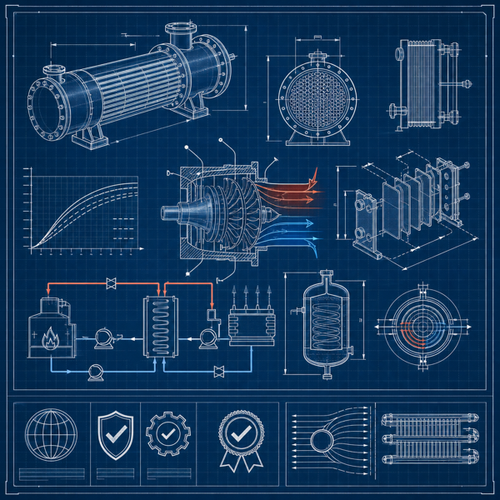
June 2026: New Standards for Energy and Heat Transfer Engineering
The month of June 2026 marks a significant step forward in the field of Energy and Heat Transfer Engineering, bringing the publication of five crucial international standards. These updates range from advancements in nuclear power plant safety systems to enhanced test methods for solid biofuels. For engineers, quality managers, and compliance specialists, understanding these new requirements is vital to ensuring safety, regulatory alignment, and operational excellence in a rapidly evolving energy sector.
Overview
Energy and Heat Transfer Engineering is at the core of modern infrastructure, impacting both renewable and conventional energy systems, safety protocols, and environmental outcomes. International standards in this domain drive global consistency, safety, and quality by defining best practices, precise test methods, and lifecycle management requirements. This article delivers a detailed breakdown of the five newly issued standards for June 2026, providing the insights professionals need for compliance, procurement, and implementation.
You’ll discover:
- The scope and importance of each new standard
- Key requirements and industry impacts
- Compliance and certification considerations
- Technical best practices for implementation
Detailed Standards Coverage
IEC 61513:2026 – General Requirements for Nuclear Power Plant I&C Systems
Nuclear power plants – Instrumentation and control important to safety – General requirements for systems
Scope and Coverage
IEC 61513:2026 is the cornerstone standard for instrumentation and control (I&C) systems important to safety in nuclear power plants (NPPs). It ensures that both new constructions and modernized/upgraded plants meet rigorous safety goals through comprehensive system lifecycle management. The document introduces a holistic "safety lifecycle" for overall I&C architecture and individual system components, aligning plant safety objectives with detailed technical requirements.
Key requirements address:
- The derivation of I&C requirements directly from plant safety design bases
- Systematic review of functionality, performance, independence, and categorization
- Design, documentation, operation, commissioning, and maintenance plans
- Lifecycle planning including cybersecurity and configuration management
Who Should Comply
- Nuclear facility operators
- Engineering and design firms
- Safety and quality managers responsible for regulatory compliance
Practical Implications Implementing IEC 61513:2026 ensures international consistency across safety-critical I&C systems, directly reducing the risk of unexplained failures and regulatory penalties. Compliance signals a commitment to the highest levels of safety and reliability, simplifying licensing, inspection, and international collaboration.
What’s New in 2026?
- Alignment with updated IAEA safety documents (SSR-2/1, SSG-39)
- Revised requirements, terminology, and definitions
- Integration of recent standards including IEC 62566, 61226, and others
- Incorporation of new technical requirements for I&C systems (Annex A)
Key highlights:
- Comprehensive I&C safety lifecycle definition
- Robust integration of recent IAEA and IEC standards
- Focused guidance for both new builds and plant retrofits
Access the full standard:View IEC 61513:2026 on iTeh Standards
EN ISO 16994:2026 – Sulfur and Chlorine Testing in Biofuels
Solid biofuels and pyrogenic biocarbon – Determination of sulfur and chlorine content (ISO 16994:2026)
Scope and Coverage
EN ISO 16994:2026 specifies methods for measuring sulfur and chlorine content in solid biofuels and pyrogenic biocarbon—crucial parameters for assessing fuel quality, environmental impact, and equipment corrosion risks. The standard provides two validated decomposition and analysis methods and allows for the use of automatic equipment subject to strict validation.
Key requirements include:
- Selection of decomposition technique: combustion in closed vessel or acid digestion
- Ion chromatography and other detection methods for quantifying sulfur, chlorine, fluorine, and bromine
- Calibration and validation of automatic analytical equipment
- Guidelines for sample preparation, testing, and reporting
Who Should Comply
- Biofuel producers and traders
- Analytical laboratories and quality control teams
- Energy plant operators using solid biofuels
Practical Implications Precise determination of sulfur and chlorine content is essential for compliance with emission standards, optimized combustion efficiency, and minimizing corrosion in energy systems. Adoption of EN ISO 16994:2026 enables benchmarking of solid and pyrogenic biofuel quality at an international level.
What’s New in 2026?
- Inclusion of fluorine and bromine determination capabilities
- Updated references and enhanced detection methods
- Removal of outdated ICP analysis for chlorine
Key highlights:
- Supports validation of automatic analysis equipment
- Harmonizes analytical procedures for fuel testing across the EU and globally
- Tightens environmental and safety compliance
Access the full standard:View EN ISO 16994:2026 on iTeh Standards
ISO 16994:2026 – International Determination of Sulfur and Chlorine Content
Solid biofuels and pyrogenic biocarbon — Determination of sulfur and chlorine content
Scope and Coverage
ISO 16994:2026 serves as the global counterpart to EN ISO 16994:2026, detailing standardized methods for analyzing sulfur and chlorine in solid biofuels and pyrogenic biocarbon. It includes guidance on determining fluorine and bromine for selected sample types, establishing consistency across international biofuel markets.
Key requirements:
- Two-step analyte determination (sample decomposition and chromatographic/analytical quantification)
- Acceptance of validated automatic methods and equipment
- Calibration using certified reference materials
- Comprehensive reporting procedures
Who Should Comply
- International biofuel producers and distributors
- Laboratories engaged in quality assurance and regulatory testing
- Power plants and industrial consumers of solid biofuels
Practical Implications Adoption facilitates international trade, compliance with environmental legislation, and reliable lifecycle assessments. It enables more efficient procurement and acceptance of biofuels and enhances environmental performance by controlling emissions.
What’s New in 2026?
- Added analytical scope for fluorine and bromine
- Enhanced detail on detection protocols and validation of alternative techniques
- Removal of acid digestion/ICP methodology for chlorine
Key highlights:
- Direct support for international supply chain QA/QC processes
- Streamlined and modernized laboratory workflows
- Facilitated environmental reporting and compliance
Access the full standard:View ISO 16994:2026 on iTeh Standards
EN IEC 62397:2026 – Safety Instrumentation: Resistance Temperature Detectors
Nuclear power plants – Instrumentation and control important to safety – Resistance temperature detectors
Scope and Coverage
EN IEC 62397:2026 defines design, material, manufacturing, and performance requirements for resistance temperature detectors (RTDs) deployed in nuclear power plant I&C systems important to safety. These RTDs ensure reliable temperature monitoring under both normal and accident scenarios.
Requirements span:
- RTD type selection (direct-immersed, thermowell-mounted)
- Materials, reliability, manufacturing quality, and qualification protocols
- Detailed calibration, performance, and validation testing
- Documentation and reporting for installation and maintenance
Who Should Comply
- Nuclear utilities and power plant operators
- Instrumentation and system integrators
- Quality assurance and engineering managers
Practical Implications High-integrity RTDs are essential for accurate monitoring and protection of reactor systems. Compliance minimizes the risk of catastrophic failure by ensuring sensor reliability and integrity throughout operational and accident conditions. The standard’s rigorous test protocols provide a basis for effective lifecycle management and regulatory inspection.
What’s New in 2026?
- Incorporates technical upgrades from the previous edition (2007)
- Harmonized safety and performance requirements
- Expanded and clarified test, calibration, and documentation practices
Key highlights:
- Comprehensive guidance on RTD qualification, calibration, and installation
- Assurance of RTD performance under environmental and accident extremes
- Enhanced traceability and lifecycle management
Access the full standard:View EN IEC 62397:2026 on iTeh Standards
EN IEC 62705:2026 – Radiation Monitoring Systems for Nuclear Facilities
Nuclear facilities – Instrumentation and control important to safety – Radiation monitoring systems (RMS): Characteristics and lifecycle
Scope and Coverage
EN IEC 62705:2026 specifies lifecycle management, design, qualification, and calibration requirements for radiation monitoring systems (RMS) in nuclear facilities. RMS safeguards plant personnel, the environment, and critical equipment by providing timely detection and assessment of radiological conditions during all operational and accident scenarios.
Core requirements include:
- RMS system categorization and safety classification
- Criteria for plant-specific variable identification
- Coverage of all forms of radiological monitoring: area, on-line, in-line, and centralized systems
- Environmental and seismic qualification, EMC, and calibration protocols
Who Should Comply
- Nuclear facility operators and regulatory authorities
- Engineering, procurement, and construction (EPC) teams
- Safety case authors and auditors
Practical Implications An effective, dependable RMS is key for license approval, incident preparedness, and ongoing compliance. Following EN IEC 62705:2026 ensures that monitoring systems are robust, accurate, and maintainable throughout the facility lifecycle.
What’s New in 2026?
- Updated accident and scenario categorization for monitoring
- Clarified linkages with the latest international standards and assessment methodologies
- Enhanced qualification, validation, and traceability of measurement data
Key highlights:
- Lifecycle-oriented RMS management across application scenarios
- Synced with the most advanced standards for nuclear I&C and safety
- Simplified compliance with evolving regulatory demands
Access the full standard:View EN IEC 62705:2026 on iTeh Standards
Industry Impact & Compliance
How These Standards Affect Businesses
Adoption of these new standards directly affects engineering workflows, procurement policies, and regulatory strategies for organizations involved in energy and heat transfer engineering—especially those operating in the nuclear, biomass, and renewable energy sectors.
- Stricter qualification: More rigorous specification and validation procedures mean organizations need to update testing, calibration, and documentation workflows.
- International consistency: Global operations will benefit from clearer, harmonized requirements, easing cross-border trade and compliance.
Compliance Considerations
- Review and update company procedures to map onto new standard requirements
- Implement new calibration, testing, and reporting protocols for instrumentation and RMS
- Train personnel on safety lifecycle and process documentation
- Determine transition periods aligned with your jurisdiction and regulatory authorities
Benefits
- Enhanced safety and reliability of critical systems
- Lower risk of audit findings, non-conformities, or regulatory penalties
- More efficient product and process certification
- Improved market access for certified equipment and fuels
Risks of Non-Compliance
- Regulatory delays or shutdowns
- Increased exposure to safety and environmental incidents
- Loss of competitive advantage in international tenders
Technical Insights
Common Technical Requirements
- Lifecycle management (from design through decommissioning)
- Validation of analytical/test methods, particularly for automated and alternative techniques
- Emphasis on the use of certified reference materials and rigorous calibration
- Detailed, auditable documentation for traceability
Implementation Best Practices
- Gap analysis: Compare current systems and practices vs. new standard requirements
- Stakeholder training: Ensure technical teams understand new protocols
- Equipment validation: Re-qualify or calibrate analytical equipment and sensors
- Documentation: Adopt new templates for lifecycle planning, testing, and certification
- Audit readiness: Maintain up-to-date records and address any interim deviations
Testing and Certification Considerations
- Engage accredited laboratories and certification bodies for system and fuel sample testing
- Participate in industry round-robin proficiency testing for analytical techniques
- Stay current with new reference materials and regulatory guidance documents
Conclusion / Next Steps
June 2026 sets a new benchmark for safety, performance, and environmental stewardship in Energy and Heat Transfer Engineering. These standards—from nuclear I&C architecture to biofuel analysis—represent not just regulatory requirements but strategic tools for risk management and operational excellence.
What should you do next?
- Conduct internal training and standards reviews
- Access and study the full standards using the links provided
- Start updating internal processes and documentation
- Engage with industry groups and regulatory authorities to plan a smooth transition
Stay ahead—explore all the latest international standards on iTeh Standards and ensure your organization leads in quality, safety, and innovation.
Categories
- Latest News
- New Arrivals
- Generalities
- Services and Management
- Natural Sciences
- Health Care
- Environment
- Metrology and Measurement
- Testing
- Mechanical Systems
- Fluid Systems
- Manufacturing
- Energy and Heat
- Electrical Engineering
- Electronics
- Telecommunications
- Information Technology
- Image Technology
- Precision Mechanics
- Road Vehicles
- Railway Engineering
- Shipbuilding
- Aircraft and Space
- Materials Handling
- Packaging
- Textile and Leather
- Clothing
- Agriculture
- Food technology
- Chemical Technology
- Mining and Minerals
- Petroleum
- Metallurgy
- Wood technology
- Glass and Ceramics
- Rubber and Plastics
- Paper Technology
- Paint Industries
- Construction
- Civil Engineering
- Military Engineering
- Entertainment