


Solar Energy Engineering Standards: Boosting Performance, Safety, and Scale
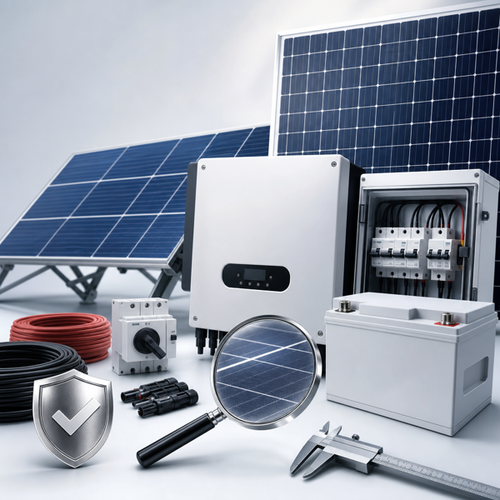
Solar energy engineering is at the heart of the renewable revolution, offering sustainable, efficient, and economically viable solutions for modern power needs. As the drive toward decarbonization accelerates, businesses and organizations are increasingly investing in solar technologies, not only to reduce their environmental impact but also to enhance competitiveness and ensure regulatory compliance. However, the promising potential of solar power hinges on one critical factor: strict adherence to international standards, which guarantee safety, quality, and consistency in solar installations around the world. This article explores four influential standards that underpin solar engineering today, making sense of complex requirements for all stakeholders.
Overview / Introduction
The transition to clean and renewable energy sources is creating enormous opportunities—and new challenges—for industry, utilities, and end-users. Solar energy engineering involves every step of the photovoltaic (PV) and solar thermal value chain, from the design and specification of solar modules to system implementation, performance measurement, and ongoing operation. To ensure reliability, safety, and optimal efficiency, international standards set out unambiguous requirements for manufacturers, system designers, installers, and operators.
Standards are not just technical checklists—they are business enablers. They foster innovation, support scalable growth, reduce risks, and facilitate international trade. Especially in solar energy, adhering to global specifications enables businesses to:
- Mitigate technical and financial risks
- Develop secure, robust, and high-performing installations
- Streamline compliance and certification
- Increase productivity and system longevity
In this article, you’ll find clear, digestible guidance on four key international standards for solar energy engineering:
- IEC 61215-1-2:2021 – Special requirements for thin-film CdTe based PV modules
- IEC TS 62257-4:2005 – System selection and design for small renewable and hybrid systems
- IEC TS 62862-1-3:2017 – Data format for meteorological data in solar thermal electric plants
- IEC TS 62916:2017 – ESD susceptibility testing for PV module bypass diodes
Let’s dive into what each standard entails, who needs to comply, and how implementation can place your organization at the forefront of the solar energy sector.
Detailed Standards Coverage
IEC 61215-1-2:2021 – Special Requirements for Thin-Film CdTe PV Modules
Terrestrial Photovoltaic (PV) Modules – Design Qualification and Type Approval – Part 1-2: Special Requirements for Testing of Thin-Film Cadmium Telluride (CdTe) Based Photovoltaic (PV) Modules
Scope and Purpose:
IEC 61215-1-2:2021 is a cornerstone for qualifying thin-film CdTe photovoltaic modules intended for long-term outdoor operation. It supplements the general PV module requirements of IEC 61215-1:2021 and IEC 61215-2:2021 by addressing unique performance and durability aspects specific to cadmium telluride (CdTe) technology. Designed by IEC Technical Committee 82, this standard ensures that CdTe PV modules achieve robust performance and reliability under diverse environmental conditions.
Key Requirements and Specifications:
- Test sequences covering electrical and thermal behavior
- Modifications to general PV qualification procedures for CdTe technology
- Accelerated stress testing to simulate prolonged environmental exposure
- Pass/fail criteria specific to single- and multi-junction cell modules, with defined thresholds for reproducibility and measurement uncertainty
Notable Technical Updates in the 2021 Edition:
- Inclusion of a cyclic (dynamic) mechanical load test (MQT 20) for better simulation of real-world stress
- Addition of the potential-induced degradation (PID) test (MQT 21) to detect degradation under high-voltage stress
- Introduction of a bending test (MQT 22) for flexible CdTe modules
Who Needs to Comply:
- CdTe PV module manufacturers
- Testing laboratories
- Solar project developers and engineering, procurement, and construction (EPC) companies deploying CdTe technology
Practical Implications and Features:
- Enables consistent, reproducible assessment of CdTe PV module durability and performance
- Supports product warranties with documented proof of quality
- Required for international market access and product certifications
Key highlights:
- Tailored for thin-film CdTe photovoltaic modules in open-air environments
- Mandates specialized mechanical, electrical, and environmental tests
- Essential for anyone specifying, producing, or qualifying CdTe-based modules
Access the full standard:View IEC 61215-1-2:2021 on iTeh Standards
IEC TS 62257-4:2005 – System Selection and Design for Small Renewable and Hybrid Systems
Recommendations for Small Renewable Energy and Hybrid Systems for Rural Electrification – Part 4: System Selection and Design
Scope and Purpose:
IEC TS 62257-4:2005 provides comprehensive guidelines for designing and selecting renewable and hybrid energy systems—mainly PV, wind, and small hydro—for rural or remote electrification. These recommendations are essential for ensuring that off-grid and mini-grid solutions meet user needs efficiently while operating safely and reliably across their expected lifespans.
Key Requirements and Specifications:
- Functional requirements for energy production and distribution subsystems, independent of the technology type
- Methodology for translating user energy needs into system design criteria
- Guidelines on energy management rules and demand-side management
- Criteria for equipment sizing and proposal evaluation
- Data acquisition requirements for effective system management and maintenance
Who Needs to Comply:
- Rural electrification project developers
- EPC contractors for off-grid systems
- NGOs and governments involved in development programs
- Manufacturers of small-scale PV and hybrid system components
Practical Implications and Features:
- Supports the implementation of sustainable, cost-effective rural electrification projects
- Encourages the use of renewable energy in meeting the needs of underserved areas
- Provides a foundation for integrating different energy technologies (hybrid systems) into cohesive solutions
- Generates documentation for performance guarantees, site constraints, and equipment suitability
Key highlights:
- Facilitates the selection and sizing of small-scale renewable/hybrid energy systems
- Promotes energy management best practices, improving overall system resilience
- Ensures systematic data collection for ongoing monitoring and optimization
Access the full standard:View IEC TS 62257-4:2005 on iTeh Standards
IEC TS 62862-1-3:2017 – Data Format for Meteorological Data in Solar Thermal Electric Plants
Solar Thermal Electric Plants – Part 1-3: General – Data Format for Meteorological Data Sets
Scope and Purpose:
Meteorological data is critical to the performance prediction and operational management of solar thermal electric plants. IEC TS 62862-1-3:2017 standardizes the data format for meteorological datasets, reducing errors and barriers in data exchange and ensuring clarity between equipment, models, and stakeholders.
Key Requirements and Specifications:
- Defines a flexible, concise, and universally interpretable ASCII file format for meteorological data
- Accommodates measured, modelled, synthetic, and satellite-derived datasets
- Mandates inclusion of metadata such as location (latitude, longitude, elevation), time-stamps, data source, quality control measures, and character set
- Specifies gap treatment, variable naming conventions, and header structure for interoperability
Who Needs to Comply:
- Operators and developers of solar thermal power plants
- Weather data providers, meteorological agencies, and modelers
- Software developers creating energy prediction, yield assessment, or monitoring tools for solar plants
Practical Implications and Features:
- Facilitates seamless integration of weather data into performance calculations and plant operation software
- Reduces the risk of misunderstandings due to ambiguous or legacy data formats
- Key enabler for international collaboration and the scalability of plant designs across regions
Key highlights:
- Provides a standardized, flexible meteorological data exchange format
- Ensures data integrity, reliability, and ease of analysis for solar plant performance
- Supports both historical and real-time data for continuous optimization
Access the full standard:View IEC TS 62862-1-3:2017 on iTeh Standards
IEC TS 62916:2017 – Photovoltaic Module Bypass Diode ESD Susceptibility Testing
Photovoltaic Modules – Bypass Diode Electrostatic Discharge Susceptibility Testing
Scope and Purpose:
Bypass diodes are crucial in protecting individual cells within a PV module from damage in case of partial shading or faults. IEC TS 62916:2017 prescribes a common, reproducible methodology for electrostatic discharge (ESD) susceptibility testing of discrete component bypass diodes. It helps manufacturers assess the diode’s ability to survive realistic ESD events encountered during manufacturing, transport, or installation.
Key Requirements and Specifications:
- Describes the test setup and procedure for applying progressive ESD stress to bypass diodes
- Specifies the use of the two-parameter Weibull distribution for data analysis, enabling statistical modeling of failure rates
- Recommends data analysis methods, including median rank estimation and least-squares regression
- Gives guidelines for reporting and qualifying results, supporting quality assurance and improvement
Who Needs to Comply:
- PV module manufacturers and quality control laboratories
- Component suppliers and procurement specialists
- Installers and EPC companies handling large-scale or critical solar projects
Practical Implications and Features:
- Supports the reduction of early-life failures due to ESD
- Aids in qualifying new product types and quality-controlling incoming components
- Provides input for determining the need for further ESD controls or improvements in manufacturing environments
Key highlights:
- Ensures safe, reliable operation of PV modules subjected to ESD during handling
- Provides a statistical foundation for robustness in purchasing and design decisions
- Essential for compliance in safety-critical or high-reliability PV installations
Access the full standard:View IEC TS 62916:2017 on iTeh Standards
Industry Impact & Compliance
International standards have become non-negotiable for any business wanting to survive and thrive in the fast-evolving solar sector. Here’s how adoption and compliance with these key standards impact your organization:
1. Market Access and Competitiveness:
- Many regions and customers mandate certified compliance for procurement and installation.
- Standards compliance unlocks new markets and enhances brand credibility.
2. Safety, Security, and Longevity:
- Robust engineering standards prevent failures, reduce hazards, and increase life expectancy of solar assets.
- For PV and hybrid systems in rural or high-risk environments, adherence is crucial for community trust and project sustainability.
3. Scalability and Productivity:
- Standardized data formats, interoperability, and certification streamline project scaling.
- Supports remote monitoring, predictive maintenance, and efficient system expansion—critical for productivity growth.
4. Risk Mitigation and Liability Reduction:
- Compliance reduces legal, financial, and technical risks associated with project underperformance or safety incidents.
- Consistent qualification, testing, and reporting build trust with insurers and investors.
5. Innovation Enablement:
- Standards set a common language, accelerating R&D and reducing time-to-market for new technologies.
Risks of Non-Compliance:
- Delayed or denied project approvals and certifications
- Increased downtime, safety incidents, or costly recalls
- Difficulty in accessing finance or insurance for unqualified systems
Implementation Guidance
Implementing international solar energy standards doesn’t need to be daunting. Here are practical steps and best practices to ensure smooth adoption and ongoing compliance:
Gap Analysis:
- Review current processes, products, and data systems against standard requirements.
- Identify areas needing upgrade or adjustment (e.g., ESD testing, data formats, installation protocols).
Staff Training and Awareness:
- Ensure engineers, procurement staff, installers, and quality managers understand relevant standards.
- Provide ongoing education to keep teams current on new standard editions and updates.
Engage Accredited Testing Labs:
- Partner with ISO/IEC-accredited laboratories for critical module and component tests.
- Read reports carefully; use test results to inform design and procurement decisions.
Integrate into Procurement and Design:
- Specify standard-compliant modules, diodes, and system components in all contracts and RFQs.
- Use standardized data formats (e.g., for meteorological data) in SCADA, monitoring, and performance analysis systems.
Documentation and Record Keeping:
- Maintain comprehensive records for certification and audits.
- Document test procedures, results, and ongoing monitoring data.
Leverage Support Resources:
- Use online portals like iTeh Standards to access the latest international standards, technical documentation, and user guides.
- Participate in IEC Technical Committee updates and forums for real-time industry insights.
Best Practices:
- Start standardization early in the project lifecycle.
- Regularly audit both internal processes and external suppliers.
- Foster a culture of continuous improvement and standard awareness.
- Participate in international collaborations to stay ahead of evolving requirements.
Conclusion / Next Steps
Industry-leading solar energy businesses understand that the competitive edge lies in proactive adoption of international standards. By following specifications like IEC 61215-1-2:2021, IEC TS 62257-4:2005, IEC TS 62862-1-3:2017, and IEC TS 62916:2017, organizations can ensure consistent performance, unlock market opportunities, and minimize operational and financial risks.
Key Takeaways:
- International standards offer a clear, proven path to
- Product reliability and safety
- Regulatory compliance
- Productivity and effortless scaling
- Implementing these standards widens access to finance, investment, and new customers
- Businesses that treat standards as value drivers—not mere regulatory obstacles—will set the pace in the global solar market
Next Steps:
- Review your project or organization’s current alignment to applicable solar standards
- Identify immediate compliance gaps and develop a plan to close them
- Explore the full texts and ongoing updates for these and related standards at iTeh Standards, the authoritative resource for up-to-date technical documentation
Stay ready for tomorrow’s energy challenges by embedding international standards at the heart of your solar energy engineering strategy!
Categories
- Latest News
- New Arrivals
- Generalities
- Services and Management
- Natural Sciences
- Health Care
- Environment
- Metrology and Measurement
- Testing
- Mechanical Systems
- Fluid Systems
- Manufacturing
- Energy and Heat
- Electrical Engineering
- Electronics
- Telecommunications
- Information Technology
- Image Technology
- Precision Mechanics
- Road Vehicles
- Railway Engineering
- Shipbuilding
- Aircraft and Space
- Materials Handling
- Packaging
- Textile and Leather
- Clothing
- Agriculture
- Food technology
- Chemical Technology
- Mining and Minerals
- Petroleum
- Metallurgy
- Wood technology
- Glass and Ceramics
- Rubber and Plastics
- Paper Technology
- Paint Industries
- Construction
- Civil Engineering
- Military Engineering
- Entertainment