

Ignitability and Burning Behaviour Standards: Essential Fire Hazard Testing for Safer, Scalable Product Innovation
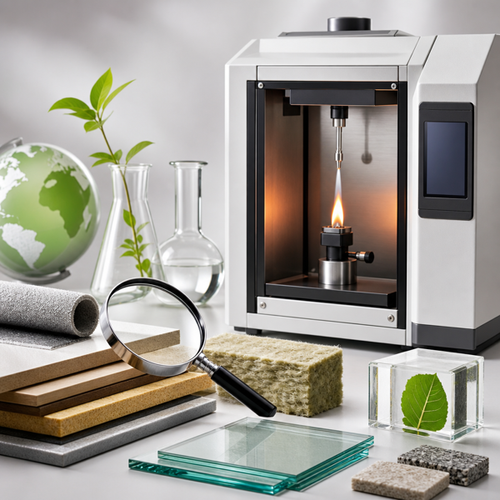
In a world increasingly powered by advanced materials and complex electrical products, the risks of fire hazards loom larger than ever—especially as industries introduce new technologies at scale. Understanding and managing the ignitability and burning behaviour of materials is not just a technical necessity but a cornerstone of productivity, security, and long-term organizational growth. International standards, established by authorities like the International Electrotechnical Commission (IEC), provide universally recognized benchmarks for fire hazard testing. In this article, we explore four pivotal IEC standards—IEC 60695-2-10:2026, IEC TR 60695-11-40:2026, IEC TR 60695-2-16:2025, and IEC TR 60695-2-22:2026—that set the foundation for assessing ignitability and burning behaviour in environments where safety and compliance are critical for success.
Overview / Introduction
The modern landscape of manufacturing, electronics, consumer goods, and construction is defined by a constant drive for efficiency, innovation, and safety. One critical aspect that binds these sectors is the imperative to ensure that materials and finished products neither ignite easily nor propagate fire, regardless of their context—be it in consumer electronics, industrial machinery, building materials, or electric vehicles.
Fire hazard testing standards serve several fundamental purposes:
- They safeguard human life and property from fire incidents.
- They provide objective metrics for benchmarking material and product performance.
- They ensure global market access, facilitating trade and reducing liability for manufacturers.
With the ongoing digital transformation and the integration of high-performance materials into new applications, the value of fire hazard assessment and burning behaviour testing has never been more prominent. Businesses that implement these standards benefit from increased productivity (through better process control), enhanced safety and operational security (via risk mitigation), and improved scalability (by streamlining compliance across markets).
This article deconstructs the four most recent and impactful IEC standards that address the ignitability and burning behaviour of materials and products, making the information clear and actionable for both technical and non-technical audiences.
Detailed Standards Coverage
IEC 60695-2-10:2026 – Glow-Wire Apparatus and Common Test Procedure
Fire hazard testing – Part 2-10: Glowing/Hot-wire based test methods – Glow-wire apparatus and common test procedure
IEC 60695-2-10:2026 provides the foundational apparatus and common test procedures for simulating the effects of thermal stress—specifically, those that may occur from glowing elements, overloaded resistors, or similar heat sources that pose a fire initiation risk in electrical devices or installations. The standard uses a methodical approach: a standardized electrically heated "glow-wire" simulates how fire may be ignited within materials, providing a rigorous, reproducible framework for assessing fire hazards at a small scale.
Key aspects include:
- Standardization of the glow-wire device: Ensures consistent testing and reliable results across laboratories.
- Common test procedures: These methods assess whether materials will ignite, sustain burning, or self-extinguish after exposure to thermal stresses.
- Detailed apparatus and calibration requirements, including the innovative reference to using a pyrometer for temperature measurement (Annex D in this edition).
- Alignment with ISO 13943:2017 for terminology, supporting consistency across industry standards.
Who needs to comply?
- Manufacturers of electrical and electronic equipment
- Producers of solid insulating materials and other solid combustibles
- Testing laboratories, quality assurance teams, R&D departments
Practical implications: Implementing IEC 60695-2-10 enhances product safety and compliance, making products eligible for certification and global market acceptance. The precise methodology reduces variability in test results, providing manufacturers with greater confidence in their fire hazard assessments.
Notable features:
- Revision introduces requirements for pyrometer usage, increasing the accuracy and repeatability of glow-wire tests.
- Serves as the common technical basis for further testing methods documented in IEC 60695-2-11, 2-12, and 2-13.
- Recognized as a basic safety publication by IEC Guide 104.
Key highlights:
- Universal apparatus and procedure for glow-wire ignition source tests
- Enhanced accuracy with pyrometer temperature measurement
- Mandatory reference for testing labs and quality systems
Access the full standard:View IEC 60695-2-10:2026 on iTeh Standards
IEC TR 60695-11-40:2026 – Test Flames and Confirmatory Testing Guidance
Fire hazard testing – Part 11-40: Test flames – Confirmatory tests – Guidance
IEC TR 60695-11-40:2026 offers important theoretical and practical guidance for producing and verifying small-scale test flames, which are vital for fire hazard testing in electrical, electronic, and related products. This technical report specifically focuses on confirmatory tests using copper block calorimetry—a process to verify that test flames exhibit the properties necessary for accurate and valid material testing.
What does this standard provide?
- Detailed characterization of diffusion and pre-mixed test flames, including key parameters such as burner design, fuel gas composition, and air mixing rates.
- Clear instructions on setting up confirmatory tests using copper blocks, which help ensure that the flame energy and heat distribution are within prescribed ranges.
- Guidance on critical flame characteristics: flame size, temperature, stability, and measurement methodology.
Who should use this guidance?
- Technical committees preparing safety publications
- Laboratories conducting fire risk assessments
- Product certification and conformity assessment bodies
Practical implications: Correctly conducted confirmatory tests provide the foundation for reliable test data in product evaluations, reducing the likelihood of false negatives or positives in fire hazard testing. This, in turn, enables manufacturers to optimize material selection, design, and process parameters for improved fire performance.
Notable features:
- Provides a theoretical basis for energy calibration in fire tests, supporting advanced research
- Clarifies distinctions and applications between diffusion and pre-mixed flame setups
- Offers clear directions for ensuring the test equipment’s suitability, enabling consistent safety certification
Key highlights:
- In-depth analysis of standardized test flames
- Robust methodology for flame performance verification
- Essential for robust material and product fire risk evaluations
Access the full standard:View IEC TR 60695-11-40:2026 on iTeh Standards
IEC TR 60695-2-16:2025 – Round Robin Tests on Pyrometer Use for Glow-Wire Temperature Measurement
Fire hazard testing – Part 2-16: Glowing/hot-wire based test methods – Summary of the round robin tests related to the use of pyrometer for glow-wire temperature measurements according to IEC 60695-2-10
IEC TR 60695-2-16:2025 documents the results of collaborative inter-laboratory (round robin) tests concerning the use of pyrometers—non-contact optical instruments—to measure the temperature of glow-wires, as an alternative to the traditional thermocouple-based method outlined in IEC 60695-2-10.
Scope and significance:
- Summarizes test objectives, methodologies, and outcomes from pre-round robin and two round robin studies
- Establishes the minimum technical characteristics and usage conditions required for pyrometers to ensure compatibility and comparability with thermocouple readings
- Informs the newly introduced Annex D in IEC 60695-2-10, formalizing pyrometer requirements for global practice
Target audiences:
- Electrical and fire safety testing labs
- R&D facilities exploring new measurement technologies
- Standards and regulatory bodies shaping fire safety requirements
Practical implementation: This technical report quantifies the variability and accuracy between pyrometer and thermocouple methods, providing industries with validated guidance for transitioning towards more robust, non-contact temperature measurement for fire hazard assessments. Adopting pyrometers can improve process efficiency, reduce contamination, and allow for automation in test procedures.
Notable features:
- Includes statistical analysis of test results, clarifying sources of error and repeatability
- Proposes clear guidelines for pyrometer selection and calibration for consistent results
- Underpins the shift towards more innovative measurement solutions within the framework of fire hazard testing
Key highlights:
- Comprehensive comparative data on temperature measurement tools
- Practical blueprint for deploying pyrometers in flame testing
- Directly supports compliance with updated glow-wire test requirements
Access the full standard:View IEC TR 60695-2-16:2025 on iTeh Standards
IEC TR 60695-2-22:2026 – Verification Results for Fire Containment Test Methodology
Fire hazard testing – Part 2-22: Glowing/hot-wire based test methods – Results of the round robin tests for the development of IEC TS 60695-2-21:2023
IEC TR 60695-2-22:2026 provides a detailed record of round robin test activities carried out to develop the fire containment test for finished units, as codified in IEC TS 60695-2-21:2023. This technical report is a knowledge repository that describes investigation methodologies, verification techniques, and aggregated results from international collaborative testing initiatives.
Key areas covered:
- Methodologies for fire containment tests on finished electrical and electronic units
- Analysis of variables such as ignition events, flame duration, flame height, and material response
- Detailed comparison of test results between participants, improving transparency and best-practice sharing
Target users:
- Standards developers and technical committees (IEC, national equivalents)
- Manufacturers and certification labs engaged in fire performance evaluation of complete products
- Auditors and regulatory compliance officials
Benefits for implementation: The documentation and analysis provided in this standard help users understand possible variability in fire containment tests and identify best practices for both repeatability and reliability of results. These lessons learned shape subsequent regulatory guidance and product testing programs, ensuring the continual progress of fire safety science.
Notable features:
- Aggregates real-world data to guide the refinement of fire containment test protocols
- Helps harmonize global testing methods, enhancing fairness and clarity in conformity assessments
- Enables scale-up of new ignition risk mitigation measures in product design and certification
Key highlights:
- Consolidated round robin test outcomes for fire containment methods
- Actionable feedback for standardizing next-generation fire safety tests
- Strengthens product and organizational credibility through proven methodologies
Access the full standard:View IEC TR 60695-2-22:2026 on iTeh Standards
Industry Impact & Compliance
The Modern Imperative for Fire Hazard Testing Standards
With rapid advancements in product design and the introduction of new materials, the spectrum of fire risks has broadened. Now, more than ever, full compliance with fire hazard testing standards has become a prerequisite for global market access and customer trust.
Key business benefits of complying with these standards include:
- Enhanced Product Safety: Validated fire hazard testing reduces the risk of product recalls, liability claims, and brand damage following fire-related incidents.
- Operational Security: Systematic fire risk assessments—mandated by these standards—support robust facility safety, shielding assets and personnel.
- Regulatory and Insurance Compliance: Satisfying legal and industry requirements is vital for product approvals, especially in regulated environments such as construction, consumer electronics, and vehicular systems.
- Productivity and Scalability: Organizations that integrate these standards benefit from streamlined design-to-manufacturing pipelines, faster approvals, and easier replication of compliance across multiple product lines or markets.
Risks of non-compliance:
- Legal penalties and loss of certification
- Barriers to entering new markets or competing globally
- Increased probability of safety incidents and associated costs
Implementation Guidance
Practical Steps to Adopting Fire Hazard Standards
Gap Assessment:
- Audit existing testing protocols and safety documentation against IEC standard requirements.
Staff Training:
- Ensure technical staff, testers, and compliance officers are trained in the latest apparatus, test methods, and documentation techniques, especially in new domains like pyrometer temperature measurement.
Testing Infrastructure Upgrades:
- Invest in precision test equipment, such as standardized glow-wire devices and calibrated pyrometers.
Process Integration:
- Embed standard-specific checkpoints into product lifecycle management—from design through production to final QA.
Documentation and Record-Keeping:
- Maintain thorough records of test parameters, setups, and results to support audits and regulatory submissions.
Continuous Improvement:
- Monitor developments in standard revisions, updating procedures accordingly.
- Leverage participation in industry round robins or benchmarking exercises to keep ahead of compliance trends.
Best practices include:
- Participating in inter-laboratory comparisons (round robin tests) for benchmarking
- Collaborating with accredited testing organizations
- Using standards-based audit templates for internal quality management
- Staying informed on emerging technologies in non-contact testing and digital compliance tools
Resources:
- iTeh Standards: Official sources, downloads, and guidance documents
- Manufacturer and industry association forums
- Specialized fire safety and compliance consultants
Conclusion / Next Steps
As the line between technological opportunity and risk continues to blur, robust standards like IEC 60695-2-10:2026, IEC TR 60695-11-40:2026, IEC TR 60695-2-16:2025, and IEC TR 60695-2-22:2026 provide the foundation for safe, innovative, and globally competitive products. Fire hazard testing standards are more than regulatory checkboxes—they are tools for operational excellence, customer satisfaction, and sustainable growth.
Key takeaways:
- Adhering to modern fire hazard testing standards is essential for safety, productivity, and scalability
- New technologies (like pyrometer-based temperature measurement) offer enhanced accuracy and efficiency
- Round robin and confirmatory testing drive innovation while ensuring compliance and repeatability
Recommendations for organizations:
- Make fire hazard testing core to your quality management strategy
- Train staff appropriately and upgrade testing infrastructure as needed
- Regularly review standards for updates and emerging best practices
Next steps:
- Explore the full text and detailed requirements of these standards via iTeh Standards
- Engage with industry forums to remain current on evolving fire safety benchmarks
- Conduct a compliance audit and integrate new requirements into your product development cycles
Future success depends on embedding fire safety into every stage of the product lifecycle—and these globally accepted standards are your blueprint for achieving that goal.
Categories
- Latest News
- New Arrivals
- Generalities
- Services and Management
- Natural Sciences
- Health Care
- Environment
- Metrology and Measurement
- Testing
- Mechanical Systems
- Fluid Systems
- Manufacturing
- Energy and Heat
- Electrical Engineering
- Electronics
- Telecommunications
- Information Technology
- Image Technology
- Precision Mechanics
- Road Vehicles
- Railway Engineering
- Shipbuilding
- Aircraft and Space
- Materials Handling
- Packaging
- Textile and Leather
- Clothing
- Agriculture
- Food technology
- Chemical Technology
- Mining and Minerals
- Petroleum
- Metallurgy
- Wood technology
- Glass and Ceramics
- Rubber and Plastics
- Paper Technology
- Paint Industries
- Construction
- Civil Engineering
- Military Engineering
- Entertainment