


Plastics Pipes Standards: Essential Guidelines for Quality, Safety, and Efficiency in Fluid Systems
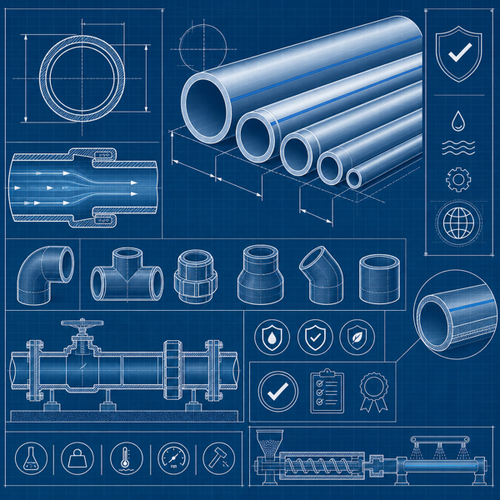
Plastics Pipes Standards: Essential Guidelines for Quality, Safety, and Efficiency in Fluid Systems
In today’s rapidly evolving infrastructure and building sectors, plastics piping systems play a vital role in enabling safe, sustainable, and efficient management of fluids. Behind the reliability of every pipeline are international standards that ensure durability, safety, performance, and compliance. This article offers a complete overview of four foundational ISO standards focused on plastics pipes, providing insights into technical requirements, practical implementation, and the significant benefits these standards bring to businesses worldwide.
Implementing plastics pipes standards is now essential—helping organizations achieve regulatory compliance, reduce operational risks, and ensure long-term resilience of their fluid transport systems. By adhering to these standards, businesses can improve productivity, safety, and scalability, laying the groundwork for smarter, more sustainable growth in today’s fluid systems industry.
Overview / Introduction
Plastics pipes are at the heart of modern fluid systems, used in everything from drinking water conveyance and sewage to industrial process lines and thermal management. As cities grow and industries expand, the pressure on these systems—literally and figuratively—continues to mount. This makes the role of international standards more critical than ever.
But why do these standards matter? The answer lies in the need for consistent product quality, system safety, environmental protection, and efficient installation. Whether you’re refurbishing an aging sewer network, certifying a new building’s waste discharge lines, or selecting materials for chemical transport, adherence to internationally recognized plastics pipes standards is central to success.
In this article, you will learn:
- What each selected ISO standard covers and its key requirements
- Where and how these standards are applied across industries
- The tangible impacts on productivity, reliability, safety, and scaling
- Essential implementation guidance and compliance tips
Detailed Standards Coverage
ISO 11296-9:2022 – Rigidly Anchored Plastics Inner Layer for Underground Non-Pressure Networks
Plastics piping systems for renovation of underground non-pressure drainage and sewerage networks — Part 9: Lining with a rigidly anchored plastics inner layer
This standard, part of the broader ISO 11296 series, addresses the renovation of underground non-pressure drainage and sewerage networks using a cutting-edge method: lining existing pipes with a rigidly anchored plastics inner layer supported by structural grout. The method offers structural rehabilitation while minimizing excavation, environmental impact, and system downtime.
Scope and Requirements
ISO 11296-9:2022 specifies:
- Materials and components: Requirements for plastics inner layers (such as studded PE sheets or PVC-U profiles), grout materials (with or without steel reinforcement), and associated fittings.
- Jointing techniques: Including welding for PE sheets, mechanical jointing for spirally wound PVC-U and PE strips, and requirements for seam sealants.
- Geometric/Mechanical properties: Dimensions, mechanical performance, anchoring strength and durability.
- Fitness for purpose: Installed lining systems must meet stringent performance, material, and mechanical standards after installation—not just as-manufactured.
- Installation practices: Steps covering preparatory work, equipment, final inspection, testing, and documentation.
Who Should Comply?
- Utilities and contractors working on sewer and drainage rehabilitation
- Engineers specifying piping solutions for municipal infrastructure renewal
- Organizations seeking trenchless, low-disruption methods for pipe renovations
Practical Implications
Implementing this standard enables:
- Seamless, non-invasive pipeline renovation
- Improved longevity of sewer and drainage assets
- Reduction of leakage, blockages, and ground movement issues
Notable Features
- Rigorous test methods for anchoring and crushing strength
- Suitability for systems with or without steel reinforcement
- Focus on post-installation performance validation
Access the full standard:View ISO 11296-9:2022 on iTeh Standards
ISO 19899:2010 – Polyolefin Pipe Assemblies Resistance to End Load (AREL Test)
Plastics piping systems — Polyolefin pipes and mechanical fitting assemblies — Test method for the resistance to end load (AREL test)
A major challenge in plastics piping is ensuring mechanically jointed assemblies can withstand the stresses they encounter—both at installation and over service life. ISO 19899:2010 introduces the Accelerated Relaxation and End Load (AREL) test, an essential method for assessing the resistance of small-diameter polyolefin pipe and fitting assemblies to pull-out forces under prolonged loads.
Scope and Requirements
ISO 19899:2010 covers:
- Testing polyolefin pipe and fitting assemblies up to 63 mm in outside diameter
- Evaluating resistance to pipe pull-out due to persistent, longitudinally applied force at elevated temperatures
- Examines susceptibility to stress crack failure at joints
- Specifies apparatus, sample preparation, test procedures, and reporting requirements
Who Needs to Comply?
- Manufacturers and certifiers of polyolefin pipe and mechanical fittings (e.g., used in gas and water systems)
- Laboratories responsible for type testing and quality assurance
- Utilities and contractors verifying pipe joint reliability in small-diameter systems
Practical Implications
With AREL testing:
- Weaknesses in pipe joints are revealed before deployment, reducing risk of in-field failure
- Ensured compliance boosts confidence in pressurized/non-pressurized applications for critical infrastructure
- Supports product certification and market acceptance
Notable Features
- Simulates long-term mechanical loading scenarios (e.g., from ground settlement or installation stress)
- Key for evaluating mechanical joint reliability in safety-critical systems
- Aligns with industry best practices for plastics piping assembly validation
Access the full standard:View ISO 19899:2010 on iTeh Standards
ISO 23228:2011 – Stress-Rupture Resistance for Thermoplastics Pipes and Moulding Materials
Thermoplastics pipes for the conveyance of fluids — Determination of the stress-rupture resistance of moulding materials using plain strain grooved tensile (PSGT) specimens
Long-term durability and resistance to rupture are critical for pipes conveying water, chemicals, and other fluids under pressure. ISO 23228:2011 specifies an innovative test methodology to determine the stress-rupture (or time-to-failure) resistance of moulding materials used to produce thermoplastics pipes and fittings.
Scope and Requirements
ISO 23228:2011 includes:
- PSGT Test Method: Using specially grooved tensile specimens to simulate biaxial stress as found in pressurized pipes
- Applicability: Suited for evaluating new resins, experimental plastics, or pipes that are difficult to test directly (e.g., large diameter)
- Test environments: Allows for various mediums (e.g., air, water) and temperatures
- Calculation/Reporting: Procedures for applying and tracking constant load, calculating nominal stress, and reporting failure times
Target Audience
- Pipe and fitting manufacturers developing or certifying new materials
- Research labs and quality assurance departments testing resin performance
- Utilities or project owners concerned with long-term asset integrity
Practical Implications
- Early identification of materials not meeting required performance
- Facilitates accelerated development of robust pipes and fittings
- Ensures suitability for both standard and extreme applications (e.g., high-pressure, large-diameter systems)
Notable Features
- Directly simulates pressurized pipe stresses in a reproducible, laboratory-friendly format
- Enables reliable extrapolation of long-term strength
- Complements, but does not replace, full-scale pressure testing (ISO 1167)
Access the full standard:View ISO 23228:2011 on iTeh Standards
ISO 7671:2003 – Polypropylene (PP) Piping Systems for Soil and Waste Discharge Offices and Buildings
Plastics piping systems for soil and waste discharge (low and high temperature) inside buildings — Polypropylene (PP)
Buildings increasingly rely on plastics piping for soil and waste discharge, including systems exposed to varying temperature ranges and aggressive effluents. ISO 7671:2003 details the requirements for solid-wall PP pipes and fittings used inside buildings for all temperature ranges, whether for toilets, kitchen sinks, or general wastewater lines.
Scope and Requirements
This standard addresses:
- Material selection: Specifies PP compounds, fillers, melt mass-flow rates, and thermal stability
- Pipe and fitting dimensions: Includes tables for diameters, wall thicknesses, and fitting geometries (metric and inch-based sizing)
- Joints & assembly: Guidance for jointing methods—elastomeric sealing rings or butt fusion
- Physical and mechanical characteristics: Performance in terms of impact resistance, pressure integrity, chemical compatibility, and fire behaviour
- Marking and identification: Requirements for product marking to ensure traceability
Who Should Apply This Standard?
- Plumbing system designers and mechanical engineers
- Contractors and installers working on new and refurbished buildings
- Manufacturers selling PP piping components into regulated markets
Real-World Impact
- Ensures safe, leak-free conveyance of waste and soil in residential and commercial buildings
- Compatibility across products simplifies maintenance and future upgrades
- Standardizes quality parameters, reducing the need for project-specific specifications
Key Highlights
- Covers both low and high temperature applications for maximum versatility
- Promotes uniformity in product quality, colour, and marking
- Supports both small and large-diameter installations
Access the full standard:View ISO 7671:2003 on iTeh Standards
Industry Impact & Compliance
Why Are Plastics Pipes Standards Essential Today?
1. Regulatory Compliance and Risk Reduction
Adherence to ISO standards ensures your plastics piping systems meet international and local regulations, reducing legal and operational risks. Non-compliance can result in failed inspections, costly rework, or environmental fines.
2. Safety and Environmental Protection
Properly designed, installed, and maintained piping is essential for public health and ecological safety. Leaking or failing pipes can contaminate water supplies or soil, while correct material selection and installation methods prevent these outcomes.
3. Improved Reliability and Lifetime Value
Implementing recognized standards increases the long-term reliability of fluid systems, boosting return on investment (ROI) through minimized maintenance costs, fewer outages, and less system downtime.
4. Productivity and Scaling
With clear technical requirements and testing protocols, implementation is streamlined across projects, allowing businesses to scale infrastructure quickly while maintaining high quality and performance.
5. Market Acceptance and Customer Confidence
Certified compliance with ISO plastics piping standards builds client trust and simplifies approvals for tenders, insurance, and public sector projects.
Implementation Guidance
Best Practices for Adopting Plastics Pipes Standards
Identify Scope and Applicability
- Start by mapping required standards (e.g., based on fluid type, application area, pipe material) to your specific project or product needs.
Source Certified Products
- Partner with reputable suppliers who certify their products to relevant ISO standards.
Train Staff and Stakeholders
- Ensure all team members, from designers to installers, understand the requirements and rationale behind the standards.
Integrate Standards into Documentation
- Incorporate relevant ISO clauses into project specifications, procurement templates, and installation manuals.
Conduct Rigorous Testing and Inspection
- Follow standard test methods for materials and assemblies as specified (e.g., AREL test, PSGT test) to validate compliance both pre- and post-installation.
Maintain Traceability and Reporting
- Document serial numbers, batch tracings, test reports, and installation records as per marking and documentation requirements in each standard.
Resources for Successful Implementation
- ISO and iTeh Standards for technical documents and updates
- Training organizations specializing in plastics pipes standards
- Industry bodies (e.g., standards committees, trade associations)
- Accredited testing laboratories for third-party compliance verification
Conclusion / Next Steps
As plastics pipes become ever more integral to safe urban infrastructure, building systems, and industrial process lines, embracing international standards is not just a recommendation—it’s a necessity. By applying comprehensive standards such as ISO 11296-9:2022, ISO 19899:2010, ISO 23228:2011, and ISO 7671:2003, organizations can:
- Deliver higher quality, safer, and more sustainable piping systems
- Minimize risks and costly failures associated with non-compliance
- Position themselves as industry leaders ready for tomorrow’s fluid system challenges
We recommend organizations assess current practices, bridge any gaps in compliance, and remain proactive by consulting the latest standards regularly. For detailed guidance, access the full texts via iTeh Standards and keep your operations up-to-date and competitive.
Explore your complete standards solution today—enhance your productivity, guarantee safety, and ensure scalable growth with comprehensive plastics piping guidance.
Categories
- Latest News
- New Arrivals
- Generalities
- Services and Management
- Natural Sciences
- Health Care
- Environment
- Metrology and Measurement
- Testing
- Mechanical Systems
- Fluid Systems
- Manufacturing
- Energy and Heat
- Electrical Engineering
- Electronics
- Telecommunications
- Information Technology
- Image Technology
- Precision Mechanics
- Road Vehicles
- Railway Engineering
- Shipbuilding
- Aircraft and Space
- Materials Handling
- Packaging
- Textile and Leather
- Clothing
- Agriculture
- Food technology
- Chemical Technology
- Mining and Minerals
- Petroleum
- Metallurgy
- Wood technology
- Glass and Ceramics
- Rubber and Plastics
- Paper Technology
- Paint Industries
- Construction
- Civil Engineering
- Military Engineering
- Entertainment