


Interface and Interconnection Equipment Standards: Boosting IT Infrastructure Reliability and Scalability
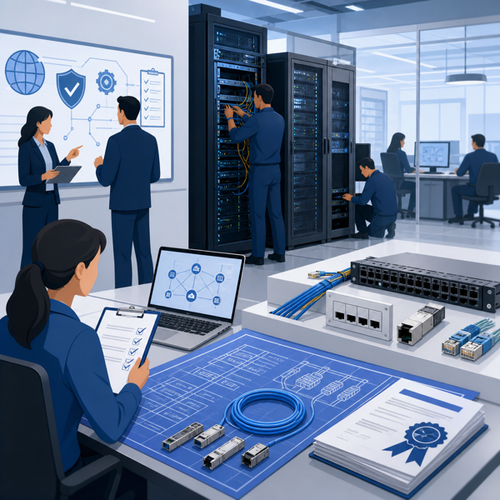
In the era of digital transformation and rapid technological evolution, the backbone of reliable business operations is a robust, standardized information technology infrastructure. Interface and interconnection equipment standards are at the heart of this foundation—governing everything from structured cabling to building-wide bonding networks. These international standards do more than dictate technical details; they form the blueprint for enhanced performance, scalable deployments, better cybersecurity, and seamless integration of the newest technologies. This article explores four pivotal standards that every business—regardless of size or sector—should understand and leverage to secure resilient, future-ready IT environments.
Overview / Introduction
With organizations increasingly reliant on digital services, cloud connectivity, and smart devices, the underlying IT networks must be secure, interoperable, and scalable. Improper infrastructure not only risks downtime, data breaches, or operational bottlenecks, but can also hinder the adoption of innovations such as Industry 4.0, IoT (Internet of Things), and smart building technologies. International interface and interconnection equipment standards, such as those developed by ISO/IEC, provide a common technical language and baseline for deploying and maintaining network infrastructure across borders and industries.
Through this article, you’ll gain a clear understanding of:
- Why interface and interconnection equipment standards are essential for productivity, cybersecurity, and scalability in today’s businesses
- The specific objectives, requirements, and benefits of key standards in this area
- How to implement these standards in practical, actionable terms for organizational benefit
Let’s walk through the four foundational standards driving excellence in information technology infrastructure.
Detailed Standards Coverage
ISO/IEC 11801-1:2017/AMD1:2025 – Amendment 1 to Generic Cabling for Customer Premises – Part 1: General Requirements
Full Standard Title: Amendment 1 - Information technology - Generic cabling for customer premises - Part 1: General requirements
This 2025 amendment introduces significant enhancements and corrections to the core ISO/IEC 11801-1:2017 standard, which sets the global benchmark for structured cabling in non-residential buildings and premises. It highlights the emerging importance of single pair cabling—supporting expanding use-cases in intelligent buildings and industrial automation.
Scope and Key Features:
- Introduction of Categories T1-A, T1-B, and T1-C for single pair cabling, alongside classes defining their frequency ranges and applications
- Updated requirements for transmission, environmental endurance, and remote power delivery
- Specific metrics for cable performance: DC loop resistance, return loss, insertion loss, and unbalance attenuation across multiple frequencies
- Normative references expanded to include the latest IEC standards covering cables, connectors, and remote power
Who Needs to Comply?
- IT infrastructure managers and facilities engineers in office parks, manufacturing sites, smart buildings, and institutions
- Systems integrators and network planners designing or upgrading structured cabling systems
Implementation and Practical Impact: This amendment ensures that both new and updated IT environments can accommodate the growing trend of single pair Ethernet (SPE), enabling streamlined deployment of IoT devices, network sensors, and controllers. It mandates rigorous compliance testing, reliable labelling, and compatibility between all cabling components, minimizing errors during installation and maintenance, and enabling future scalability and energy efficiency.
Key highlights:
- Enables support for single pair Ethernet (SPE) networks across multiple environments
- Ensures backward compatibility and future expansion, critical for smart building and industry 4.0
- Details precise environmental and electrical requirements for robust, high-performance cabling
Access the full standard:View ISO/IEC 11801-1:2017/AMD1:2025 on iTeh Standards
ISO/IEC 30129:2015 – Information Technology – Telecommunications Bonding Networks for Buildings and Other Structures
Full Standard Title: Information technology - Telecommunications bonding networks for buildings and other structures
As digital systems proliferate in commercial and mission-critical facilities, electrical hazards and electromagnetic interference (EMI) pose growing risks to IT network performance and uptime. ISO/IEC 30129:2015 offers a reference framework for designing and installing telecommunications bonding networks—safeguarding both equipment and users, while ensuring reliable data transmission.
Scope and Core Provisions:
- Specifies the requirements for creating robust electrical connections—or bonds—between all conductive elements during building construction or refurbishment
- Provides strategies for using either protective (shared) or dedicated telecommunications bonding networks based on risk assessment and operational needs
- Addresses d.c. resistance and impedance criteria, with recommended practices for selecting, sizing, and routing bonding conductors
- Advocates thorough documentation, periodic testing, and maintenance of bonding network performance
Target Audience:
- Building architects, IT facility designers, MEP (mechanical, electrical, and plumbing) engineers
- Owners, managers, and installers tasked with building or updating cable systems
Implementation Considerations: By implementing ISO/IEC 30129:2015, organizations can minimize noise, static discharge, and EMI risks that could disrupt sensitive IT equipment or compromise network integrity. The standard’s recommendations enhance both safety and system reliability, ensuring uninterrupted service and future network flexibility.
Key highlights:
- Reduces risk of data and service interruptions due to electrical hazards or EMI
- Integrates network bonding with building construction for lifecycle resilience
- Supports regular testing and documentation to maintain compliance and operational assurance
Access the full standard:View ISO/IEC 30129:2015 on iTeh Standards
ISO/IEC 30129:2015/AMD2:2025 – Amendment 2: Telecommunications Bonding Networks for Buildings and Other Structures
Full Standard Title: Amendment 2 - Information technology - Telecommunications bonding networks for buildings and other structures
This amendment delivers essential updates reflecting the latest best practices in telecommunications bonding, with a focus on consistent safety, improved EMI immunity, and clear alignment with global building codes and technology trends.
Scope and Specific Enhancements:
- Clarifies definitions around potential differences (d.c. and a.c.) in telecommunications networks and the vital importance of minimizing them
- Strengthens recommendations and requirements for both dedicated and shared bonding networks, allowing for greater adaptability in smart buildings and intelligent facilities
- Updates references to keep pace with the rapidly evolving field of information and telecommunication technologies
Who Should Adopt It?
- IT and facility managers implementing advanced automation or smart building features
- Design consultants and auditors evaluating compliance for new or upgraded facilities
Implementation Impacts: Amendment 2 underscores the need for holistic approaches that address noise, transients, and grounding across increasingly interconnected ecosystems. Adhering to the latest guidelines ensures your organization’s physical infrastructure meets the expectation of zero-downtime digital operations and resilience against new electrical threats.
Key highlights:
- Modernizes bonding network standards for rapidly evolving IT environments
- Supports resiliency in high-density and high-availability applications
- Aligns equipment bonding with up-to-date international benchmarks
Access the full standard:View ISO/IEC 30129:2015/AMD2:2025 on iTeh Standards
ISO/IEC TS 11801-9903:2025 – Information Technology – Generic Cabling for Customer Premises – Part 9903: Modelling of Channels and Links
Full Standard Title: Information technology - Generic cabling for customer premises - Part 9903: Modelling of channels and links
This pivotal technical specification is the backbone for accurately predicting the behavior of structured cabling systems. It introduces comprehensive models and formulas for calculating performance limits across a range of transmission parameters—crucial for high-bandwidth, low-latency applications.
Scope and Technical Highlights:
- Outlines matrix modelling of mixed-mode transmission parameters within and between cabling pairs, enabling simulation and optimization prior to deployment
- Provides formulas for converting between S-parameter and T-parameter matrix representations, crucial for link and channel modelling
- Expanded list of parameters includes mode-conversion, unbalance attenuation, and comprehensive signal-to-noise ratio analysis
- Offers detailed calculation and alternative modeling approaches, supporting diverse deployment scenarios
Intended Users:
- Network architects, design engineers, and system integrators planning large-scale or mission-critical networks
- Product developers for network components and next-generation cabling systems
Implementation Insights: By applying ISO/IEC TS 11801-9903:2025, practitioners can accurately model and simulate the end-to-end performance of structured cabling systems before physical rollout. This preemptive optimization reduces risks, streamlines troubleshooting, and ensures the infrastructure fully supports demanding digital workloads.
Key highlights:
- Empowers precise network performance modelling prior to deployment
- Supports troubleshooting, validation, and future-proofed upgrades
- Essential for high-speed, low-latency, and mission-critical environments
Access the full standard:View ISO/IEC TS 11801-9903:2025 on iTeh Standards
Industry Impact & Compliance
Business Benefits of Standards Adoption
Implementing these interface and interconnection equipment standards is no longer optional for forward-looking organizations. From corporate offices to factories and smart campuses, benefits include:
- Increased productivity: Standard-compliant networks experience fewer failures, accelerate troubleshooting, and optimize performance for advanced applications.
- Enhanced cybersecurity and safety: Consistent bonding, grounding, and cabling vastly reduce the risk of interference, network downtime, and associated data breaches.
- Scalability: Standardized cabling and bonding support seamless expansion as your business grows, integrates IoT, or upgrades to higher-bandwidth technologies.
- Cost savings: Streamlined, standards-based deployments lower installation, maintenance, and upgrade costs, while minimizing risks of costly misconfigurations.
Compliance Considerations
Staying compliant means:
- Adhering to current edition requirements, including all amendments and corrigenda
- Performing regular documentation, testing, and maintenance
- Keeping project and facility teams updated on the latest international guidelines
Failure to comply can bring increased downtime, unsafe installations, non-conformance penalties, and serious risks to business continuity.
Implementation Guidance
Best Practices for Adopting Interface and Interconnection Equipment Standards
- Start with an Audit: Assess existing cabling, grounding, and network environments for compliance gaps.
- Plan with the Future in Mind: Use the latest standards as the baseline for new installations or upgrades, ensuring backward compatibility and support for future technologies.
- Document Everything: Maintain up-to-date documentation on all components, test results, and compliance certificates.
- Test and Validate: Regularly carry out standards-based testing to ensure that all performance parameters are met.
- Train and Educate: Invest in staff training so all parties—from engineering and IT to facilities and vendors—understand the standards and their practical application.
- Leverage Expert Resources: Consult manufacturers, certified specialists, and authoritative guides such as those available through iTeh Standards.
Helpful Resources
- iTeh Standards Online Catalog: Browse and acquire the official texts of ISO/IEC and other global standards
- Professional associations and certification programs in IT infrastructure and network engineering
- Vendor-neutral guidelines, webinars, and technical workshops
Conclusion / Next Steps
Adopting and maintaining compliance with international standards for interface and interconnection equipment is foundational to reliable, high-performing, and secure IT infrastructures. With new demands emerging from cloud computing, IoT, smart buildings, and automation, these standards provide not just a technical roadmap but also a business imperative for organizations looking to thrive amidst digital transformation.
Key takeaways:
- Standards such as ISO/IEC 11801-1:2017/AMD1:2025 and ISO/IEC 30129:2015 (and its amendments) provide clear, future-ready requirements for physical infrastructure
- Applying ISO/IEC TS 11801-9903:2025 empowers precise network performance modeling
- Compliance and proactive implementation improve security, scalability, and operational efficiency
- Engaging with authoritative resources and maintaining up-to-date knowledge is essential
Next steps:
- Conduct a review of your current infrastructure against the highlighted standards
- Develop an organizational roadmap to close compliance gaps and support future growth
- Explore the full library of interface and interconnection equipment standards on iTeh Standards to keep your operations secure, efficient, and ready to embrace technological advancements
For expert guidance and the latest standards documentation, visit iTeh Standards today.
Categories
- Latest News
- New Arrivals
- Generalities
- Services and Management
- Natural Sciences
- Health Care
- Environment
- Metrology and Measurement
- Testing
- Mechanical Systems
- Fluid Systems
- Manufacturing
- Energy and Heat
- Electrical Engineering
- Electronics
- Telecommunications
- Information Technology
- Image Technology
- Precision Mechanics
- Road Vehicles
- Railway Engineering
- Shipbuilding
- Aircraft and Space
- Materials Handling
- Packaging
- Textile and Leather
- Clothing
- Agriculture
- Food technology
- Chemical Technology
- Mining and Minerals
- Petroleum
- Metallurgy
- Wood technology
- Glass and Ceramics
- Rubber and Plastics
- Paper Technology
- Paint Industries
- Construction
- Civil Engineering
- Military Engineering
- Entertainment