


A Practical Guide to Interface and Interconnection Equipment Standards in Information Technology
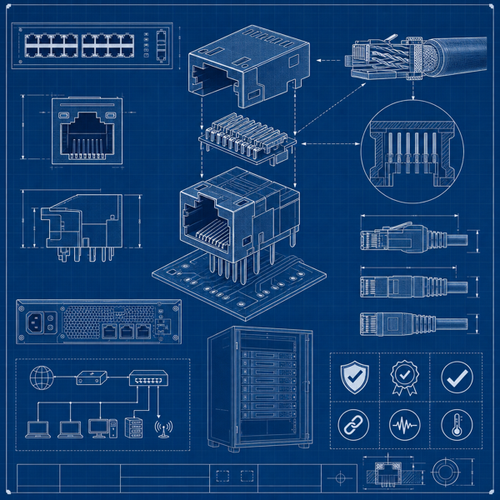
In today's rapidly evolving digital landscape, the success of any organization hinges on the performance, reliability, and scalability of their information technology infrastructure. Interface and interconnection equipment standards are the unsung heroes behind seamless data exchange, robust network management, and secure device interoperation. This guide explores four pivotal international standards—addressing areas from cabling measurement and storage interfacing, to content directory structuring and IoT device management. Understanding and implementing these standards is not only a strategic advantage, but a necessity for businesses seeking increased productivity, heightened security, and effortless scaling.
Overview / Introduction
Information technology forms the backbone of modern business operations, with data centers, offices, and field sites all depending on robust and interoperable networks. The proliferation of cloud services, IoT, multimedia streaming, and remote collaboration has heightened the need for clear, trustworthy standards.
Yet, for many outside the IT department, the significance of standards behind the scenes isn't always clear. Interface and interconnection equipment standards ensure that cables, devices, and software from different vendors work harmoniously; that measurement and operation protocols are unified; and that new solutions can be adopted without costly overhauls.
In this article, you'll discover:
- Key details and practical insights for four influential IT equipment standards
- How these standards affect productivity, security, and scaling
- The compliance landscape and industry impacts
- Guidance for straightforward implementation—no deep technical background required
Detailed Standards Coverage
ISO/IEC 14763-4:2021/Cor 1:2022 – Measurement of E2E Links, MPTLs, and Direct Attach Cabling
Information technology — Implementation and operation of customer premises cabling — Part 4: Measurement of end-to-end (E2E) links, modular plug terminated links (MPTLs) and direct attach cabling — Technical Corrigendum 1
The efficiency and reliability of a network depend greatly on the quality and verification of installed cabling. ISO/IEC 14763-4:2021/Cor 1:2022 sets the technical guidelines for measuring performance of varied cabling types: end-to-end (E2E) links, modular plug-terminated links (MPTLs), and direct attach cables. It introduces specific requirements for transmission performance, referencing the authoritative IEC 60603-7 series and IEC 61076-3 connectors.
The standard specifies:
- When and how E2E link testing should be used
- Performance benchmarks for various cable terminations
- Clarified guidance for MPTLs and direct attachments
- Updated paragraphs and corrections to the base document
Who should comply: IT infrastructure designers, installers, testers, and facility managers responsible for commercial or industrial cabling systems.
Practical implications:
- Ensures that cabling is certified to support the required bandwidth and application performance
- Reduces troubleshooting costs and network downtime
- Provides assurance for future upgrades and system expansions
Key highlights:
- Defines test methods for modern cabling structures
- Aligns measurements with current connector standards
- Improves clarity and accuracy for real-world installations
Access the full standard:View ISO/IEC 14763-4:2021/Cor 1:2022 on iTeh Standards
ISO/IEC 14776-411:1999 – SCSI-3 Architecture Model (SCSI-3 SAM)
Information technology — Small Computer System Interface-3 — Part 411: SCSI-3 Architecture Model (SCSI-3 SAM)
If you've ever wondered how servers, enterprise storage systems, or high-performance workstations manage complex data flows, the credit often goes to SCSI (Small Computer System Interface) standards. The SCSI-3 Architecture Model (SAM) provides the foundational framework for SCSI-3 systems—defining how different hardware and software elements interact within a storage environment.
This standard covers:
- Abstract models for command, task, and device management in SCSI-3 systems
- Behavioral requirements essential for interoperability between host software and device firmware
- Reference objects and hierarchical diagrams for SCSI domain, device, initiator, target, and logical unit concepts
Who should comply: Storage system manufacturers, server builders, datacenter operators, and system integrators dealing with SCSI-based environments.
Practical implications:
- Facilitates compatibility across SCSI hardware and software implementations
- Enables reliable storage sharing and management within varied enterprise environments
- Supports scalability and easy integration of new storage technologies
Key highlights:
- Unified SCSI-3 reference model for all implementation standards
- Behavioral guidelines for timeouts, error handling, and task management
- Foundational for modern storage architectures (RAID systems, SANs)
Access the full standard:View ISO/IEC 14776-411:1999 on iTeh Standards
ISO/IEC 29341-14-12:2011 – UPnP Device Architecture for AV Content Directory Services
Information technology — UPnP Device Architecture — Part 14-12: Audio Video Device Control Protocol — Level 3 — Audio Video Content Directory Service
Consumer electronics and business AV deployments increasingly rely on standardized content management. The UPnP Content Directory Service specification defines how devices organize, discover, and serve up content (like movies, photos, and music) on a network. It’s the backbone of interoperability for smart TVs, wireless speakers, and networked storage.
Key components:
- A UPnP-compliant service template for Audio Video Content Directory
- Uniform UI mechanisms for browsing and retrieving rich media content
- XML-based structures and metadata models for media objects
- Lookup, search, and storage features for client applications
Who should comply: Smart home device vendors, AV system integrators, application developers, and IT teams deploying multimedia solutions.
Practical implications:
- Boosts user experiences by enabling seamless, cross-device content navigation
- Ensures future-proof integration of new playback and storage formats
- Simplifies UI development for media browsers and streaming platforms
Key highlights:
- Advanced metadata and classification for AV content
- Scalable browsing and querying for large content libraries
- Vendor extension mechanisms for differentiated features
Access the full standard:View ISO/IEC 29341-14-12:2011 on iTeh Standards
ISO/IEC 29341-30-2:2017 – IoT Management and Control Device
Information technology — UPnP Device Architecture — Part 30-2: IoT management and control device control protocol — IoT management and control device
The rise of smart buildings and industry automation hinges on efficient, secure, and interoperable management of connected devices. This standard describes a general-purpose IoT Management and Control Device under the UPnP architecture—acting as a gateway between sensors, actuators, and the connected IT world.
Scope and requirements:
- Specifies Level 1 IoT Management and Control Device compliant with UPnP Device Architecture
- Supports multiple transport protocols (Bluetooth, ZigBee, IEEE 11073, and more)
- Enables device discovery, status monitoring, configuration, and direct control
- Facilitates data exchange between sensors/actuators and the network
Who should comply: IoT solution architects, automation system installers, device manufacturers, and facilities managers in smart buildings and industrial settings.
Practical implications:
- Enables scalable, standardized integration of heterogeneous sensor networks
- Enhances security and management capabilities for IoT deployments
- Reduces complexity in multi-vendor, multi-protocol environments
Key highlights:
- Bridges UPnP network with physical sensors and actuators
- Modular and extensible to accommodate evolving device types
- Supports status checking, configuration, and real-time data transfer
Access the full standard:View ISO/IEC 29341-30-2:2017 on iTeh Standards
Industry Impact & Compliance
The implementation of interface and interconnection equipment standards brings significant benefits to businesses.
Why do these standards matter now more than ever?
- Productivity: Unified testing and interoperability simplify deployment, reduce downtime, and ensure that devices and data travel efficiently across the network.
- Security: Consistent protocols and reference architecture models mean fewer vulnerabilities and easier application of patches and protections.
- Scalability: As organizations grow or adopt new technologies, compliance with established standards prevents costly rework and incompatibility issues.
Compliance Considerations:
- Procurement policies should require equipment to be compliant with applicable standards.
- Staff responsible for deployment and maintenance should be trained in current requirements and best practices.
- Documentation and testing records should be kept, especially for regulated environments or critical infrastructure.
Risks of non-compliance include:
- Increased risk of incompatibility and unreliable performance
- Higher long-term costs due to repeated troubleshooting and system retrofits
- Security vulnerabilities from inconsistent protocols
Implementation Guidance
Adopting these standards doesn't have to be intimidating. For most organizations, implementation boils down to these core approaches:
- Assessment: Review current IT infrastructure—what cables, connectors, devices, and protocols are present? Which standards apply?
- Planning: Select products and systems explicitly supporting relevant standards.
- Training: Ensure installation and technical staff are up-to-date on testing, verification, or software/firmware configuration requirements.
- Testing: Use certified testers and tools, especially for cabling, storage, and network deployments.
- Documentation: Keep thorough records of test results, compliance checklists, and device inventories.
- Review and Update: Periodically review standards and update processes as new versions are released or technology evolves.
Best Practices:
- Always use third-party certified products and tools where possible
- Create clear internal guidelines referencing applicable standards
- Tap into external resources: iTeh Standards (standards.iteh.ai), industry forums, manufacturer and vendor documentation
- Plan for future-proofing by choosing scalable, modular equipment compliant with the latest standards
Resources:
- Standard documents via iTeh Standards
- Professional organizations and training (ISO, IEC, vendor seminars)
- Online communities for practical advice and troubleshooting
Conclusion / Next Steps
Interface and interconnection equipment standards are the quiet foundation supporting every modern IT environment—facilitating everything from robust multimedia streaming, and secure cloud storage, to the thriving world of IoT. Organizations that prioritize compliance with these standards set themselves up for greater productivity, enhanced security, and the ability to scale efficiently as business needs grow.
By familiarizing yourself with the specifics of:
- Cabling measurement and testing (ISO/IEC 14763-4:2021/Cor 1:2022)
- Storage system architecture (ISO/IEC 14776-411:1999)
- Smart content directory services (ISO/IEC 29341-14-12:2011)
- IoT device management protocols (ISO/IEC 29341-30-2:2017)
you’re making a strategic decision to future-proof your operations and enhance your technological edge.
Ready to go further? Explore the full text of each standard on iTeh Standards, stay updated on new developments, and build compliance into your organization’s DNA from the ground up.
Categories
- Latest News
- New Arrivals
- Generalities
- Services and Management
- Natural Sciences
- Health Care
- Environment
- Metrology and Measurement
- Testing
- Mechanical Systems
- Fluid Systems
- Manufacturing
- Energy and Heat
- Electrical Engineering
- Electronics
- Telecommunications
- Information Technology
- Image Technology
- Precision Mechanics
- Road Vehicles
- Railway Engineering
- Shipbuilding
- Aircraft and Space
- Materials Handling
- Packaging
- Textile and Leather
- Clothing
- Agriculture
- Food technology
- Chemical Technology
- Mining and Minerals
- Petroleum
- Metallurgy
- Wood technology
- Glass and Ceramics
- Rubber and Plastics
- Paper Technology
- Paint Industries
- Construction
- Civil Engineering
- Military Engineering
- Entertainment