


A Practical Guide to Key Interface and Interconnection Equipment Standards in Information Technology
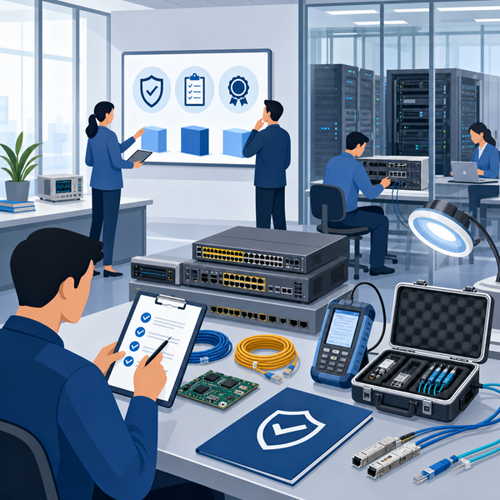
In today’s fast-paced digital world, the backbone of every thriving organization lies in its ability to connect, communicate, and scale securely and efficiently. Interface and interconnection equipment standards sit at the heart of this technological ecosystem, ensuring that devices, systems, and networks work in harmony. This article delves into four key international standards in information technology, distilling technical complexities into actionable insights for both professionals and the wider public. By embracing these standards, businesses gain not only compliance and future-proof infrastructure, but also a decisive edge in productivity, security, and scalability.
Overview of Interface and Interconnection Equipment Standards
The realm of information technology is built upon seamless connectivity—spanning everything from structured cabling within buildings to the interoperability of servers, storage, and cloud-based IoT devices. Standards for interface and interconnection equipment define the technical rules, test methods, and operational requirements needed to ensure components are compatible and reliable.
Why are these standards indispensable? Because they:
- Ensure uniformity across networks and devices, reducing errors and downtime
- Simplify implementation and management for businesses
- Enhance security by addressing vulnerabilities and enforcing best practices
- Support scalability, allowing organizations to grow without fear of incompatibility
- Protect investments through lifelong product interoperability
In this article, you will learn how four essential standards—spanning structured cabling, SCSI-3 architecture, media content directories, and IoT management—empower your digital infrastructure. We’ll break down each standard, review key requirements, and provide hands-on guidance for implementation, making even the most technical material accessible.
Detailed Standards Coverage
ISO/IEC 14763-4:2021/Cor 1:2022 - Measurement of End-to-End Links in Customer Premises Cabling
Information technology — Implementation and operation of customer premises cabling — Part 4: Measurement of end-to-end (E2E) links, modular plug terminated links (MPTLs) and direct attach cabling — Technical Corrigendum 1
This standard specifies detailed testing methodologies and requirements for measuring end-to-end (E2E) cabling links, modular plug terminated links (MPTLs), and direct attach cabling within customer premises. The technical corrigendum updates transmission limits and clarifies testing procedures to align with the latest connection hardware specifications (IEC 60603-7 and IEC 61076-3 series).
Scope & Requirements:
- Defines how to accurately test cabling from device-to-device (E2E), capturing real-world operational performance
- Covers MPTL and direct attach links, essential for modern workplace deployments (e.g., direct connection to devices like IP cameras or PoE-enabled endpoints)
- Stresses compliance with hardware series critical for ensuring performance at higher frequencies and future applications
Target Audience:
- Network designers, installers, IT infrastructure managers, building facility teams
Implementation Implications:
- Ensures that installed cabling supports required bandwidth and device performance
- Minimizes downtime and costly rework by identifying unacceptable links before operation
- Underpins physical network reliability in modern office, data center, and industrial environments
Key highlights:
- Updated transmission limit specifications for new hardware
- Comprehensive E2E link testing guidance
- Supports direct attach installations and MPTLs, critical for IoT and smart building deployments
Access the full standard:View ISO/IEC 14763-4:2021/Cor 1:2022 on iTeh Standards
ISO/IEC 14776-411:1999 - SCSI-3 Architecture Model (SCSI-3 SAM)
Information technology — Small Computer System Interface-3 — Part 411: SCSI-3 Architecture Model (SCSI-3 SAM)
The SCSI-3 SAM standard sets the foundational reference model for interoperability of high-performance storage devices and host systems. It defines the coordination and behavioral requirements for Small Computer System Interface (SCSI) I/O systems, vital for robust storage networking.
Scope & Requirements:
- Provides a universal, protocol-neutral architecture for SCSI-3 systems
- Establishes definitions for roles (initiator, target, logical units) and command processing
- Lays out a task management and command execution framework vital for fault tolerance and error recovery
Who Should Comply:
- Data center architects, SAN/NAS administrators, enterprise IT teams, storage device manufacturers
Practical Implications:
- Enables hardware and software from different manufacturers to interoperate without custom drivers
- Ensures reliable data transfer, error recovery, and scalability in environments ranging from personal computers to enterprise storage networks
- Defines standards for command sets, data structures, and management—making troubleshooting predictable and secure
Key highlights:
- Reference models for I/O architecture and device behavior
- Task management and error handling protocols
- Universal definitions for robust interoperability across vendors
Access the full standard:View ISO/IEC 14776-411:1999 on iTeh Standards
ISO/IEC 29341-14-12:2011 - UPnP Audio Video Content Directory Service
Information technology — UPnP Device Architecture — Part 14-12: Audio Video Device Control Protocol — Level 3 — Audio Video Content Directory Service
Focusing on the world of networked digital media, this standard defines the ContentDirectory service for UPnP (Universal Plug and Play) Audio Video devices. It empowers smart TVs, media servers, and digital home ecosystems to browse, search, and manage rich content intuitively and securely.
Scope & Requirements:
- Provides a service model for browsing, searching, and retrieving digital content objects (e.g., music, videos, pictures)
- Specifies support for hierarchical content organization and metadata handling (e.g., genres, playlists, contributor info)
- Offers lookup and storage functions for seamless content location and transfer between client and server devices
- Ensures compliance with UPnP Device Architecture v1.0 and XML schema conventions
Key Stakeholders:
- Consumer electronics producers, smart home integrators, multimedia application developers
Business Implications:
- Guarantees interoperability across entertainment devices, simplifying consumer experiences
- Facilitates the integration and management of multi-brand devices in homes and enterprise environments
- Enables resource-optimized sharing, searching, and streaming of digital media
Key highlights:
- Hierarchical, metadata-rich content repositing and querying
- Advanced search, sort, and transfer capabilities
- Vendor extension mechanisms for unique, branded experiences
Access the full standard:View ISO/IEC 29341-14-12:2011 on iTeh Standards
ISO/IEC 29341-30-2:2017 - IoT Management and Control Device Protocol
Information technology — UPnP Device Architecture — Part 30-2: IoT management and control device control protocol — IoT management and control device
This leading-edge standard defines a general-purpose IoT Management and Control device within the UPnP ecosystem. It enables seamless discovery, configuration, status monitoring, and bidirectional data exchange with sensors and actuators through various transport protocols (Bluetooth, ZigBee, IEEE 11073, etc).
Key Aspects:
- Outlines device definitions and UPnP service relationships for IoT device bridges/gateways
- Standardizes device configuration, sensor/actuator connectivity, and control flows
- Ensures interoperability and security for connected environments across vendor ecosystems
Recommended For:
- IoT platform architects, smart building managers, device and sensor manufacturers, home automation integrators
Implementation Value:
- Enables plug-and-play integration of heterogeneous devices and sensors
- Supports scalable, secure, and upgradable IoT deployments
- Lays the groundwork for advanced applications in industry, healthcare, utilities, and smart cities
Key highlights:
- General-purpose bridge/gateway device for diverse IoT endpoints
- Unified service architecture for configuration, data access, and management
- Comprehensive support for multiple communication protocols
Access the full standard:View ISO/IEC 29341-30-2:2017 on iTeh Standards
Industry Impact & Compliance
Modern businesses depend on rapid, secure, and high-volume data transfer, whether within office networks, media distribution platforms, or sprawling IoT landscapes. Each of these four standards addresses specific pain points and opportunities:
- ISO/IEC 14763-4:2021/Cor 1:2022 guarantees physical cabling meets rigorous performance benchmarks, minimizing costly outages and boosts operational uptime.
- ISO/IEC 14776-411:1999 brings consistency and longevity to data storage systems, eliminating siloed solutions and vendor lock-in.
- ISO/IEC 29341-14-12:2011 supports user-friendly, feature-rich multimedia ecosystems—a must for modern digital media businesses.
- ISO/IEC 29341-30-2:2017 powers the backbone of IoT, ensuring that devices connect and scale reliably, supporting innovation in smart environments.
Why Compliance Matters
Neglecting these standards can result in:
- Interoperability failures and costly integrations
- Increased system downtime or catastrophic data loss
- Security vulnerabilities and compliance risks
- Higher costs for technical support, troubleshooting, and future expansion
Meeting or exceeding these standards protects your investment, builds customer trust, and future-proofs organizational growth.
Implementation Guidance
Successfully adopting these interface and interconnection equipment standards requires planning, tools, and continual improvement. Here’s how organizations can proceed:
- Assessment & Awareness
- Conduct a network and system inventory
- Review existing compliance against current standards
- Training & Documentation
- Educate staff and stakeholders on critical requirements
- Maintain up-to-date documentation and operational checklists
- Procurement & Design
- Specify compliant products during purchasing and upgrades
- Design new systems with scalability and compatibility in mind
- Testing & Validation
- Use certified tools for cabling and link measurement
- Validate device and protocol compliance in multi-vendor environments
- Security & Maintenance
- Integrate regular audits and patch management into maintenance cycles
- Leverage vendor updates to address evolving threats and requirements
Best Practices
- Partner with certified installers and solution integrators
- Maintain detailed test and validation logs for audit trails
- Use simulation environments for major upgrades or integrations
- Track emerging versions of these standards via platforms like iTeh Standards
Conclusion & Next Steps
The digital economy demands resilient, scalable, and secure interconnection at every level—from copper cables to cloud-managed IoT devices. Implementing world-class standards like those covered here is more than just a regulatory requirement; it’s a strategic imperative that unlocks new opportunities.
Key takeaways:
- Standards-based deployment enhances productivity, security, and scalability
- Each covered standard tackles a unique aspect of modern IT connectivity
- Regularly update your technical knowledge and audit your systems for compliance
Recommendations:
- Evaluate current systems against these global benchmarks
- Explore the iTeh Standards platform for the latest documentation, updates, and expert guidance
- Make standards compliance a cornerstone of all IT, connectivity, and infrastructure decisions
Stay future-ready by integrating the latest interface and interconnection equipment standards—discover, implement, and lead in your digital transformation journey.
Categories
- Latest News
- New Arrivals
- Generalities
- Services and Management
- Natural Sciences
- Health Care
- Environment
- Metrology and Measurement
- Testing
- Mechanical Systems
- Fluid Systems
- Manufacturing
- Energy and Heat
- Electrical Engineering
- Electronics
- Telecommunications
- Information Technology
- Image Technology
- Precision Mechanics
- Road Vehicles
- Railway Engineering
- Shipbuilding
- Aircraft and Space
- Materials Handling
- Packaging
- Textile and Leather
- Clothing
- Agriculture
- Food technology
- Chemical Technology
- Mining and Minerals
- Petroleum
- Metallurgy
- Wood technology
- Glass and Ceramics
- Rubber and Plastics
- Paper Technology
- Paint Industries
- Construction
- Civil Engineering
- Military Engineering
- Entertainment