


Information Technology Standards: Key July 2026 Updates for ISMS, Smart Cities, Digital Twins, DASH, and Health Data
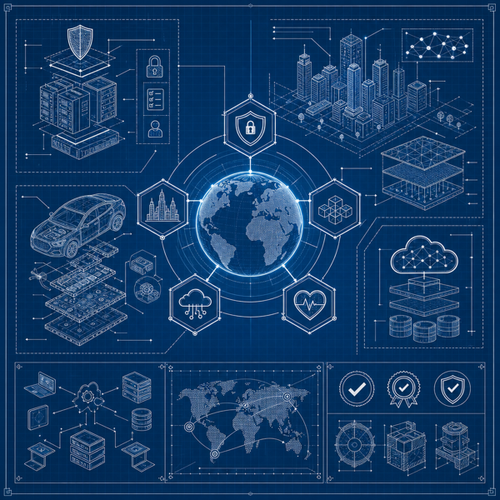
As the digital landscape becomes increasingly complex and interconnected, July 2026 brings a pivotal set of new standards to the field of Information Technology and Office Equipment. This fifth installment in our eight-part series examines five freshly published standards that target core areas—from information security management and smart city data use to advanced manufacturing digital twins, adaptive streaming over HTTP, and healthcare data identification. These releases are shaping the way organizations worldwide address security, interoperability, data quality, streaming performance, and compliance with growing regulatory demands.
Overview
Robust, up-to-date standards are the foundation of secure, efficient, and innovative information technology infrastructure. They provide not only compliance pathways, but also technical guidance for digital transformation, seamless integration of services, and improved user safety. In this article, industry professionals will discover:
- Key requirements of the July 2026 standards
- How these standards impact your IT, manufacturing, and health data ecosystems
- Strategic considerations for compliance, implementation, and future-proofing operations
Whether you are responsible for organizational security, digital infrastructure, smart city strategy, or healthcare data flows, staying ahead with the latest standardization is critical for regulatory alignment, resilience, and technological advancement.
Detailed Standards Coverage
EN ISO/IEC 27000:2026 – ISMS Overview for Information Security
Information security, cybersecurity and privacy protection – Information security management systems – Overview (ISO/IEC 27000:2026)
This publication provides a thorough overview of the core concepts and principles of Information Security Management Systems (ISMS). Acting as a foundational document, it delineates how organizations should think about information assets, risks, and protective measures. It outlines the scope, necessity, and operation of ISMS, referencing related standards such as ISO/IEC 27001, 27002, and sector-specific security controls.
Key requirements include:
- Understanding confidentiality, integrity, and availability in information management
- Applying risk-based approaches for adapting to evolving security threats
- Establishing a process-centric, continual improvement framework for ISMS
- Mapping relationships among ISMS-related standards for coherent implementation
Who should comply?
- IT and security managers
- Compliance officers
- Any organization pursuing certification to ISO/IEC 27001 or requiring integrated risk management
Practical implications: Updating your ISMS approach in line with this edition will ensure alignment with the latest terminology, risk concepts, and integration principles. The revised document puts extra emphasis on ISMS’ role in supporting business objectives, auditing, and cross-standard relationships.
Key highlights:
- Incorporates revised definitions and concepts
- Clarifies relationships between ISMS documents
- Emphasizes risk and business integration
Access the full standard:View EN ISO/IEC 27000:2026 on iTeh Standards
ISO/IEC 25005-1:2026 – Framework for Smart City Data Use
Information technology — Data use in smart cities — Part 1: Framework
This first part in a dedicated series delivers a multidimensional framework for the effective and responsible use of data as a strategic citywide resource. It categorizes smart city data use across five major axes: availability, quality assurance, usability, security, and innovation enablement. The standard is a touchstone for city planners, technology deployers, policy makers, and solution providers working to realize the value of urban data in services, infrastructure, and citizen engagement.
Key requirements and specifications cover:
- Structuring city data resources for inclusiveness and accessibility
- Implementing robust data quality and trust mechanisms
- Ensuring ease of integration and utilization across city systems
- Providing governance for secure usage, with attention to privacy and ethical dimensions
- Supporting intelligent, data-driven services and agile innovation throughout urban infrastructure
Who needs to comply?
- Smart city offices
- Municipal IT departments
- Urban digital solution providers
- Data governance bodies
The framework prompts users to address gaps in current urban data management and offers guidance for harmonizing international practices on data as a strategic asset.
Key highlights:
- Unified smart city data value-chain model
- Guidelines for security, inclusivity, and interoperability
- Basis for citywide innovation and scalability
Access the full standard:View ISO/IEC 25005-1:2026 on iTeh Standards
ISO 23247-6:2026 – Digital Twin Composition for Manufacturing Integration
Automation systems and integration — Digital twin framework for manufacturing — Part 6: Digital twin composition
In modern manufacturing, digital twins are no longer standalone models but interconnected systems that must collaborate for operational transparency, predictive maintenance, and flexible production. This new standard provides methodologies and requirements for composing multiple digital twins—integrated, unified, or federated approaches—enabling interoperability across vendors, platforms, and production lines.
Key requirements:
- Principles for the selection and connection of digital twins (component and composed)
- Lifecycle stages: specification, design, development, and operation of composite digital twins
- Deployment procedures for integrated, unified, and federated digital twin compositions
- Guidance on data models, communication protocols, and aggregation
Who needs to comply?
- Manufacturing IT leads
- Automation engineers
- Solution integrators
- Vendors of smart manufacturing software
The standard emphasizes reusability, flexibility, and the scalability of digital twins, providing use cases such as robot arm integration and AGV coordination across production chains.
Key highlights:
- Three structured composition approaches: integrated, unified, federated
- Implementation steps and best practices for digital twin operations
- Practical case studies demonstrating industry applications
Access the full standard:View ISO 23247-6:2026 on iTeh Standards
ISO/IEC 23009-1:2026 – DASH Media Presentation and Segment Formats
Information technology — Dynamic adaptive streaming over HTTP (DASH) — Part 1: Media presentation description and segment formats
This critical update to the DASH streaming standard introduces enhanced support for low-latency and live content, new profile and segment options, and fresh metadata for adaptive online media distribution. The goal: seamless, scalable, and high-performance delivery of multimedia across the Internet that works with any standard-compliant HTTP infrastructure.
Key requirements:
- Compliant media presentation descriptions and segment formats for MPEG streaming
- Support for a range of delivery scenarios, from video-on-demand to broadcast live feeds
- Updated features include segment duration patterns, new metrics, addressable resource index tracks, content steering, and more
Who needs to comply?
- Streaming service providers
- Media application developers
- Broadcasters and online content networks
Practical implications include lowered streaming latency, improved scalability for simultaneous viewers, and enriched interactive media capabilities.
Key highlights:
- Full support for live and low-latency streaming
- Introduction of advanced content steering and reporting features
- Expanded profiles for multi-device and OTT delivery
Access the full standard:View ISO/IEC 23009-1:2026 on iTeh Standards
ISO/TS 22220:2026 – Health Data Identification
Health informatics — Identification of persons, healthcare providers and healthcare organizations
Accurate identification is foundational to care continuity, interoperability, and data security in healthcare. The updated ISO/TS 22220 provides the essential framework for consistent, application-independent identification of persons (including patients and professionals), providers, and organizations across systems and jurisdictions.
Key requirements:
- Standardized data elements and structures for unique, robust identification
- Definitions for demographic, electronic, address, and administrative identifiers
- Use case alignment: registry management, clinical/administrative record sharing, system cross-linking
Exclusions: While the specification focuses on identification, it leaves out consent management, privacy/security protocols, and certain workflows outside ID scope; implementers may extend as needed.
Who needs to comply?
- Healthcare IT developers
- National health authorities
- Clinical registries/providers handling digital person and organization identity
The new edition clarifies terminology, broadens the use cases, and fully updates required data elements—including gender and professional attributes—to increase data access and care quality safely.
Key highlights:
- Fully updated data models and element definitions
- Three use-case-driven conformance models
- Neutral framework for national/international settings
Access the full standard:View ISO/TS 22220:2026 on iTeh Standards
Industry Impact & Compliance
These standards affect organizations across multiple technology verticals:
- Security and risk management: Adopting ISO/IEC 27000:2026 aligns controls, terminology, and risk models, foundational for global certifications and reducing cyber risk.
- Smart cities: The 25005-1:2026 framework enables integrated data planning, ensures privacy/ethical use, and supports data-driven urban transformation.
- Manufacturing: Digital twin guidelines foster operational innovation, asset lifecycle transparency, and supply chain agility.
- Media/streaming: Updated DASH specifications mean higher quality user experiences, reduced lag, and more robust service scaling.
- Healthcare: Consistent digital IDs enhance patient safety, interoperability, and trust—all vital to health data initiatives and regulatory compliance.
Compliance timelines:
- Standards typically become enforceable after national adoption; organizations should review dependencies across existing systems and plan systematic integration.
Benefits of adoption:
- Stronger data security, privacy, and operational resilience
- Improved ability to participate in international trade and cross-border operations
- Reduced risk of regulatory non-compliance and reputational damage
Risks of non-compliance:
- Security breaches and data loss
- Exclusion from critical digital government, health, or industry networks
- Legal penalties or failed certification audits
Technical Insights
While each of these standards has a unique focus, several technical themes emerge:
- Emphasis on data quality and integrity: Across smart cities, manufacturing, and healthcare, robust data models and structured interoperability are paramount.
- Security and risk management: Both technical and organizational controls (from ISMS to healthcare ID data) are essential to protect data assets and ensure safe digital operations.
- Scalability and reuse: Digital twins, streaming platforms, and ID management frameworks are now designed for modularity, reusability, and integration with third-party systems.
Implementation best practices:
- Conduct a gap analysis: Map new requirements against existing policies, procedures, and technology stack.
- Update documentation and training: Ensure all stakeholders are informed of changes and responsibilities.
- Leverage certification/validation: Partner with accredited auditors or use reference tools for standard assessments.
- Prioritize interoperability: Consider end-to-end data flows and system interfaces, especially in smart city and healthcare projects.
- Plan for incremental rollout: Stage complex technical upgrades to minimize operational risk.
Testing and certification considerations:
- Use test scenarios provided in the standards (particularly for media streaming and digital twin composition) to validate conformance before scaling deployment.
- Seek compliance certificates—particularly critical for ISMS (ISO/IEC 27000/27001) and privacy-sensitive applications.
Conclusion / Next Steps
With the July 2026 releases, organizations working with information security, data-driven urban environments, manufacturing digitization, adaptive online networks, and health informatics have new best practices to follow. Each standard plays a strategic role in making IT ecosystems more secure, interoperable, and future-ready.
Recommendations:
- Review the detailed requirements of each new standard relevant to your business area
- Engage stakeholders across IT, compliance, operations, and strategy teams
- Align your roadmaps and procurement with these global benchmarks
- Explore the full text of each standard on iTeh Standards to stay at the forefront of technology and compliance
Stay informed: Bookmark this update series and consult iTeh Standards for authoritative guidance on standards development, implementation, and certification. Leading organizations act early on new standards—ensure your teams are prepared and up-to-date.
Categories
- Latest News
- New Arrivals
- Generalities
- Services and Management
- Natural Sciences
- Health Care
- Environment
- Metrology and Measurement
- Testing
- Mechanical Systems
- Fluid Systems
- Manufacturing
- Energy and Heat
- Electrical Engineering
- Electronics
- Telecommunications
- Information Technology
- Image Technology
- Precision Mechanics
- Road Vehicles
- Railway Engineering
- Shipbuilding
- Aircraft and Space
- Materials Handling
- Packaging
- Textile and Leather
- Clothing
- Agriculture
- Food technology
- Chemical Technology
- Mining and Minerals
- Petroleum
- Metallurgy
- Wood technology
- Glass and Ceramics
- Rubber and Plastics
- Paper Technology
- Paint Industries
- Construction
- Civil Engineering
- Military Engineering
- Entertainment