

October 2026: New Agriculture Standards for Tobacco Products and Machinery Safety
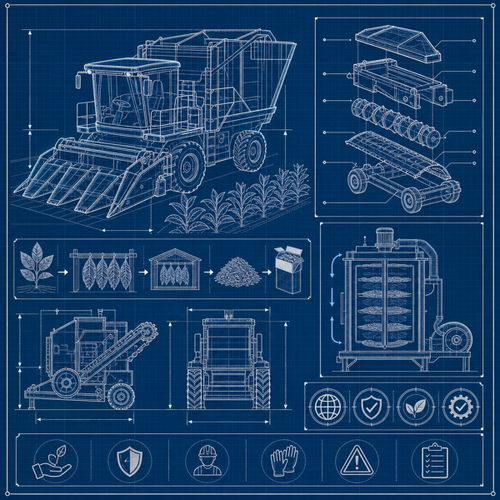
October 2026: New Agriculture Standards for Tobacco Products and Machinery Safety
The agriculture sector is witnessing pivotal changes driven by new international standards addressing both modern tobacco products and farm machinery safety. In October 2026, four significant standards were published, expanding requirements and guidance for laboratory testing, product specification, and operator safety. These updates empower manufacturers, quality professionals, compliance officers, and procurement specialists to enhance product reliability, ensure regulatory compliance, and drive operational efficiency.
Overview
The agriculture industry is evolving rapidly, impacted by emerging technologies in tobacco processing and enhanced safety expectations for agricultural machinery. Standards play a crucial role by establishing consistent methods, safety requirements, and reliable data for both regulators and the industry at large. This article provides:
- An up-to-date summary of the four newly published standards
- Technical details relevant to laboratories, manufacturers, and machinery operators
- Compliance guidance for seamless adoption
- Actionable insights for safety and quality improvement
By staying informed, professionals across the agriculture value chain can minimize risks, improve product quality, and demonstrate alignment with global best practices.
Detailed Standards Coverage
ISO 18722-1:2026 – Tobacco Heating Systems (eHTPs): Aerosol and Nicotine Determination
Tobacco heating systems — Determination of aerosol collected mass and nicotine in the aerosol with a puffing regime according to the ISO 5501 series — Part 1: Electrically heated tobacco products (eHTPs)
ISO 18722-1:2026 specifies an analytical method for determining aerosol collected mass (ACM) and nicotine content produced by electrically heated tobacco products (eHTPs), using a laboratory puffing regime compliant with ISO 5501-1. The standard provides laboratories and manufacturers with gravimetric and chromatographic procedures for reliable, repeatable results. Its methodology covers everything from glassware preparation to calibration, extraction, and precise quantification using gas chromatography with flame ionization detection (GC-FID).
This standard enables:
- Product design and regulatory compliance for eHTPs
- Reliable nicotine and aerosol yield analysis
- Data comparability for international trade and product assessment
Who Must Comply:
- Tobacco product manufacturers
- Regulatory compliance laboratories
- Product development and quality assurance teams
Practical implications: Laboratories must adopt specific apparatus, high-quality reagents (including propane-2-ol and internal standards), and follow rigorous sampling and calibration protocols. The standard also clarifies the limitations of machine-based puffing as proxies for human exposure, cautioning against misinterpreting laboratory data for consumer risk.
Key highlights:
- Standardized puffing regime for eHTPs based on ISO 5501-1
- Gravimetric and GC-FID methods for ACM and nicotine determination
- Guidance on test reporting, repeatability, and reproducibility
Access the full standard:View ISO 18722-1:2026 on iTeh Standards
ISO 18722-2:2026 – Tobacco Heating Systems (aHTPs): Aerosol and Nicotine Determination
Tobacco heating systems — Determination of aerosol collected mass and nicotine in the aerosol with a puffing regime according to the ISO 5501 series — Part 2: Aerosol heated tobacco products (aHTPs)
ISO 18722-2:2026 extends the scope of laboratory testing protocols to aerosol heated tobacco products (aHTPs), specifying analytical methods under the ISO 5501-2 puffing regime. The standard details gravimetric and chromatographic procedures (GC-FID) to accurately quantify ACM, optionally accounting for tobacco heating system mass loss (THSML), and nicotine concentration in product aerosols.
Industries Covered:
- aHTP manufacturers
- Quality assurance and regulatory laboratories
- Research and development teams for tobacco alternatives
Key specifications:
- Standardization across various aHTP device-product combinations
- Procedures for both ACM and mass loss (optional)
- Strict requirements for reagents, calibration, and apparatus
Implementation Considerations: Teams must ensure proficiency in glass fibre filter handling and rigorous calibration. The method ensures consistent and reproducible lab analysis, supporting product safety claims, regulatory filings, and global market entry.
Key highlights:
- Analytical repeatability and reproducibility guidance
- Simultaneous analysis of related compounds (e.g., glycerol)
- Methodologies harmonized with CORESTA CRM 107
Access the full standard:View ISO 18722-2:2026 on iTeh Standards
prEN 12525 – Agricultural Machinery: Front Loaders Safety
Agricultural machinery – Front loaders – Safety
prEN 12525 is a comprehensive update addressing the safety requirements for front loaders mounted on agricultural and forestry tractors. It establishes technical and procedural measures to manage the risks associated with lifting operations, attachment mounting/demounting, hydraulic systems, operator controls, and combination stability.
Scope and Application:
- Front loader manufacturers and integrators
- Tractor OEMs
- Farms and contractors using agricultural loader systems
- Safety regulators and machinery inspectors
Technical Requirements:
- General and specific hazard identification (e.g., unintended lowering, falling objects)
- Controls for mounting on tractor frames, stability during mounting/demounting, and hydraulic circuit protection
- Detailed marking, instructional signs, operator guidance, and requirements for manual contents
- Mandatory verification and validation procedures for OPG (Operator Protective Guard), float positions, rated capacity, and more
Practical Impact: Front loaders produced after the standard's effective date must comply with the new requirements, including updated guidance on operator protection, compatibility checks, and enhanced safety for accessory use. Machinery safety professionals must update procurement and inspection checklists accordingly.
Key highlights:
- New requirements for protection against falling objects and control systems
- Alignment with EN ISO 4254-1, CEN Guide 414, and key EU directives/regulations
- Detailed procedures for capacity testing and OPG verification
Access the full standard:View prEN 12525 on iTeh Standards
ISO 21114:2026 – Nicotine Pouches: Determination of Nicotine Content (LC-UV)
Nicotine pouches — Determination of nicotine content using liquid chromatography ultraviolet spectroscopy (LC-UV)
ISO 21114:2026 delivers a robust analytical method for determining nicotine content in nicotine pouches and filler, using high- or ultra-performance liquid chromatography (HPLC/UPLC) coupled with ultraviolet (UV) detection. The method covers extraction, sample preparation, calibration, and reporting protocols, ensuring the comparability and reliability of test results.
Who benefits:
- Manufacturers of nicotine pouches and non-tobacco oral products
- Testing laboratories
- Regulatory compliance bodies
Technical features:
- Buffers and mobile phases tailored for precise extraction and separation
- Flexible design allows use of both HPLC and UPLC columns and equipment
- Validation guidelines for repeatability and reproducibility based on international collaborative trials
- Detailed apparatus and reagent specifications for accredited labs
Practical Application: Laboratories must follow methodical steps for extraction, sample handling, and calibration, ensuring accurate nicotine quantification for labeling, regulatory declarations, and product development.
Key highlights:
- Covers a wide calibration range (2–40 mg/g)
- Supports quality assurance for emerging oral nicotine products
- Provides guidelines for both pouch and filler forms
Access the full standard:View ISO 21114:2026 on iTeh Standards
Industry Impact & Compliance
The publication of these four new agriculture standards reflects increasing complexity and regulatory stringency in both tobacco products and farm machinery design. Organizations must review and update:
- Testing protocols: Laboratories need to update procedures in line with new sample preparation, extraction, and calibration requirements.
- Product development: Manufacturers of tobacco heating systems and nicotine pouches must ensure all new batches meet these new analytical expectations.
- Machinery safety policy: Farm operators and machinery procurement teams must specify compliant front loaders and validate their existing fleets against the latest safety features.
Benefits of adoption:
- Enhanced consumer and worker safety
- Lower risk of regulatory violations
- Greater confidence in product claims and international certification
Non-compliance risks:
- Product recalls or market withdrawal
- Regulatory fines or operational stoppages
- Liability from user injury or mislabeling
Timelines for compliance may vary by jurisdiction, but proactive implementation is recommended.
Technical Insights
Common technical themes across the standards:
- Emphasis on repeatability and reproducibility: Test methods (for tobacco and nicotine products) explicitly define validation requirements to ensure accuracy across different laboratories and operators.
- Advanced chromatographic techniques: Both ISO 18722 series and ISO 21114 specify the use of GC-FID and LC-UV for trace chemical determination, demanding well-equipped labs and trained analysts.
- Integration with regulatory frameworks: prEN 12525 directly references key EU machinery directives; the ISO standards support global regulatory compliance.
Implementation best practices:
- Update SOPs to incorporate new sample collection, extraction, and calibration techniques.
- Conduct staff training on hazard identification, analytical testing, and machinery operation.
- Invest in compliant apparatus—particularly chromatography and safety control devices.
- Schedule regular audits and proficiency testing to ensure ongoing conformity.
Testing and certification: Independent verification (via accredited labs or notified bodies) is strongly recommended for both tobacco products and machinery to demonstrate true compliance and support certification claims.
Conclusion and Next Steps
The October 2026 release of these four new international standards marks a critical advancement for agriculture professionals working with tobacco products or farm machinery. By aligning operations with ISO 18722-1, ISO 18722-2, prEN 12525, and ISO 21114, organizations can:
- Ensure safe, high-quality products and equipment
- Meet regulatory and market expectations in domestic and export markets
- Demonstrate leadership in compliance, quality, and consumer protection
Recommended actions:
- Review and update testing and safety procedures in line with the new standards
- Educate staff on key changes and compliance strategies
- Access the full standards through iTeh Standards for in-depth requirements and supporting materials
Stay ahead in the agriculture sector by continuously monitoring standards development and integrating new guidance into your operations.
Categories
- Latest News
- New Arrivals
- Generalities
- Services and Management
- Natural Sciences
- Health Care
- Environment
- Metrology and Measurement
- Testing
- Mechanical Systems
- Fluid Systems
- Manufacturing
- Energy and Heat
- Electrical Engineering
- Electronics
- Telecommunications
- Information Technology
- Image Technology
- Precision Mechanics
- Road Vehicles
- Railway Engineering
- Shipbuilding
- Aircraft and Space
- Materials Handling
- Packaging
- Textile and Leather
- Clothing
- Agriculture
- Food technology
- Chemical Technology
- Mining and Minerals
- Petroleum
- Metallurgy
- Wood technology
- Glass and Ceramics
- Rubber and Plastics
- Paper Technology
- Paint Industries
- Construction
- Civil Engineering
- Military Engineering
- Entertainment