


July 2026: New Automotive Standards Drive Next-Gen Road Vehicle Engineering
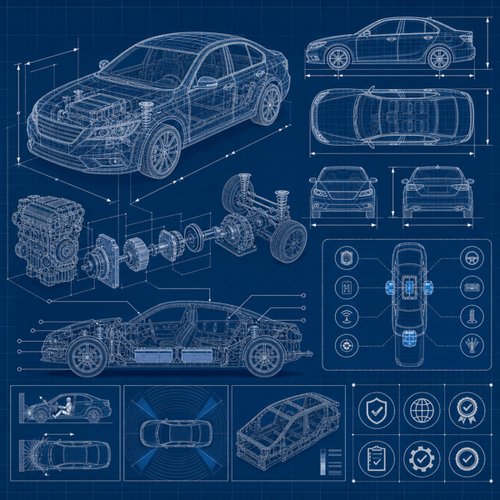
July 2026: New Automotive Standards Drive Next-Gen Road Vehicle Engineering
The automotive and road vehicles sector is entering a new era as three pivotal standards are published in July 2026. Addressing environmental stewardship, electric vehicle (EV) performance, and component safety, these documents establish a robust framework for innovation and regulatory compliance. Discover the standards driving the industry’s future: EN IEC 62321-14:2026, ISO 8715-1:2026, and ISO 8820-3:2026.
Overview
The automotive and road vehicles sector is experiencing a profound transformation, propelled by demands for cleaner mobility, high-performing electric vehicles, and safer, smarter component designs. International standards play a crucial role in this evolution, ensuring consistency, quality, and interoperability on a global scale.
For engineers, manufacturers, quality managers, and procurement specialists, adopting and understanding new standards is essential—supporting everything from material selection and emissions management to component specification and product testing. This article covers the newly published standards for July 2026 and reveals their performance requirements, compliance imperatives, and impact on daily operations in the automotive industry.
Key takeaways:
- Clarity on hazardous substance testing in plastics and electronics
- New performance metrics and test methods for electric passenger vehicles
- Updated requirements for electrical safety through advanced fuse-link designs
Detailed Standards Coverage
EN IEC 62321-14:2026 - Testing for Chlorinated Paraffins in Automotive Plastics
Determination of certain substances in electrotechnical products – Part 14: Short-chain chlorinated paraffins (SCCPs) and medium-chain chlorinated paraffins (MCCPs) in plastics by gas chromatography-negative chemical ionization-mass spectrometry (GC-NCI-MS)
Electrotechnical products in automotive applications increasingly face environmental scrutiny, especially regarding substances of very high concern such as SCCPs and MCCPs. EN IEC 62321-14:2026 establishes a precise, globally harmonized testing methodology for determining the presence and concentration of these chlorinated paraffins in plastics used in road vehicle components.
Scope and Application
This standard specifies a quantitative method for determining SCCPs (C10-C13) and MCCPs (C14-C17) in automotive plastics via solvent extraction and advanced GC-NCI-MS techniques. Applicable substances include those found in ABS and PVC matrices commonly used for components such as dashboards, panels, electrical housings, and cable insulation.
Key Requirements and Specifications
- Sampling and Sample Preparation: Defines strict procedures for preparing polymer samples, including ultrasonic extraction and sulfuric acid cleanup, to ensure accurate results.
- Calibration and Reference Materials: Requires the use of specific calibration solutions with defined chlorination degrees (e.g., SCCPs at 59%, MCCPs at 55%) and validated reference materials.
- Analytical Parameters: Sets mandatory instrument configurations for GC-NCI-MS, including mass-to-charge ratios for quantification and qualification of target substances.
- Quality Assurance: Outlines repeatability, reproducibility, and method detection limits, ensuring robust and defensible results across global laboratories.
- Test Reporting: Mandates comprehensive reporting structures for results, including integration with peak shape evaluation.
Who Should Comply
- Automotive OEMs and Tier 1/2 suppliers using plastics in vehicle electronics
- Laboratories and third-party testing providers
- Quality and compliance teams monitoring REACH, RoHS, and similar regulations
Practical Implications
Implementing EN IEC 62321-14:2026 provides manufacturers with:
- A reliable framework for due diligence in hazardous substance management
- Enhanced market access via regulatory compliance
- Better risk controls for recalled or non-compliant materials
Key highlights:
- Quantifies SCCPs and MCCPs in both ABS and PVC plastics
- Employs advanced GC-NCI-MS methods and rigorous quality control
- Directly supports environmental compliance for global supply chains
Access the full standard:View EN IEC 62321-14:2026 on iTeh Standards
ISO 8715-1:2026 - Road Performance of Electric Passenger and Light Duty Vehicles
Electric road vehicles — Road operating characteristics — Part 1: Passenger cars and light duty vehicles
Reflecting the surge of electric vehicles in the automotive fleet, ISO 8715-1:2026 delivers a comprehensive suite of test methods to quantify the road performance of purely electrically propelled passenger cars and light duty vehicles. This first edition modernizes the foundational standard, aligning test procedures with today’s electric vehicle architecture and regulatory expectations.
What the Standard Covers
- Performance Evaluation: Systematically assesses maximum speed, acceleration capabilities, hill climbing performance, gradeability, and hill starting ability according to rigorous, repeatable methods.
- Test Conditions: Specifies vehicle, track, and atmospheric conditions, emphasizing reproducibility and safety (including precise tyre pressures, energy storage protocols, and pre-test conditioning).
- Data Accuracy: Mandates high standards for measurement uncertainty (e.g., ±0.1 s for time, ±0.1 km/h for speed).
- Vehicle Definitions: Clarifies classifications for passenger cars and light duty vehicles, based on internationally recognized mass criteria.
Implementation and Compliance
OEMs and suppliers seeking to validate their electric vehicles for performance claims or regulatory submissions will use this standard’s test regime. Key applications include:
- Homologation/approval of new EV models worldwide
- Internal benchmarking between models and competitors
- Communication of standardized, comparable performance figures to regulators and consumers
Practical Implications
- Enables fair market comparison of electric vehicles across manufacturers
- Supports transparency for fleet procurement and public tenders
- Facilitates integration into national and regional type approval systems
Key highlights:
- Defines precise test procedures for speed, acceleration, hill climbing, and gradeability
- Ensures harmonized test masses and load distributions
- Mandates rigorous environmental and operational controls for repeatability
Access the full standard:View ISO 8715-1:2026 on iTeh Standards
ISO 8820-3:2026 - Blade-Type Automotive Fuse-Links for Improved Vehicle Safety
Road vehicles — Fuse-links — Part 3: Fuse-links with tabs (blade type) Type C (medium), Type E (high current) and Type F (miniature)
Reliable circuit protection is a cornerstone for modern road vehicles, especially as electrification and onboard electronics proliferate. The fifth edition of ISO 8820-3:2026 defines the global specifications for blade-type fuse-links categorized as Type C (medium), Type E (high current), and Type F (miniature)—covering design, performance, and test requirements for these critical safety components.
Standard Coverage and Scope
- Applicability: Addresses fuse-links up to 100 A and voltages of 32 V or 58 V, commonly installed in automotive electrical panels and distribution boxes.
- Test Procedures: Outlines comprehensive sequences for voltage drop, transient current cycling, breaking capacity, environmental endurance, and terminal strength.
- Marking and Colour Coding: Standardizes fuse identification for safe, efficient service and maintenance operations.
- Dimensional Specifications: Achieves cross-compatibility and easy retrofitting across different vehicle brands and models.
Key Requirements
- All fuse-links must withstand strict voltage drop and thermal cycling tests
- Breaking capacity defined up to 1,000 A to support demanding electrical loads in electric and hybrid vehicles
- Updated mechanical strength and temperature rise tests to address new-generation vehicle architectures
Who Needs This Standard
- Automotive component and fuse manufacturers
- Wire harness and vehicle electrical system designers
- Vehicle manufacturers and maintenance providers seeking improved electrical safety
Practical Implications
The adoption of ISO 8820-3:2026 brings:
- Improved system reliability and fire protection
- Standardized servicing for automotive electricians worldwide
- Reduced product liability and warranty claims
Key highlights:
- Fully updated requirements for Type C, E, and F blade-type fuse-links
- Reflects latest advances in electrical load management for EVs and hybrids
- Comprehensive performance, marking, and dimensional standards
Access the full standard:View ISO 8820-3:2026 on iTeh Standards
Industry Impact & Compliance
The July 2026 updates mark a step-change for compliance and market leadership in automotive and road vehicles engineering. Here’s what businesses and technical teams need to consider:
- Compliance Deadlines: Early adoption is critical for suppliers and OEMs to ensure continued access to global markets, especially with growing environmental and safety regulations.
- Regulatory Alignment: All three standards support traceable, auditable compliance with EU, North American, and Asia-Pacific regulatory regimes, including REACH, RoHS, type approval, and electrical safety laws.
- Operational Benefits: Consistent test methods, material requirements, and component specifications streamline global supply chains, reduce costly recalls, and support efficient innovation.
- Risk of Non-Compliance: Failure to implement these standards may result in import/export barriers, certification delays, and significant reputational damage—including liability exposure and market withdrawal.
Technical Insights
Across the three standards, several common technical requirements and best practices emerge:
- Sample Preparation and Test Methodology: Accurate sample preparation and adherence to prescribed analytical techniques (e.g., GC-NCI-MS protocols in EN IEC 62321-14:2026) are vital for reproducible results.
- Calibration and Quality Assurance: Employ traceable calibration standards and conduct regular interlaboratory comparisons for substance analyses and performance tests.
- Performance Verification: For electric vehicles, test conditions must strictly follow standardized environmental and track conditions, ensuring reliable and comparable data.
- Component Interchangeability: With ISO 8820-3:2026, consistent dimensions and color coding support fast, error-free service and safer field maintenance.
- Testing and Certification: Engage third-party labs and certification bodies early to validate conformity and establish competitive market advantage.
Best practices include:
- Early-stage integration of new standard clauses in product design and quality management systems
- Comprehensive training for laboratory, engineering, and service staff
- Frequent audits and documentation updates to capture the latest regulatory amendments
Conclusion and Next Steps
The July 2026 standards highlight a forward-looking agenda for the automotive and road vehicles sector. From ensuring safer, more sustainable electronics and plastics to unlocking the high-performance capabilities of next-gen EVs and building uncompromising circuit protection, these standards provide the platform for excellence in manufacturing, compliance, and engineering.
For organizations and professionals:
- Review and integrate these standards into procurement and design criteria
- Invest in ongoing staff training on new testing methods and compliance requirements
- Develop robust documentation and traceability systems to demonstrate alignment
Stay ahead of the curve and ensure your operations are equipped for the next era of automotive innovation.
Explore these standards and more on iTeh Standards—your partner in global compliance and technical leadership.
Categories
- Latest News
- New Arrivals
- Generalities
- Services and Management
- Natural Sciences
- Health Care
- Environment
- Metrology and Measurement
- Testing
- Mechanical Systems
- Fluid Systems
- Manufacturing
- Energy and Heat
- Electrical Engineering
- Electronics
- Telecommunications
- Information Technology
- Image Technology
- Precision Mechanics
- Road Vehicles
- Railway Engineering
- Shipbuilding
- Aircraft and Space
- Materials Handling
- Packaging
- Textile and Leather
- Clothing
- Agriculture
- Food technology
- Chemical Technology
- Mining and Minerals
- Petroleum
- Metallurgy
- Wood technology
- Glass and Ceramics
- Rubber and Plastics
- Paper Technology
- Paint Industries
- Construction
- Civil Engineering
- Military Engineering
- Entertainment