


June 2026 Updates: New Standards Elevate Electrical Engineering Safety and Performance
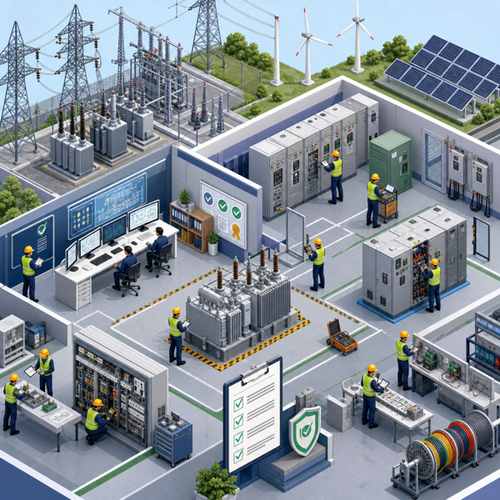
June 2026: New International Standards Enhance Electrical Engineering Safety and Performance
The electrical engineering landscape is undergoing significant advancements this June with the publication of five pivotal international standards. Covering critical domains from power system simulation, hazardous area assessment, and auxiliary power design to the rigorous specification of magnetic steel materials, these updates establish new benchmarks for operational safety, efficiency, and product quality.
Industry professionals, compliance managers, and engineers across power generation, industrial automation, equipment manufacturing, and procurement will find these standards essential for maintaining compliance and boosting performance—whether implementing state-of-the-art control strategies or specifying materials for high-efficiency transformers and motors.
Overview
Electrical engineering is foundational to modern infrastructure and industry. Robust international standards ensure that systems are safe, reliable, and interoperable, while fostering innovation and market access. In June 2026, the International Electrotechnical Commission (IEC) has released five new or revised standards, reflecting updated safety practices, technical requirements, and quality assurance processes.
In this article, you'll discover:
- What each new standard covers and why it matters
- Key technical requirements and target users
- Practical compliance and implementation guidance
- Major changes from prior versions
- How these standards impact your business and competitive advantage
Detailed Standards Coverage
IEC TS 63537:2026 – Hardware-in-the-Loop Simulation Test of Power System Stability Control System
Hardware-in-the-loop simulation test of power system stability control system
This Technical Specification sets out comprehensive guidelines and requirements for hardware-in-the-loop (HIL) simulation testing of Power System Stability Control (PSSC) systems. It standardizes terminology, objectives, system architecture, test procedures, and quality management, driving improvements in the stability and safe operation of complex power grids.
Scope and Application:
- Targets the simulation testing of PSSC devices integrating new principles, models, or complex control strategies
- Details requirements for CHIL (Controller Hardware-in-the-Loop) simulation, communication interfaces (analog, digital, sampled value), and integration with subsystems like HVDC and renewables
- Covering architectures used within power stations, transformer substations, converter stations, and renewable plants
- Test coverage includes information exchange verification, fault simulations, control strategy effectiveness, and configuration adaptability
Key requirements:
- Accurate modeling and interaction between real hardware and simulated environments
- Management of multiple simultaneous stability strategies and communication protocols
- Detailed reporting and test model/version management for auditability
- Application of simulation tests for both primary and standby PSSC systems if from different vendors
Who should comply:
- Power utilities
- Grid control system manufacturers
- Engineering consultancies specializing in grid stability
- Testing and certification laboratories involved in power system validation
Practical implications:
- Streamlines product validation cycles
- Enhances detection of control issues before field deployment
- Reduces risks linked to wide-area disturbances and cyber-physical interactions
Notable updates:
- Expanded test scenarios for multi-vendor and multi-strategy environments
- New criteria for interface standardization and test system traceability
Key highlights:
- Comprehensive HIL test methodology for stability controls
- Requirements for multi-party, multi-subsystem communication
- Focus on quality management in test execution and documentation
Access the full standard:View IEC TS 63537:2026 on iTeh Standards
IEC 60079-10-2:2026 – Explosive Atmospheres – Part 10-2: Classification of Areas – Explosive Dust Atmospheres
Explosive atmospheres – Part 10-2: Classification of areas – Explosive dust atmospheres
IEC 60079-10-2:2026 is a cornerstone for safety in industries handling combustible dust. This standard specifies methods to identify and classify hazardous areas where explosive dust clouds or dust layers are present, supporting effective risk assessment and ignition source control.
Scope and Application:
- Applies to facilities where explosive or combustible dust atmospheres (including fibres and flyings) exist
- Details classification for dust clouds (e.g., during processing) and dust layers (e.g., from accumulation)
- Excludes underground mining, non-atmospheric oxygen combustibles, medical/dwelling spaces, and catastrophic failures
- Stipulates that effective housekeeping is critical for minimization of risk
- Includes considerations for hybrid mixtures and alignment with atmospheric parameters
Key requirements:
- Procedures for classifying zones (Zone 20, 21, 22) based on the likelihood and persistence of dust/air mixtures
- Documentation and labelling of hazardous areas
- Recommendations for managing changes, personnel competence, and process safety
- Addresses both normal and non-standard pressure/temperature conditions
Who should comply:
- Chemical, pharmaceutical, food processing and agricultural facilities
- Equipment manufacturers for hazardous areas
- Safety managers and compliance auditors
Practical implications:
- Improved plant safety and reduced incident rates
- Enables robust design of electrical installations and process controls
- Minimum requirements for documentation during audit and investigation
Notable updates:
- Revised definitions for zone classifications, minimum explosive concentrations, and oxygen thresholds
- Guidance aligned with recent versions of related standards (IEC 60079-10-1, IEC 60404 series)
Key highlights:
- Clear classification process for hazardous dust zones
- Enhanced safety requirements for dust layers and housekeeping
- New and updated definitions and technical recommendations
Access the full standard:View IEC 60079-10-2:2026 on iTeh Standards
IEC TS 63346-2-1:2026 – Low-Voltage Auxiliary Power Systems – Part 2-1: Design Criteria – General Requirements
Low-voltage auxiliary power systems - Part 2-1: Design criteria - General requirements
Focused on the safe and reliable design of auxiliary power supply (APS) in power stations and substations, this Technical Specification details principles and requirements for systems at voltages ≤ 1 kV AC and 1.5 kV DC and up to 60 Hz.
Scope and Application:
- Defines design guidance for auxiliary systems in substations, converter stations, hydro and thermal power plants
- Excludes nuclear power stations and offshore or traction substations due to their specialized demands
Key requirements:
- Emphasizes safety first (personnel, equipment, system), followed by reliability
- System flexibility for future modification and expansion
- Strict selection of operational conditions and external influences (environmental resilience)
- Configuration requirements for AC and DC systems, grounding, overcurrent protection, and redundancy
- Dedicated requirements for transient/temporary overvoltage, electromagnetic disturbances, and arc faults
- Mandates SCADA integration and provision for measurement and online monitoring
Who should comply:
- Power station and substation designers/maintainers
- APS equipment manufacturers
- Electrical engineering consultants
Practical implications:
- Ensures availability of critical power for control, protection, and communication systems
- Reduces operational downtime and increases plant resilience
- Facilitates modification and expansion with minimum disruption
Notable updates:
- Expanded references to current IEC installation standards (IEC 60364 series, IEC 60947, IEC 61439)
- New provisions for integrating digital monitoring and SCADA
Key highlights:
- Design criteria for reliable low-voltage auxiliary power
- Flexible configurations for future-proofing assets
- Integrated approach to safety, protection, and monitoring
Access the full standard:View IEC TS 63346-2-1:2026 on iTeh Standards
IEC 60404-8-3:2023 – Magnetic Materials – Part 8-3: Specifications for Cold-Rolled Non-Oriented Electrical Steel Strip and Sheet Delivered in the Semi-Processed State
Magnetic materials - Part 8-3: Specifications for individual materials - Cold-rolled non-oriented electrical steel strip and sheet delivered in the semi-processed state
This standard provides the foundation for specifying cold-rolled non-oriented (CRNO) electrical steels in the semi-processed condition—a key class of materials for transformers, electrical machines, and magnetic circuits.
Scope and Application:
- Defines grades, requirements, and inspection protocols for semi-processed CRNO electrical steel: nominal thicknesses 0.47 mm, 0.50 mm, 0.64 mm, 0.65 mm, and 0.79 mm (selective use at 60 Hz)
- Applicability to materials delivered in coils or sheets, prior to final heat treatment
- Relevance for users handling their own annealing processes for tailored magnetic properties
- Excludes fully-processed steel varieties
Key requirements:
- Comprehensive specifications for magnetic properties, geometric tolerances, stacking factor, and testing
- Standardization of terms, test specimen lengths, and geometric measurements (now 1m, previously 2m)
- Mandates consistency with global standards (IEC 60404 series)
Who should comply:
- Manufacturers of electrical rotating machines and transformers
- Steel mills producing electrical steels
- Design engineers specifying magnetic materials for power and control applications
Practical implications:
- Assures reliable supply and process compatibility for magnetic assemblies
- Facilitates international trade and quality benchmarking
Notable updates:
- New tolerances on nominal thickness and revised geometric characteristics
- Consistency with IEC 60404-9:2018 and elimination of redundant European designation annex
Key highlights:
- Detailed grades and specification tables for CRNO steel
- Updated geometric tolerance and test sample definitions
- Ensures consistent material quality for further processing and end-use
Access the full standard:View IEC 60404-8-3:2023 on iTeh Standards
IEC 60404-8-4:2022 – Magnetic Materials – Part 8-4: Specifications for Cold-Rolled Non-Oriented Electrical Steel Strip and Sheet Delivered in the Fully-Processed State
Magnetic materials - Part 8-4: Specifications for individual materials - Cold-rolled non-oriented electrical steel strip and sheet delivered in the fully-processed state
The fully-processed counterpart to the previous standard, IEC 60404-8-4, is essential for specifying cold-rolled non-oriented electrical steel supplied after the final annealing, for immediate integration in magnetic circuit assemblies.
Scope and Application:
- Grades/requirements for fully-processed CRNO steel in nominal thicknesses: 0.35 mm, 0.47 mm, 0.50 mm, 0.65 mm, and 1.00 mm (0.47 mm: for use at 60 Hz)
- Details all relevant properties for material received in its final magnetic state—ready for direct use
- Used in manufacturing high-efficiency motors, generators, and transformers
- Excludes semi-processed steel (specified in IEC 60404-8-3)
Key requirements:
- Magnetic property measurement (Epstein method)
- Table-based tolerances for thickness and width; geometric checks
- Surface, cutting suitability, density, stacking factor
- Updated test specimen and residual curvature definitions
Who should comply:
- OEMs manufacturing high-efficiency electrical apparatus
- Procurement teams in transformer and machine plants
- Testing laboratories and quality assurance teams
Practical implications:
- Eliminates uncertainty in magnetic behavior and assembly fit
- Streamlines procurement with harmonized international specs
Notable updates:
- Revised geometric characteristics and tolerance tables for modern manufacturing needs
- Updated length of test specimen and consistency across IEC 60404 series
Key highlights:
- Grades and magnetic property tables for fully-processed CRNO steel
- Enhanced geometric and technological property definitions
- Alignment with latest international methods (IEC 60404-9:2018)
Access the full standard:View IEC 60404-8-4:2022 on iTeh Standards
Industry Impact & Compliance
Adopting these June 2026 standards will:
- Propel equipment safety, performance, and resilience in critical electrical infrastructure
- Support international market access and product acceptance
- Streamline risk assessment and area classification in hazardous settings
- Standardize procurement and material specification with up-to-date requirements
Compliance considerations:
- Review current company procedures, testing, and certification against updated specifications
- Initiate staff training on new definitions, tolerances, or test protocols
- Update documentation and procurement templates to reference new standards
- Identify deadlines within regional implementation frameworks (e.g., presumption of conformity for CE marking or local equivalents)
Benefits:
- Enhanced workplace safety and reduced risk of incident or recall
- Lower lifecycle costs through better reliability and standardized materials
- Greater customer trust and auditability
Risks of non-compliance:
- Regulatory penalties or loss of certification
- Increased incidents, downtime, or liability exposure
- Market exclusion for non-conforming equipment/materials
Technical Insights
Common requirements and best practices:
- Emphasis on simulation, rigorous testing, and validation before field implementation
- Standardized design criteria for auxiliary power systems—ensuring redundancy and robustness
- Material grades and property specification advances reflect the needs of high-efficiency electrical machines and transformers
- Classification of hazardous areas now ties explicitly to housekeeping, documentation, and staff competence
Implementation tips:
- Cross-check equipment and system designs against new specification tables and geometric tolerances
- Schedule HIL testing for grid-control and automation products before large-scale rollouts
- Confirm that supplier documentation matches the new magnetic steel standards (both semi- and fully-processed)
- Use updated hazard area classification maps for all new or retrofitted facilities
Testing and certification:
- Leverage IEC-referenced test methods (Epstein frame, geometric checks, functional CHIL tests)
- Maintain organized, versioned documentation for audits and future revisions
- Engage with accredited labs for initial conformity assessment if required
Conclusion & Next Steps
The June 2026 batch of IEC standards delivers vital upgrades to electrical engineering practice, spanning everything from power system stability and explosion safety to the granular details of auxiliary system design and magnetic materials. Forward-thinking organizations should:
- Review and incorporate these standards into their compliance, design, procurement, and QA programs
- Educate engineering and safety teams on new requirements and best practices
- Monitor upcoming releases (see Part 2) for further updates and expanded sector coverage
- Explore each standard in detail to ensure full and effective implementation
Stay informed and maintain your competitive edge in electrical engineering: explore the latest standards, detailed documentation, and expert insights at iTeh Standards.
Categories
- Latest News
- New Arrivals
- Generalities
- Services and Management
- Natural Sciences
- Health Care
- Environment
- Metrology and Measurement
- Testing
- Mechanical Systems
- Fluid Systems
- Manufacturing
- Energy and Heat
- Electrical Engineering
- Electronics
- Telecommunications
- Information Technology
- Image Technology
- Precision Mechanics
- Road Vehicles
- Railway Engineering
- Shipbuilding
- Aircraft and Space
- Materials Handling
- Packaging
- Textile and Leather
- Clothing
- Agriculture
- Food technology
- Chemical Technology
- Mining and Minerals
- Petroleum
- Metallurgy
- Wood technology
- Glass and Ceramics
- Rubber and Plastics
- Paper Technology
- Paint Industries
- Construction
- Civil Engineering
- Military Engineering
- Entertainment