


Electronics Standards Update: Key July 2026 Publications for the Industry
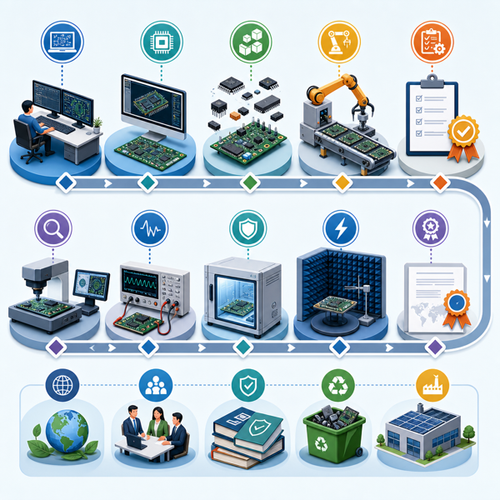
Electronics professionals face ongoing change, and July 2026 marks a significant milestone with the release of five vital international standards. Spanning device packaging, high-voltage component specification, laser technology, and electromagnetic compatibility, these standards introduce new requirements and harmonized guidelines critical for quality management, regulatory compliance, and technical innovation. Organizations must act quickly to align procedures and ensure both product safety and market access. This article—the first in a two-part series—delivers an in-depth look at these recent publications, providing clarity on scope, requirements, and practical business impacts.
Overview
The electronics sector is fundamental to global technology advancement, powering industries from manufacturing to medical devices and telecommunications. International standards in electronics not only ensure product reliability and safety but also drive efficiency, interoperability, and innovation. Adopting up-to-date standards empowers manufacturers, engineers, and compliance professionals to streamline operations, minimize risk, and access global markets. This July 2026 update covers five major standards: from managing moisture sensitive devices to advanced definitions for laser measurement and EMC evaluation for automotive transceivers. Readers will gain actionable knowledge to guide policy updates, procurement decisions, and engineering processes.
Detailed Standards Coverage
EN IEC 61760-4:2026 - Moisture Sensitive Devices in Surface Mount Technology
Surface mounting technology - Part 4: Classification, packaging, labelling and handling of moisture sensitive devices
This standard defines comprehensive classification procedures, packaging requirements, labelling formats, and handling methods for moisture sensitive devices (MSDs) commonly used in surface mount technology (SMT). Given the increased risk of component damage during high-temperature soldering—especially with the trend toward lead-free alloys—proper MSD handling has become critical. EN IEC 61760-4:2026 introduces rigorous testing processes to determine moisture sensitivity levels (MSL), specifies dry pack requirements, packaging material criteria, and graphical labelling symbols.
Key requirements include:
- Moisture Sensitivity Level (MSL) assessment and classification for different device types
- Standardized temperature profiles for soak and reflow processes
- Packaging using moisture barrier bags, desiccants, and humidity indicators
- Storage, shelf-life, floor-life, and ESD protection guidelines
- Label formats for clear identification of MSD risk
Organizations employing SMT, including contract manufacturers, PCB assemblers, and OEMs, must comply to avoid yield loss and latent defects. New features extend relevance beyond plastic packages—addressing additional component types and harmonizing with global best practices (such as J-STD-020F). Implementation means reviewing procurement, storage, and production workflows, as well as updating labelling and training protocols.
Key highlights:
- Expanded classification procedure for diverse component types
- Detailed packaging, dry pack, and labelling specifications
- Comprehensive handling guidance (storage, ESD, re-baking)
Access the full standard:View EN IEC 61760-4:2026 on iTeh Standards
IEC 62146-1:2026 - Capacitors for High-Voltage AC Circuit-Breakers
Capacitors for high-voltage alternating current circuit-breakers - Part 1: General and grading capacitors
Focusing on grading capacitors for alternating current (AC) circuit-breakers, IEC 62146-1:2026 harmonizes performance criteria, testing, and safety requirements for both air-insulated and enclosed types. Grading capacitors ensure uniform voltage distribution across interrupter units in multi-break circuit-breakers, reducing stress and extending equipment life. The new edition brings a clearer distinction between grading capacitors and other types, updates dielectric and mechanical test methodologies, and specifies verification of losses, partial discharge, and handling practices.
Targeted at switchgear manufacturers, utility engineers, and high-voltage system integrators, the standard sets clear rules for:
- Service and environmental conditions (temperature, altitude, vibration, corrosion)
- Performance ratings (voltage, insulation, frequency)
- Testing protocols (dielectric, insulation, vibration, ageing, partial discharge)
- Safe transport, handling, and maintenance guidance
- Environmental and marking requirements
Revision highlights include detailed annexes on corrosion testing and new resonance frequency measurement methods. Adopting the updated standard can reduce equipment failure risk, optimize preventive maintenance, and ensure regulatory conformity in advanced grid and industrial projects.
Key highlights:
- Comprehensive test and inspection procedures for capacitor grading
- Enhanced safety, marking, and environmental protection measures
- New guidance on installation, operation, and periodic maintenance
Access the full standard:View IEC 62146-1:2026 on iTeh Standards
EN ISO 13694:2026 - Laser Beam Irradiance Measurement
Optics and photonics - Lasers and laser-related equipment - Test methods for laser beam irradiance (fluence) distribution (ISO 13694:2026)
This standard provides standardized methods to measure and characterize the spatial irradiance (fluence) distribution of both continuous wave and pulsed laser beams, ensuring precise and reproducible laser measurement in research, industrial, and medical applications. It introduces harmonized terminology (as per ISO 8000-7), new definitions for beam width, diameter, and cross-section, and prescribes best practices for test arrangements and environmental controls. Methods covered include camera arrays, slits, apertures, knife-edges, and pinholes—applicable for both near-field and far-field evaluation.
Applicable to optics designers, quality managers, and laser safety officers, the standard is essential for product specification, beam profiling, and calibration laboratory procedures. It mandates:
- Use of standardized parameters and symbols for reporting results
- Detailed calibration and background correction protocols
- Comprehensive test arrangements and control procedures
- Uniform reporting format for cross-lab comparability
Noteworthy revisions harmonize terminology and introduce new methods for handling complex beam profiles, enhancing device interoperability and international trade.
Key highlights:
- Modernized definitions for irradiance, fluence, and spatial distribution
- Step-by-step measurement, calibration, and data correction procedures
- Focus on reproducibility and comparability for multi-sector applications
Access the full standard:View EN ISO 13694:2026 on iTeh Standards
IEC 62228-7:2026 - EMC Evaluation of CXPI Transceiver ICs
Integrated circuits - EMC evaluation of transceivers - Part 7: CXPI transceivers
IEC 62228-7:2026 presents detailed electromagnetic compatibility (EMC) test and measurement methods for CXPI (Clock Extension Peripheral Interface) transceiver integrated circuits. Essential for automotive electronics and smart mobility, this standard sets forth requirements for evaluating RF emission, immunity to radiofrequency disturbances, impulses, and electrostatic discharge (ESD) under real network conditions. Updated terminology replaces master/slave with commander/responder and introduces new test setups and signal definitions for Type-A and Type-B transceivers.
Target organizations include automotive IC manufacturers, OEM system integrators, and EMC laboratories. Compliance ensures robust communication and resilience in increasingly complex automotive networks. Requirements include:
- Strict test configurations and conditions reflecting real CXPI network environments
- Defined test signals, failure criteria, and test boards
- Differentiation between standard and embedded transceivers
- Clear stepwise procedures for ESD, impulse, and RF disturbance evaluation
- Updated reporting, including new examples of test limits and configuration diagrams
This revised edition brings improved clarity to terms, expands scope to include embedded variants, and supports both regulatory and supply-chain demands for automotive EMC resilience.
Key highlights:
- Refined terminology and inclusion of embedded transceiver evaluation
- Enhanced RF, impulse, and ESD immunity test procedures
- Practical test setups supporting automotive compliance workflows
Access the full standard:View IEC 62228-7:2026 on iTeh Standards
ISO 11145:2026 - Unified Laser Vocabulary and Symbols
Optics and photonics — Lasers and laser-related equipment — Vocabulary and symbols
ISO 11145:2026 defines the foundational vocabulary, symbols, and measurement units for laser technology, critical for consistent communication and product specification across international markets. The sixth edition overhauls prior terminology, standardizing terms such as "irradiance", "fluence", and "encircled-power" in place of older definitions like "power density" or "energy density." It also introduces clearer rules for beam diameter, width, propagation characteristics, and new definitions for principal axis and spatial fluctuation.
This standard targets laser equipment manufacturers, researchers, technical writers, and test laboratories. Compliance ensures mutual understanding of performance specifications and supports regulated sectors like medical devices and industrial safety. Among the core elements:
- Definitions for all measurable beam properties and test conditions
- Standardized symbols aligned with current international photonics conventions
- Guidance to resolve IEC/ISO terminology differences (notably with IEC 60825-1)
- Structured index for reference and cross-standard harmonization
This edition enhances interoperability, supports more accurate referencing in procurement and product datasheets, and lays the groundwork for consistent technical communication.
Key highlights:
- Unified laser beam definitions and symbol system
- Updated terminology in line with photonics industry consensus
- Resolves key ISO/IEC terminology differences for suppliers and users
Access the full standard:View ISO 11145:2026 on iTeh Standards
Industry Impact & Compliance
The July 2026 standards deliver broad-reaching impacts across the electronics value chain:
- Manufacturers must update specifications, design rules, and quality procedures (especially for MSD handling and component packaging).
- Testing laboratories and inspection bodies should re-align protocols for laser characterization, EMC assessment, and capacitor verification.
- Procurement and quality managers need to ensure suppliers comply with new packaging, labelling, and documentation requirements.
- Automotive electronics developers gain updated, clearer EMC validation processes for CXPI networks, supporting vehicle system integration and reliability.
- Compliance officers must monitor implementation timelines and coordinate with certification bodies to remain market eligible.
The benefits include improved product reliability, reduced risk of defects or recalls, clearer contractual requirements, and smoother international market access. Non-compliance risks include increased warranty returns, loss of customer confidence, legal liability, or regulatory enforcement actions.
Technical Insights
Key Common Requirements
- Clear documentation of compliance to classification and testing requirements in technical datasheets
- Rigorous calibration, data logging, and reporting to ensure traceability and audit readiness
- Harmonized symbols, terminology, and units across documentation, packaging, and procurement
Implementation Best Practices
- Gap analysis: Assess current processes and identify areas requiring updates or retraining.
- Supplier communication: Distribute new requirements to component suppliers and require updated certifications.
- Process updates: Revise handling, storage, labelling, and testing procedures as stipulated in the new standards.
- Staff training: Provide targeted training on new definitions, testing protocols, and documentation formats.
- Internal audits: Schedule compliance reviews prior to external assessments or certifications.
Testing & Certification Considerations
- Adopt standardized test setups and data correction protocols (for lasers, EMC, and capacitors)
- Maintain calibration records in alignment with ISO/IEC guidelines
- Utilize iTeh Standards resources for full-text standards access and clarification during audits
Conclusion / Next Steps
The July 2026 electronics standards release marks a pivotal point for global professionals, setting new benchmarks on device handling, component testing, and harmonized terminology. Implementing these standards will drive quality, compliance, and competitive differentiation across manufacturing, procurement, and R&D functions. Organizations are urged to:
- Review and integrate the standards discussed above
- Communicate requirements internally and across their supplier network
- Stay up to date with coming Part 2 coverage for additional electronics standards this month
For more details or to access full-text standards, visit iTeh Standards and secure your compliance advantage in a rapidly evolving industry landscape.
Categories
- Latest News
- New Arrivals
- Generalities
- Services and Management
- Natural Sciences
- Health Care
- Environment
- Metrology and Measurement
- Testing
- Mechanical Systems
- Fluid Systems
- Manufacturing
- Energy and Heat
- Electrical Engineering
- Electronics
- Telecommunications
- Information Technology
- Image Technology
- Precision Mechanics
- Road Vehicles
- Railway Engineering
- Shipbuilding
- Aircraft and Space
- Materials Handling
- Packaging
- Textile and Leather
- Clothing
- Agriculture
- Food technology
- Chemical Technology
- Mining and Minerals
- Petroleum
- Metallurgy
- Wood technology
- Glass and Ceramics
- Rubber and Plastics
- Paper Technology
- Paint Industries
- Construction
- Civil Engineering
- Military Engineering
- Entertainment