


June 2026: New Standards Enhance Energy Efficiency and Wind Turbine Reliability
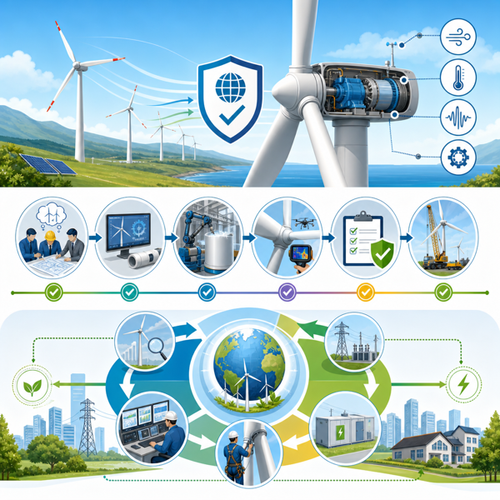
June 2026 sees the release of transformative international standards in the field of energy and heat transfer engineering. As part three of our comprehensive monthly coverage, we highlight two pivotal standards that set new requirements for energy network safety and wind turbine reliability. These updates not only address immediate technical needs but also reinforce the global shift towards smarter, safer, and more efficient energy management systems.
The new standards—one from IEC and one from ISO—set, for the first time, harmonized international requirements for the switching devices that enable prosumer electrical installations to safely operate in island mode, and for the condition monitoring and diagnostics of wind turbines. Both are essential for organizations striving for operational excellence, sustainability, and risk management in the modern energy sector.
Overview / Introduction
The energy and heat transfer engineering sector is at the core of the global transition to sustainable and resilient power systems. With more distributed energy resources, smarter grids, and the proliferation of wind and solar generation, the international community faces new technical and safety challenges. Standards in this field play a critical role in safeguarding installations, ensuring interoperability, and optimizing performance for all stakeholders—from utilities and equipment manufacturers to wind farm operators and residential prosumers.
In this article, you'll learn about:
- The latest IEC and ISO standards shaping low-voltage energy systems and wind power maintenance
- Key technical requirements, compliance targets, and industry implications
- How these documents support innovation, reliability, and energy efficiency across the value chain
Detailed Standards Coverage
IEC 63552:2026 – Switching Device for Islanding (SDFI)
Switching device for islanding (SDFI)
Scope and Purpose IEC 63552:2026 introduces the first comprehensive specification for the design, construction, and performance of switching devices for islanding (SDFI) in household and similar electrical installations. SDFIs are critical components in prosumer electrical installations (PEI), allowing these systems to disconnect from the main grid and run autonomously in 'island mode.' This capability is essential for energy efficiency, grid stability, and the integration of local renewable energy sources such as solar PV and battery storage.
Key Requirements and Specifications IEC 63552:2026 applies to SDFIs intended for low-voltage installations (up to 440 V AC), focused on:
- Safe disconnection and reconnection to the distribution network
- Reliable operation in both connected mode and island mode as defined by IEC 60364-8-82
- Operation in installations with prospective short-circuit currents up to 25,000 A
- Robust construction, marking, and product information provisions
- Integration with or interlocking to system referencing conductor switching devices (SRCSD) when necessary
The standard sets out strict requirements for:
- Operational endurance and type testing
- Electromagnetic compatibility (EMC) through comprehensive emissions and immunity tests
- Voltage and frequency deviation response
- Control unit (CU) functionalities, including possible communication with external systems (e.g., Customer Energy Manager or CEM)
- Manual and automated reclosing procedures for seamless grid reconnection
Who Needs to Comply?
- Electrical manufacturers of SDFI and related switchgear
- Installers and designers of prosumer islandable electrical installations
- Energy management solution providers
- Quality and compliance teams responsible for microgrid projects and distributed energy resources
Practical Implications Implementing SDFI in compliance with IEC 63552:2026 ensures:
- Enhanced safety during grid disconnection and reconnection
- Regulatory alignment for new microgrids and prosumer systems
- Future-proofing against evolving distributed energy standards
- Simplified integration of local energy storage and generation assets
Key highlights:
- Harmonizes operational safety for SDFIs in islandable installations
- Defines construction, marking, and EMC testing requirements
- Supports interfaces with modern energy management systems
Access the full standard:View IEC 63552:2026 on iTeh Standards
ISO 16079-1:2026 – Condition Monitoring and Diagnostics of Wind Turbines – Part 1: General Guidelines
Condition monitoring and diagnostics of wind turbines — Part 1: General guidelines
Scope and Purpose ISO 16079-1:2026 offers a much-needed framework for the condition monitoring and diagnostics of wind turbines. With the rapid expansion of the wind power industry, this standard is designed to help operators, maintenance teams, and condition monitoring system (CMS) providers select effective monitoring methods for failure mode detection, diagnostics, and prognostics. This improves turbine reliability, reduces unexpected downtime, and supports predictive maintenance across wind farms.
Importantly, Part 1 provides general guidelines applicable to all wind turbine types and focuses on methods rather than prescribing specific IT system architectures.
Key Requirements and Specifications
- Outlines the process for implementing a robust wind turbine condition monitoring program
- Introduces methodology based on FMECA (Failure Mode, Effects, and Criticality Analysis) for prioritizing component monitoring based on risk, criticality, detectability, and maintenance impact
- Clarifies the use of descriptors, anomalies, alarms, and diagnostic workflows
- Emphasizes reliable alarm generation, estimated time to failure (ETTF), remaining useful life (RUL), and actionable measurement parameters
- Considers the challenges unique to wind turbines—such as remote locations, variable loads, and complex environmental factors
- Recognizes the role and limitations of artificial intelligence (AI) in diagnostics, highlighting that it should support but not replace expert judgment
Who Needs to Comply?
- Wind farm operators and owners
- Turbine manufacturers and maintenance contractors
- Providers of condition monitoring and diagnostic equipment
- Renewable asset managers and engineers charged with maximizing uptime and minimizing failures
Practical Implications Adhering to ISO 16079-1:2026 will help organizations:
- Build a structured, cost-effective monitoring program that prioritizes critical components
- Predict and manage turbine faults for better maintenance scheduling
- Improve wind farm reliability and lower lifecycle costs
- Equip teams with a common language and process for diagnostics
Key highlights:
- Establishes FMECA-based prioritization of monitoring efforts
- Equips organizations to address unique wind turbine diagnostic challenges
- Lays the foundation for data-driven, AI-assisted condition monitoring
Access the full standard:View ISO 16079-1:2026 on iTeh Standards
Industry Impact & Compliance
The introduction of IEC 63552:2026 and ISO 16079-1:2026 has wide implications for organizations across the energy sector:
- Safety and Risk Management: Both standards enhance safety in prosumer installations and wind farms, reducing hazards associated with grid transitions or catastrophic turbine failures.
- Regulatory Compliance: National and regional authorities are likely to adopt or reference these international standards, making early compliance essential for market access and project approval.
- Operational Excellence: By adopting best-in-class specifications for both SDFI devices and condition monitoring, organizations can achieve higher reliability, lower maintenance costs, and improved asset performance.
- Implementation Timelines: Companies should review project and procurement plans now to ensure that all new equipment and systems commissioned from June 2026 onward align with these latest requirements.
- Competitive Advantage: Early adopters gain a head start in meeting stakeholder demands for safety, reliability, and energy efficiency, while also future-proofing operations against regulatory shifts.
Risks of Non-Compliance:
- Project delays due to non-approval
- Increased likelihood of equipment failure or unsafe operation
- Higher operational costs from unplanned downtime or rework
- Potential legal and reputational consequences
Technical Insights
Common Technical Requirements
- Reliability and Endurance: Both standards demand rigorous type and endurance testing (e.g., for operational cycles and EMC performance in the case of SDFI; for alarm and anomaly detection for wind turbines).
- Data-Driven Decision Making: FMECA and condition monitoring rely on data reduction, prioritization, and diagnostic workflows, using standardized descriptors and alarms to streamline maintenance.
- Integration with Modern Systems: SDFIs must be designed for compatibility with advanced energy management and automation systems. Wind turbine CMS schemes should be AI-ready, but always include human oversight.
- Component Traceability and Markings: Detailed marking and product information requirements support streamlined maintenance and regulatory audits.
Implementation Best Practices
- Start with a Gap Analysis: Compare current equipment, monitoring, and procedures to the new requirements.
- Prioritize Training: Ensure engineers and installers are updated on the new standard specifications and diagnostic methodologies.
- Engage Suppliers Early: Collaborate with technology vendors to ensure products meet the latest IEC and ISO tests and markings.
- Pilot Modern Monitoring Approaches: For wind turbines, begin integrating FMECA-based prioritization and AI-assisted workflows to build experience ahead of large-scale rollout.
- Document Compliance: Maintain detailed records of product certifications and testing to ease audits and client assurance processes.
Testing and Certification Considerations
- Electromagnetic Compatibility: Devices must undergo certified EMC testing to avoid interference and ensure reliability under field conditions.
- Functional Safety Checks: SDFIs require verification for disconnection, reconnection, interlocking, and sync processes.
- Condition Monitoring System Performance: CMS installations on wind farms should be validated for data quality, alarm thresholds, descriptor calibration, and effective predictive maintenance feedback loops.
Conclusion / Next Steps
The release of IEC 63552:2026 and ISO 16079-1:2026 sets a new benchmark for safe, efficient, and reliable operations in energy and heat transfer engineering. With the ongoing integration of distributed energy resources and the rapid growth of wind power, strict international standards are no longer optional—they are integral to sustained success.
Key takeaways:
- These standards are essential for modern prosumer installations and wind energy asset management
- Adoption enhances safety, predictability, and operational value
- Early compliance ensures business continuity and market access
Recommendations:
- Download and review the full standards from iTeh Standards
- Update internal company specifications and training materials
- Collaborate across engineering, procurement, and compliance teams to ensure effective implementation
- Stay informed about future updates and related parts in these standard series
For forward-thinking organizations, these standards offer not just a regulatory mandate, but a pathway to competitive advantage and excellence in energy system design and management.
Categories
- Latest News
- New Arrivals
- Generalities
- Services and Management
- Natural Sciences
- Health Care
- Environment
- Metrology and Measurement
- Testing
- Mechanical Systems
- Fluid Systems
- Manufacturing
- Energy and Heat
- Electrical Engineering
- Electronics
- Telecommunications
- Information Technology
- Image Technology
- Precision Mechanics
- Road Vehicles
- Railway Engineering
- Shipbuilding
- Aircraft and Space
- Materials Handling
- Packaging
- Textile and Leather
- Clothing
- Agriculture
- Food technology
- Chemical Technology
- Mining and Minerals
- Petroleum
- Metallurgy
- Wood technology
- Glass and Ceramics
- Rubber and Plastics
- Paper Technology
- Paint Industries
- Construction
- Civil Engineering
- Military Engineering
- Entertainment