


May 2026 Brings Critical Updates in Environmental and Safety Standards
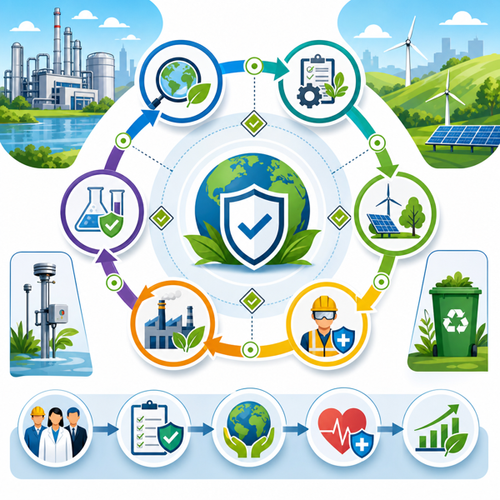
Major Updates in Environmental and Safety Standards – May 2026
May 2026 marks a significant update for professionals working in environmental protection, health, and safety. The latest round of international standards delivers new guidance across fire hazard testing, workplace ergonomics, vehicle thermal environments, hazardous substance analysis, and water quality assessment. This article explores five newly published standards, detailing their key requirements, industry implications, and what you need to know to keep your organization at the forefront of compliance and risk management.
Overview
In today's rapidly evolving regulatory landscape, maintaining robust standards for environmental protection, occupational health, and product safety is vital. International standards not only ensure legal compliance, but also enhance organizational performance, reputation, and sustainability objectives. With five new standards released this May, industry stakeholders have comprehensive new tools to address fire safety, manual handling risks, thermal stress in vehicles, hazardous contaminant monitoring, and chemical content in electrotechnical products. This article provides an expert review of each standard, offering practical advice for implementation and compliance.
Detailed Standards Coverage
IEC 60695-2-10:2026 - Glow-Wire Fire Hazard Testing
Fire Hazard Testing – Part 2-10: Glowing/Hot-wire Based Test Methods: Glow-wire Apparatus and Common Test Procedure
The IEC 60695-2-10:2026 standard outlines the apparatus and procedures for glow-wire testing, which simulates thermal stresses caused by overheating components in electrotechnical products. This fourth edition represents a technical revision, harmonizing references with ISO 13943:2017 and adding new guidance on pyrometer use for temperature measurement during tests (Annex D).
The standard establishes a common small-scale test procedure using a heated wire to assess ignition risks in end products and insulating materials. Manufacturers and product developers use these procedures both for design validation and regulatory compliance in consumer electronics, industrial controls, and electrical components.
Key requirements include:
- Detailed guidance on glow-wire apparatus setup and temperature measurement
- Verification and calibration procedures for apparatus and pyrometers
- Standardized criteria for ignition, flame spread, and test result evaluation
- Applicable to testing both final assembled products and individual solid materials
- Harmonized referencing for terminology and definitions per ISO standards
Key highlights:
- Revised pyrometer procedures enhance test reliability and repeatability
- Clearer ignition and flaming criteria for consistent interpretation
- Aligned with the latest international definitions for fire safety testing
Access the full standard:View IEC 60695-2-10:2026 on iTeh Standards
ISO 11228-3:2026 - Ergonomics: Manual Handling – Repetitive Upper Limb Tasks
Ergonomics — Manual Handling — Part 3: Repetitive Movements and Exertions of the Upper Limbs
ISO 11228-3:2026 addresses one of the most pervasive risks in industrial and service environments: repetitive strain and musculoskeletal disorders (MSDs) of the upper limbs. Implemented by occupational health professionals, workplace designers, and safety managers, this standard provides evidence-based guidelines for identifying and mitigating health risks from repetitive manual tasks.
The revision modernizes assessment tools, offering quick risk assessment protocols and detailed evaluation frameworks. It defines best practices in task design, risk reduction (including job rotation and mechanization), and provides clarity on application scope, focusing on tasks performed for one hour or more per shift for healthy adult workers.
Key requirements include:
- Definitions for repetitive manual tasks, cycles, risk factors, and acceptable exposure
- A two-tier risk assessment process: initial screening and detailed method selection
- Guidance on organizational and engineering interventions
- Exclusion of tasks involving lifting aids, pregnant women, and disabled persons
- Integration with related standards on ergonomics and posture (ISO 11226, ISO 6385)
Key highlights:
- Streamlined quick assessment for efficient workplace screening
- Validation and inclusion criteria for different ergonomic assessment tools
- Holistic approach incorporating physical and psychosocial risk factors
Access the full standard:View ISO 11228-3:2026 on iTeh Standards
ISO 14505-1:2026 - Thermal Environment in Vehicles
Ergonomics of the Thermal Environment — Evaluation of Thermal Environments in Vehicles — Part 1: Principles and Methods for Assessment of Thermal Stress
The publication of ISO 14505-1:2026 is a significant milestone for designers and safety managers in the automotive, maritime, and aerospace sectors. This standard establishes principles and robust methods for assessing thermal stress within vehicles, recognizing the complexity of in-cabin climates affected by HVAC systems, solar radiation, and variable external environments.
ISO 14505-1:2026 covers:
- Whole-body and local assessments of heat and cold stress for drivers and passengers
- Definition of equivalent temperature metrics and methodological recommendations
- Procedures for both technical measurement (instrumentation, manikins) and subjective assessments
- Integration with international standards for climate and HVAC performance testing
This standard is essential for manufacturers, fleet operators, and occupational health experts responsible for vehicle design, occupational risk assessments, and comfort/safety validation in both commercial and special vehicles.
Key highlights:
- Comprehensive measurement methodologies for thermal comfort and stress
- Guidance on using manikin models and participant-based assessments
- Expanded advice for assessing asymmetric thermal conditions and solar loads
Access the full standard:View ISO 14505-1:2026 on iTeh Standards
ISO 22032:2026 - Water Quality: PBDE Determination
Water Quality — Determination of Polybrominated Diphenyl Ethers (PBDE) in Sediment, Suspended Particulate Matter and Biota — Method Using Gas Chromatography Coupled with Tandem Mass Spectrometry (GC-MS/MS) or with High Resolution Mass Spectrometry (GC-HRMS)
ISO 22032:2026 brings enhanced analytical protocols for environmental laboratories and regulators monitoring hazardous flame-retardants in aquatic environments. The ability to accurately quantify PBDEs—persistent organic pollutants—across sediments, suspended particles, and biological samples supports compliance with wastewater directives and international pollutant management.
The standard’s scope includes expanded target analyte lists, improved clean-up and extraction procedures, and the latest validations for GC-MS/MS and GC-HRMS detection modes. It provides practical LOQ values across sample types and details on avoiding common analytical interferences.
Key requirements include:
- Sample extraction, clean-up, and quantification strategies for a wide range of PBDEs
- LOQ as low as 0.003 µg/kg dry mass for sensitive detection in sediments and biological material
- Internal standard calibration and extensive QC requirements
- Guidance on analytical interference mitigation and contamination prevention
Key highlights:
- Now covers PBDE determination in both abiotic and biotic matrices
- Comprehensive clean-up and calibration strategies for ultra-trace detection
- Support for regulatory compliance with EU water and wastewater directives
Access the full standard:View ISO 22032:2026 on iTeh Standards
IEC 62321-3-1:2026 - Substance Screening in Electrotechnical Products
Determination of Certain Substances in Electrotechnical Products – Part 3-1: Screening – Lead, Mercury, Cadmium, Total Chromium, Total Bromine, Total Phosphorus, Total Chlorine, Total Tin, and Total Antimony Content by X-ray Fluorescence Spectrometry
IEC 62321-3-1:2026 delivers cutting-edge guidance for screening hazardous and regulated elements in a broad range of electrotechnical products. This edition introduces new target substances (including phosphorus, tin, and antimony) and now references critical raw materials in line with IEC TR 62936:2016.
Key features include:
- Non-destructive and destructive approaches for rapid screening via X-ray fluorescence (XRF)
- Procedures for testing plastics, metals, solders, and circuit boards
- Requirements for instrument calibration, check samples, and data interpretation
- Guidance for alignment with global product regulations (RoHS, REACH)
- Statistical methods for reproducibility and repeatability assessment
Organizations throughout the electronics value-chain, from manufacturers to importers, can use this standard to demonstrate due diligence and regulatory compliance efficiently.
Key highlights:
- Expanded to cover additional elements aligned with new regulatory requirements
- RLV (Redline Version) provides clear comparison with previous editions
- Enhanced guidance for XRF instrument setup and matrix effect control
Access the full standard:View IEC 62321-3-1:2026 on iTeh Standards
Industry Impact & Compliance
These new and revised standards significantly affect compliance procedures, product development, workplace safety, and environmental management. For businesses, adhering to these standards ensures better risk management, worker protection, and global market access. Key impacts include:
- Manufacturers: Need to update test protocols and product designs to reflect evolving fire safety and material restrictions.
- Regulators and Quality Managers: Must integrate new testing methods and thresholds into compliance audits.
- Environmental Laboratories: Accredited labs will need to upgrade analytical methods for PBDEs and other hazardous substances.
- Occupational Health Professionals: Can leverage ergonomic and vehicle climate standards to improve worker health outcomes.
Transition timelines for implementation may vary, but early adoption often provides a competitive advantage and reduces risk of market withdrawal for non-compliance. Non-conformance can lead to regulatory penalties, product recalls, and reputational harm.
Technical Insights
Across the five standards, several trends and best practices emerge:
- Testing and Verification: Emphasis on repeatable, validated procedures (e.g., pyrometer calibration, internal standard calibration for analytical chemistry, instrument performance checks)
- Documentation and Traceability: Detailed requirements for reporting results, traceability protocols, and tool/method validation
- Ergonomics and Human Factors: Integration of physical, organizational, and psychosocial interventions
- Substance Management: Advanced screening and analytical techniques allow earlier detection of hazardous substances, facilitating efficient risk management
- Certification: Accredited third-party laboratories and conformity assessment bodies play a crucial role in validating product and environmental compliance
Implementation best practices:
- Regularly review standards updates and adapt test and assessment protocols proactively
- Employ interlaboratory testing and cross-validation for critical analytic measurements
- Document assessment decisions and maintain clear audit trails for regulatory authorities
- Involve multidisciplinary teams (engineering, health, quality) in ergonomic and environmental risk assessments
Conclusion & Next Steps
The May 2026 updates to leading international standards for environment, health protection, and safety provide essential guidance for managing new and emerging risks. Professionals across product development, regulatory affairs, laboratory analysis, and occupational health should:
- Review and update internal protocols to align with new requirements and recommendations
- Assess staff training needs for updated methods (e.g., XRF, ergonomic risk assessment)
- Engage with third-party certification bodies for complex testing and verification
- Stay connected to standards development organizations and platforms like iTeh Standards for timely updates
Remaining proactive in monitoring and integrating these standards will help ensure organizational resilience, maintain market access, and protect health and environmental interests into the future.
For the complete text and implementation details on each standard discussed above, visit iTeh Standards.
Categories
- Latest News
- New Arrivals
- Generalities
- Services and Management
- Natural Sciences
- Health Care
- Environment
- Metrology and Measurement
- Testing
- Mechanical Systems
- Fluid Systems
- Manufacturing
- Energy and Heat
- Electrical Engineering
- Electronics
- Telecommunications
- Information Technology
- Image Technology
- Precision Mechanics
- Road Vehicles
- Railway Engineering
- Shipbuilding
- Aircraft and Space
- Materials Handling
- Packaging
- Textile and Leather
- Clothing
- Agriculture
- Food technology
- Chemical Technology
- Mining and Minerals
- Petroleum
- Metallurgy
- Wood technology
- Glass and Ceramics
- Rubber and Plastics
- Paper Technology
- Paint Industries
- Construction
- Civil Engineering
- Military Engineering
- Entertainment