


July 2026: New Standards for Kitchen Equipment, Cleaning Appliances, and Sports Gear
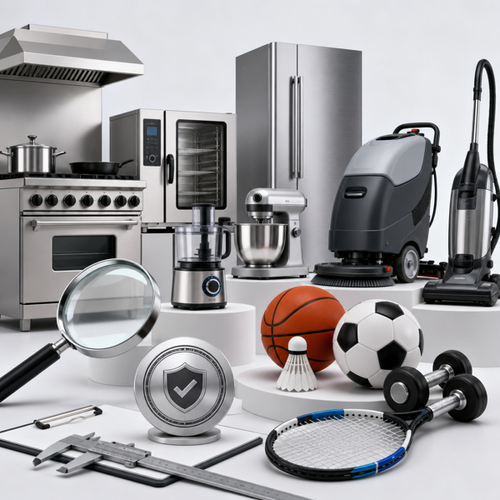
The latest set of international standards published in July 2026 marks a significant advancement in the areas of domestic and commercial equipment, entertainment, and sports. This update—Part 2 of our comprehensive three-part coverage—focuses on five new and revised standards affecting industries ranging from food service and hospitality to facility management, appliance manufacturing, and sporting goods. As regulatory and market demands increase for consistent quality, safety, and performance, these standards provide the essential frameworks and test methods that professionals can trust.
Overview / Introduction
The world of domestic and commercial equipment is rapidly evolving, with innovation shaping everything from commercial kitchen environments to cleaning technologies and athletic equipment. Standards play a vital role in ensuring that these innovations are safe, effective, energy-efficient, and readily comparable in an international market. For professionals—from engineers to compliance officers—keeping up to date with current standards is crucial for risk management, product development, operational excellence, and market access.
This article explains how the newly published July 2026 standards will impact key sectors. You’ll gain insight into new requirements for commercial kitchen ventilation, vacuum cleaner test methods, advanced controls, refrigeration appliances, and even slope testing for alpine skis. Detailed summaries are provided for each standard, including their scope, target sectors, implementation advice, and direct links to the full text on iTeh Standards.
Detailed Standards Coverage
ISO 8783:2026 - Alpine Skis: Slope Performance Testing
Alpine skis — Guidelines and requirements for conducting slope performance tests
ISO 8783:2026 is the latest international reference for rigorous, transparent, and reproducible comparative testing of alpine skis. It sets out requirements and recommendations for organizing and conducting slope performance tests, ensuring factors such as skier ability, assessment consistency, preparation, and reporting are harmonized.
The standard applies to all alpine skis as per ISO 6289, benefiting manufacturers, ski testers, retailers, and specialist sports laboratories. It covers:
- Principles behind performance evaluation
- Test conditions (weather, snow type, ski preparation)
- Test personnel qualifications and requirements
- Test committee structures and reporting methods
Practical implications include more reliable market comparisons, increased consumer trust, and harmonization across regions. For manufacturers, compliance with ISO 8783:2026 facilitates entry into regulated markets and offers a marketing edge.
Key highlights:
- Establishes detailed criteria and procedures for slope tests
- Defines committee and personnel competency requirements
- Requires transparent test reporting and result publication
Access the full standard:View ISO 8783:2026 on iTeh Standards
EN 16282-1:2026 - Commercial Kitchen Ventilation: General Requirements
Equipment for commercial kitchens - Components for ventilation in commercial kitchens - Part 1: General requirements including calculation method
EN 16282-1:2026 sets the benchmark for ventilation design and operation in commercial kitchens, encompassing ergonomic, hygienic, and technical requirements. Applicable to all non-domestic kitchen ventilation, it mandates calculation methods for airflow, addresses control of temperature, moisture, and noise, and aligns with hygiene standards for food processing areas. Notably, it excludes ventilation in domestic kitchens and systems for solid fuel appliances.
Targeted at designers, kitchen installers, food service operators, facility managers, and equipment suppliers, this revision brings improved clarity and practical calculation tools. It aids reliable planning and maintenance, thus promoting safer, healthier, and more efficient kitchens.
Notable updates in this edition include new requirements for small kitchens, revised noise and hygiene criteria, updated calculation tables, and improved guidance for system integration and inspection.
Key highlights:
- Unified ergonomic, air quality, and moisture control recommendations
- Standardized airflow calculation (capture velocity, extract/supply balance)
- Enhanced hygiene, noise, and thermal environment requirements
Access the full standard:View EN 16282-1:2026 on iTeh Standards
IEC 62885-2:2026 - Dry Vacuum Cleaner Performance Measurement
Surface cleaning appliances - Part 2: Dry vacuum cleaners for household or similar use - Methods for measuring the performance
The third edition of IEC 62885-2 brings a thorough update to test methods for dry vacuum cleaners, responding to advances in both technology and market expectations. Covering mains-powered and cordless household vacuum cleaners—including those with water filters—but excluding handheld-only models, this standard enables accurate, comparable assessment of key performance factors.
Among the most significant changes are:
- Consolidation of test material and procedure annexes
- New, streamlined test strokes for efficiency
- Expanded requirements for cordless vacuum evaluation
- Universal nozzle definitions and revised air data measurement
This standard serves appliance manufacturers, QA engineers, test labs, and procurement specialists needing clear benchmarks for product development and purchasing. It also addresses end-user needs for transparent, meaningful information at the point of sale.
Key highlights:
- Updated comparative testing methods for both mains and cordless units
- Full coverage of dust/debris removal, filtration, emissions, and operation
- Emphasis on reproducibility and consumer transparency
Access the full standard:View IEC 62885-2:2026 on iTeh Standards
prEN ISO 22043 - Ice-Cream Freezers: Classification, Requirements, Test Conditions
Ice-cream freezers - Classification, requirements and test conditions (ISO/DIS 22043:2024)
This draft international standard specifies detailed construction, performance, and testing requirements for horizontal, top-access ice-cream freezers with integral refrigeration systems. Its focus is on units used for the storage and display of pre-packed ice-cream, distinguishing them clearly from supermarket segment freezers.
Highlights include full classification systems, mechanical reliability tests (lid sealing and durability), net volume and energy use metrics, and thermal performance under real-world conditions. The scope is limited to units of ≤600L net volume, with specific guidance for transparent-lid models.
The document aligns with current EU ecodesign and energy labeling regulations, directly benefiting manufacturers, quality managers, procurement teams, and retailers aiming for compliance and improved consumer confidence.
Key highlights:
- Standardized classification and volume test methods
- Energy/net-volume criteria aligned with EU requirements
- Test protocols for construction, durability, and thermal performance
Access the full standard:View prEN ISO 22043 on iTeh Standards
EN IEC 60730-2-15:2026 - Automatic Electrical Controls for Flow and Level Sensing
Automatic electrical controls - Part 2-15: Particular requirements for automatic electrical air flow, water flow and water level sensing controls
The new edition of EN IEC 60730-2-15 details construction, safety, and operational performance requirements for electrical controls that sense or regulate air flow, water flow, or water levels across a broad range of domestic, commercial, and industrial applications. This includes controls used in boilers, pumps, HVAC systems, dishwashers, smart-grid and building automation environments.
Updates in this revision reinforce overall and functional safety, reliability under electromagnetic disturbances (EMC), and construction standards (thermistor use, mechanical/electrical integration, and software safety). Notably, the scope covers both manual and automatic (smart) controls with AC or DC supply up to 690V AC/600V DC, and those integrating with broader control or safety systems.
This standard is essential for control designers, system integrators, manufacturers of HVAC or water management equipment, and anyone involved in safety-critical sensing or automation.
Key highlights:
- Complete requirements for safety, operation, and EMC resilience
- Functional safety for smart/control-integrated systems
- Specific tests for endurance, environmental stress, and construction
Access the full standard:View EN IEC 60730-2-15:2026 on iTeh Standards
Industry Impact & Compliance
The adoption of these updated standards creates major benefits across sectors:
- Enhanced product safety and reliability: Rigorous test methods and clear definitions mean fewer field failures and better user protection.
- Regulatory alignment: Manufacturers and operators complying with these standards ensure market access and avoid legal/regulatory issues, particularly with the new energy and safety directives referenced in ice-cream freezers and kitchen ventilation standards.
- Market competitiveness: Certification to these standards can provide a strong market differentiator, enabling companies to communicate quality and compliance in competitive tenders.
- Operational efficiency and hygiene: Updated ventilation and control standards enable energy-efficient, safe, and comfortable commercial environments.
Compliance advice:
- Review product or system specifications for alignment with key requirements.
- Plan necessary upgrades or testing in advance of enforcement or customer deadlines.
- Document and retain all conformity assessment evidence, including test reports and committee decisions.
- Educate teams on new procedures for commissioning, maintenance, and performance validation.
Failure to meet these standards may result in:
- Barriers to market entry (particularly in the EU and regulated economies)
- Increased warranty costs and reputational risk
- Loss of customer trust and business opportunities
Technical Insights
Across these July 2026 standards, several technical trends and best practices emerge:
- Testing Rigor: Standards like ISO 8783:2026 and IEC 62885-2:2026 place strong emphasis on reproducible, comparative testing procedures, including environmental control and operator qualification.
- System Integration: EN IEC 60730-2-15:2026 requirements for smart, integrated, and multi-modal controls highlight the growing expectation for interoperability and cybersecurity awareness.
- Hygiene & Energy Efficiency: Commercial kitchen and refrigeration standards consolidate best practices for air cleanliness, moisture/humidity control, energy use, and environmental comfort metrics.
- Consumer Transparency: Point-of-sale information and test report publication (from vacuum cleaners to ski performance) equip users and buyers to make better, data-driven choices.
Implementation best practices:
- Select test labs with current accreditation and in-depth experience in the applicable standard.
- Use checklists based on the standard’s test procedures and reporting requirements.
- Involve multidisciplinary teams (engineering, QA, regulatory) early in new product development or facility upgrades.
Certification Considerations:
- For equipment imports or exports, check for mutual recognition or equivalency of ISO, IEC, and EN certification marks.
- Maintain serial test data for traceability.
- Stay alert to national regulatory additions where referenced (such as kitchen hygiene laws).
Conclusion / Next Steps
In a changing landscape of quality, safety, and performance, early adoption of the July 2026 equipment, entertainment, and sports standards is a sound business strategy. These standards advance industry best practices for performance, energy efficiency, user safety, and regulatory compliance.
Key takeaways:
- Review each standard relevant to your product, site, or procurement area.
- Prepare to update manufacturing, testing, and documentation processes.
- Engage with new requirements early for smoother implementation, improved outcomes, and lower compliance risk.
Stay ahead of regulatory changes and competitive demands by exploring the detailed content and full standards at iTeh Standards. Subscribe for updates and leverage authoritative international guidelines to secure your business success in domestic and commercial equipment sectors.
Categories
- Latest News
- New Arrivals
- Generalities
- Services and Management
- Natural Sciences
- Health Care
- Environment
- Metrology and Measurement
- Testing
- Mechanical Systems
- Fluid Systems
- Manufacturing
- Energy and Heat
- Electrical Engineering
- Electronics
- Telecommunications
- Information Technology
- Image Technology
- Precision Mechanics
- Road Vehicles
- Railway Engineering
- Shipbuilding
- Aircraft and Space
- Materials Handling
- Packaging
- Textile and Leather
- Clothing
- Agriculture
- Food technology
- Chemical Technology
- Mining and Minerals
- Petroleum
- Metallurgy
- Wood technology
- Glass and Ceramics
- Rubber and Plastics
- Paper Technology
- Paint Industries
- Construction
- Civil Engineering
- Military Engineering
- Entertainment