

September 2026: Key Standards for Domestic and Commercial Equipment, Entertainment, and Sports
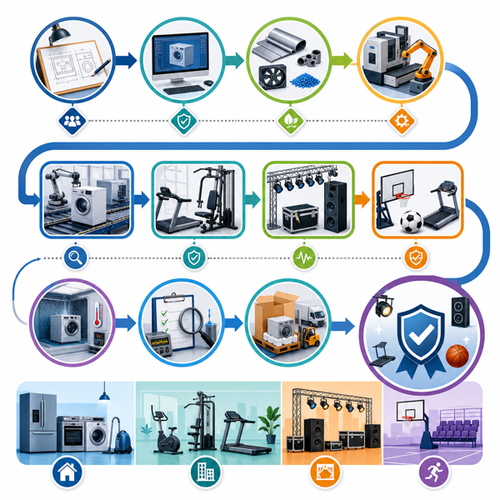
In September 2026, the domestic and commercial equipment, entertainment, and sports sector saw the publication of five pivotal international standards. These updates impact manufacturers, operators, safety professionals, and product designers working across cold chain logistics, child care, hospitality, and home goods. Covering energy efficiency, safety, user information, and children’s product requirements, this article reviews each standard’s scope, key specifications, compliance implications, and practical outcomes.
Overview
The domestic and commercial equipment, entertainment, and sports industry is dynamic, touching every aspect of modern living, from home appliances to public leisure facilities and child safety. Robust international standards are vital for harmonizing product safety, energy performance, and information transparency—meeting compliance obligations, enabling market access, and building consumer trust.
This article reviews five newly published standards from September 2026, providing in-depth analysis for quality managers, compliance officers, engineers, and procurement specialists. Readers will learn:
- The latest testing and performance requirements
- Practical details for implementation
- Key benefits and compliance strategies
- How to access the full standards for in-depth application
Detailed Standards Coverage
EN ISO 19424:2026 - Refrigerated Food Lockers Performance
Refrigerated food lockers - Thermal and energy performance, ratings, environmental test conditions and associated testing methods (ISO 19424:2026)
EN ISO 19424:2026 is the new international reference for evaluating the thermal and energy performance of refrigerated food lockers. It defines requirements and associated testing methodologies for the temporary cold storage of chilled or frozen pre-ordered foodstuffs until consumer pickup, excluding vending machines and several other specific refrigerating appliances.
The standard applies to both fully/partially integrated and remote locker systems for indoor or outdoor installation. It details construction characteristics that impact energy usage, classification schemes, rating methods, and environmental test conditions. Health, safety, and ergonomic aspects are expressly outside its scope.
Manufacturers, cold chain logistics firms, and food retailers deploying smart or contactless refrigerated lockers must ensure compliance to declare performance ratings, plan installations, and meet regulatory obligations.
Notable changes include enhanced requirements for energy measurement precision, detailed volume declarations, and manufacturer-provided technical information for market transparency.
Key highlights:
- Covers lockers for chilled or frozen food, excluding vending machines and retail display cabinets
- Specifies comprehensive testing for temperature control, condensation, and electrical energy consumption
- Mandates precise load, marking, and reporting procedures for transparency
Access the full standard:View EN ISO 19424:2026 on iTeh Standards
EN 14059:2026 - Decorative Oil Lamps Safety
Decorative oil lamps - Safety requirements and test methods
EN 14059:2026 sets out strict safety requirements and test methods for decorative oil lamps used in homes, restaurants, and recreational facilities. Designed to minimize the risk of accidental poisoning, especially in children under three, it covers design, material safety, leakage prevention, and child-proofing mechanisms for both refillable and non-refillable lamps.
Manufacturers and distributors must now use double-action closures for filler caps, avoid child-appealing designs, provide robust wick guards, and ensure product markings remain durable through use. The standard also details impact strength, stability, functional testing, and resistance to child opening.
Compared to the previous edition (EN 14059:2002), this version newly incorporates non-refillable lamps, boosts technical precision throughout, and mandates specific tests for leak prevention and durability.
Key highlights:
- Wick guard and filler cap requirements to prevent child access
- Includes non-refillable oil lamps for the first time
- Enhanced impact strength, leakage, and child-appeal testing procedures
Access the full standard:View EN 14059:2026 on iTeh Standards
ISO 19424:2026 - Refrigerated Food Lockers Performance (ISO Edition)
Refrigerated food lockers — Thermal and energy performance, ratings, environmental test conditions and associated testing methods
The ISO edition of EN ISO 19424:2026, ISO 19424:2026, provides a globally harmonized technical specification for refrigerated food lockers. Its content mirrors the CEN version in most aspects, ensuring international consistency. This makes it the go-to reference for international manufacturers and suppliers engaging in cross-border commerce.
The standard covers test conditions for temperature, condensation, and electrical energy consumption, addresses both integrated and remote cooling systems, and sets out requirements for locker construction, installation types, and performance classification.
Target organizations include international retailers, logistics providers, and equipment makers. The standard facilitates compliance with both European and ISO frameworks, increasing market access and supporting global harmonization.
Key highlights:
- Internationally harmonized with the CEN standard under the Vienna Agreement
- Applies to both indoor and outdoor refrigerated locker systems
- Requires rigorous manufacturer declaration and transparent marking
Access the full standard:View ISO 19424:2026 on iTeh Standards
ISO/TS 24929-5:2026 - Child Care Articles: Product Information
Child care articles — General safety — Part 5: Product information
ISO/TS 24929-5:2026 establishes best practices for incorporating product information in standards related to child care articles. This technical specification emphasizes clear, effective, and durable information provision—including marking, labeling, instructions for use, warnings, and purchase information.
All documentation must be accessible, comprehensible, and durable under expected usage conditions. Manufacturers of strollers, high chairs, child carriers, and similar products must ensure labeling and information meet these guidelines to reduce misuse, enhance user safety, and facilitate informed purchasing.
The annex provides rationales for every requirement, enabling standard developers and quality managers to design compliant product information solutions.
Key highlights:
- Covers all types of product information: markings, packaging, instructions, warnings
- Stresses clarity, visibility, and durability in information presentation
- Includes rationales for key requirements to support compliance and standardization
Access the full standard:View ISO/TS 24929-5:2026 on iTeh Standards
EN 18122:2026 - Learning Towers for Children: Safety & Testing
High chairs and learning towers - Learning towers - Requirements and test methods
EN 18122:2026 is dedicated to safety requirements and test procedures for learning towers—height-adjustable platforms that enable children to safely access kitchen surfaces, bathroom sinks, and similar areas. These tools are popular in homes and educational settings for promoting child independence.
The standard details mechanical, chemical, structural, and entrapment hazard testing. Critical elements include: platform strength, dimensional requirements, entrapment risk control, guardrail robustness, and marking/instruction durability. Only products that meet these demanding criteria can be marketed as compliant learning towers.
This standard supports product designers, manufacturers, and safety assessors working in child furniture and educational product sectors.
Key highlights:
- Addresses fall, entrapment, stability, and choking risks
- Requires thorough product marking and user instructions
- Supports use for children up to six years old in home environments
Access the full standard:View EN 18122:2026 on iTeh Standards
Industry Impact & Compliance
Adoption of these September 2026 standards brings significant benefits—and some challenges—to the domestic and commercial equipment, entertainment, and sports industry:
- Compliance and Market Access: Organizations must align with updated requirements to maintain CE/ISO marking, comply with procurement contracts, and access regulated markets.
- Enhanced Safety and Performance: New safety guidelines for child-related products and decorative lamps will reduce incidents and promote consumer confidence.
- Sustainability & Energy Efficiency: New energy and thermal performance benchmarks support regulatory trends toward greener, more efficient appliances.
- Documentation & Transparency: Standards now demand better product information, transparent performance declarations, and clear marking—empowering both users and regulators.
Implementation timelines are typically outlined in each standard’s foreword or annex. Early engagement with standards, supplier requirements, and compliance testing supports smoother transitions.
Risks of non-compliance include:
- Product recall or market withdrawal
- Regulatory penalties
- Loss of consumer trust and certification status
Technical Insights
Common Technical Requirements
- Testing Conditions: Strict environmental and operational parameters must be controlled during laboratory assessment (e.g., temperature, humidity).
- Marking and Documentation: All professionals must ensure products carry durable, legible, and comprehensive labels aligned with the latest standards. User instructions, warnings, and sales information form a vital compliance component.
- Mechanical and Structural Integrity: From oil lamp wick guards to learning tower guardrails, mechanical integrity and resilience under stress are key regulatory priorities.
Implementation Best Practices
- Gap Analysis: Review current products and documentation against each new standard’s requirements.
- Supplier Engagement: Work with supply chain partners to update specifications, materials, and labeling as needed.
- Product Testing: Carry out independent or accredited laboratory testing—especially for performance or safety certifications.
- Staff Training: Ensure product managers, engineers, and marketing staff understand new compliance obligations.
Testing & Certification Considerations:
- Employ certified labs familiar with the latest standard methodology
- Maintain comprehensive test records and mark products per the requirements
- Prepare for regulatory audits and customer inquiries by keeping all documentation up to date
Conclusion & Next Steps
September 2026 marks a significant step forward for international standards in domestic and commercial equipment, entertainment, and sports. These five standards demonstrate a firm commitment to safety, performance, and transparency that will affect every business operating in the sector.
Key takeaways:
- Familiarize your team with updated requirements for each relevant standard
- Re-evaluate product lines and documentation to close any compliance gaps
- Prioritize independent testing and certification where needed
- Download and reference the full texts via iTeh Standards for complete compliance
Explore Part 2 for additional September 2026 standard updates in this sector. To stay competitive and compliant, regularly monitor for future revisions and best practice updates.
Visit iTeh Standards to access, purchase, or download the latest standards, and ensure your organization remains ahead of regulatory changes.
Categories
- Latest News
- New Arrivals
- Generalities
- Services and Management
- Natural Sciences
- Health Care
- Environment
- Metrology and Measurement
- Testing
- Mechanical Systems
- Fluid Systems
- Manufacturing
- Energy and Heat
- Electrical Engineering
- Electronics
- Telecommunications
- Information Technology
- Image Technology
- Precision Mechanics
- Road Vehicles
- Railway Engineering
- Shipbuilding
- Aircraft and Space
- Materials Handling
- Packaging
- Textile and Leather
- Clothing
- Agriculture
- Food technology
- Chemical Technology
- Mining and Minerals
- Petroleum
- Metallurgy
- Wood technology
- Glass and Ceramics
- Rubber and Plastics
- Paper Technology
- Paint Industries
- Construction
- Civil Engineering
- Military Engineering
- Entertainment