

October 2026: New Fluid Systems Standards Enhance Safety and Performance
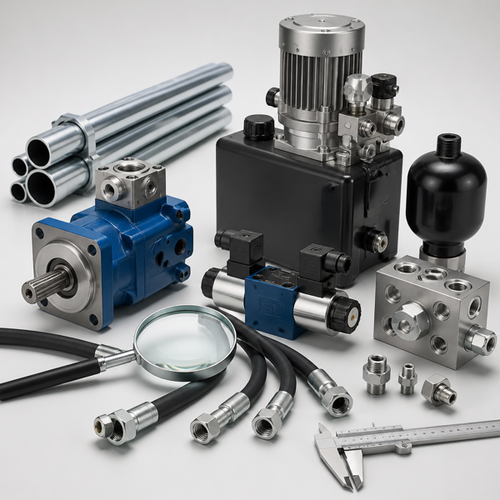
October 2026: New Fluid Systems Standards Enhance Safety and Performance
October brought significant advancements for professionals in the field of fluid systems and components for general use. This month, three pivotal international standards were published, setting new benchmarks for hydraulic sealing devices, pneumatic cylinders, and electrical air-cleaning appliances. These updates are critical for engineers, quality managers, compliance officers, and procurement specialists striving to enhance reliability, safety, and environmental performance across a broad range of fluid power applications.
Overview
Fluid systems and components underpin countless industries, from manufacturing to building technology. The safe, efficient movement, sealing, and purification of fluids—both gases and liquids—is crucial for system integrity and regulatory compliance.
Standards in this sector:
- Ensure interoperability between products and systems
- Enhance equipment reliability and lifespan
- Safeguard user safety and environmental quality
- Support global trade via harmonized technical requirements
This article reviews three newly published standards for October 2026. Readers will gain insights into what each covers, the core technical requirements, compliance impacts, and practical recommendations for smooth adoption.
Detailed Standards Coverage
ISO 7986:2026 – Hydraulic Fluid Power — Sealing Devices — Standard Test Methods to Assess the Performance of Rod Seals Used in Oil Hydraulic Reciprocating Applications
Hydraulic fluid power — Sealing devices — Standard test methods to assess the performance of rod seals used in oil hydraulic reciprocating applications
ISO 7986:2026 sets out standardized laboratory test conditions and methods for evaluating the performance of rod seals in oil hydraulic reciprocating equipment. This revision supersedes the previous 1997 edition, introducing clearer references, updated minimum pressure criteria, and enhanced technical illustrations.
The standard provides detailed procedures for:
- Test rig design (including rod, stroke, and seal housing specifications)
- Control of test parameters like speed, pressure, temperature, and fluid characteristics
- Accurate measurement of seal leakage and friction
- Standardized reporting protocols for test results
Target users:
- Hydraulic equipment manufacturers
- Seal suppliers and testing laboratories
- Industries employing hydraulic actuators (e.g., manufacturing automation, construction machinery)
Practical implications: Manufacturers and engineers can make direct, meaningful comparisons of different rod seal performances based on harmonized methodology. ISO 7986:2026 also helps in pre-selecting suitable sealing solutions for given operating environments, reducing the risk of in-service failure.
Key highlights:
- Strict control of test variables for reproducible results
- Standardized working pressures: 6.3, 16, and 31.5 MPa
- Focus on surface finish, fluid specifications, and environmental factors affecting seal longevity
Access the full standard:View ISO 7986:2026 on iTeh Standards
IEC 63086-2-2:2026 – Household and Similar Electrical Air Cleaning Appliances — Method for Measuring the Performance — Part 2-2: Particular Requirements for Determination of Gas-Phase Pollutant Reduction
Household and similar electrical air cleaning appliances — Method for measuring the performance — Part 2-2: Particular requirements for determination of gas-phase pollutant reduction
IEC 63086-2-2:2026 introduces a structured framework for assessing how well domestic and similar electrical air cleaners reduce concentrations of gaseous airborne pollutants. Unlike standards addressing particulate filtration, this part focuses on volatile organic compounds (VOCs), aldehydes, hydrocarbons, and inorganic gases commonly present indoors.
Key sections detail:
- Selection and preparation of test gases (e.g., formaldehyde, toluene, ammonia)
- Test chamber setup and environmental controls
- Measurement of pollutant decay rates—both naturally and under device operation
- Calculation of clean air delivery rate (CADR) specific to gases
Who should comply:
- Manufacturers of household and commercial air purifiers
- Testing laboratories
- Certification bodies and regulatory agencies managing indoor air quality
Practical implications: Compliance ensures devices are verified using repeatable, comparable methods, giving end-users confidence in manufacturer claims regarding pollutant removal. Detailed instructions help avoid test bias related to cross-gas reactivity or variations in initial concentrations.
Key highlights:
- Covers representative test gases: formaldehyde, toluene, n-heptane, d-limonene, ammonia, nitrogen dioxide
- Standardized calculation of pollutant removal rates and CADR
- Guidance on test gas selection, test chamber protocol, and multiple-gas scenarios
Access the full standard:View IEC 63086-2-2:2026 on iTeh Standards
ISO 15524:2026 – Pneumatic Fluid Power — Cylinders — Single-Rod Short-Stroke Cylinders, 1 000 kPa (10 bar) Series, Bores from 20 mm to 100 mm
Pneumatic fluid power — Cylinders — Single-rod short-stroke cylinders, 1 000 kPa (10 bar) series, bores from 20 mm to 100 mm
The updated ISO 15524:2026 defines a metric series of single-rod pneumatic short-stroke cylinders for use up to 1,000 kPa (10 bar), with standardized bores from 20 mm to 100 mm. These cylinders, without adjustable cushioning or magnetic detection, are widely utilized in industrial automation, packaging, and material handling.
The standard provides:
- Standardized bore sizes and dimensional tolerances
- Nominal stroke lengths
- Allowable mounting types
- Updated recommendations for cylinder rod design (with new annex on external threaded rod ends)
Industries impacted:
- Pneumatic component suppliers
- OEMs and end-users in manufacturing automation
- Maintenance and system design professionals
Implementation insights: Adopting ISO 15524:2026 ensures global compatibility, easier sourcing, and reliable interchangeability of pneumatic cylinders. The addition of external threaded rod end data addresses current market trends for installation versatility.
Key highlights:
- Wide applicability for bores 20 mm to 100 mm
- For systems where adjustable cushioning is not required
- Addition of external threaded rod end recommendations to reflect market needs
Access the full standard:View ISO 15524:2026 on iTeh Standards
Industry Impact & Compliance
The rollout of these standards brings tangible benefits to fluid power system stakeholders:
- Improved system reliability: Through precise component selection and harmonized test methods.
- Greater market access: Standardized products facilitate international trade and procurement.
- Enhanced safety: Adherence reduces risk of equipment failure, environmental hazards, and non-compliance penalties.
- Clearer performance claims: Measurable testing supports transparent marketing and specification.
Compliance considerations:
- Organizations should update procurement guidelines, internal specifications, and supplier contracts to reference the new standard versions.
- Allow adequate time for product validation and testing facilities to adopt revised procedures.
- Regulators and certification bodies may update conformance requirements based on these latest editions—monitor changes to ensure uninterrupted market access.
Risks of non-compliance:
- Product recalls, equipment failures, or occupational safety incidents
- Inability to compete in markets demanding current certification
- Increased liability or insurance costs
Technical Insights
Common technical requirements and best practices across the standards:
- Controlled test parameters: Both ISO 7986 and IEC 63086-2-2 demand tightly controlled physical and environmental conditions for repeatable and comparable results.
- Accurate measurement techniques: A strong focus on calibration, precision instrumentation (e.g., load cells, pressure transducers, chromatographs), and consistent reporting formats.
- Standardization for interoperability: ISO 15524 promotes dimensional and performance harmony, essential for system integration and replacement part sourcing.
- Documentation and reporting: All standards stress detailed test records—beneficial for traceability, quality audits, and continual improvement.
Implementation best practices:
- Familiarize technical staff with the updated standards and key changes.
- Audit existing systems and products to evaluate gaps or upgrade needs.
- Engage with accredited testing laboratories to ensure current methods are in place.
- Update design documentation and marketing materials to reflect new compliance where applicable.
Testing and certification considerations:
- Verification by accredited bodies may be required, especially when serving regulated markets.
- Regular training is recommended as test methods evolve with the standards.
Conclusion & Next Steps
October 2026 marked a decisive step forward for the fluid systems and components industry, with new and revised standards establishing more rigorous, harmonized guidelines for hydraulic seals, pneumatic cylinders, and electrical air-cleaning appliances.
Key takeaways:
- Early adoption of ISO 7986:2026, IEC 63086-2-2:2026, and ISO 15524:2026 will strengthen your compliance profile and operational reliability.
- Proactive engagement with supply chain partners ensures smooth transitions to updated requirements.
- Continued education and attention to standards updates are vital for maintaining competitiveness and regulatory standing.
Recommendations:
- Download and review the full text of each standard directly.
- Assess and update your organizational processes accordingly.
- Subscribe to future updates on iTeh Standards to stay ahead in fluid systems best practices.
Stay informed, stay compliant, and drive operational excellence with the latest in international fluid systems standards.
Categories
- Latest News
- New Arrivals
- Generalities
- Services and Management
- Natural Sciences
- Health Care
- Environment
- Metrology and Measurement
- Testing
- Mechanical Systems
- Fluid Systems
- Manufacturing
- Energy and Heat
- Electrical Engineering
- Electronics
- Telecommunications
- Information Technology
- Image Technology
- Precision Mechanics
- Road Vehicles
- Railway Engineering
- Shipbuilding
- Aircraft and Space
- Materials Handling
- Packaging
- Textile and Leather
- Clothing
- Agriculture
- Food technology
- Chemical Technology
- Mining and Minerals
- Petroleum
- Metallurgy
- Wood technology
- Glass and Ceramics
- Rubber and Plastics
- Paper Technology
- Paint Industries
- Construction
- Civil Engineering
- Military Engineering
- Entertainment