

October 2026: New Standards Advance Glass and Ceramics Industries
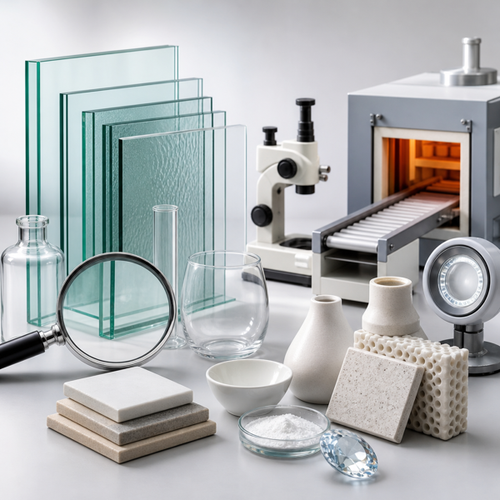
October 2026: New Standards Advance Glass and Ceramics Industries
The glass and ceramics industries are entering a new era of innovation and quality with the publication of three pivotal international standards in October 2026. These standards address critical aspects such as environmental declarations for building glass, advanced methods for analyzing ceramic raw materials, and reliable hardness testing for fine ceramics. Industry professionals, from engineers and quality managers to compliance officers and procurement specialists, will find these updates essential for ensuring excellence, compliance, and sustainability in manufacturing and product development.
Overview / Introduction
Glass and ceramics are foundational to modern construction, advanced manufacturing, and engineered materials. With their widespread applications—from architectural glazing and structural elements to fine ceramics used in electronics and aerospace—the integrity and sustainability of these materials are paramount.
International standards ensure that glass and ceramics products are:
- Consistent in quality and performance
- Safe for their intended use
- Environmentally responsible throughout their lifecycle
In this article, you'll learn:
- The scope and significance of each new standard published in October 2026
- Key technical requirements and compliance obligations
- Practical steps for implementation and industry impact
- How to access the full standards for your organization
Detailed Standards Coverage
EN 17074:2026 - Environmental Product Declarations for Flat and Channel Shaped Glass
Glass in Building – Environmental product declarations – Product category rules complementary to EN 15804 for flat glass and channel shaped glass products
This newly revised European Standard defines complementary product category rules (c-PCR) for Type III environmental product declarations (EPDs) specific to flat glass and channel shaped glass used in buildings. Building on the framework of EN 15804, it establishes clear criteria for life cycle assessment (LCA) and the communication of environmental impacts, enabling transparent, comparable declarations across the industry.
What this standard covers:
- Relevant to all intermediate and finished flat and channel shaped glass products for construction (other than glass-block products)
- Outlines detailed requirements for defining life cycle stages—covering raw material extraction to end-of-life
- Specifies calculation rules, system boundaries, and data quality requirements for accurate LCA
- Provides rules for the inclusion of different cullet types (furnace process, pre-consumer, post-consumer), reflecting material circularity
- Defines how to declare technical and environmental data, including emissions, material densities, and service life assumptions
Key requirements and specifications:
- Utilization of a declared unit of 1 square meter for all glass products in environmental calculations
- Clear distinctions and guidance for allocating impacts of various cullet streams
- Mandatory inclusion of all components, such as adhesives and sealants, not just the glass element
- Utilization of reference data (e.g., 2,500 kg/m³ density for basic glass) and a default reference service life of 30 years unless otherwise specified
- Exclusion of benefits during the product use stage (e.g., energy savings from insulation) from headline LCA results, though these can be included as additional information
Who needs to comply:
- Glass manufacturing companies supplying products for building applications
- Environmental consultants preparing EPDs in construction
- Architectural firms, sustainability officers, and project certifiers concerned with material footprints
Practical implications for implementation:
- Enables companies to provide third-party verified EPDs for their glass products, supporting green building certifications (e.g., LEED, BREEAM)
- Offers transparent data for clients and regulators, simplifying material selection and procurement
- Helps organizations demonstrate compliance with evolving sustainability regulations and client demands
Notable changes from previous versions:
- Refined cullet definitions and allocation procedures
- Removal of outdated product stage designations
- Expanded guidance for data quality, scenarios, and communication formats
- Clarified exclusions (e.g., glass blocks)
Key highlights:
- Aligns with EN 15804 for life cycle and EPD requirements
- Enhanced rules for cullet and recycled content reporting
- Supports sustainability claims in green construction
Access the full standard:View EN 17074:2026 on iTeh Standards
ISO 17947-1:2026 - Chemical Analysis Methods for Silicon Nitride Powders in Fine Ceramics
Fine ceramics (advanced ceramics, advanced technical ceramics) — Methods for chemical analysis of silicon nitride powders — Part 1: Wet chemical methods, X-ray fluorescence (XRF) using the fused cast-bead method, carrier-gas hot extraction (CGHE) and combustion methods
This first part of the ISO 17947 series introduces standardized procedures for the precise determination of key elements in silicon nitride powders, which are foundational to advanced ceramics manufacturing. Accurate chemical analysis is essential for performance-critical applications in electronics, automotive, aerospace, and specialized engineering sectors.
What this standard covers:
- Specifies analytical methods for measuring silicon, nitrogen, aluminum, iron, calcium, oxygen, carbon, fluorine, and chlorine
- Covers wet chemical analysis, XRF using the fused cast-bead method, carrier-gas hot extraction (CGHE), and combustion techniques
- Applies to raw silicon nitride powders used in the production of fine ceramics
Key requirements and specifications:
- Detailed procedures for sample preparation, drying, and weighing with high precision
- Specific ranges for analytes (e.g., silicon 30%–70%, nitrogen 30%–45%, trace metals in ppm to 0.6% range)
- Calibration against certified reference materials and inclusion of blank tests to ensure accuracy
- Use of advanced instrumentation such as ICP-OES, XRF, coulometry, and IR absorption spectrometry for quantitative results
Who needs to comply:
- Producers of silicon nitride and advanced ceramic powders
- Laboratories conducting quality control or R&D on fine ceramics
- Manufacturers and end-users of ceramics in industries requiring stringent material properties (e.g., electronics, automotive, aeronautics)
Practical implications for implementation:
- Enables consistent, repeatable assessment of raw material quality—crucial for high-reliability applications
- Supports QA/QC protocols in ceramics manufacturing
- Facilitates regulatory and customer requirements for material traceability and conformance
Notable changes from previous guidance:
- Alignment with best practices from JIS, CEN, and ASTM references
- Updated procedures for advanced analytical methods
- Expansion on handling trace and impurity-level constituents
Key highlights:
- Comprehensive suite of chemical analysis techniques
- Improved precision and repeatability for ceramic raw material assessment
- Essential for supplier qualification and process optimization
Access the full standard:View ISO 17947-1:2026 on iTeh Standards
EN ISO 14705:2026 - Hardness Test Methods for Monolithic Fine Ceramics
Fine ceramics (advanced ceramics, advanced technical ceramics) – Test method for hardness of monolithic ceramics at room temperature (ISO 14705:2026)
This European-adopted ISO standard provides industry-accepted methods for determining the hardness of monolithic ceramic materials at room temperature using both the Vickers and Knoop indentation techniques. Precise hardness measurement is critical to predicting wear, machinability, and overall performance of ceramics in demanding applications.
What this standard covers:
- Procedures for measuring both Vickers and Knoop hardness values of fine ceramics
- Guidance on sample preparation, test piece dimensions, application of force, and measurement accuracy
- Methods for reporting results, calculating statistical measures, and ensuring traceability
Key requirements and specifications:
- Testing at room temperature (typically 23°C ± 5°C), with controlled loading and indentation protocols
- Use of calibrated diamond indenters and high-resolution optical measurement systems
- Minimum five valid indentations per sample for statistically significant results
- Adherence to sample thickness and surface preparation rules to avoid measurement errors
Who needs to comply:
- Producers and users of advanced technical ceramics
- Materials laboratories; R&D facilities
- Industries relying on ceramics for electronic, medical, chemical, or mechanical performance
Practical implications for implementation:
- Ensures reliable, internationally comparable hardness data to inform design and quality assurance
- Assists manufacturers and users in benchmarking and qualifying new ceramic materials
- Supports product certification, R&D, and supplier validation processes
Notable changes from previous edition (2021):
- Clarification of measurement device resolution requirements
- Modified accuracy protocol for diagonal measuring systems
- Emphasis on procedure standardization for consistent results
Key highlights:
- Enables repeatable, precise hardness testing for advanced ceramics
- Supports mechanistic understanding for critical applications
- Facilitates compliance for internationally traded ceramic materials
Access the full standard:View EN ISO 14705:2026 on iTeh Standards
Industry Impact & Compliance
These October 2026 standards bring substantial benefits and responsibilities for organizations throughout the glass and ceramics industries:
- Enhances sustainability and transparency: EPD rules for glass set new benchmarks for environmental accountability, aiding compliance with green building initiatives.
- Improves material quality: Advanced analytical and testing methods ensure that both raw materials and finished ceramics meet strict industry requirements.
- Supports market access: Adherence to these standards is increasingly demanded by global customers, regulators, and certification bodies.
Compliance Considerations
- Organizations should initiate gap analyses against these new standards as part of regular compliance programs.
- For EPDs, collaboration between sustainability teams, technical managers, and external auditors is key.
- Laboratories and production facilities must update SOPs, calibrate equipment, and—where needed—train staff on new test methodologies.
Benefits of Adoption
- Greater market competitiveness through transparency and reliability
- Streamlined qualification of materials and suppliers
- Lower risk of regulatory non-compliance or client rejection
Timelines
- Immediate application is recommended for all new projects and product lines
- For ongoing projects, plan a transition period for updating declarations, testing, and quality systems
Technical Insights
Common Technical Requirements
- Data Quality and Traceability: Consistent sample preparation, calibrated measurement equipment, and documented procedures are essential for all three standards.
- Third-party Verification: Especially critical for EPDs and for laboratories seeking accreditation in chemical analysis or materials testing.
- Reporting Consistency: Ensure that measurement units, statistical reporting, and result expression are consistent with the standards’ requirements.
Implementation Best Practices
- Establish cross-functional teams involving R&D, quality, sustainability, and compliance departments.
- Invest in staff training for new test methods and sustainability declarations.
- Upgrade and calibrate laboratory equipment according to updated accuracy and resolution requirements.
- Maintain thorough documentation—especially for EPDs, supporting LCA calculations and project reports.
- Engage in proficiency testing or round robin exercises for analytical laboratories.
Testing and Certification Considerations
- Participation in recognized proficiency schemes or achieving laboratory accreditation demonstrates compliance and builds customer confidence.
- Regular internal auditing and updating of quality manuals to reflect the new standards is encouraged.
Conclusion / Next Steps
The October 2026 standards for glass and ceramics represent a meaningful advance for product quality, environmental responsibility, and technical assurance. Organizations that proactively implement these standards will:
- Lead the market in sustainability and innovation
- Reduce compliance risks and ensure smooth market access
- Deliver superior products with verified quality
Recommendations:
- Download and review the full standards from iTeh Standards
- Conduct internal assessments and train relevant staff
- Update procedures, declarations, and laboratory practices accordingly
Stay ahead—explore these standards today to ensure your operations, products, and projects are future-ready and fully compliant with international best practices.
Categories
- Latest News
- New Arrivals
- Generalities
- Services and Management
- Natural Sciences
- Health Care
- Environment
- Metrology and Measurement
- Testing
- Mechanical Systems
- Fluid Systems
- Manufacturing
- Energy and Heat
- Electrical Engineering
- Electronics
- Telecommunications
- Information Technology
- Image Technology
- Precision Mechanics
- Road Vehicles
- Railway Engineering
- Shipbuilding
- Aircraft and Space
- Materials Handling
- Packaging
- Textile and Leather
- Clothing
- Agriculture
- Food technology
- Chemical Technology
- Mining and Minerals
- Petroleum
- Metallurgy
- Wood technology
- Glass and Ceramics
- Rubber and Plastics
- Paper Technology
- Paint Industries
- Construction
- Civil Engineering
- Military Engineering
- Entertainment